

Peptide therapy side effects depend on three things at once, the specific molecule, the quality of the compounded product, and the patient's health, and rates can be high for some drugs, with 81.3% to 95.8% of participants in one trial program reporting at least one adverse event. Not every adverse event is the peptide's fault, because preparation errors, dose escalation, and underlying illness can produce the same symptoms.
Most popular advice tells you to find one list, memorize it, and assume you're prepared. That's bad advice. A list that lumps a growth hormone secretagogue, a melanocortin drug, and an incretin together won't tell you what to watch for, what to ignore for a day, or when to stop and call. You need a triage mindset, not a symptom dump.
Table of Contents
- Why Peptide Side Effects Cannot Be Lumped Together
- How Peptide Therapies Work and Why That Drives Their Side Effects
- The Most Common Side Effects by Peptide
- Rare but Serious Reactions Worth Knowing
- How Product Quality and Dosing Errors Shape the Risk
- Monitoring and Mitigation Strategies That Actually Help
- When to Contact a Provider and What to Tell Them
Why Peptide Side Effects Cannot Be Lumped Together
Peptide therapy isn't a drug class. It's a shelf label for dozens of molecules that bind different receptors, move through different pathways, and carry different evidence behind them. Treating them as interchangeable is the first safety mistake patients make, and clinics that market them under one generic wellness banner encourage it.
A peptide that pushes the pituitary to release growth hormone can affect glucose regulation, fluid balance, and sleep. A melanocortin peptide used for sexual response works through central pathways and can affect nausea and blood pressure. An incretin peptide slows gastric emptying and changes appetite. Blaming one molecule for another's effects leads to two errors. You either fear a reaction that isn't plausible for your prescription, or you miss the reaction that is.
The Three Drivers I Use in Clinic
- The peptide itself: Receptor target, dose, and route determine the predictable pharmacologic effects.
- The preparation: Concentration, purity, sterility, storage, and labeling determine whether you received what the prescription intended.
- The patient: Diabetes, kidney disease, cardiovascular history, other medications, and prior reactions determine how much margin you have.
That model changes the questions you ask. Don't start with, "Are peptides safe?" Start with, "Which molecule, from which pharmacy, at what concentration, for a man with my history?" If a provider can't answer those four parts clearly, you don't have a safety plan. You have a sales pitch.
Practical rule: If the consent conversation doesn't name the exact peptide, its intended target, and its specific stop rules, it wasn't specific enough.
Evidence quality also varies sharply. Some peptide drugs have formal prescribing information from controlled trials. Others used in wellness settings have thin human data, so absence of reported harm doesn't prove safety. Underreporting, variable products, and small studies can hide problems for years.
That's why timing matters. Nausea that appears hours after every dose increase suggests dose-linked intolerance. Progressive swelling, weakness, or glucose changes suggest a broader pathway effect that needs labs, not automatic escalation. Same patient, same vial, very different meaning. The driver framework lets you sort those signals instead of reacting to every symptom the same way.
How Peptide Therapies Work and Why That Drives Their Side Effects
A peptide works like a key cut for a particular lock. It binds a receptor, that receptor changes signaling inside the cell, and downstream hormones or neurotransmitters shift. When the key fits more than one lock, or the dose turns the lock harder than physiology normally would, you get effects beyond the one you wanted. That's not mysterious. It's predictable.
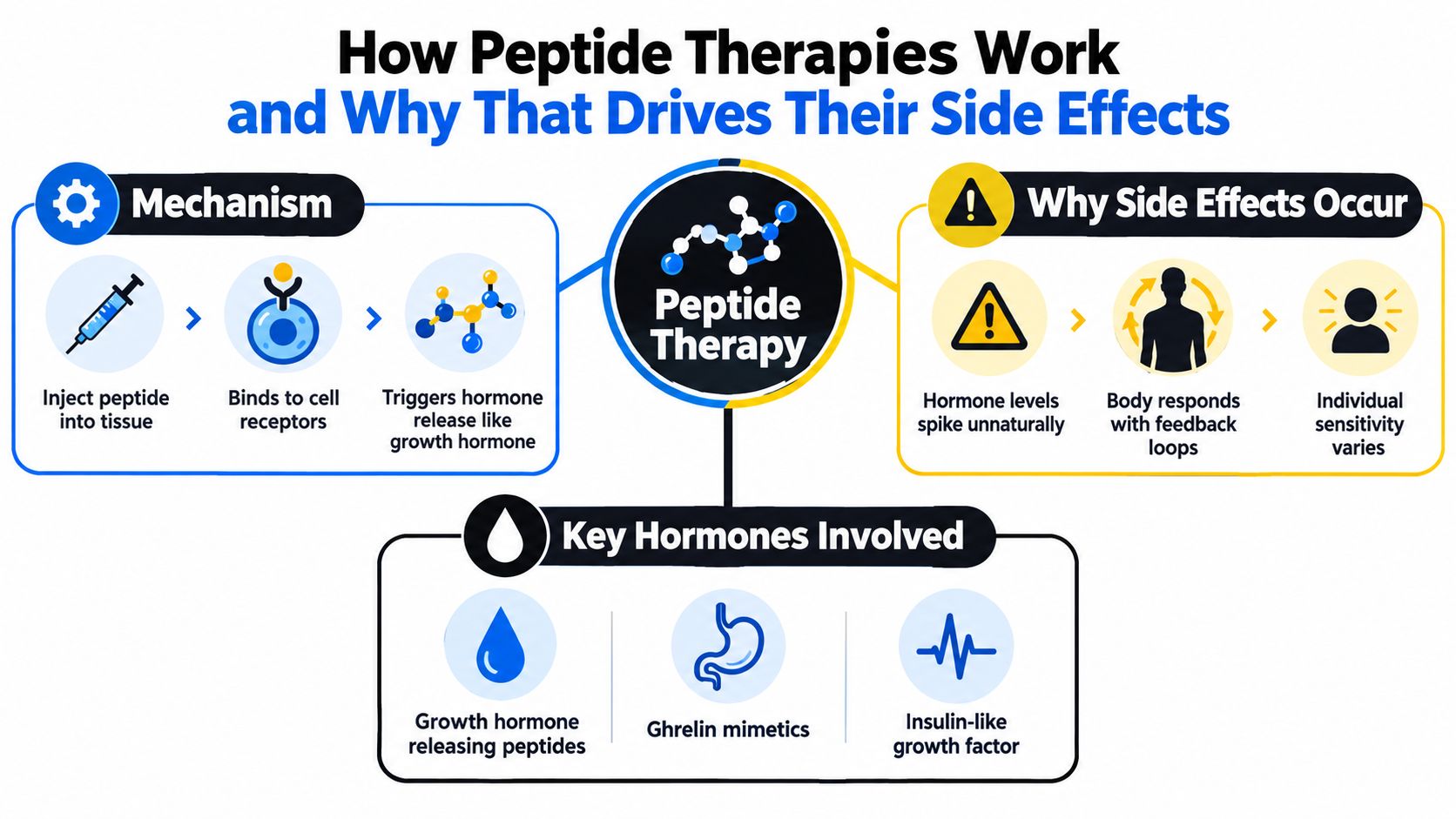
Sermorelin and ipamorelin act on the growth hormone axis. They signal the pituitary, directly or through hypothalamic pathways, to release growth hormone. Growth hormone then influences IGF-1, tissue repair, fluid retention, and insulin sensitivity. So the side effects to discuss aren't random. Flushing, headache, injection site discomfort, water retention, joint aches, tingling, and glucose changes fit the pathway. In an FDA review of ipamorelin data, hypokalemia occurred in 12.5% versus 3.4% on placebo, insomnia in 10.7% versus 5.2%, and hyperglycemia at hospital discharge in 14.3% versus 8.6%, as reported in the FDA ipamorelin clinical review. Those patients weren't healthy men in a wellness clinic, and surgery and illness contributed, but the pattern still tells you which systems to monitor.
Different Targets Different Complaints
PT-141, also called bremelanotide, targets melanocortin receptors involved in sexual arousal. Because those receptors sit in central pathways that also influence nausea and autonomic tone, flushing, headache, yawning, nausea, and transient blood pressure changes make mechanistic sense. NAD+ participates in cellular energy and redox pathways rather than one classic hormone receptor, and tolerability often relates to dose and administration speed, with flushing, headache, chest tightness during infusion, and gastrointestinal upset reported in practice. Tissue repair peptides such as BPC-157 sit in a different category because human safety data are much thinner, so you can't borrow confidence from better studied drugs.
Dose response explains titration. I start low for the same reason I don't train a deconditioned man at his max on day one. Gradual escalation lets receptors, gut motility, and fluid balance adapt, and it lets us see which dose caused a problem. Men who are also considering testosterone replacement therapy need that discipline even more, because adding two hormone active treatments at once makes attribution nearly impossible.
Route matters too. An injection bypasses digestion and delivers a sharper peak. A nasal or oral product may produce local irritation and more variable absorption. If a symptom doesn't fit the receptor, the route, or the timing, don't force it into the peptide story. Look for another cause.
The Most Common Side Effects by Peptide
Men don't experience categories. They experience a flush after dinner, a headache at bedtime, or nausea that ruins the point of a dose. Here's how the common patterns break down for the peptides patients ask me about most, stated qualitatively where controlled human data are limited.
NAD+ tends to bother people during or shortly after administration. Flushing, headache, nausea, abdominal cramping, and a sense of pressure or warmth are the complaints I hear, along with soreness at an injection site. Slowing administration and avoiding a large meal right beforehand often helps. If symptoms escalate with each exposure instead of easing, that's not something to push through.
Sermorelin is usually discussed around injection site redness or discomfort, flushing, headache, and mild fluid retention. Because it works through growth hormone signaling, I also ask about joint stiffness, hand swelling, tingling, vivid sleep changes, and fasting glucose if a man has metabolic risk. Most nuisance effects are mild, but persistent swelling or numbness deserves a dose review and labs rather than reassurance alone.
PT-141 Deserves Its Own Conversation
PT-141 commonly causes flushing and headache, and nausea is the effect men underestimate. Some describe a washed out, mildly queasy feeling later that night or the next morning. I call it social nausea in clinic because it doesn't always cause vomiting, but it can make a man quiet, pale, and uninterested in food or sex, which defeats the purpose. Transient blood pressure elevation matters if you have uncontrolled hypertension or cardiovascular disease, so disclose that history before anyone prescribes it. Men weighing fertility questions alongside hormone treatment should also review whether TRT makes you infertile before stacking therapies without a plan.
| Peptide | Most Common Side Effects | Typical Severity | Usual Resolution |
|---|---|---|---|
| NAD+ | Flushing, headache, nausea, injection discomfort | Mild to moderate | Slower administration, dose adjustment |
| Sermorelin | Injection site reaction, flushing, headache, fluid retention | Usually mild | Site rotation, dose review, monitoring |
| PT-141 | Flushing, nausea, headache, yawning | Mild to moderate | Time limited, lower dose if recurrent |
| Ipamorelin | Headache, gastrointestinal upset, sleep or glucose changes | Variable | Dose review and lab checks if persistent |
The table is a pattern guide, not permission to self diagnose. A mild headache after a first dose is different from a severe headache with vision changes. Brief flushing is different from flushing with wheeze or lip swelling. Pattern plus severity plus timing determines the response.
Rare but Serious Reactions Worth Knowing
Rare reactions matter because they're the ones patients dismiss until they're in trouble. The most important is immunogenicity, where the immune system forms antibodies against a peptide, an aggregate, or an impurity. That can cause injection reactions, hypersensitivity, altered clearance, loss of effect, or in severe cases anaphylaxis. The peptide sequence isn't the only variable. Aggregation, excipients, storage, route, and manufacturing controls all influence risk.
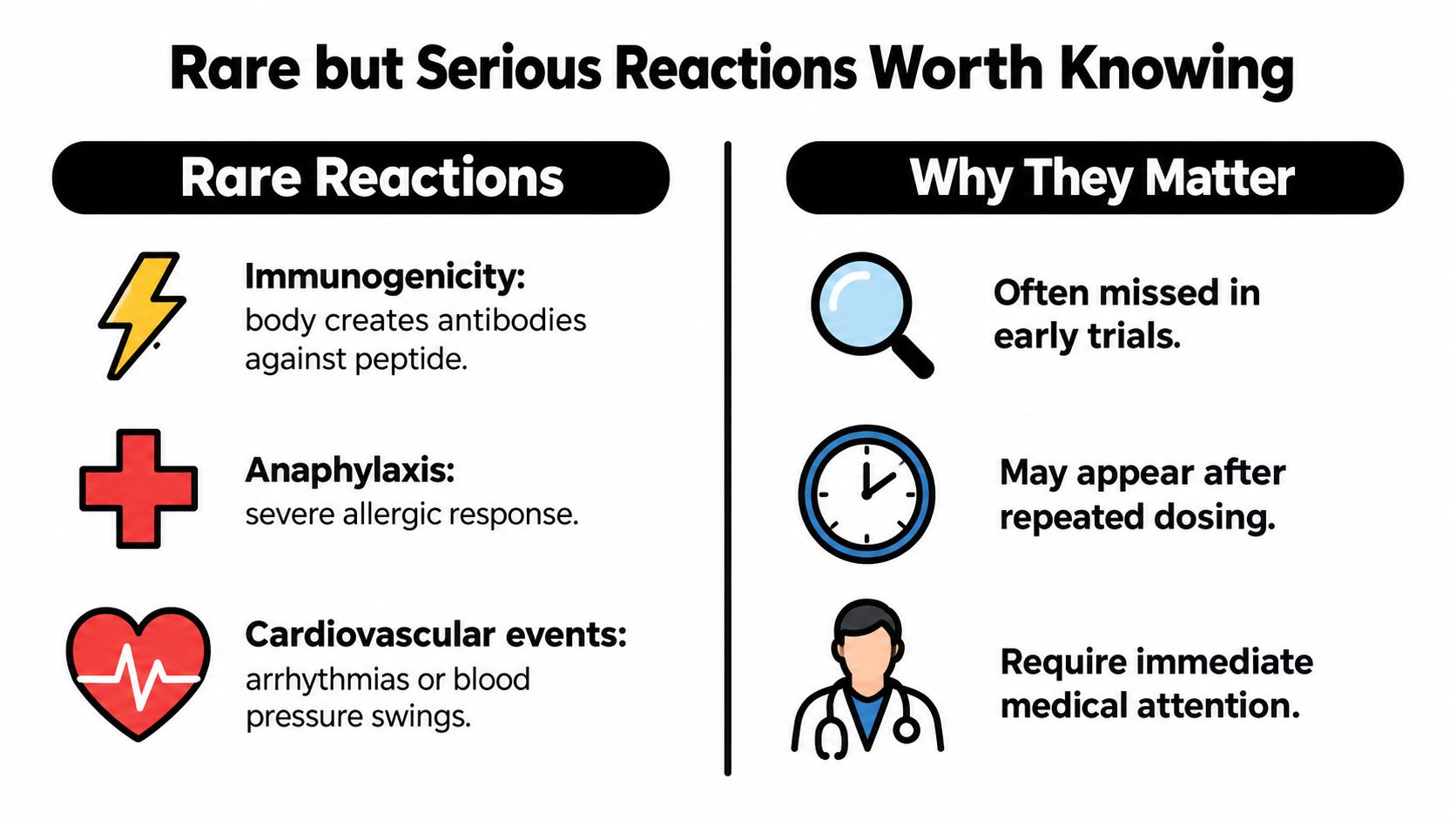
Regulators have acted on that concern. In September 2023, the FDA identified compounded GHRP-2 and GHRP-6 as substances that may present significant safety risks, citing possible immunogenicity from peptide aggregation and impurities for GHRP-2, and potential cortisol effects and reduced insulin sensitivity for GHRP-6, in its notice on bulk drug substances that may present significant safety risks. For GHRP-2, the agency also noted reports involving infection, pancreatitis, increased insulin requirements, and deaths among critically ill study subjects, while explicitly stating causality hadn't been established. Don't overread that, and don't underread it either. It means the signal was serious enough to flag, not that every event was proven caused by the peptide.
Reactions That Change the Plan Immediately
- Breathing difficulty, throat tightness, or facial swelling: Stop exposure and seek emergency care.
- Spreading redness, warmth, drainage, or fever at an injection site: Treat as possible infection, not a normal reaction.
- Severe abdominal pain or persistent vomiting: Consider pancreatic, gallbladder, dehydration, or dosing causes and get evaluated.
- New marked swelling, numbness, or glucose instability on a growth hormone axis drug: Pause escalation and get labs.
Rare does not mean irrelevant. It means you won't see it often, so you need the language ready before it happens.
Endocrine disruption is another concern when growth hormone stimulation is layered onto other hormone therapies, poor sleep, obesity, or untreated pituitary disease. More signaling isn't always better. If IGF-1, glucose, blood pressure, or fluid retention move the wrong way, the protocol is not working safely, whatever the mirror says. A candid provider will sometimes tell you the evidence doesn't support continuing. Listen to that provider.
How Product Quality and Dosing Errors Shape the Risk
Some peptide therapy side effects aren't pharmacology at all. They're preventable medication use events. A man draws to the wrong syringe line, confuses milligrams with milliliters, misunderstands units, or receives a vial at a different concentration than the last one. He then reports severe nausea or fainting, and everyone blames the molecule when the actual failure was measurement.
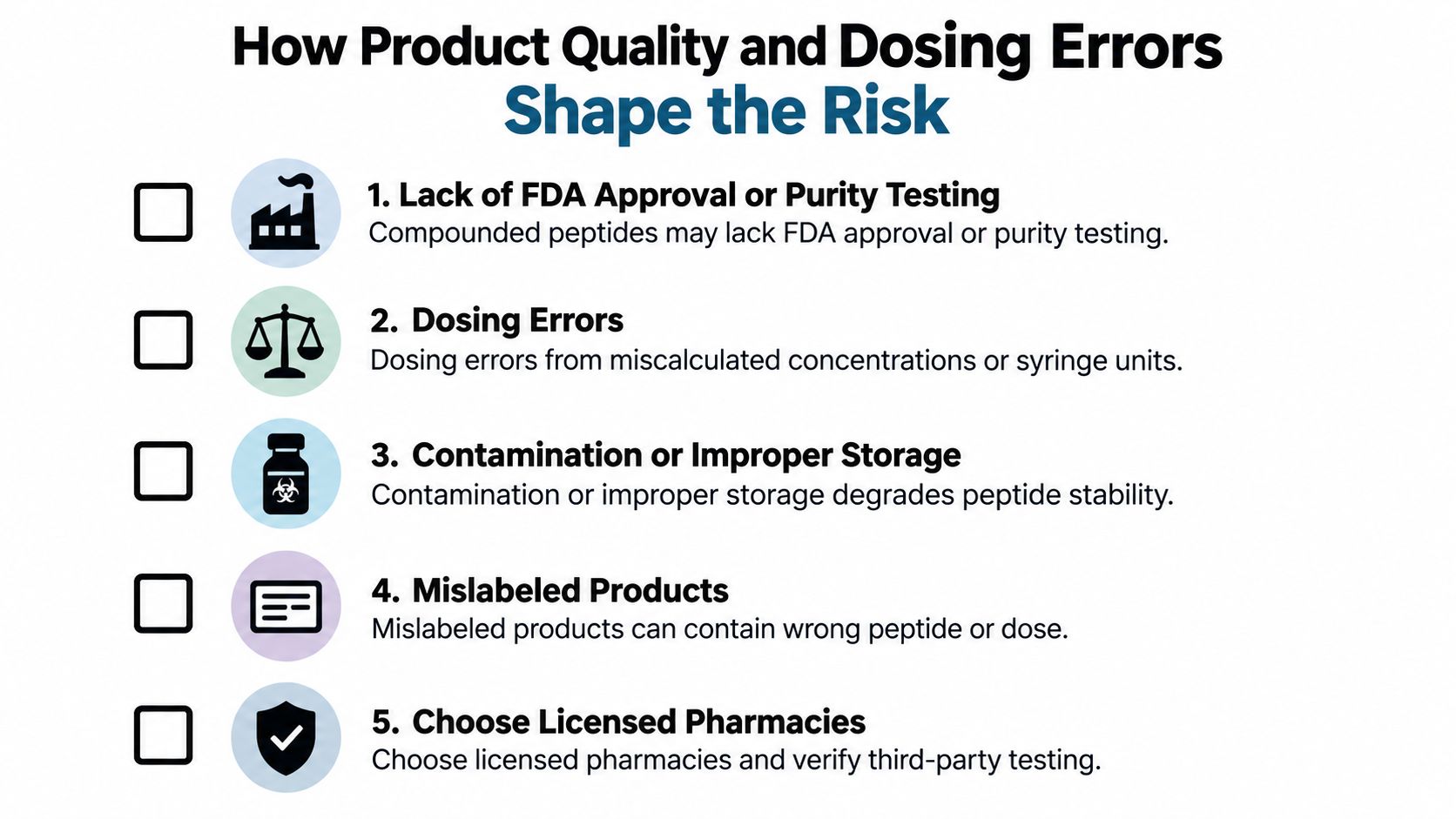
That isn't theoretical. As of April 30, 2025, the FDA had received 520 adverse event reports for compounded semaglutide and 480 for compounded tirzepatide, including gastrointestinal symptoms, fainting, dehydration, pancreatitis, and gallstones, often tied to unit conversion mistakes, according to the FDA alert on dosing errors with compounded injectable drugs. Some patients received five to ten times the intended amount. Those are different peptides from sermorelin or PT-141, but the administration lesson transfers directly to any multidose vial a patient measures at home.
The short video below is useful background on why instructions and supervision matter with injectable therapies.
Verify the Vial Before You Blame Your Body
Check the exact active ingredient, concentration, total contents, beyond use date, storage requirements, and pharmacy name before the first dose. Confirm whether your syringe is marked in milliliters or units, and have the pharmacy show the exact line for your dose. Ask about sterility controls and what happens if a shipment arrives warm. If a new vial looks different, has particles, or carries a changed concentration, don't inject first and ask later.
Formulation changes risk too. Impurities and aggregates can provoke immune responses unrelated to the intended mechanism, and poor storage can degrade potency or create unpredictable exposure. Sudden severe symptoms right after a refill or concentration change should make you suspect a product or measurement problem. Save the vial, box, lot information, and syringe. That evidence helps your clinician and pharmacy investigate instead of guessing.
Monitoring and Mitigation Strategies That Actually Help
Monitoring works when it's tied to the pathway you're stimulating. A generic panel for every man wastes money and still misses the relevant change. Before a growth hormone axis peptide, I want a medication review, blood pressure, glucose context such as fasting glucose or A1c when indicated, and IGF-1 when it'll change management. Electrolytes and kidney function matter more when vomiting, dehydration, diuretics, or chronic illness enter the picture.
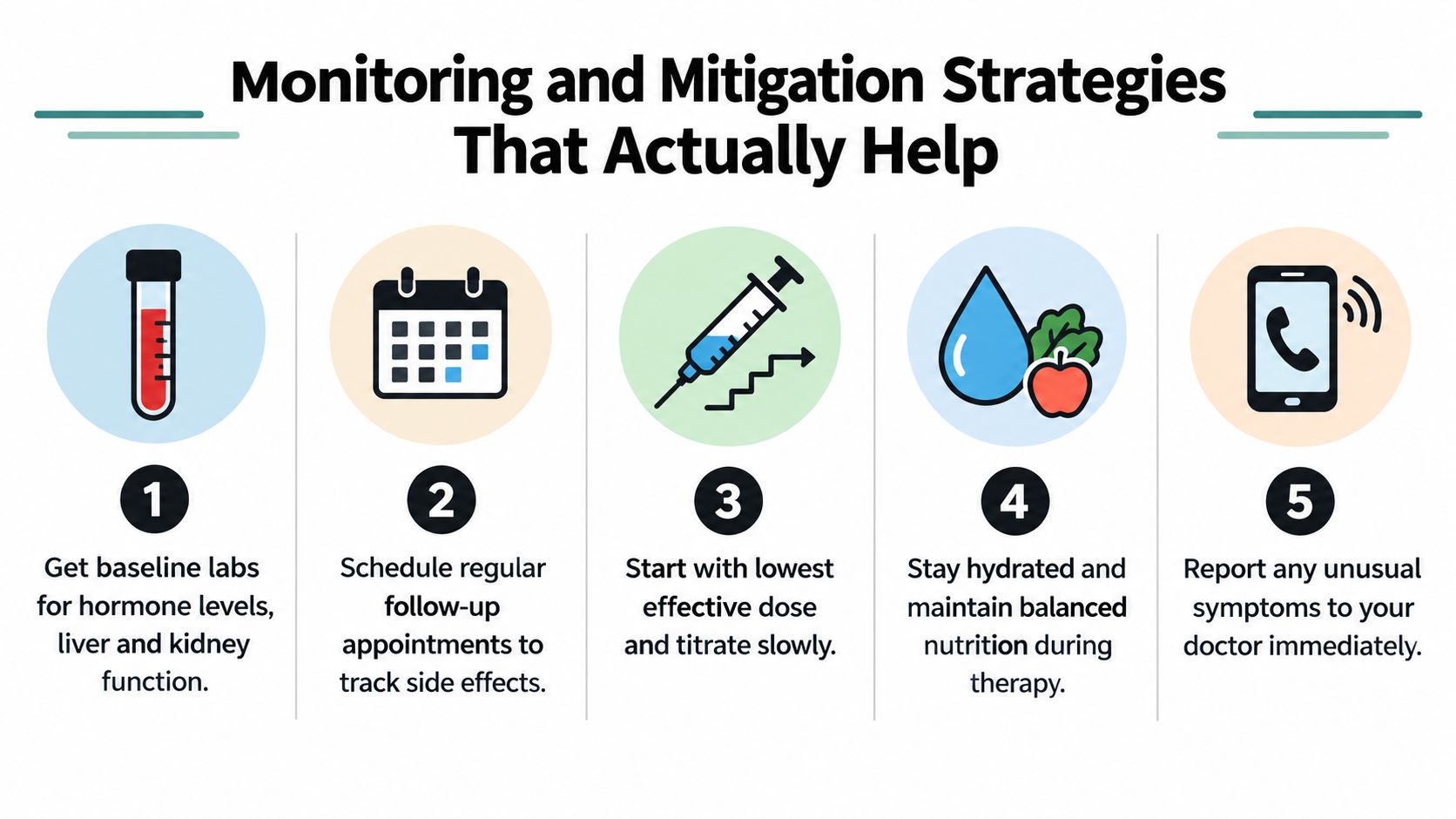
During titration, track dose, time, site, symptom onset, severity, food, alcohol, sleep, and other medications. A note that says "felt bad Tuesday" doesn't help. A note that says nausea began forty minutes after each PT-141 dose and lasted into the next morning changes prescribing. Unusual symptoms count too. FDA reported events linked to compounded products include increased tearing and headache after a nasal ipamorelin product and left elbow joint pain after an injectable ipamorelin and sermorelin product, documented in the FDA compounded ipamorelin review. Neither event proves a class effect. Both show why you document instead of dismissing.
At home, simple measures handle many nuisance effects. Hydrate, eat enough protein and calories, rotate injection sites, don't escalate during illness, and don't add a second new therapy the same week. Slower NAD+ administration can reduce flushing. A lower PT-141 dose may preserve benefit with less nausea. Holding escalation is often smarter than adding another drug to suppress a side effect.
In a physician supervised model such as Cost Plus TRT, the practical value is that dose changes, interactions, and stop rules can be reviewed with the prescriber rather than improvised from a forum. That doesn't make a peptide risk free. It makes the response organized.
Use an escalation ladder. Green zone symptoms are mild, expected, and resolving. Log them. Yellow zone symptoms persist, recur after every dose, or interfere with fluids, sleep, work, or training. Message the provider. Red zone symptoms involve breathing, swelling of the face or throat, fainting, chest symptoms, severe pain, or inability to keep fluids down. Seek urgent care.
When to Contact a Provider and What to Tell Them
Call the same day for persistent vomiting, unusual swelling, severe headache, lightheadedness, rapidly worsening injection site pain, fever, or a symptom that repeats and intensifies after each dose. Don't wait for a routine visit to mention that you can't maintain fluids or that your hands have become numb. Those details may change the dose, trigger labs, or end the therapy.
Seek emergency care for trouble breathing, swelling of the lips, tongue, or throat, fainting, severe abdominal pain, confusion, or suspected overdose. If you may have drawn the wrong amount, say so immediately. Pride delays treatment. Clinicians would rather hear "I think I took too much" early than reconstruct it later.
The Script That Gets You Help Faster
State the peptide name, dose, concentration, route, lot number if available, time administered, symptom start time, other medications taken, and any recent dose or vial change. Add relevant readings if you have them, such as blood pressure or glucose, and a photo of a skin reaction when it's safe to take one. End with one direct question. "Should I hold the next dose and come in today?" beats a vague symptom report.
Report persistent or unexpected effects through FDA MedWatch, especially when a compounded product, labeling confusion, or dosing error is suspected. Surveillance for compounded products is incomplete, so your report may be the signal that helps another patient. The honest state of the evidence is mixed. Some peptide drugs are well characterized, some are plausible but thinly studied, and product quality can shift risk independent of the molecule. Good care respects all three facts at once.
If you're considering NAD+, sermorelin, PT-141, or TRT and want the side effect discussion handled before the first dose, not after a problem, visit Cost Plus TRT to start with a physician consultation, transparent pricing, and a plan built around your labs, medications, and stop rules.