
You wake up tired despite a full night in bed. Your workouts feel less productive, your muscles seem harder to maintain, and your interest in sex has changed. A single internet search may lead you to testosterone replacement therapy, or TRT, as though it were a general solution for aging and low energy.
TRT is prescription endocrine treatment, not an over-the-counter wellness supplement. It's intended for men with clinically diagnosed hypogonadism, meaning symptoms or signs of testosterone deficiency combined with repeatedly and reliably low testosterone levels. The Endocrine Society's clinical practice guidance emphasizes that one abnormal test, fatigue alone, or getting older doesn't establish a diagnosis.
Understanding the complete pathway matters. You'll need to know how testosterone production works, which symptoms deserve evaluation, how clinicians confirm deficiency, what treatment forms exist, and which risks require monitoring. If you're considering remote care, you'll also want to understand how a telemedicine consultation, laboratory review, prescription, and payment fit together.
Table of Contents
- Introduction to Testosterone Replacement Therapy
- How Testosterone Works in the Body
- Recognizing Symptoms and Medical Indications
- Accurately Diagnosing Testosterone Deficiency
- Treatment Options and Administration Methods
- Benefits Risks and Monitoring Guidelines
- Telemedicine Cost Options and Patient Journey
- Next Steps and Frequently Asked Questions
Introduction to Testosterone Replacement Therapy
A common starting point is simple. A man feels more tired than usual, notices lower sex drive, sees less progress in the gym, and wonders whether TRT is the answer. Those changes can be related to testosterone, but they can also come from poor sleep, stress, depression, weight gain, certain medications, untreated sleep apnea, or another health problem that lowers energy and changes lab results at the same time.
That is why TRT starts with sorting out the cause, not picking a product.
Doctors use testosterone replacement therapy to treat men with confirmed hypogonadism, a medical condition in which symptoms or signs line up with repeatedly low testosterone levels. The diagnosis is more careful than a single blood test. As noted in clinical guidance on testosterone deficiency, clinicians look for compatible symptoms or signs, then confirm low serum total or free testosterone on repeat fasting morning testing.
A helpful way to view TRT is as hormone replacement, not a general energy treatment. If chronic sleep loss or untreated sleep apnea is the primary driver, adding testosterone may miss the main issue. If the problem is true hypogonadism, replacement may help because it addresses the deficiency itself.
Clinicians usually build the decision from several pieces:
- Symptoms and signs: Reduced libido, erectile difficulties, fatigue, loss of muscle mass, or low bone density can support an evaluation.
- Repeat testing: Testosterone varies by time of day and can shift with illness, sleep disruption, medications, and test conditions.
- Cause assessment: The workup looks at whether the issue begins in the testes or higher up in the hormone signaling pathway.
- Safety screening: Blood counts, prostate-related review, blood pressure, fertility goals, and other health factors shape whether treatment is appropriate.
For men using telemedicine, this often unfolds in a clear sequence: consultation, lab review, diagnosis, prescription discussion, and a transparent breakdown of medication, testing, and follow-up costs. Some men will be good candidates for injections, gels, patches, or pellets. Others benefit more from treating reversible lifestyle or medical factors first.
How Testosterone Works in the Body
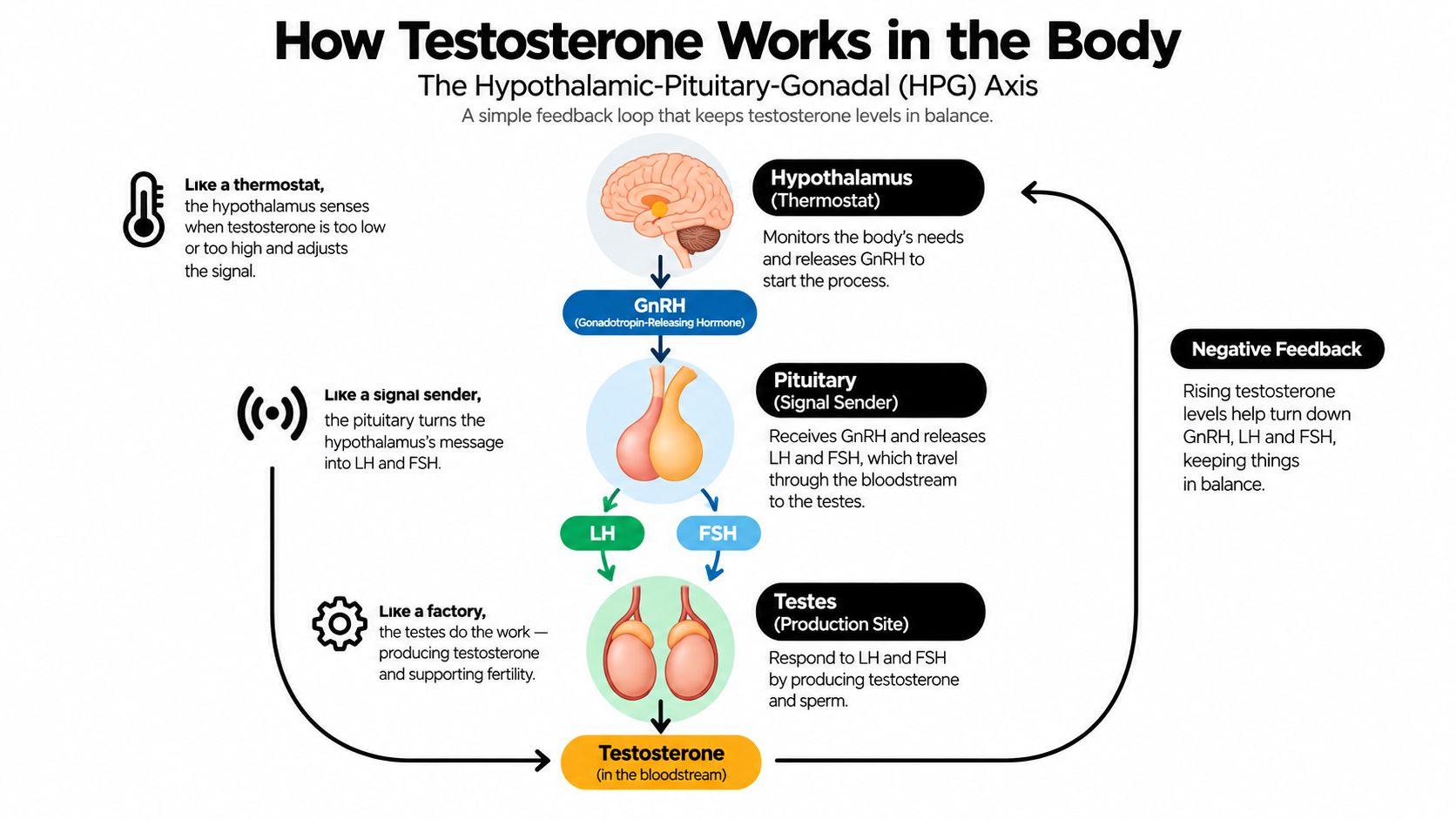
A clearer way to understand testosterone is to picture a home heating system that adjusts itself all day. The hypothalamus acts like the thermostat. It senses the hormonal environment and releases gonadotropin-releasing hormone, or GnRH, in pulses. That message reaches the pituitary, which then releases the hormones that tell the testes what to do.
Two pituitary hormones matter most here:
- Luteinizing hormone, or LH: Stimulates the testes to make testosterone.
- Follicle-stimulating hormone, or FSH: Supports sperm production through its actions in the testes.
The testes are the main production site. In response to LH, specialized cells make testosterone, which then circulates through the bloodstream and affects sexual function, muscle maintenance, bone health, red blood cell production, mood, and other body systems.
The feedback loop
The system also has brakes. When testosterone rises, the hypothalamus and pituitary dial down GnRH, LH, and FSH. That negative feedback loop helps keep production in a physiologic range rather than letting output keep climbing.
Low testosterone does not always mean the testes have permanently failed. The problem can start at different levels of the axis. In primary hypogonadism, the testes do not produce enough testosterone even when the brain is sending the right signals. In secondary hypogonadism, the hypothalamus or pituitary does not provide enough stimulation. A third pattern is temporary suppression. Poor sleep, acute illness, certain medications, psychological stress, and metabolic problems can all lower testosterone signals for a time without causing permanent damage.
That distinction helps explain why careful diagnosis matters before treatment starts, especially in telemedicine where patients may expect a fast prescription. If the axis is being suppressed by reversible factors, the better first step may be treating sleep apnea, improving sleep, addressing weight gain, or reviewing medications. If true hypogonadism is present, TRT may help by replacing what the body is not making.
External testosterone changes the loop. Once testosterone comes from outside the body, the hypothalamus and pituitary usually reduce LH and FSH. The blood level may improve, but the testes often become less active, and sperm production can fall.
The treatment goal is to restore testosterone toward a physiologic, typically mid-normal range, improve meaningful symptoms, and limit adverse effects. That is why clinicians adjust therapy based on lab timing, symptoms, side effects, and the formulation being used.
Recognizing Symptoms and Medical Indications
Symptoms can provide the first reason to seek evaluation, but they can't diagnose hypogonadism by themselves. Reduced sexual desire, erectile dysfunction, fatigue, loss of muscle mass, mood changes, and reduced bone density may occur with testosterone deficiency. They can also arise from depression, relationship difficulties, poor nutrition, overtraining, sleep disorders, chronic illness, or medication effects.
The pattern matters. A man who develops several compatible symptoms deserves a structured medical assessment, especially when symptoms persist or interfere with daily life. A man with fatigue alone may need a broader evaluation rather than an immediate hormone prescription.
Reversible contributors deserve attention
Obesity can alter hormone levels and often overlaps with sleep disruption and metabolic disease. Poor sleep can lower daytime function and mimic low testosterone symptoms. Some medications, acute illness, psychological stress, and untreated severe obstructive sleep apnea can also complicate the picture.
The AUA guideline review on testosterone deficiency highlights the need to distinguish true hypogonadism from reversible contributors. It also identifies untreated severe obstructive sleep apnea as an important reason to avoid starting testosterone until the condition receives attention.
A useful appointment begins with context:
- Record the pattern: Note changes in libido, erections, energy, strength, mood, sleep quality, and exercise recovery.
- Review health changes: Tell the clinician about weight changes, recent illness, stress, and possible snoring or breathing interruptions during sleep.
- List medications: Include prescription medicines, nonprescription products, and substances that could affect hormones or sexual function.
- Clarify your goal: Say whether you're seeking help with sexual symptoms, energy, fertility, body composition, or a laboratory result.
Treating sleep apnea or reviewing a medication may improve symptoms without TRT. If symptoms remain and testing confirms deficiency, the clinician can then consider replacement as treatment for a defined endocrine disorder rather than as a general energy or anti-aging intervention.
Accurately Diagnosing Testosterone Deficiency
Diagnosis usually starts with properly timed testing. Testosterone follows a daily rhythm, and levels can vary between separate tests, so a late-day sample or a single unexpected result may not provide enough evidence.
The American Urological Association guideline uses total testosterone below 300 ng/dL as a reasonable diagnostic threshold and recommends two separate early-morning measurements. The clinical diagnosis still requires compatible symptoms or signs. A number below a threshold without symptoms may not establish that TRT is appropriate.
A step-by-step laboratory pathway
First, confirm the result. Arrange early-morning testing under the conditions your clinician recommends. Fasting morning testing may be used because food, illness, sleep, and laboratory conditions can affect interpretation.
Next, clarify the measurement. Total testosterone measures testosterone in the bloodstream overall. Free testosterone represents the fraction not tightly bound to carrier proteins. A clinician may consider free testosterone when the total result doesn't fit the symptoms or when binding-protein changes could affect interpretation.
Then, investigate the source. LH and FSH help distinguish primary testicular disease from secondary problems involving the hypothalamus or pituitary. This step can change the evaluation, treatment strategy, and fertility discussion.
Finally, complete safety screening. Baseline hemoglobin and hematocrit help identify a risk of excessive red blood cell production. In men older than 40, baseline PSA testing supports prostate-related safety assessment.
Diagnostic tests and thresholds
| Test | Threshold |
|---|---|
| Total testosterone | Below 300 ng/dL can support diagnosis when confirmed on two separate early-morning tests and paired with compatible symptoms |
| Free testosterone | No single universal threshold is provided here. Interpret with the laboratory range, symptoms, total testosterone, and binding factors |
| LH and FSH | No single diagnostic threshold is provided here. Use the pattern to distinguish primary from secondary hypogonadism |
| Hemoglobin and hematocrit | Baseline safety assessment. A baseline hematocrit above 50% generally warrants evaluation before treatment |
| Hematocrit during treatment | A hematocrit of at least 54% requires clinical intervention |
| PSA | Baseline assessment may be recommended in men older than 40. Follow-up depends on age, risk, and clinical findings |
These tests answer different questions. Testosterone helps establish whether levels are low, LH and FSH help identify why, and blood counts and PSA help determine whether treatment can begin safely. Skipping repeat testing or cause assessment turns a complex diagnosis into an unreliable guess.
Treatment Options and Administration Methods
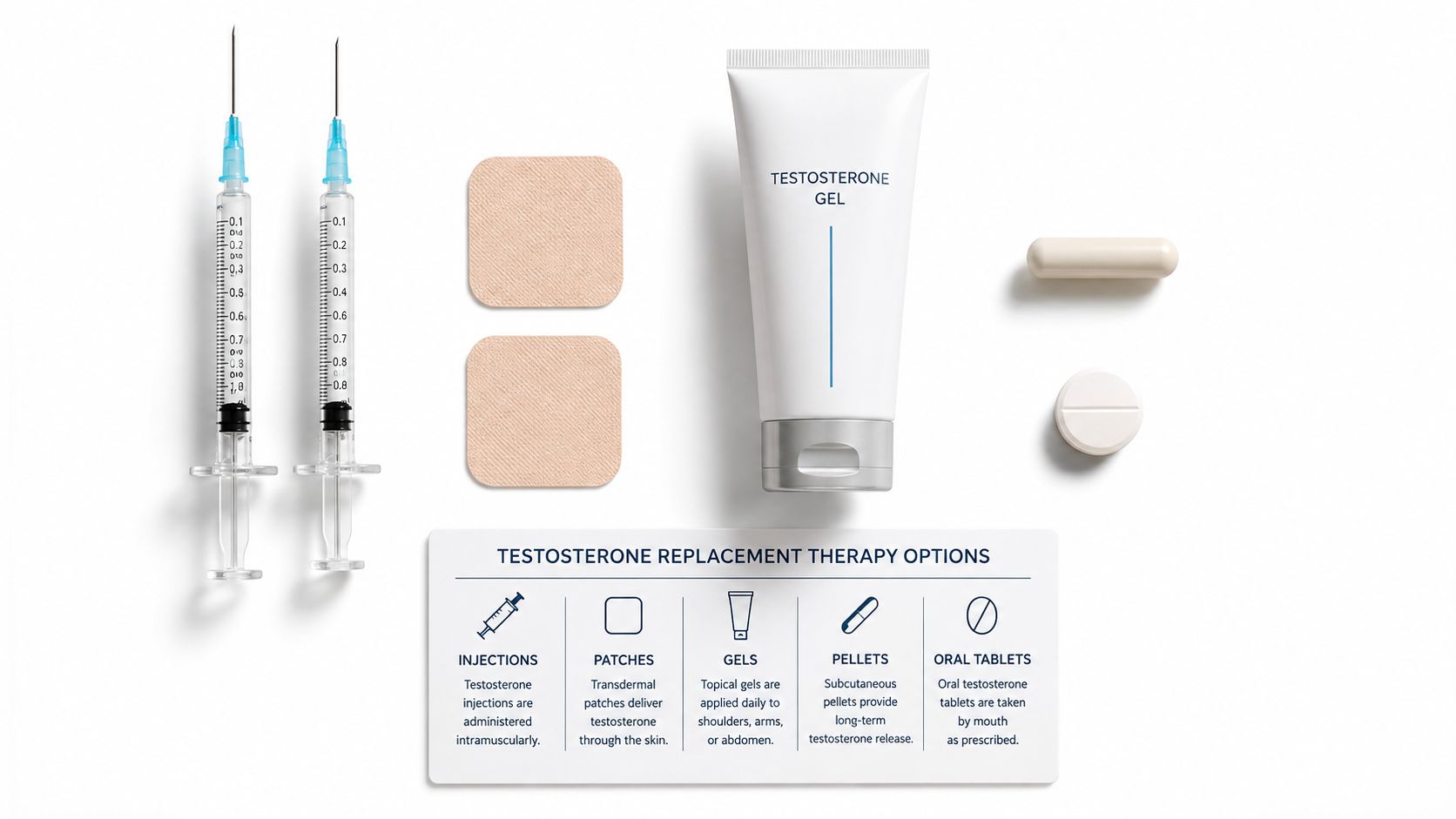
TRT comes in several prescription forms. The best choice depends on medical history, comfort with administration, fertility goals, cost, access to follow-up, and how consistently you can use the treatment.
Comparing the delivery methods
Injections deliver testosterone into muscle or under the skin, depending on the prescribed product and clinician instructions. They can be convenient for people comfortable with needles, but some injectable schedules create peak and trough fluctuations. Your clinician needs to interpret the blood draw in relation to the injection schedule rather than treating one number as independent of timing.
Transdermal gels apply testosterone to the skin. Clean, dry skin and careful handwashing help reduce accidental transfer to another person. You'll need to follow the product's instructions about application sites, drying, clothing, bathing, and skin contact.
Patches release testosterone through the skin on a regular schedule. They avoid injections, but some people develop local skin irritation. Rotating approved application sites and following the product directions can reduce avoidable problems.
Pellets are placed under the skin by a clinician and release testosterone over time. They may reduce daily treatment tasks, but changing the dose is less immediate once the pellets have been inserted.
Oral options use formulations designed for oral administration. They should only be taken exactly as prescribed because different products have different absorption and safety considerations.
Avoiding common administration mistakes
Keep a written schedule for doses and laboratory appointments. Don't increase the amount because energy or gym performance hasn't changed quickly, and don't interpret a high or low test without considering when you applied the gel or received the injection.
Practical rule: The most convenient formulation is the one you can use consistently and monitor correctly, not necessarily the one advertised as fastest.
Your clinician may reassess symptoms, adherence, testosterone concentration, blood pressure, hematocrit, and formulation-specific effects before adjusting treatment. The goal is controlled replacement, not a performance-enhancing dose.
Benefits Risks and Monitoring Guidelines
TRT may improve symptoms related to confirmed testosterone deficiency, including sexual desire, erectile function, energy, mood, muscle maintenance, or bone-related health. Benefits vary by the underlying cause, baseline levels, other medical conditions, and whether symptoms result from low testosterone.
The risks require equal attention. Testosterone can increase red blood cell production, influence prostate monitoring, raise blood pressure, and complicate cardiovascular risk assessment. It can also suppress the reproductive hormone signals that support sperm production.
Fertility is a separate treatment goal
External testosterone can suppress LH and FSH. When those signals fall, testosterone inside the testes can decline and sperm production can be impaired. That means TRT may conflict with a near-term goal of conceiving, even if it improves libido or energy.
The clinical review of TRT and male fertility notes that sperm recovery may take 3–12 months after stopping TRT and isn't guaranteed. Men who may want children should discuss fertility before starting treatment, not only after semen volume or conception becomes a concern.
Read more about this issue in whether TRT can make you infertile. A fertility-focused urologist or reproductive specialist may recommend a different supervised strategy rather than merely starting and later stopping testosterone.
Monitoring makes treatment safer
The FDA-approved testosterone labeling recommends checking testosterone concentrations and hematocrit during follow-up, with timing aligned to the treatment plan. The clinical target is generally mid-normal rather than an intentionally high level. Monitoring commonly includes:
- Testosterone: Check response and timing relative to the formulation.
- Hematocrit: Check at baseline, 3–6 months, and annually, according to FDA labeling (testosterone product labeling).
- Blood pressure: Testosterone products can increase blood pressure, so readings should remain part of follow-up.
- PSA and prostate assessment: Use age- and risk-appropriate screening. The FDA labeling recommends urological evaluation for a confirmed PSA rise greater than 1.4 ng/mL above baseline during the first year or a PSA above 4.0 ng/mL.
- Symptoms and adverse effects: Report swelling, worsening sleep symptoms, urinary changes, severe acne, mood changes, or other new concerns.
The FDA required labeling changes in 2015 after reviewing age-related use and cardiovascular safety concerns. The agency noted that some, but not all, studies had reported a cardiovascular risk signal and that long-term cardiovascular outcomes had not been definitively established. That history reinforces the need for patient selection and continuing supervision, not panic or casual use.
Telemedicine Cost Options and Patient Journey
A telemedicine pathway usually begins before the video appointment. Consider a man who has fatigue, reduced libido, and an old laboratory result but isn't sure whether it meets current diagnostic requirements. He completes an online questionnaire, lists medications and symptoms, and chooses whether to arrange new laboratory testing or upload recent results for review.
A licensed physician then evaluates the history and laboratory data through a remote consultation. If the evidence supports treatment, the clinician discusses formulation, administration, monitoring, contraindications, and fertility goals before issuing a prescription. If the evidence is incomplete, the clinician may request additional testing or recommend addressing sleep, illness, medication effects, or another contributor first.
How the process can work
- Gather records: Upload recent laboratory results when accepted, or arrange testing through the clinic's laboratory pathway.
- Complete the intake: Provide symptom history, medical conditions, medications, treatment experience, and reproductive plans.
- Attend the consultation: Discuss the diagnosis, alternatives, formulation, safety testing, and follow-up schedule with a licensed clinician.
- Receive the prescription: If approved, the pharmacy prepares the medication and any included injection supplies for delivery.
- Continue follow-up: Share updated laboratory results and report changes in symptoms or side effects.
Cost depends on the provider, required laboratory work, medication, insurance, and follow-up structure. Cost Plus TRT charges $119 a month, month to month, with lab work, provider visits, testosterone cypionate, injection supplies, and shipping included. Review the clinic's current terms and eligibility before making a decision. A detailed explanation of possible expenses is available in this guide to TRT costs.
A remote appointment doesn't remove the need for diagnosis or monitoring. It changes where those conversations happen and may make follow-up more manageable for people who have difficulty attending a traditional clinic.
Next Steps and Frequently Asked Questions
Start by writing down your symptoms, when they began, sleep quality, medications, illness history, and fertility plans. Ask a clinician whether you need two early-morning testosterone tests, additional hormone testing, blood counts, PSA assessment, or evaluation for sleep apnea and other reversible contributors.
Prepare these questions for an in-person or telemedicine visit:
- Can TRT worsen sleep apnea? Untreated severe obstructive sleep apnea should be addressed before starting testosterone. Tell the clinician about loud snoring, witnessed breathing pauses, or significant daytime sleepiness.
- What if insurance is required? Ask whether the clinician can provide documentation for your insurer, whether laboratory work is covered, and which medication forms are included in the plan.
- How do injections work during travel? Ask in advance about storage, supplies, prescription rules, and how to handle a missed dose. Don't change the schedule without clinical advice.
- When should you see a specialist? Consider urology or endocrinology referral when fertility is important, the cause is unclear, prostate findings need evaluation, blood counts are abnormal, or treatment response is difficult to interpret.
The Cost Plus TRT FAQ can help you prepare practical questions about remote care, but it doesn't replace an individualized medical consultation.
Cost Plus TRT offers physician-supervised telemedicine evaluation, laboratory review, prescription testosterone when clinically approved, injection supplies, medication shipping, and ongoing provider consultations. If you're trying to distinguish true hypogonadism from reversible causes while keeping the care process remote, visit Cost Plus TRT to review the current program and request a consultation.