
You might be here because the changes have been gradual. You're getting through work, but your energy isn't what it used to be. Your sex drive feels flatter. Recovery from workouts is slower. You wonder if this is stress, bad sleep, getting older, or something hormonal.
That question is exactly where many men get stuck. They search for what is low testosterone in men, find a symptom list, and assume one blood test will give a simple yes-or-no answer. In real practice, it doesn't work that way. Low testosterone isn't just a feeling, and it isn't just a number.
Table of Contents
- Introduction to Low Testosterone in Men
- Understanding Testosterone and What Counts as Low
- Common Causes and Risk Factors Behind Low Testosterone
- Signs and Symptoms You Should Not Ignore
- How Low Testosterone Is Diagnosed and What Labs Mean
- Treatment Options Benefits Risks and Health Implications
- Next Steps When to See a Doctor and What to Expect
Introduction to Low Testosterone in Men
A common scenario looks like this. A man in his 40s notices that the gym feels different, not because he stopped training, but because his progress stalled. He also notices less interest in sex, more irritability, and a general sense that his engine isn't firing the way it used to.
The tempting conclusion is, "My testosterone must be low."
Sometimes that's true. Sometimes it isn't. Fatigue, lower libido, mood changes, and erectile problems can show up with low testosterone, but they can also come from sleep apnea, obesity, depression, chronic illness, medication effects, or poor sleep habits. That's why careful doctors don't diagnose low testosterone from symptoms alone.
Why this topic gets misunderstood
Part of the confusion comes from how common low testosterone appears to be when you only look at lab values. In a large U.S. population analysis, low total testosterone rose from 2.3% in men ages 20 to 29 to 25% in men ages 70+, and low free testosterone increased from 0% to 24.9% across the same age groups, according to an NHANES III analysis on testosterone prevalence. That same review notes that published prevalence estimates vary widely, from 2% to 77%, because studies use different cutoffs and definitions.
That spread tells you something important. The label depends on age, symptoms, lab thresholds, and how testing was done.
Low testosterone is best understood as a symptom-plus-lab diagnosis, not a single low number on a random day.
What matters in real life
A man can have symptoms with a borderline result and still need more evaluation before treatment. Another man can have a clearly low value but no meaningful androgen-deficiency symptoms, which creates a different conversation. The gray zone is real.
A lot of public advice goes off track. It turns a nuanced endocrine diagnosis into a checklist and a sales pitch. A better approach is slower and more useful: understand what testosterone does, learn what counts as low, identify likely causes, then interpret testing in context.
By the end, you should have a clear picture of whether your next move is better sleep and weight loss, a broader medical workup, repeat hormone testing, or a discussion about treatment.
Understanding Testosterone and What Counts as Low
A common point of confusion starts here. A man may read that his testosterone is "normal" on one lab report and still have symptoms that fit low testosterone. Another man may see a borderline low number and feel fine. Both situations happen because testosterone is not interpreted like a pass fail cholesterol test. It is closer to checking blood pressure with context, timing, and repeat measurements.
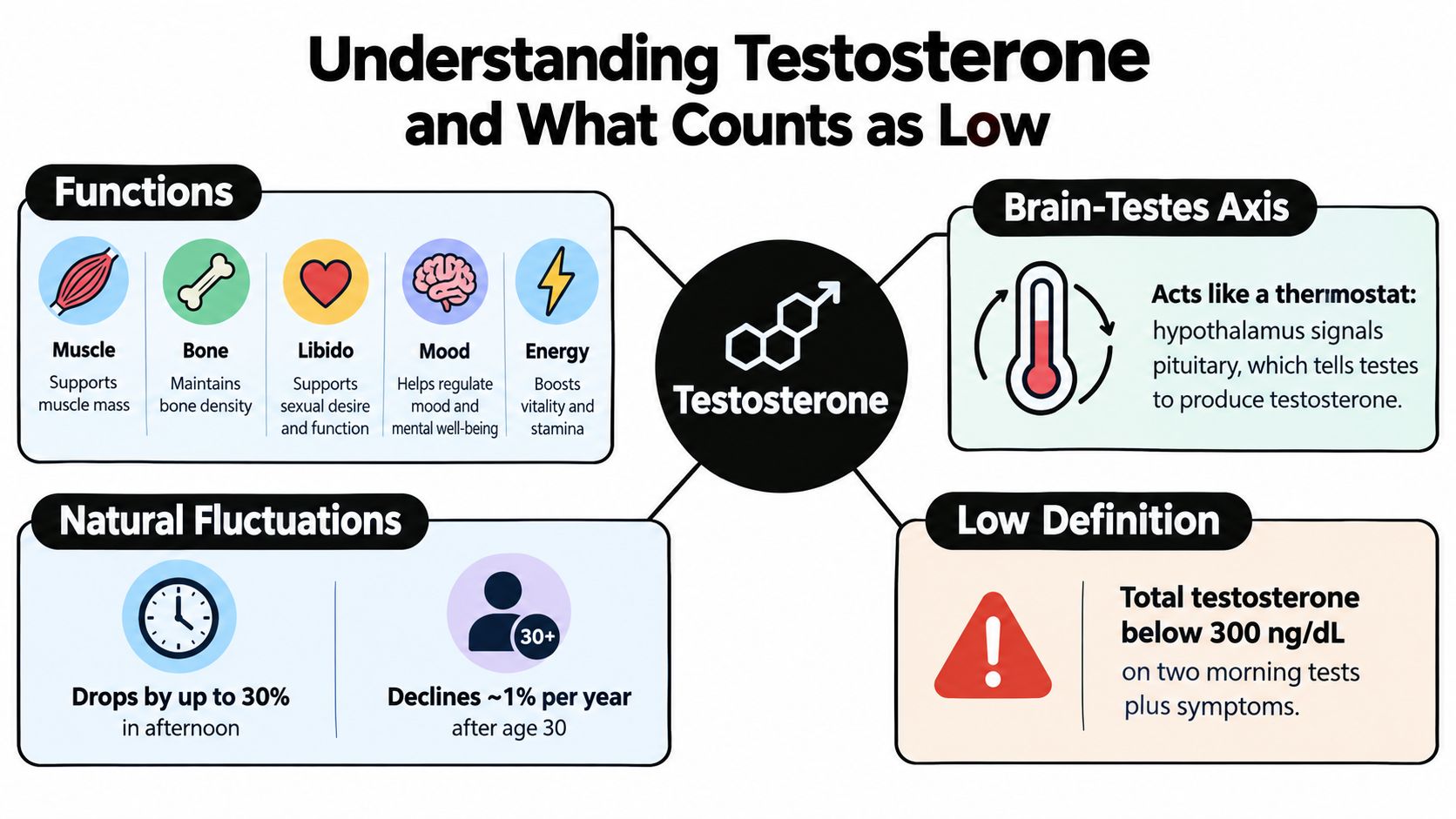
Testosterone is the main androgen hormone in men. It helps regulate sexual interest, erectile function, muscle and bone maintenance, red blood cell production, mood, and energy. It influences all of those systems, but it does not act alone. Sleep, thyroid function, stress, medications, body fat, and chronic illness can all change how a man feels, even when testosterone is part of the picture.
The thermostat analogy
Testosterone production works like a home thermostat.
The hypothalamus and pituitary in the brain act as the control panel. They send signals to the testes, which act as the furnace. When the system is working well, signals rise or fall to keep testosterone in a reasonable range for that person. If the control panel sends a weak signal, production drops. If the furnace cannot respond, production also drops.
That simple model helps explain why "low testosterone" is not one disease with one cause. The problem can start in the brain, in the testes, or from outside pressures that suppress the whole system for a time.
Why one test is often not enough
Testosterone levels rise and fall across the day, and they are usually highest in the morning. Poor sleep, acute illness, recent heavy exercise, alcohol, calorie restriction, and lab timing can all shift the result. A single afternoon blood draw can give a very different impression than two properly collected morning tests.
That is why clinicians do not diagnose low testosterone from one number in isolation.
The usual approach is symptom plus lab evidence. Men generally need symptoms that fit androgen deficiency and repeat morning testosterone results that are low or borderline low before treatment is even on the table. The gray zone matters here. A clearly low result points the evaluation in one direction. A borderline result often means the next step is to repeat testing and look more closely at the full hormone picture, not rush into a prescription.
What "counts as low" in practice
Many online summaries oversimplify the issue. There is no single number that settles every case for every man.
Guidelines often use a practical total testosterone cutoff around 300 ng/dL, but that number is a starting point for clinical judgment, not a verdict stamped on a lab slip. The Endocrine Society guideline explains that diagnosis should be made only in men with symptoms and unequivocally and consistently low testosterone concentrations, based on accurate testing and confirmation with repeat morning measurement, according to the Endocrine Society clinical practice guideline on testosterone therapy in men with hypogonadism.
A useful way to frame it is this:
Low testosterone is a symptom-plus-lab diagnosis, with a clear low range, a normal range, and a gray zone in between.
That gray zone is where many men live during the first round of evaluation.
Total testosterone and free testosterone
Total testosterone is the full amount circulating in the blood. Free testosterone is the small portion not tightly bound to proteins and more available to tissues. Another protein, SHBG, affects that balance.
Here is why that matters. Two men can have the same total testosterone level on paper, but different free testosterone levels because their SHBG levels differ. One may feel well. The other may have reduced libido, fatigue, and loss of morning erections. The total number alone does not explain the whole story.
For that reason, borderline cases often need more than a single total testosterone value. Clinicians may review SHBG and free testosterone when the symptoms fit but the total testosterone result does not fully match the clinical picture. That is part of the step by step path from first symptoms to a treatment decision, whether the visit happens in person or through telemedicine.
Common Causes and Risk Factors Behind Low Testosterone
Once low testosterone is confirmed, the next question is more important than most men realize: why is it low? The answer changes what treatment makes sense.
Primary hypogonadism
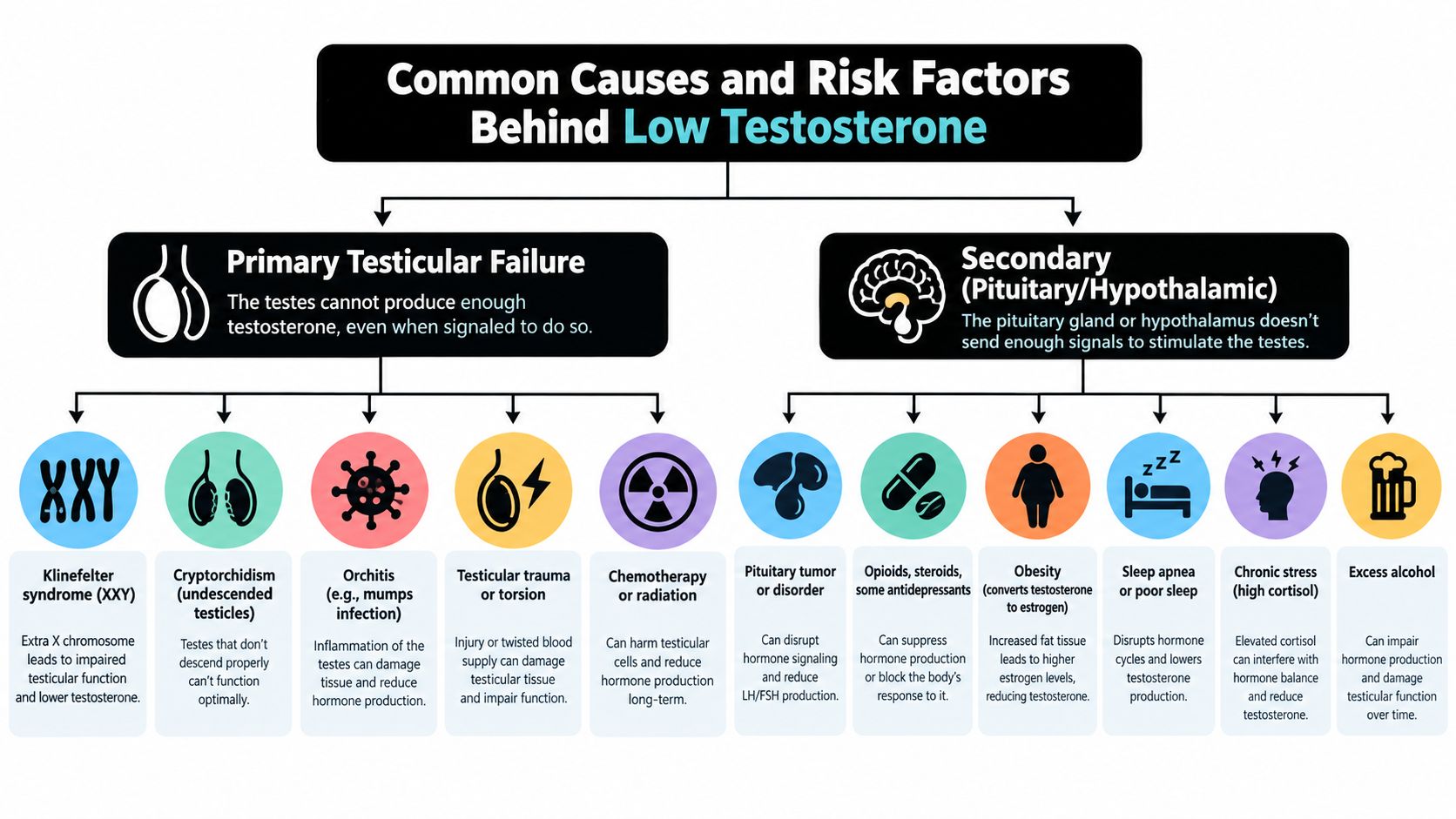
Primary hypogonadism means the testes themselves aren't producing enough testosterone, even when the brain is sending the right signal.
Examples include:
- Klinefelter syndrome
- Cryptorchidism
- Orchitis
- Testicular trauma
- Testicular malignancy
- Gonadotoxic therapies, such as chemotherapy or radiation
In this pattern, the production machinery is damaged or underdeveloped. Men with primary causes often need a more direct replacement conversation because the problem isn't lifestyle-related.
Secondary and functional hypogonadism
Secondary hypogonadism starts higher up the chain. The hypothalamus or pituitary isn't signaling properly, or the whole axis is being suppressed by other health factors.
Common causes listed in European guidance include:
- Pituitary tumors or prolactin disorders
- Systemic illness
- Obesity
- Chronic disease
- Medication effects
- Anabolic steroid abuse
The European Association of Urology pocket guideline on male hypogonadism also emphasizes a practical point many men don't hear early enough: obesity and systemic disease can suppress testosterone without permanent testicular failure. That means the first move may be addressing the underlying driver, not jumping straight to lifelong testosterone replacement.
Why the cause matters
Think about two different men.
One has a history of testicular injury and repeatedly low morning testosterone with clear symptoms. The path may point fairly directly toward hormone replacement after proper evaluation.
Another has weight gain, loud snoring, poor sleep, and borderline testosterone. His hormone result may be part of a bigger metabolic and sleep picture. If he treats the underlying issues, his testosterone may improve enough that medication decisions look different later.
The lab result tells you that testosterone is low. The cause tells you what to do about it.
Risk factors that deserve attention
Certain patterns should push the workup beyond "I'm getting older":
| Factor | Why it matters |
|---|---|
| Obesity | Can functionally suppress testosterone production |
| Chronic illness | Can lower hormone signaling during ongoing disease burden |
| Medication exposure | Some drugs can interfere with the hormone axis |
| Anabolic steroid history | Can shut down natural production and confuse lab interpretation |
| Pituitary symptoms | May point toward a central signaling problem rather than testicular failure |
This is also why self-diagnosis is shaky. Two men with similar symptoms may have completely different causes.
Signs and Symptoms You Should Not Ignore
Symptoms are usually what bring men in. Not a lab report. Not a diagnosis. Just the feeling that something is off.

The sexual symptoms tend to matter most
When testosterone is low, the most useful clues often show up in sexual function.
Look closely at patterns like these:
- Lower libido: you notice less interest in sex, not just occasional off days
- Fewer spontaneous erections: especially if that shift is persistent
- Erectile problems: not every erectile problem is hormonal, but it belongs in the evaluation
- Reduced sexual confidence or responsiveness: things feel muted rather than situational
A single symptom doesn't prove anything. A cluster that persists does deserve attention.
Energy mood and body changes
Other symptoms can be real, but they're less specific on their own.
Some men notice:
- Persistent fatigue
- Lower motivation
- Depressed or flatter mood
- Harder time maintaining muscle
- More body fat, especially around the midsection
- Reduced exercise drive or slower recovery
The same pattern can also happen with poor sleep, overwork, depression, alcohol overuse, chronic pain, or untreated sleep apnea.
Practical rule: If your main complaint is fatigue alone, don't assume low testosterone is the answer. If sexual symptoms are present too, testing becomes more reasonable.
Less obvious signs
Not all effects are easy to see in the mirror.
Longer-standing testosterone deficiency can affect:
- Bone health
- Body composition
- Overall sense of physical resilience
Those changes can develop. A man may think he's "not bouncing back" the way he used to.
For a broader visual explanation of symptom patterns and overlap, this short video is helpful:
When symptoms need prompt medical attention
Don't reduce every symptom to testosterone.
See a doctor promptly if you have:
- Severe erectile dysfunction that appears suddenly
- Marked breast enlargement or nipple discharge
- Headaches or vision changes along with low testosterone symptoms
- Testicular pain, swelling, or a new mass
- Extreme fatigue with broader signs of illness
Those patterns can point to conditions that need a wider workup. Low testosterone may be part of the picture, but it shouldn't be the only thing on the list.
How Low Testosterone Is Diagnosed and What Labs Mean
A common scenario goes like this. A man notices lower sex drive, less drive in the gym, or a general sense that something is off. He gets one blood test, sees a number flagged low, and assumes the diagnosis is settled.
It usually is not that simple.
Low testosterone is a symptom-plus-lab diagnosis. The lab value matters, but the number has to match the story. One borderline result in the wrong setting can mislead you just as easily as one missed test can delay a real diagnosis.
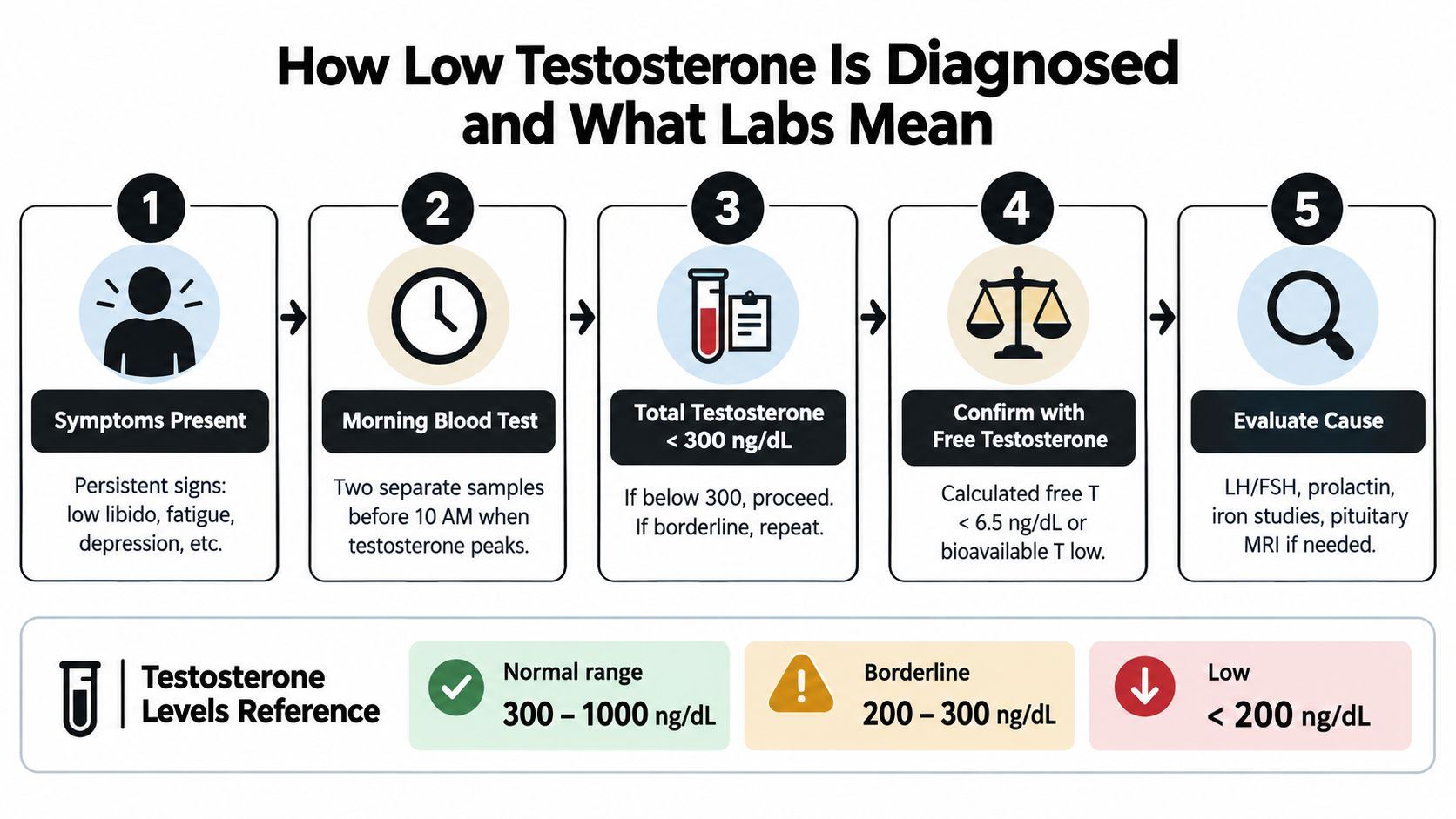
Step one starts with the symptom pattern
Doctors begin with the pattern, not just the lab slip.
Symptoms such as lower libido, weaker erections, reduced morning erections, lower motivation, or loss of physical resilience fit the picture better than fatigue alone. Fatigue is common in poor sleep, stress, depression, chronic illness, and sleep apnea, so it cannot carry the whole diagnosis by itself.
A good evaluation asks a simple question first. Does this look like androgen deficiency, or does it look like something else that can mimic it?
Step two is repeat morning testing
Testosterone changes through the day. It also shifts with illness, short sleep, alcohol use, weight changes, and stress. That is why clinicians usually want at least two morning total testosterone measurements before labeling a man as testosterone deficient.
As noted earlier, many clinicians use a total testosterone level below 300 ng/dL as a practical reference point when symptoms are also present. That cutoff helps frame the discussion. It does not replace judgment.
One result is a snapshot. Repeated morning labs are closer to a short video.
Step three is handling the gray zone
Some results are clearly low. Some are clearly normal. Many fall in the middle, where the right answer depends on context.
That gray zone is where men often get confused.
If the level is borderline or only mildly low, a careful clinician slows down and checks the conditions around the test:
- Was the blood drawn in the morning?
- Were you recently sick, sleeping poorly, or under unusual strain?
- Could obesity, medications, or chronic disease be pushing the level down?
- Do the symptoms strongly fit testosterone deficiency, or only loosely?
In telemedicine, this part still matters. A proper online evaluation should follow the same logic as an in-person one: symptoms first, repeat labs when needed, then treatment only if the whole picture fits. If you want to see that process, the physician-guided TRT intake process outlines the basic steps.
Borderline results usually call for more clarification, not a fast prescription.
Step four is deciding whether free testosterone matters
Total testosterone is the usual starting test. Free testosterone can help when the total number does not fully match the symptoms.
A practical way to understand this is to picture total testosterone as the amount of money in an account, while free testosterone is the amount you can spend right now. If SHBG is high or low, the total may look acceptable while the usable portion is lower than expected, or the reverse.
This is why free testosterone is often most useful in men with borderline total testosterone or suspected SHBG changes, rather than as a first test for everyone.
Step five is finding the reason the level is low
The next question is not just, "Is testosterone low?" It is, "Why is it low?"
That distinction changes treatment. A PubMed-indexed guidance summary on male hypogonadism evaluation emphasizes that symptoms alone are not enough and that the workup should consider pituitary causes, testicular causes, and functional causes such as obesity-related suppression.
Doctors may order LH and FSH to see whether the signal from the brain is strong or weak. Prolactin can matter if a pituitary problem is possible. Other testing depends on the history, fertility goals, medications, and whether symptoms point toward a broader medical issue.
Why the process can feel slower than expected
Patients often want a single answer from a single lab. Hormones rarely work that neatly.
A careful diagnosis takes symptom review, repeated morning testing, selective use of free testosterone, and a search for reversible causes. That slower approach protects men in both directions. It helps prevent lifelong treatment based on a temporary dip, and it helps identify men who do have true hypogonadism and need a structured treatment decision.
Treatment Options Benefits Risks and Health Implications
Treatment should match the cause, your symptoms, and your goals. It shouldn't be a reflex.
Sometimes the first treatment isn't testosterone
If obesity, poor sleep, heavy alcohol use, chronic illness, or medication effects are driving the problem, those factors need attention. Functional suppression can improve when the underlying burden improves.
That doesn't mean lifestyle advice is a brush-off. It means a man with potentially reversible low testosterone deserves a chance to fix the actual driver before assuming he needs long-term hormone replacement.
When TRT enters the conversation
For men with clear symptoms and convincingly low repeated labs, testosterone replacement therapy, or TRT, can be appropriate. The treatment signal is often strongest in men with more clearly low values, especially in the lower range noted by European guidance in the source cited earlier.
TRT comes in different forms, and the right option depends on preference, monitoring needs, and how steady you want levels to be. In telemedicine practice, one option is Cost Plus TRT's TRT program, which provides physician-supervised testosterone treatment after lab review and consultation.
Treatment works best when the diagnosis is solid, the cause has been considered, and the patient knows what tradeoffs come with therapy.
Fertility changes the plan
This deserves plain language. Exogenous testosterone can reduce or suppress sperm production.
If you may want future children, bring that up before treatment starts. In some cases, doctors may discuss alternatives such as SERMs or gonadotropin-based approaches, depending on the underlying cause and fertility goals. Those aren't interchangeable with TRT, and they aren't right for everyone, but fertility planning should happen before the first prescription, not after.
Comparing low testosterone treatment approaches
| Approach | Best For | Potential Benefits | Key Risks or Considerations |
|---|---|---|---|
| Weight loss and sleep improvement | Men with obesity, poor sleep, or likely functional suppression | May improve symptoms and hormone function without replacement | Requires time, consistency, and may not fully correct true hypogonadism |
| Treating underlying illness or adjusting medications | Men whose testosterone may be affected by chronic disease or drug effects | Addresses the root problem rather than only the lab value | Depends on whether the driver is reversible |
| TRT | Men with persistent symptoms and confirmed low testosterone | Can improve androgen-deficiency symptoms in appropriately selected men | Requires monitoring and can affect fertility |
| SERMs or gonadotropin-based treatment | Men prioritizing fertility in selected situations | May support hormone goals without the same direct fertility suppression pattern as exogenous testosterone | Not a universal substitute for TRT and requires clinician oversight |
Risks and expectations
TRT isn't a cure-all. It won't fix every reason a man feels worn down, unmotivated, or stressed. If low sleep quality, depression, relationship strain, or untreated medical problems are still in the background, treatment may help only part of the picture.
The healthiest way to think about treatment is this: use it when the diagnosis is real, the expected benefit matches your symptoms, and the risks make sense for your life.
Next Steps When to See a Doctor and What to Expect
You should consider medical evaluation if symptoms are persistent, especially when sexual symptoms are part of the pattern. Don't wait for things to become severe before asking better questions.
What to bring to an evaluation
A useful first visit is much easier when you show up prepared.
Bring or track:
- Your symptom pattern: what changed, when it started, and whether sexual symptoms are present
- Your medication list: including opioids, steroids, supplements, or past anabolic steroid use
- Your sleep and weight history: both can strongly influence results
- Any recent hormone labs: especially morning testosterone results if you already have them
What a modern telemedicine pathway looks like
A telemedicine testosterone evaluation is usually straightforward when it's done properly. You complete an intake, arrange labs or upload recent results, and then meet with a licensed physician who reviews symptoms, bloodwork, and whether another cause needs attention first.
If treatment is considered, fertility goals, likely cause, and monitoring plans should be discussed before anything is prescribed. Men who already have recent labs may be able to use those, while others may choose testing through Quest Diagnostics depending on the clinic workflow.
Questions worth asking before treatment
Use these in your consult:
- Do my symptoms and labs meet diagnostic criteria?
- Could obesity, sleep apnea, depression, or medication effects explain this?
- Do I need free testosterone or additional pituitary testing?
- How would treatment affect fertility?
- If I start therapy, what monitoring will I need?
If fertility is on your mind, review this guide on whether TRT can affect fertility before making a decision.
A good low testosterone visit shouldn't feel like ordering a product. It should feel like making a medical decision.
A simple action plan
If you're not sure what to do next, keep it basic:
- Notice the symptom pattern
- Get properly timed morning labs
- Repeat testing if results are low or borderline
- Check for reversible causes
- Discuss treatment only after the diagnosis is clear
That's the difference between chasing a number and improving your health.
If you think low testosterone may be part of your picture, Cost Plus TRT offers physician-supervised telemedicine evaluation, lab review, and treatment when appropriate, with the option to upload existing labs or arrange testing. If you want a clear next step without guesswork, visit Cost Plus TRT to see how the process works.