
Low testosterone rarely feels like one isolated problem. The clearest pattern is a cluster of sexual, physical, and psychological changes, while the Endocrine Society reports that hypogonadism affects approximately 35% of men older than 45, with estimates rising to roughly 30–50% among men with obesity or type 2 diabetes (American Urological Association guideline).
You may be sitting at your desk feeling drained despite getting through the night, wondering why exercise feels harder, sex feels less interesting, and ordinary tasks require more effort. Or you may have noticed fewer morning erections and a shorter temper before considering hormones at all. Those experiences can occur with low testosterone, but they can also arise from poor sleep, depression, medication effects, metabolic disease, relationship strain, or simple overload.
The useful question isn't only “Do I feel tired?” It's whether several changes appeared together, whether they persist, and whether the pattern includes symptoms that point more specifically toward androgen deficiency. A symptom can justify an evaluation, but it can't establish the diagnosis by itself.
Table of Contents
- Understanding the Experience of Low Testosterone
- Identifying Sexual and Physical Warning Signs
- Recognizing the Mental and Emotional Shift
- Differentiating Low T from Stress or Sleep Issues
- How to Get a Confirmed Low Testosterone Diagnosis
- Exploring Telemedicine TRT and Next Steps
Understanding the Experience of Low Testosterone
A man may come in saying he feels worn down, less interested in sex, weaker in the gym, and easier to frustrate than usual. That description matters, but the pattern matters more. Low testosterone usually does not announce itself as one symptom. It shows up as several changes that begin to travel together.
Common symptoms include reduced sex drive, erectile dysfunction or loss of spontaneous erections, lower energy, reduced muscle mass, infertility, irritability, difficulty concentrating, and depressed mood. When testosterone is very low, hot flashes can also occur. The practical point is not that every man with these symptoms has hypogonadism. It is that this cluster should prompt a careful medical review, especially when the changes persist and cannot be explained by a short-term stressor.

Why tiredness alone doesn't answer the question
Fatigue is often what gets a patient through the door. It is also one of the least specific complaints I hear. Poor sleep, sleep apnea, anemia, thyroid disease, depression, chronic illness, medication effects, obesity, and overtraining can all leave a man feeling flat and physically limited. A hard month at work can do it too.
Symptoms become more informative when tiredness arrives with sexual changes, falling exercise capacity, lower motivation, or problems with focus. A man who feels better after catching up on sleep is different from a man who has ongoing fatigue, less libido, and fewer morning erections over months. Those are different clinical pictures, and they should not be lumped together.
Practical rule: Treat fatigue as a reason to investigate, not as proof that testosterone is low.
Prevalence estimates can also confuse people. Higher risk in older men, or in men with obesity or type 2 diabetes, does not mean symptoms equal a diagnosis. Clinicians still need symptoms that fit and lab results interpreted in context, as noted earlier.
Gradual change is easy to dismiss
Low testosterone often develops slowly. Men commonly explain away reduced training progress as aging, weight gain as diet drift, and irritability as stress. Sometimes those explanations are correct. When several changes persist at the same time, they deserve a closer look.
Start with a timeline. Note when desire changed, whether morning erections became less frequent, how strength or endurance shifted, how sleep changed, and which medications are in the picture. That history is usually far more useful than saying you just feel “off.”
Identifying Sexual and Physical Warning Signs
A common office visit starts like this: a man says he is tired, but what concerns him is that his sex drive is not what it was, morning erections are less frequent, and workouts no longer translate into the same strength or recovery. That pattern deserves more attention than fatigue alone.
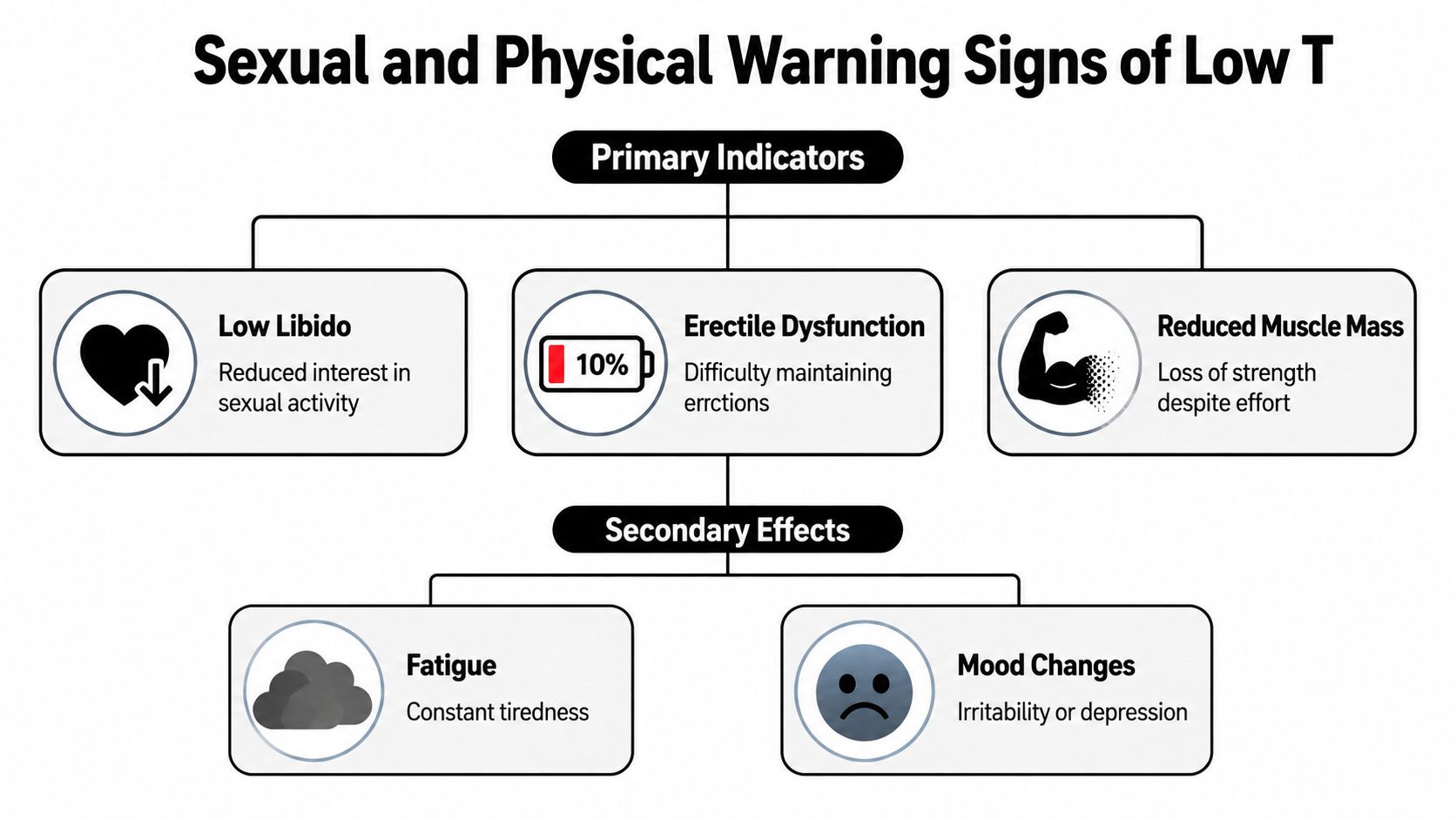
Sexual symptoms usually give the clearest signal. In the European Male Ageing Study, researchers assessed 2,966 men aged 40–79 in eight European countries, compared 19 candidate symptoms with testosterone levels, and found that low libido, erectile dysfunction, and reduced morning erections were the symptoms most consistently linked with low serum testosterone. The same study also showed why clinicians do not diagnose this by symptoms alone. Using combined symptom and laboratory criteria, only 63 men, or 2.1% of the cohort, had late-onset hypogonadism, including 36 men, representing 1.2%, with moderate disease and 27 men, or 0.9%, with severe disease.
That distinction matters in practice. General tiredness is common. A drop in sexual interest, fewer spontaneous erections, and a change in erection quality over time point more specifically toward possible hypogonadism.
Sexual changes are not interchangeable
Low libido means reduced desire. Erectile dysfunction means difficulty getting or keeping an erection. They often overlap, but they are different problems with different causes.
A man may first notice that sexual thoughts are less frequent or that interest feels muted rather than gone. Later, morning erections may fade or become less reliable, and erection quality may change. That sequence does not prove low testosterone. Vascular disease, medication effects, alcohol, stress, sleep disruption, neurological conditions, and relationship strain can all affect erections.
Morning erections are useful because they reflect spontaneous erectile function, but they have to be interpreted in context. One bad week is not very informative. A consistent shift over months is.
If erection quality is the main complaint, the right next step is often a focused erectile dysfunction workup, not automatic testosterone treatment. Depending on the history and findings, clinicians may review vascular risk, current medications, psychological contributors, or discuss targeted treatment such as prescription ED medications.
Physical capacity can decline without obvious symptoms
The physical side often feels gradual. Men describe losing strength despite the same routine, gaining fat more easily, recovering more slowly, or seeing less muscle definition than expected.
Those changes matter more when they travel with sexual symptoms. On their own, they can reflect aging, under-recovery, poor sleep, inconsistent training, chronic illness, or weight gain. Clustered together, they form a pattern that is harder to dismiss.
Recognizing the Mental and Emotional Shift
A common pattern in clinic is this. A man says he is still getting through the day, but work feels heavier than it should, small frustrations set him off, and hobbies he usually wants to do now feel easier to postpone. He often calls it brain fog, not depression.
That distinction matters, but it only helps when you look at the full pattern. Low testosterone can affect mood, drive, and concentration, yet those changes are not specific enough to diagnose hypogonadism on their own. What raises suspicion is the combination of mental shift with sexual symptoms and a drop in physical capacity over time.
The overlap with depression and stress
Low motivation is not one thing. In depression, men often describe loss of pleasure across most areas of life, social withdrawal, hopelessness, or marked changes in sleep and appetite. Under chronic stress, the picture is different. The mind stays busy, tension stays high, and rest does not feel restorative.
Hormonal symptoms can overlap with both. In practice, I pay closer attention when irritability or flat mood shows up alongside reduced libido, fewer spontaneous erections, lower exercise output, or slower recovery. That cluster does not confirm low testosterone, but it makes a hormone evaluation more reasonable than assuming the problem is purely psychological.
Mood symptoms deserve treatment in their own right, even when a hormone evaluation also makes sense.
Concentration is a clue, not a test
Trouble concentrating often shows up in ordinary moments. Reading the same paragraph twice. Losing the thread in a meeting. Starting a routine task, then realizing ten minutes later that attention drifted.
Those complaints matter, but they are still a clue, not a test. A useful workup is usually sequenced, not guessed. First, clarify timing. Did the cognitive change start with worsening sleep, a new medication, a change in dose timing, or symptoms that suggest sleep apnea such as loud snoring and unrefreshing sleep? Then look for the pattern around it. If concentration problems travel with sexual symptoms and physical decline, morning testosterone testing becomes more informative. If they track more closely with poor sleep, medication changes, or clear mood symptoms, those issues often need attention first.
Urgent help is appropriate for severe depression, thoughts of self-harm, or a sudden major change in mental status. Hormone testing should never delay mental health care when someone is in crisis.
Differentiating Low T from Stress or Sleep Issues
A common clinic scenario goes like this. A man says he feels worn out, less motivated, and off his game. He assumes testosterone is the problem. Sometimes it is. Just as often, the pattern points somewhere else.
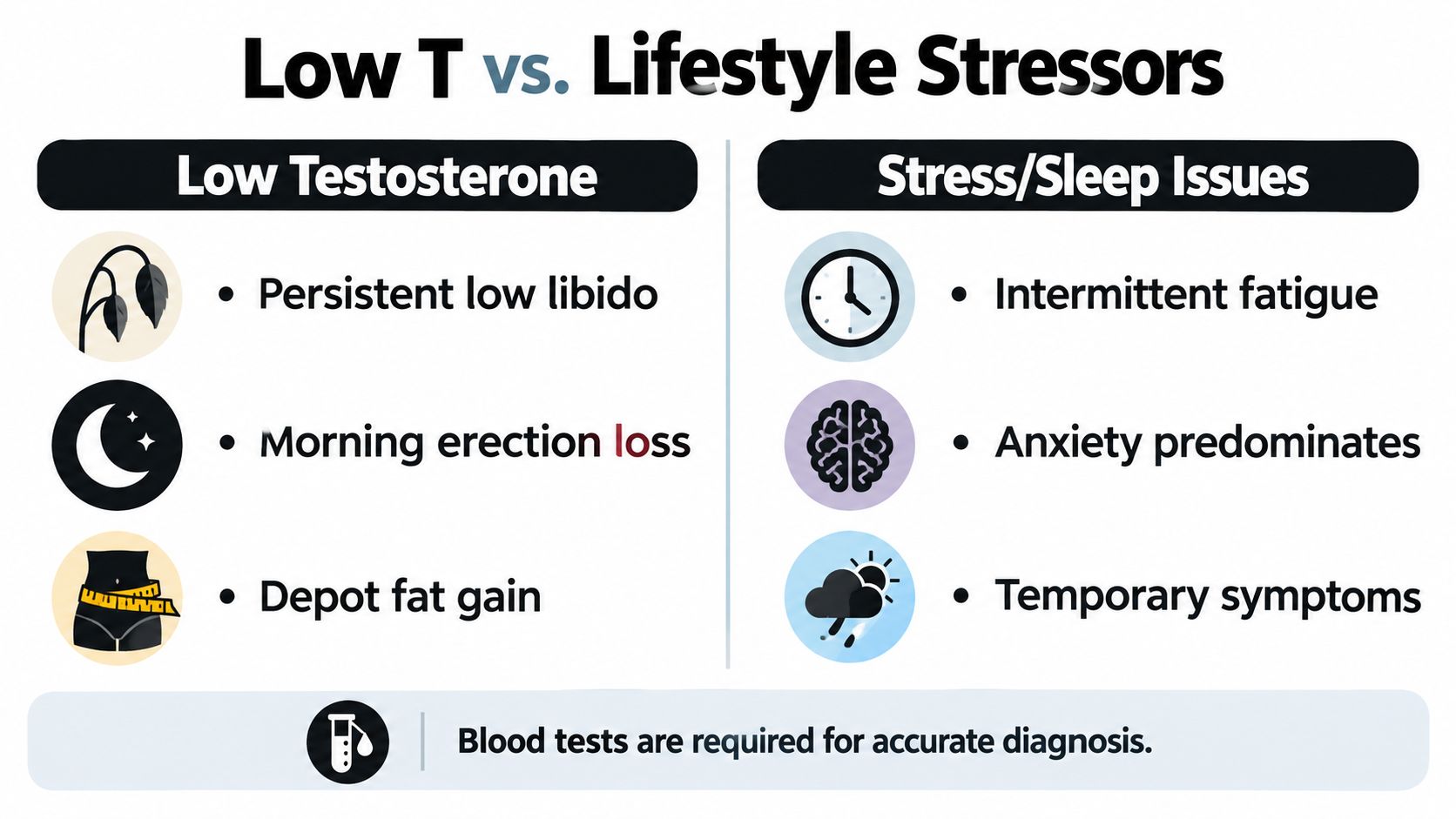
Low testosterone overlaps with stress, poor sleep, depression, weight gain, medication effects, and chronic illness. The difference is usually not fatigue by itself. The more useful question is whether tiredness travels with a specific cluster of sexual, physical, and mental changes that persist long enough to look like a hormone problem rather than a bad stretch.
Sleep apnea is a frequent confounder. Repeated nighttime breathing pauses can leave someone unrefreshed, foggy, irritable, and less interested in sex. Depression can blunt desire and energy in a similar way. Obesity, thyroid disease, anemia, heavy training loads, alcohol, and some medications can also create the same broad complaint pattern. That is why symptom review has to be specific.
Use the pattern as your starting point
Four questions make this more concrete:
- Did sexual function change in a sustained way? Lower libido matters more when it lasts for months, not days. Fewer spontaneous or morning erections, especially when that becomes an ongoing change rather than an occasional one, adds more weight than low energy alone.
- Did physical capacity drop without an obvious reason? Look for reduced gym performance, slower recovery, declining strength, or loss of muscle despite similar training and nutrition.
- Did mood or concentration shift alongside those changes? Irritability, flat mood, and poor focus are more informative when they appear with sexual symptoms and physical decline, not in isolation.
- Is there a competing explanation that fits better? Loud snoring, fragmented sleep, recent weight gain, new stress, an antidepressant, opioids, or a recent illness may explain the picture more convincingly.
This is not a home diagnosis. It helps you bring a sharper history to the visit.
Why one test isn't enough
Testosterone levels vary across the day and from one measurement to the next. A single afternoon result can mislead, especially during poor sleep, acute illness, or medication changes.
Diagnosis works best when consistent symptoms line up with repeatedly low testosterone on reliable testing, as noted earlier. The American Urological Association guideline uses total testosterone below 300 ng/dL as a reasonable supporting threshold, but that number only helps when the history fits and early-morning testing confirms it.
Diagnostic principle: Symptoms suggest the possibility. Repeated morning labs help confirm whether hypogonadism is actually present.
How to Get a Confirmed Low Testosterone Diagnosis
Start with a detailed history rather than a supplement or treatment request. Tell the clinician what changed, when it changed, whether symptoms are worsening, and whether fertility matters. Include sleep quality, weight changes, medical conditions, and every prescription or nonprescription medicine.
The medication review is particularly important for opioids and glucocorticoids, which can affect the reproductive hormone system. A clinician may also need to investigate sleep apnea, depression, obesity, diabetes, thyroid disease, anemia, or other systemic conditions before deciding that testosterone deficiency explains the symptoms.
The testing pathway
A sensible evaluation usually follows this sequence:
- Document symptoms and signs. Sexual changes, physical decline, mood symptoms, and fertility concerns provide the clinical context.
- Order an early-morning total testosterone test. Timing matters because levels change throughout the day.
- Repeat the measurement. The AUA recommends two separate early-morning tests before using the result to support a diagnosis (AUA testosterone deficiency guideline).
- Interpret the result with the history. A value below 300 ng/dL can support the diagnosis, but it doesn't replace clinical judgment.
- Investigate the cause and treatment goals. Fertility plans, medications, sleep, metabolic health, and other hormone results can change the appropriate next step.
Total testosterone is often the initial measure. In some situations, clinicians may assess free testosterone and related hormones to clarify the result, particularly when the total value doesn't match the symptoms. The correct interpretation depends on the laboratory method and the patient's broader clinical picture.
In-person care and telemedicine
A traditional clinic can be useful when a physical examination, local laboratory coordination, or complex medical workup is needed. Telemedicine can reduce travel and make follow-up more convenient, but it should still include licensed medical evaluation, appropriate testing, discussion of contraindications, and ongoing monitoring.
The format matters less than the process. A service that prescribes from a symptom questionnaire without confirming low levels is not providing a reliable diagnosis. Men comparing care options can start a TRT evaluation, but they should bring their existing laboratory results and a complete medication and fertility history to the consultation.
Exploring Telemedicine TRT and Next Steps
A common scenario is a man who has already noticed a pattern, lower libido, fewer morning erections, reduced drive in the gym, and energy that has stayed off for months, then asks whether telemedicine is a reasonable way to deal with it. If symptoms and lab results support hypogonadism, the next decision is not only whether to start testosterone. It is which outcome matters most, symptom relief, physical function, correction of a confirmed deficiency, fertility preservation, or a broader search for another cause.
Telemedicine can work well for men who want remote visits, organized lab review, and home delivery of medication. Good care still requires a licensed clinician to review the history, interpret correctly timed testing, explain risks and alternatives, and set a monitoring plan. The format is less important than the standard of care.

Fertility changes the treatment conversation
Fertility can change the plan immediately. Testosterone deficiency itself may be associated with reduced sperm production and infertility, and testosterone therapy can also suppress sperm production. That is why men who want children should discuss fertility goals before the first prescription, along with preservation options and possible alternatives to standard TRT, as outlined by the Endocrine Society hypogonadism patient resource.
I tell patients this early because priorities differ. A man focused on improving libido may choose one path. A man actively trying to conceive may need a different one.
Medication review matters too, especially opioid exposure. A 2024 PubMed-indexed study reported that nearly 90% of people with opioid-use disorder were not evaluated for testosterone deficiency even after developing symptoms. That does not make opioids the explanation in every case, but it is a good reason to ask directly about drugs that can contribute to hypogonadism and about causes that may be reversible.
A useful virtual visit starts with preparation. Bring a symptom timeline, prior lab reports, a full medication list, sleep history, and clear fertility goals. Ask about treatment forms, expected follow-up, and how monitoring will be handled if therapy begins. Men comparing remote options can review this TRT service to see how online physician consultations and treatment evaluation are structured for eligible patients.
The practical next step is to match the symptom pattern with the lab result and your goals, then choose care that confirms the diagnosis and treats the right problem.