
You started TRT to feel better, think clearer, and get your body moving in the right direction again. Then you step on the scale a few weeks later, and the number is up. That catches a lot of men off guard.
As a provider, I can tell you this is one of the most common early worries I hear. The key point is simple. Weight gain on TRT doesn't automatically mean fat gain. On testosterone, the scale can move up for three very different reasons: water, muscle, or fat. Those are not the same problem, and they don't call for the same response.
What matters is learning how to tell them apart. If you do that well, you stop panicking over normal early changes and start watching the markers that reflect whether your protocol is helping.
Table of Contents
- Understanding Weight Gain When Starting TRT
- Why the Scale Goes Up on TRT (It's Not Just Fat)
- The Typical Timeline for Weight Changes on TRT
- How Estrogen and Dosing Affect Your Weight
- Practical Strategies to Manage Your Weight on TRT
- When to Talk to Your Doctor About Weight Gain
Understanding Weight Gain When Starting TRT
If your weight goes up soon after starting TRT, don't assume the treatment is making you fat. That conclusion is often wrong.
Early changes on testosterone can look messy if you're only using a bathroom scale. Your body may hold extra fluid, store more glycogen in muscle, and start rebuilding lean tissue before you see the full fat-loss effect. Those processes can all push the number higher, even when your overall direction is good.
A practical way to think about weight gain on TRT is to sort it into three buckets:
- Water weight means temporary fluid retention and fuller muscle glycogen stores.
- Muscle gain means added lean tissue, which is usually one of the main goals of treatment.
- Fat gain means you're taking in more energy than you're burning, or your protocol needs adjustment.
Most men feel alarmed because the scale doesn't tell them which bucket they're looking at. It only gives one total.
Practical rule: If the scale rises but your waist is stable or shrinking, your strength is improving, and you look less soft in the mirror, that usually points away from fat gain.
That doesn't mean every increase is harmless. Sometimes persistent puffiness, rapid bloating, or an expanding waistline does signal a dosing issue, poor recovery, or lifestyle mismatch. But the first job is interpretation, not panic.
What works is tracking more than body weight. What doesn't work is reacting to a single weigh-in and deciding TRT has failed.
Why the Scale Goes Up on TRT (It's Not Just Fat)
The number on the scale is a pile of different tissues and fluids added together. If you don't separate them mentally, it's easy to misread what TRT is doing.
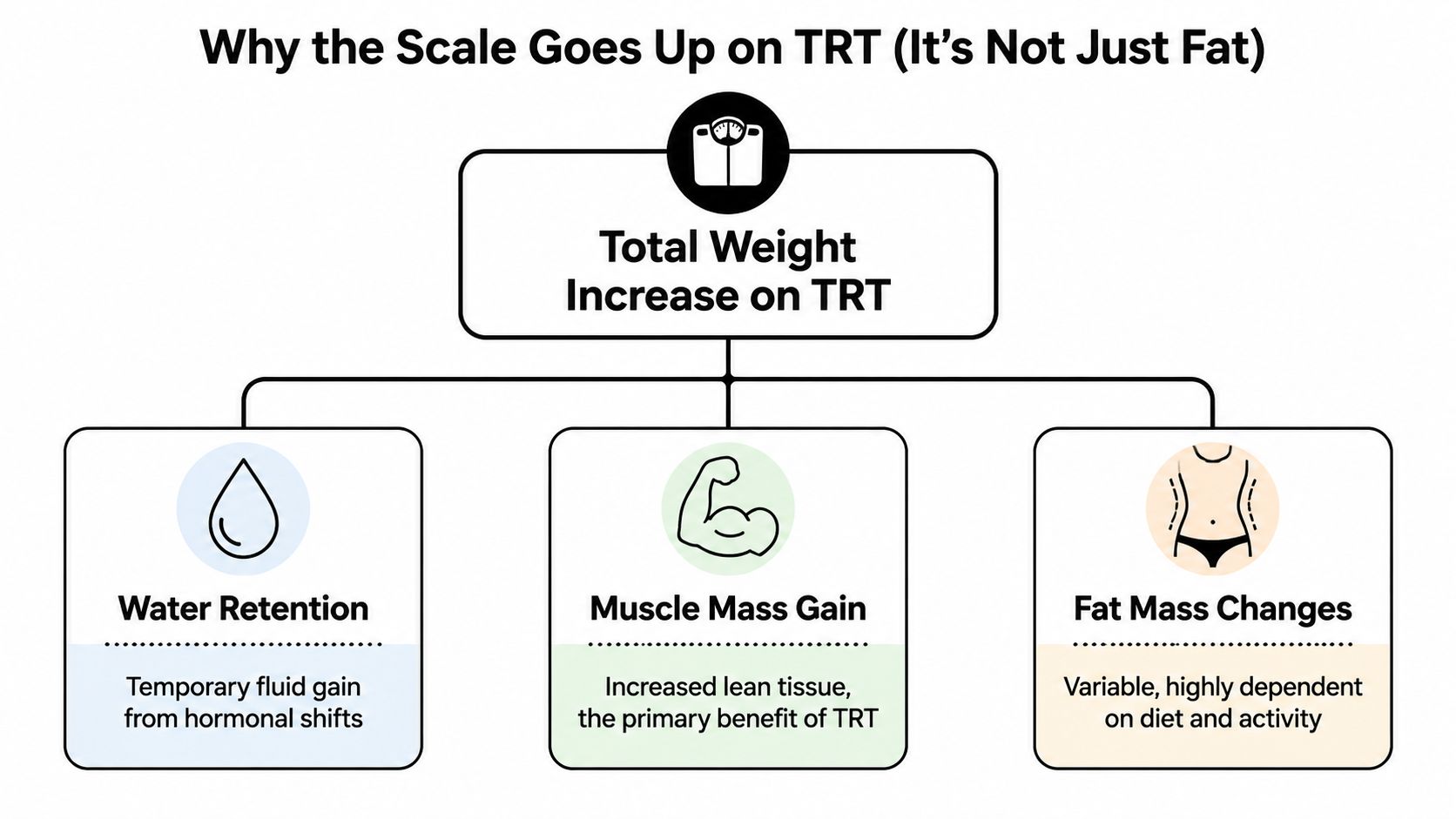
Three different kinds of weight gain
The first is water retention. Early scale increases are often not fat gain. One clinic summary reports that many men notice a small increase in the first 4 to 6 weeks of testosterone therapy, with a commonly cited range of about 5 to 12 pounds, mainly from water retention and increased muscle glycogen rather than added fat mass, as noted by Denver Regenerative Medicine's review of TRT-related weight changes.
The second is muscle gain. This is the part most men want, but it can still be confusing because muscle adds weight. A published case report showed that body weight increased by 2.3%, while lean body mass rose 3.8%, skeletal muscle mass rose 3.9%, and body-fat percentage declined 1.3%, according to this published TRT body-composition case report. In plain terms, the scale went up while body fat kept moving down.
The third is fat gain. TRT itself isn't a free pass around diet, sleep, activity, and stress. If appetite rises, food quality slips, alcohol intake climbs, training is inconsistent, and recovery is poor, fat can still accumulate. When that happens, the sign isn't just a heavier scale. It's usually a larger waist, softer look, lower work capacity, and worse habits.
A simple way to think about it
I often explain this like a house under renovation.
- Water is the scaffolding. It goes up early, changes the appearance, and often comes down once the job settles.
- Muscle is the brickwork. It's dense, useful, and often makes the total structure heavier in a good way.
- Fat is the leftover material pile. It builds up when intake and activity don't match, not because the house is being improved.
That framework helps men avoid the most common mistake. They see a heavier number and assume all added weight is bad weight.
A better question than “Why am I heavier?” is “What exactly is that weight made of?”
If you're watching weight gain on TRT, don't rely on one metric. Pair body weight with waist measurement, gym performance, mirror checks, how your clothes fit, and if possible, body-composition testing. That's how you tell a normal adaptation from a protocol problem.
The Typical Timeline for Weight Changes on TRT
A common scenario goes like this. A man starts TRT, feels better within a few weeks, then steps on the scale and sees he is up several pounds. His first thought is usually, “Is this turning into fat?”
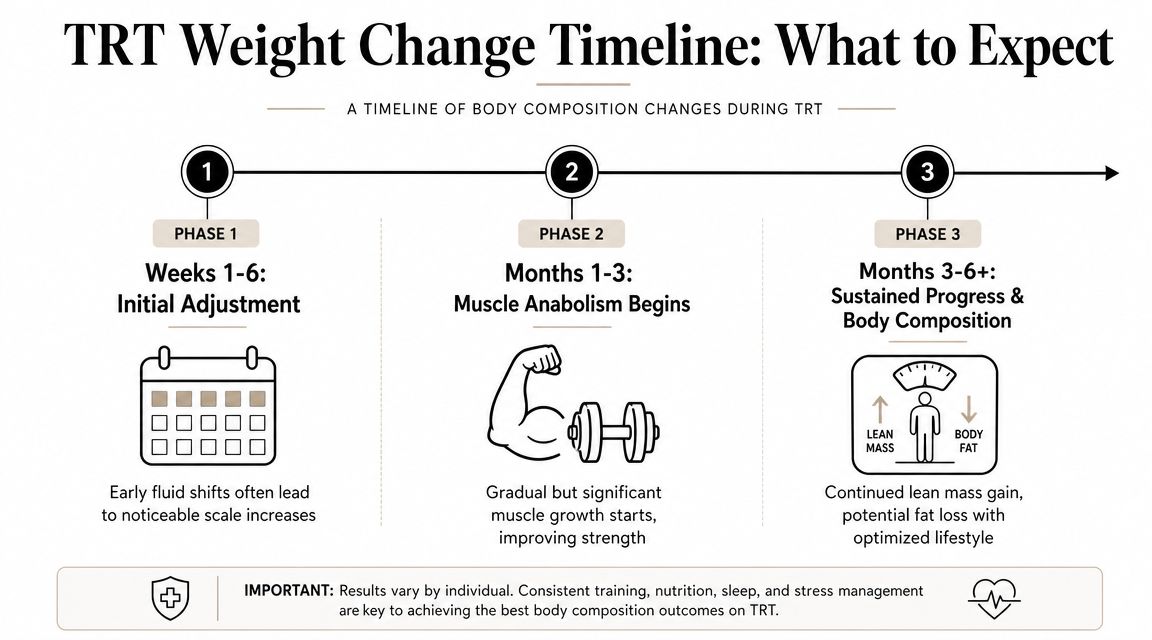
The timing usually explains the story. Early changes often reflect normal adaptation. Later changes deserve a closer look. The men who handle this well do not watch the scale alone. They track waist size, gym performance, blood pressure, how clothes fit, and whether the weight feels like fullness and strength or puffiness and softness.
If you want a basic overview of how monitored treatment is typically structured, medical TRT care and follow-up should include regular symptom review, labs, and dose adjustment rather than guesswork.
Weeks 1 to 6
This is the phase where I expect the most confusion.
Some men hold more water, store more glycogen in muscle, and look a little fuller before body-composition changes become obvious. The scale can move up even when nothing is going wrong. A mild increase in body weight with a stable waist is very different from steady waist expansion.
Track these during the first month or two:
- Morning body weight, under the same conditions
- Waist circumference at the navel, once weekly
- Blood pressure, especially if you already trend high
- Training performance, such as reps, load, or recovery between sessions
- Signs of fluid retention, including tighter rings, sock marks, or a puffier face
What I tell patients is simple. If body weight rises a bit but waist stays stable and performance improves, I usually watch rather than react.
Months 2 to 6
By this point, the pattern should be easier to interpret.
Water retention often settles. Strength, recovery, and work capacity may improve. Some men look leaner in the mirror even if the scale has not dropped much. Earlier research on testosterone replacement found increases in body weight alongside increases in fat-free mass and muscle size, which is why context matters more than a single weigh-in.
A better checkpoint during this window looks like this:
| Marker | Usually reassuring | More concerning |
|---|---|---|
| Waist | Stable or down | Rising over several weeks |
| Strength | Improving gradually | Flat or falling |
| Visual look | Firmer, more muscular | Softer, puffier |
| Energy | More stable | More erratic or worse |
| Blood pressure | Near baseline | Persistently higher |
This is also the point where symptom clusters matter. If the added weight comes with nipple sensitivity, unusual bloating, marked moodiness, or persistent puffiness in the chest and midsection, contact your prescribing clinician. Those can be signs that estrogen is running too high for your current dose or dosing schedule.
After month 6
Six months gives you enough trend data to judge the direction of treatment.
If your waist is smaller or stable, strength is better, and you feel more capable in training and day-to-day life, a heavier scale does not automatically mean a problem. If weight keeps rising and your waist keeps growing, that is different. At that stage I look closely at calorie intake, alcohol, sleep, activity, adherence, dose size, and injection frequency.
Three red flags deserve a message to your doctor sooner rather than later:
- Rapid or persistent swelling, especially with higher blood pressure or shortness of breath
- Progressive chest tenderness, marked puffiness, or worsening midsection softness
- A clear upward trend in both scale weight and waist measurement for several weeks
The goal is not to panic over early weight gain. The goal is to track the right markers on the right timeline, so you can tell normal adjustment from a protocol issue that needs correction.
How Estrogen and Dosing Affect Your Weight
When weight gain on TRT feels less like solid muscle and more like puffiness, bloating, or chest and midsection softness, I start thinking about estrogen management and dosing structure.
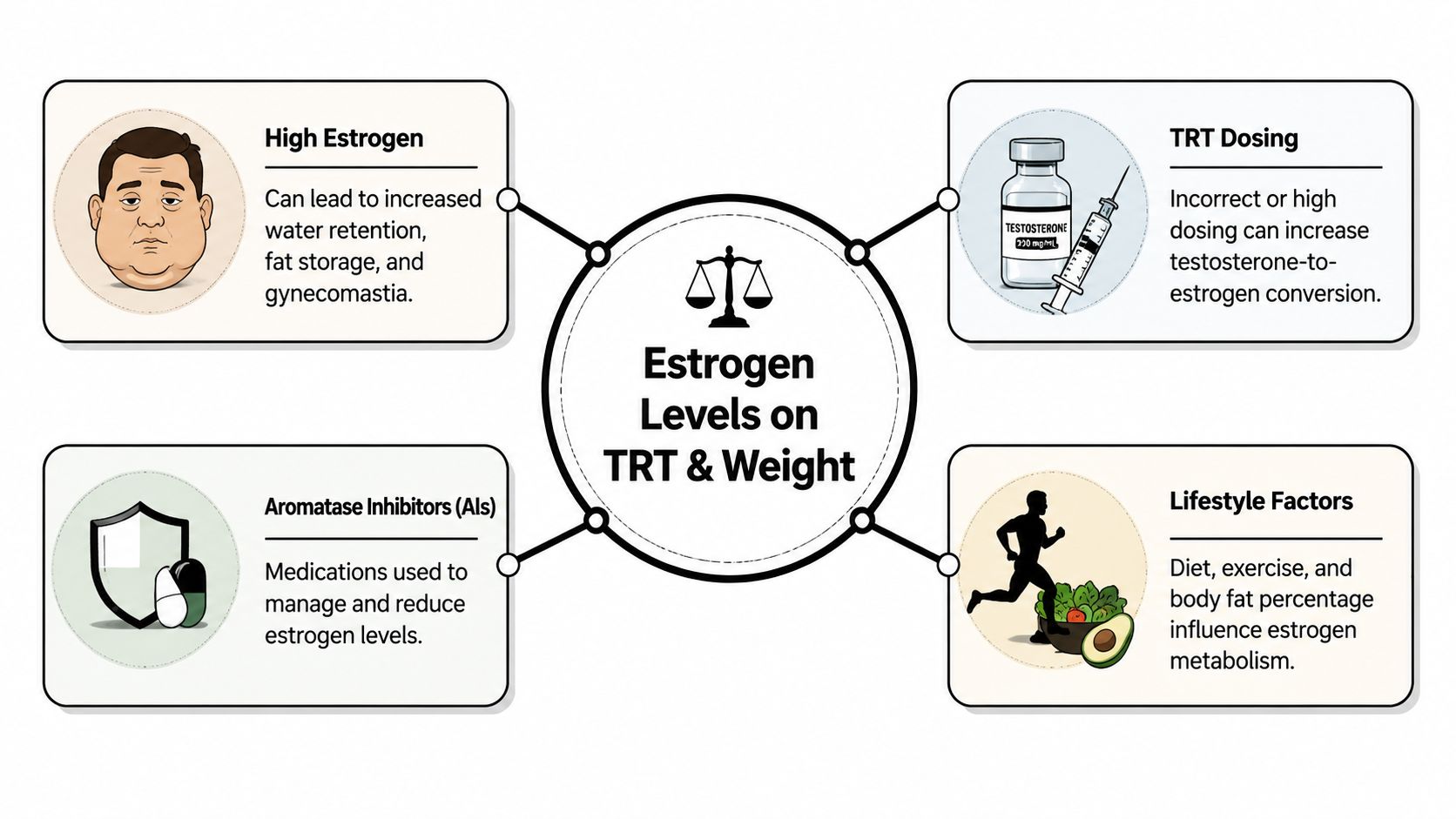
Why estrogen matters on TRT
Your body converts some testosterone into estrogen through aromatization. Men need estrogen. It supports normal physiology, and the goal is not to drive it into the floor. The goal is balance.
Problems usually show up when the protocol is too aggressive for the person using it, or when body fat, inconsistent dosing, poor sleep, and recovery issues push the system in the wrong direction. Larger peaks can mean more conversion. More conversion can mean more water retention and a softer, puffier look.
This is one reason experienced monitoring matters. If you want a basic overview of medical testosterone treatment and supervised care, Cost Plus TRT's TRT page outlines how treatment is structured.
If you feel stronger but also increasingly bloated, moody, and puffy, don't just assume “TRT isn't for me.” Sometimes the issue is the protocol, not the therapy itself.
What high estrogen can feel like
High estrogen on TRT doesn't present as one single symptom. It tends to show up as a pattern.
| Symptom | Sign of High Estrogen | Sign of Optimized TRT |
|---|---|---|
| Water retention | Puffy face, bloating, tighter rings or waistband | Stable appearance with less fluctuation |
| Chest symptoms | Nipple sensitivity or breast tenderness | No unusual breast or nipple symptoms |
| Mood | More irritable, emotional, or flat | More even mood and better resilience |
| Sexual function | Libido may feel inconsistent | Libido often feels more stable |
| Weight pattern | Scale rises with soft look and swelling | Body weight may vary, but shape and firmness improve |
A few practical red flags deserve attention:
- Breast or nipple tenderness: This can be an early clue that estrogen effects are too strong.
- Sudden bloating: A fast shift toward puffiness is more suspicious than a slow increase in lean tissue.
- Mood volatility: Some men become more irritable or emotionally off when their ratio isn't working well.
- Uncontrolled blood pressure trends: Extra fluid retention can make this more important.
What doesn't work is self-diagnosing from one symptom or chasing internet advice about estrogen blockers. What works is getting proper labs, candidly reviewing symptoms, and adjusting dose or injection frequency with your clinician.
Practical Strategies to Manage Your Weight on TRT
A common pattern looks like this. A man starts TRT, sees the scale jump a few pounds, and assumes the treatment is making him fat. Then he stops paying attention to the measurements that matter more.
TRT usually goes better when you monitor it like a clinician would. Watch trends, not single weigh-ins. Track what is changing, when it is changing, and whether your body looks and performs better at the same time.
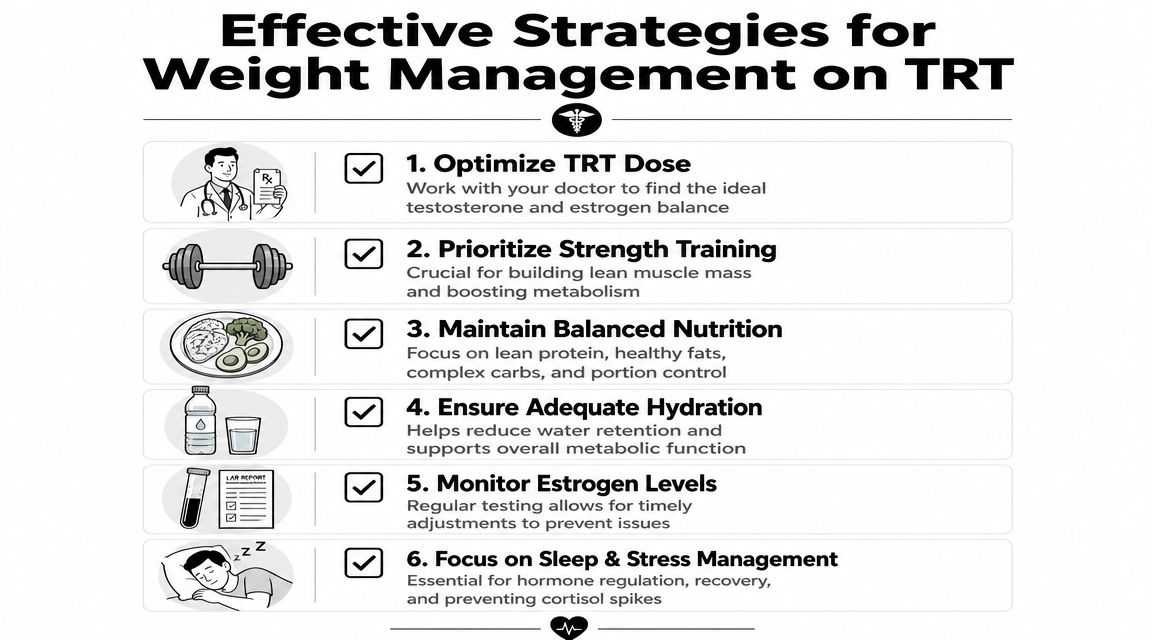
Eat for body composition, not just scale weight
Men on TRT often do best with simple structure they can repeat for months.
Build meals around protein first. That supports recovery, helps preserve or build lean mass, and makes it easier to control appetite. If calories creep up because hunger improves or weekend eating gets loose, TRT will not cancel that out.
A practical approach works well:
- Set a protein target for the day: Spread it across meals so each meal supports recovery.
- Keep liquid calories under control: Alcohol, coffee drinks, and sweetened beverages add up fast.
- Place most carbs around training: That usually helps performance and keeps intake more intentional.
- Keep meals boring enough to repeat: Consistency beats a perfect plan you follow for five days.
If you want more guidance on treatment routines, nutrition habits, and common TRT questions, Cost Plus TRT educational articles cover those topics in a practical way.
Train with a plan and measure what the scale misses
Resistance training gives TRT a clear job to do. Men who lift consistently usually get a better return in body composition than men who rely on hormones alone.
Use basic movements. Add weight, reps, or total training volume gradually. Train hard enough to create a reason for muscle growth, then recover well enough to adapt.
Cardio still matters. It helps with conditioning, appetite control, and overall health, especially if body weight is trending up faster than waist size or gym performance would justify.
The better framework is to track four markers each week:
- Morning body weight: Use a weekly average, not one random number.
- Waist circumference: Measure at the navel under the same conditions.
- Strength or work capacity: Log lifts, reps, or recovery between sessions.
- Photos and clothing fit: These often show progress before the scale does.
If body weight rises while waist stays stable or drops, strength improves, and you look firmer in photos, that trend usually points in the right direction.
A helpful video overview is below.
Use a simple timeline so you do not overreact
The first few weeks are often the noisiest. Fluid shifts, appetite changes, and training momentum can all affect weight before body composition settles into a clearer pattern.
A useful self-check schedule looks like this:
- Weeks 1 to 4: Expect more fluctuation. Focus on daily consistency, hydration, and weekly averages.
- Weeks 4 to 8: Review waist, energy, gym performance, and how clothes fit.
- Months 2 to 3: Look for direction, not perfection. Better strength and a stable or smaller waist matter more than a stubborn scale.
- After month 3: If weight keeps climbing and waist is also expanding, the plan needs a closer look.
This prevents one bad week from driving unnecessary changes.
Tighten the habits that influence water, hunger, and recovery
A good TRT protocol can still produce frustrating results if the routine around it is sloppy.
These habits make the biggest difference in practice:
- Take your medication on schedule: Irregular dosing makes weight swings and symptoms harder to interpret.
- Sleep enough to recover: Poor sleep drives hunger, worsens training recovery, and can make you feel softer and more inflamed.
- Hydrate consistently: Men who underdrink often feel more bloated, not less.
- Be honest about weekends: Many stalls come from restaurant meals, alcohol, and skipped workouts, not from the prescription.
- Review trends every 2 to 4 weeks: That is frequent enough to catch problems without chasing noise.
One more point matters. Contact your clinician sooner if rising weight comes with puffiness, breast or nipple tenderness, worsening blood pressure, or a softer look that keeps building week after week. Those patterns deserve a medical review, not guesswork.
What helps: regular dosing, high-protein meals, progressive lifting, sleep, and tracking waist alongside body weight.
What wastes time: reacting to daily scale changes, changing calories every few days, or blaming every pound on TRT.
When to Talk to Your Doctor About Weight Gain
A common scenario in clinic goes like this. A man starts TRT, feels stronger in the gym, but sees the scale jump and starts wondering if the treatment is backfiring. The right next step is not panic. It is pattern recognition.
What matters most is not a single weigh-in. It is the trend across a few simple markers you can track at home: body weight, waist measurement, blood pressure, gym performance, and how you look and feel week to week. If weight is up but your waist is stable or smaller, strength is improving, and your recovery is better, that usually points toward a normal adjustment rather than a problem.
Use a green flag versus red flag framework.
Green flags
These signs usually support staying the course and continuing to monitor:
- Strength is improving: lifts, training output, or recovery are trending up
- Waist is stable or shrinking: this often matters more than total body weight
- Energy, mood, and libido are better: the protocol may be settling in well
- You look firmer, not softer: body composition can improve before the scale reflects it
Red flags
These are the patterns that should prompt a message or follow-up with your prescriber:
- Bloating or facial puffiness that keeps building
- Breast tenderness or nipple sensitivity
- A softer look with a growing waist
- Blood pressure trending upward
- Weight continuing to rise for weeks without better strength, recovery, or appearance
- Shortness of breath, headaches, or a general sense that something feels off
Those red flags matter because they can point to estrogen running too high, dosing that needs adjustment, or lifestyle factors that are amplifying fluid retention and fat gain. Men often assume any weight increase means the testosterone dose is wrong. Sometimes that is true. Just as often, the issue is inconsistent injections, excess sodium, poor sleep, alcohol, or a calorie surplus that TRT has not magically erased.
A practical rule I give patients is simple. If the scale is rising and your waist is rising with it for more than a few weeks, or if swelling and nipple symptoms show up, contact your doctor instead of trying to fix it yourself with random dose changes. If you need to start that conversation, use the Cost Plus TRT contact page to reach a TRT provider.
Good TRT management is collaborative. Your clinician adjusts the protocol. You track the signals that show whether the current plan is helping, drifting, or creating side effects.