
You stopped testosterone replacement therapy expecting a gradual return to normal. For several days, nothing seemed different. Then fatigue arrived, your libido dropped, concentration became difficult, and the question became urgent: are these TRT withdrawal symptoms, or are the problems that led you to treatment returning?
The honest answer is that both situations occur. Testosterone supplied from outside the body suppresses the hormonal system that normally stimulates the testes, and that system doesn't restart the moment the last dose clears. At the same time, some men began TRT because their underlying hypogonadism was persistent, so stopping treatment exposes the original condition rather than creating a temporary problem. The distinction matters because recovery may take months, and for some men it remains incomplete.
A 2021 endocrine review describes withdrawal effects as a period of transient androgen deficiency that can include lethargy, loss of vitality, easy fatigue, and sexual dysfunction. Symptoms may last weeks to months while the hypothalamic-pituitary axis recovers, with recovery extending to 6 to 18 months in some cases (2021 endocrine review of androgen withdrawal). This guide separates the medical-cessation story from withdrawal after supraphysiologic or non-prescribed androgen use, then addresses what symptoms look like, how timelines vary, and how to manage the transition safely.
Table of Contents
- The Moment TRT Stops and Symptoms Begin
- How the HPTA Feedback Loop Creates Withdrawal
- The Four Symptom Categories Men Actually Report
- Realistic Recovery Timelines After Stopping TRT
- Medically Supervised Cessation vs Androgen Misuse Withdrawal
- Evidence-Based Strategies to Manage Withdrawal
- When Mood and Mental Health Become the Main Problem
- Red Flags, Provider Visits, and Telemedicine Transfers
The Moment TRT Stops and Symptoms Begin
The pattern is familiar. A man stops prescribed testosterone after discussing it with a clinician, or because he wants to see whether his natural production has returned. He feels normal at first, especially if a long-acting preparation is still releasing hormone. Later, as external testosterone falls and endogenous production remains suppressed, energy, sexual function, motivation, and mental clarity can deteriorate together.
That experience is often called TRT withdrawal, but the term needs precision. It doesn't usually describe addiction-related withdrawal. It describes a temporary low-testosterone state created by suppression of the body's own signaling system, or a return to the hypogonadism that existed before treatment. The symptoms can look identical, so symptoms alone can't establish which mechanism is operating.

Why a few symptom-free days can mislead
The timing depends on the formulation, dose history, and your baseline physiology. A symptom-free interval doesn't prove that the hormonal axis has recovered. It may mean that circulating testosterone hasn't fallen far enough to produce noticeable effects.
The important clinical question is not, “Do I feel bad after stopping?” It is, “Are the hypothalamus and pituitary beginning to signal the testes again, and can the testes respond?” Morning total testosterone, free testosterone when appropriate, LH, and FSH help answer that question. A clinician should interpret those results with the original diagnosis, examination, medications, sleep, weight, illness, and mental-health history.
Practical rule: Don't judge recovery by one difficult week or one reassuring day. Track symptoms alongside repeat laboratory testing.
The rest of the evaluation should answer four questions. Why did the symptoms begin? What pattern do they follow? How long might recovery take? What intervention is appropriate if the axis doesn't restart? The answers differ substantially between supervised TRT cessation and withdrawal after high-dose androgen exposure, which is why a generic “taper and wait” plan can be inadequate.
How the HPTA Feedback Loop Creates Withdrawal
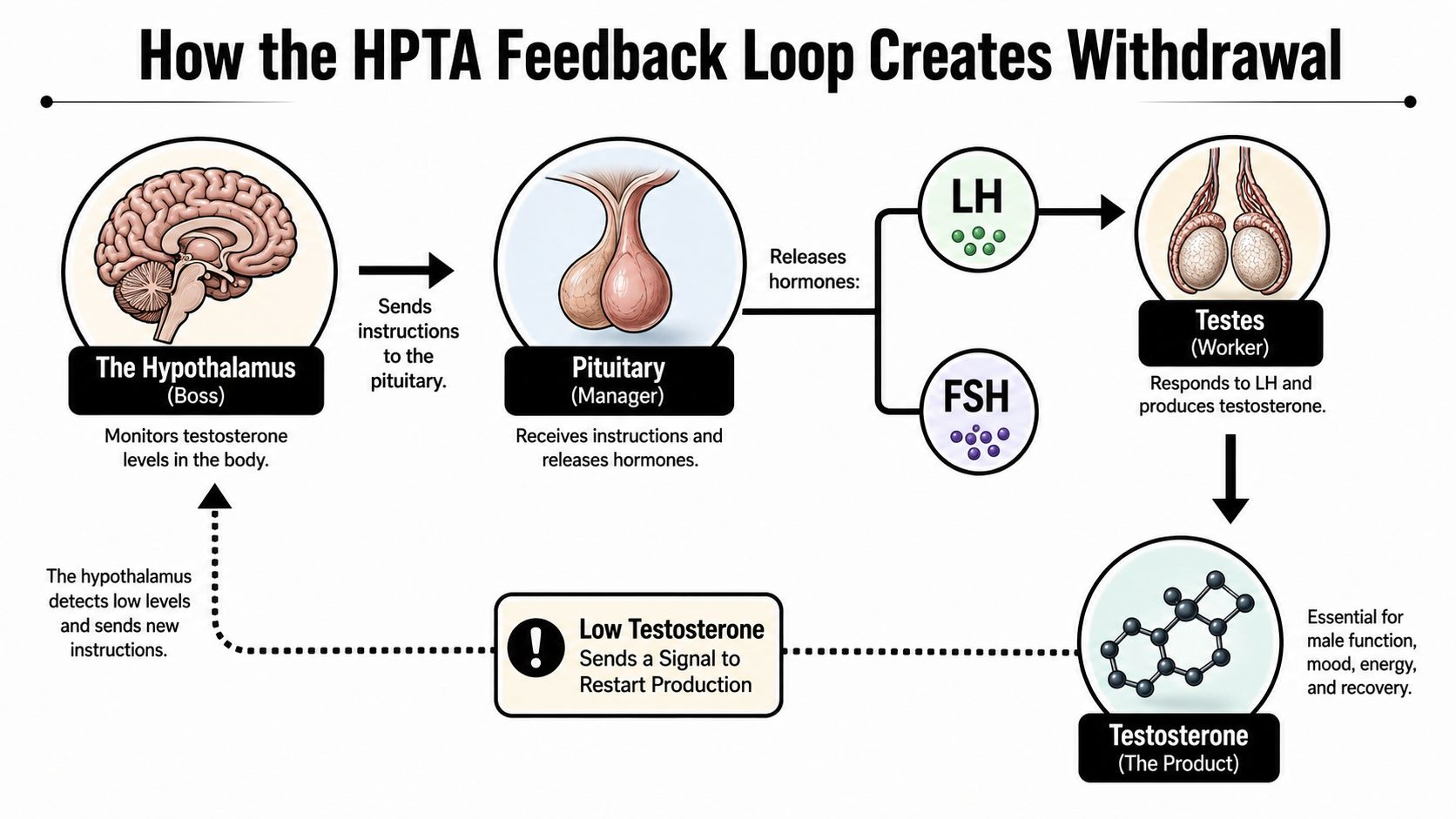
Your testosterone system works like a chain of command. The hypothalamus acts as the boss, the pituitary functions as the manager, and the testes perform the production work. Testosterone then reports back to the brain, telling it whether the system has produced enough.
The sequence in plain English
- The hypothalamus releases pulses of gonadotropin-releasing hormone, or GnRH.
- GnRH signals the pituitary gland to release luteinizing hormone, LH, and follicle-stimulating hormone, FSH.
- LH travels to the testes and stimulates Leydig cells to produce testosterone.
- FSH supports the testicular processes involved in sperm production.
- Testosterone feeds back to the hypothalamus and pituitary, reducing further signaling when levels are sufficient.
This is negative feedback. The brain doesn't keep demanding more testosterone when the bloodstream already contains enough. When TRT supplies testosterone from outside the testes, the hypothalamus detects the additional androgen and reduces GnRH pulses. The pituitary then releases less LH and FSH, and the testes receive less stimulation to make testosterone and sperm.
Why the system doesn't restart instantly
Stopping TRT removes the external supply, but it doesn't immediately restore the GnRH, LH, and FSH pattern. The hypothalamus and pituitary need to resume signaling, and the testes need to respond to that signal. During the gap, testosterone can fall to a level that produces fatigue, loss of vitality, sexual dysfunction, and other hypogonadal symptoms.
A useful distinction is between the axis and the testes. Low or rising LH and FSH can show whether the brain and pituitary are restarting. If those signals rise but testosterone remains inadequate, testicular responsiveness may be limiting recovery. If LH and FSH remain suppressed, the upstream signaling system may still be inactive.
This physiology explains why stopping TRT isn't like stopping a medication that leaves the bloodstream. The drug may clear while the body's production system remains quiet. The 2021 review describes this withdrawal state as transient androgen deficiency during hypothalamo-pituitary axis recovery, and notes that the recovery period can extend from weeks or months to 6 to 18 months in some cases (clinical explanation of androgen-withdrawal physiology).
Men considering treatment or a supervised transition can review how a clinic approaches testosterone care through this TRT treatment overview, but medication decisions still require an individualized clinician assessment.
The Four Symptom Categories Men Actually Report
TRT withdrawal symptoms usually cluster into four experiences rather than appearing as an isolated complaint. A man may notice fatigue first, then sexual changes, followed by poor concentration and mood instability. Severity ranges from an annoying reduction in performance to symptoms that disrupt work, relationships, exercise, and safety.
Physical symptoms
Physical symptoms often feel like a loss of reserve. You may wake tired despite sleeping, struggle through a familiar workout, recover slowly, or notice weakness and reduced muscle fullness. Some men report joint discomfort, hot flashes, or sweating, but these aren't universal and can have other causes.
Fatigue and loss of vitality have stronger support in the withdrawal literature than many of the more specific symptoms. The endocrine review identifies lethargy, easy fatigue, and loss of vitality as principal effects of androgen withdrawal (reviewed withdrawal effects). Muscle changes and body-composition shifts are plausible consequences of lower androgen exposure, but the degree varies with training, nutrition, illness, and the reason TRT was prescribed.
Sexual symptoms
Sexual symptoms can be the most distressing because they affect both desire and confidence. Libido may fall, morning erections may become less frequent, and erections may be less reliable or less firm. Erectile function also depends on vascular health, medication effects, sleep, anxiety, relationship factors, and pelvic or neurologic conditions, so a testosterone result doesn't explain every change.
A 2024 report of former androgen users found 7 of 19 men, or 37%, had moderate to severe impairment in sexual desire during androgen withdrawal (2024 report on sexual desire during androgen withdrawal). That population isn't interchangeable with every man stopping medically supervised TRT, but it demonstrates that sexual symptoms can remain clinically significant long after the last androgen exposure.
Cognitive symptoms
Brain fog usually means slowed thinking, reduced concentration, forgetfulness, or difficulty organizing familiar tasks. These symptoms can be amplified by poor sleep, depression, anxiety, pain, calorie restriction, alcohol, or untreated sleep apnea.
Cognitive complaints are common in patient reports, but they aren't specific enough to diagnose withdrawal. A clinician should look for competing explanations instead of attributing every lapse in focus to testosterone.
Psychological symptoms
The psychological range runs from irritability and low motivation to anxiety, insomnia, and major depression. Mood symptoms deserve more attention than casual online guides often give them, particularly after non-prescribed or supraphysiologic androgen use.
In the 2024 report, 5 of 19 former androgen users met criteria for major depressive disorder during withdrawal (2024 androgen-withdrawal psychiatric findings). That doesn't mean every man stopping TRT will become depressed. It does mean a severe mood change shouldn't be dismissed as an expected inconvenience.
Realistic Recovery Timelines After Stopping TRT
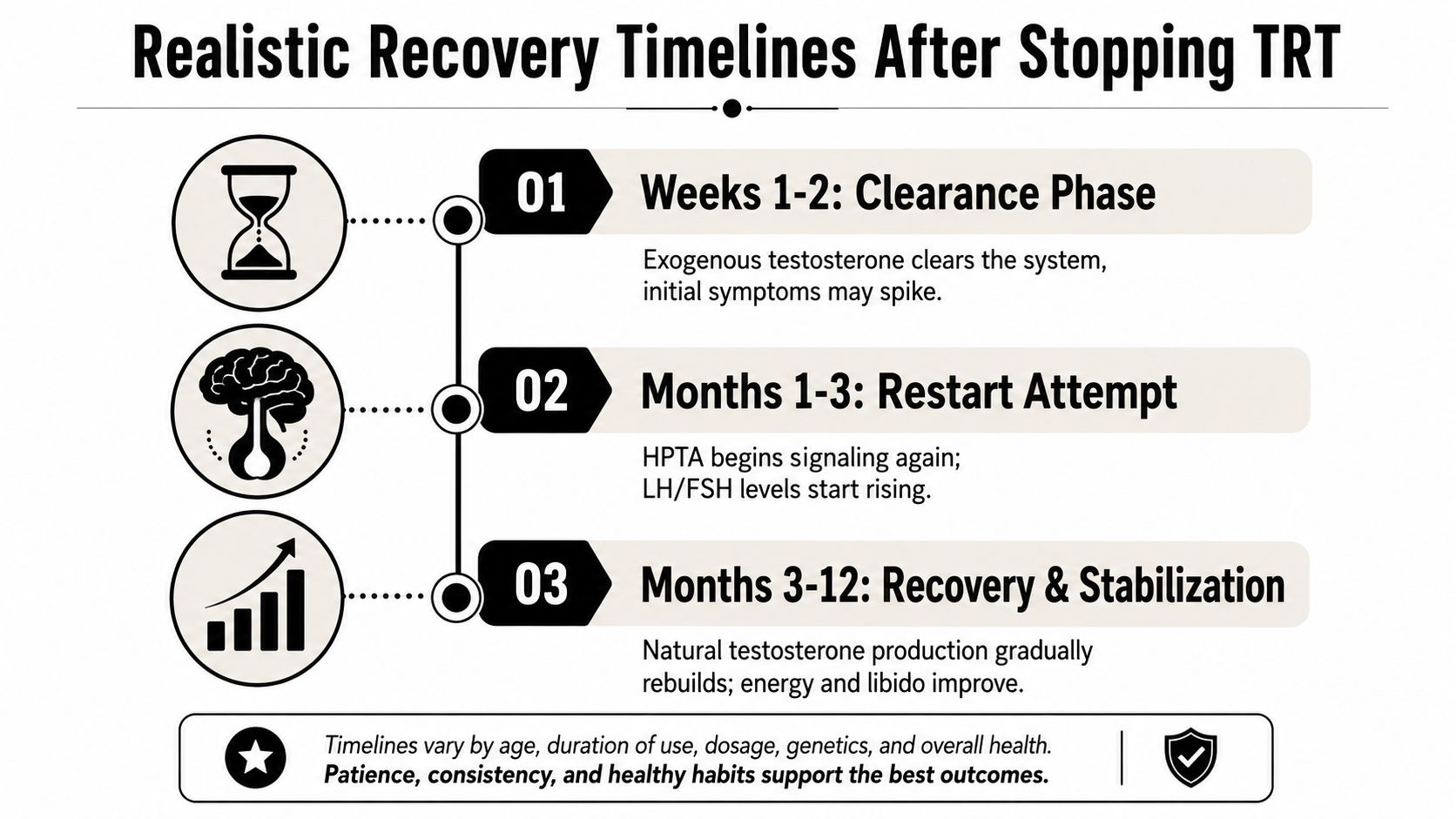
A man may feel stable during the first days after his last injection, then develop fatigue, reduced libido, or low mood as the medication clears. Recovery has no dependable calendar. The usual sequence, androgen clearance followed by HPTA restart and hormonal stabilization, is a useful framework, not a promise. The 2021 endocrine review describes recovery over weeks to months, with some cases extending to 6 to 18 months (endocrine review on recovery duration).
A practical phase-by-phase view
The first one to two weeks can be deceptively quiet, depending on the formulation. External testosterone is falling, while hypothalamic and pituitary signaling may remain suppressed. Some men notice an early change in energy or libido. Others do not feel a clear difference until later.
During the first one to three months, the main laboratory question is whether LH and FSH begin to recover. Testosterone can remain low despite improving signaling, or stay low because the original hypogonadism persists. Repeat morning testing provides more useful information than one subjective impression. Symptoms should be reviewed alongside testosterone, LH, FSH, sleep, weight, medications, and the condition that led to TRT.
From three to twelve months, some men gradually regain energy, sexual desire, mood, and exercise tolerance. Others remain clinically symptomatic. A 2024 report found that 5 of 19 former androgen users, or 26%, still had testosterone below 200 ng/dL at 3, 7, 8, 16, and 26 months after discontinuation (long-term testosterone findings after androgen cessation). Those findings come from former androgen users, so they should not be applied automatically to every man stopping medically supervised TRT.
Beyond twelve months, persistent hypogonadism warrants an explanation rather than indefinite observation. Possible contributors include pre-existing primary or secondary hypogonadism, longer or heavier androgen exposure, age-related decline, obesity, sleep disorders, chronic illness, medication effects, and inadequate testicular response.
Age, treatment duration, dose, baseline testicular function, and ancillary medications can influence recovery, but no simple calculator reliably predicts an individual course. A cohort found that only 30.1% maintained their response six months after stopping, demonstrating how variable post-cessation outcomes can be (PubMed study of TRT interruption and outcomes).
| Time after last dose | Hormone status | Typical symptoms | Action step |
|---|---|---|---|
| Early clearance | External androgen is falling, while endogenous signaling may remain suppressed | Energy, libido, mood, or concentration may worsen | Arrange clinician-guided monitoring rather than relying on symptoms alone |
| Early restart attempt | LH and FSH may begin to change, but testosterone may remain inadequate | Fatigue, sexual dysfunction, and brain fog may persist | Review morning testosterone, LH, FSH, and relevant health factors |
| Longer recovery window | The axis and testes may gradually stabilize, or persistent hypogonadism may become clear | Some symptoms improve, while libido, mood, or strength may lag | Reassess the diagnosis and discuss supervised treatment options |
Medically Supervised Cessation vs Androgen Misuse Withdrawal
A man stopping physician-prescribed TRT and a man stopping non-prescribed androgen use may both report “withdrawal,” but the clinical risks differ. Prescribed TRT at replacement doses may expose the original hormonal problem after a period of suppression. Supraphysiologic cycles, SARMs, or unknown products can produce deeper suppression, uncertain exposure, and greater psychiatric risk.
The first question is why TRT was prescribed. Primary testicular failure or pituitary disease may persist after treatment stops, while a potentially reversible secondary cause may allow recovery. As noted in the timelines section, interrupting TRT can return testosterone to hypogonadal levels and worsen obesity-related and sexual-function measures. Symptoms and laboratory results should therefore be reviewed together, rather than assuming every problem is temporary.
Why misuse withdrawal requires a different safety lens
Non-prescribed users may not know the compound, concentration, duration, or contamination risk. They may also combine several agents, making recovery harder to predict. Mood, anxiety, sleep, and safety screening deserve particular attention, especially when psychiatric symptoms are disproportionate to the testosterone result.
The same 2024 report referenced earlier found persistent biochemical and sexual effects months after discontinuation, including some men with testosterone below 200 ng/dL and others with moderate to severe loss of sexual desire (androgen-withdrawal study findings). These findings should not be transferred directly to prescribed TRT patients. They do show why cessation after high-dose androgen use needs clinical assessment, not reassurance alone.
Psychological symptoms may reflect the person's psychiatric burden more than the testosterone number. That distinction matters: correcting a laboratory result alone may not resolve depression, anxiety, irritability, or suicidal thinking.
Fertility is a separate concern. Testosterone therapy suppresses signals required for sperm production, so men planning conception should discuss that goal before changing treatment. This clinical discussion of TRT and fertility offers background, while semen testing and fertility planning belong with a qualified clinician.
Evidence-Based Strategies to Manage Withdrawal
The right plan depends on why TRT began, the preparation used, treatment duration, and whether fertility matters. No single withdrawal protocol has been proven for every patient. Online post-cycle regimens often present limited evidence as certainty, so treatment should be individualized rather than copied from a forum.
Tapering the external hormone
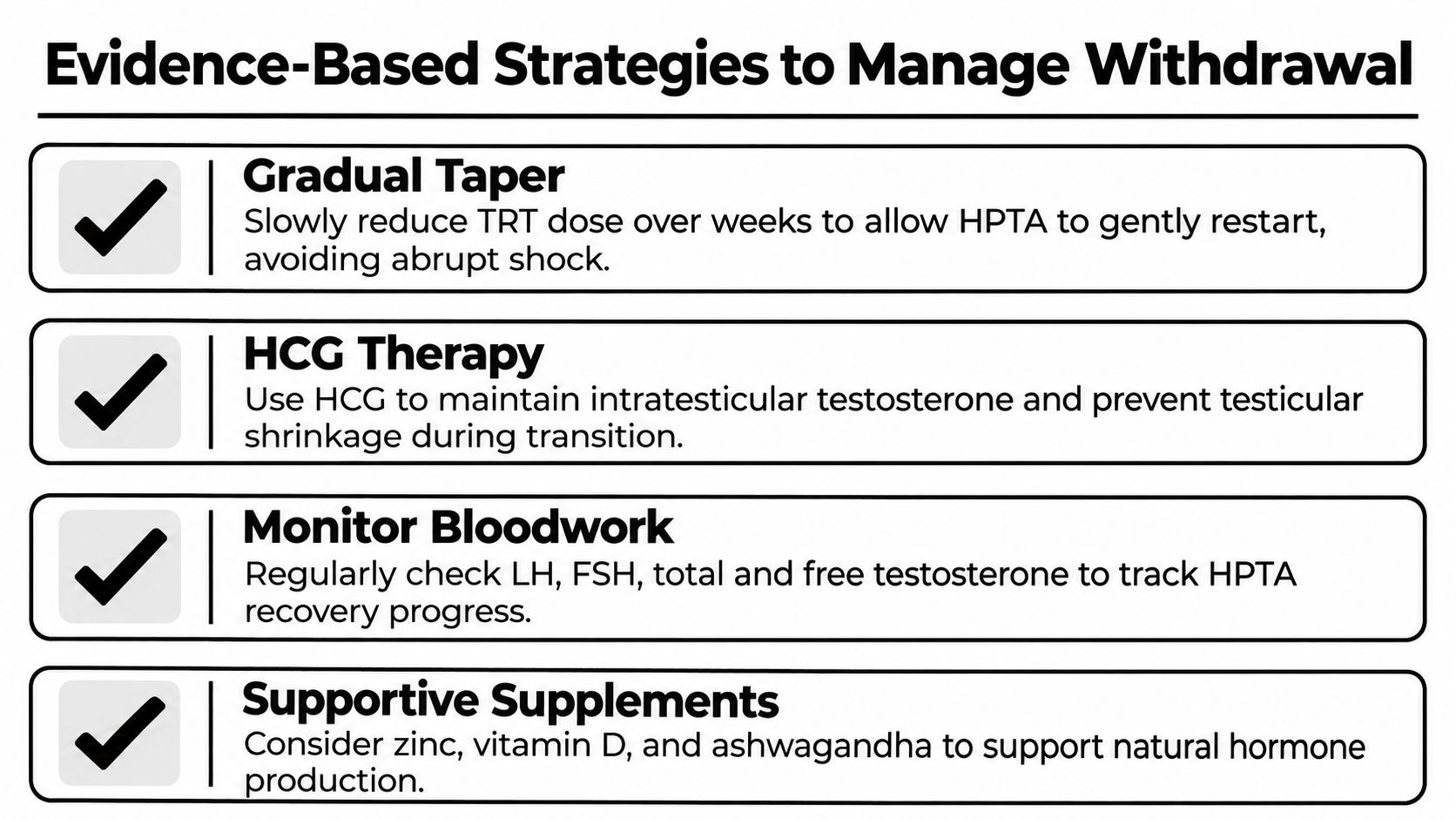
A supervised dose reduction may soften the hormonal decline and improve tolerability for some men. It does not ensure HPTA recovery, and severe symptoms or persistently abnormal laboratory results still require timely evaluation. The formulation matters because a taper suitable for one preparation may not translate to another.
Stopping abruptly is operationally simpler, but it may expose a suppressed system to a sharper hormonal gap. Tapering is therefore a reasonable option in selected cases, not a universal cure. The 2021 endocrine review cited earlier supports careful assessment of the underlying cause and recovery status rather than assuming that dose reduction alone will restore function.
Supporting the testes and signaling pathway
hCG stimulates testicular receptors that respond to LH. Clinicians may consider it when intratesticular testosterone or testicular function is a priority, particularly for men focused on fertility. It does not replace diagnostic evaluation, and it can make it harder to determine whether the brain and pituitary have resumed their own signaling.
Clomiphene or enclomiphene may be considered when upstream signaling is slow to return. These medicines aim to increase endogenous stimulation instead of supplying testosterone directly. Their use after TRT should be individualized, monitored, and discussed in relation to expected benefit, adverse effects, fertility plans, and regulatory status.
Physiologic rationale is stronger than the evidence that any medication will restore normal function in every former TRT user. In one interruption cohort, only 30.1% maintained response at six months (TRT interruption cohort). That result supports realistic counseling: some men recover, while others remain hypogonadal much longer and need reassessment rather than indefinite waiting.
What lifestyle measures can and can't do
Regular sleep, resistance training, adequate nutrition, stress reduction, and treatment of sleep apnea support function while hormone recovery is assessed. They may preserve muscle, improve energy, and reduce symptoms that overlap with hypogonadism.
They cannot reverse primary testicular failure or replace appropriate treatment. Vitamin D or zinc can be reasonable when testing shows deficiency, but “natural testosterone boosters” should not replace laboratory monitoring or an axis-focused diagnosis.
Clinical boundary: Supportive habits create better conditions for recovery. They do not demonstrate that recovery is occurring.
When Mood and Mental Health Become the Main Problem
A man may stop testosterone, sleep poorly, become anxious, and lose hope before his follow-up labs are available. Low mood is often blamed entirely on a falling serum testosterone level, but that explanation is incomplete. A report on psychiatric burden during steroid withdrawal supports a more careful view: psychological symptoms can track more closely with psychiatric burden than with hormone levels alone.
The response depends on the pattern. Mild fatigue with low testosterone may call for endocrine monitoring and supportive care. Insomnia, escalating anxiety, panic, severe irritability, hopelessness, or thoughts of self-harm require mental-health assessment alongside hormone testing. Correcting the laboratory value while ignoring the psychiatric state is unsafe.
Symptoms that need active follow-up
A history of depression, anxiety, bipolar disorder, substance-use disorder, or difficult androgen withdrawal lowers the threshold for contacting a clinician. Ask someone close to you to watch for withdrawal from normal activities, reckless behavior, agitation, hopelessness, or sudden changes in sleep and behavior.
A 2024 clinical analysis of androgen withdrawal found that psychological symptoms track more closely with psychiatric burden than with hormone levels alone. In the former androgen users described in that report, 5 men met criteria for major depressive disorder during withdrawal. As documented in the 2024 report cited earlier, that finding does not show that testosterone levels caused every case, which is why psychiatric screening matters.
When waiting is no longer appropriate
Arrange prompt evaluation when mood symptoms persist, worsen, disrupt work or relationships, or occur with substance use or prolonged insomnia. Suicidal thoughts, a plan for self-harm, psychosis, or inability to stay safe require emergency help now, not a routine hormone appointment. In the United States, call or text 988 for the Suicide & Crisis Lifeline, or contact local emergency services if immediate danger exists.
Mental-health care is part of responsible management during a physiologic transition that may expose or intensify psychiatric vulnerability. It does not mean hormone treatment has failed.
Red Flags, Provider Visits, and Telemedicine Transfers
Seek same-day help for suicidal thoughts, severe depression, psychosis, dangerous agitation, chest pain, fainting, or severe shortness of breath. For a routine cessation visit, bring your TRT formulation, last dose, prior testosterone results, original diagnosis, medication list, fertility goals, and a symptom timeline. A proper workup commonly includes morning testosterone with LH and FSH, plus other tests selected from your history and examination.
A qualified provider should explain whether the pattern suggests temporary suppression, recurrent hypogonadism, primary testicular disease, or another condition. Telemedicine can be practical when a clinic accepts recent transfer labs, reviews records, and provides licensed clinician follow-up. Read the telehealth consent information before beginning remote care.
FAQ
Can TRT withdrawal last a year? Yes. The endocrine literature describes recovery extending to 6 to 18 months in some cases (endocrine review).
Will fertility recover? It may, but the timeline is variable. TRT suppresses sperm production, so men trying to conceive need fertility-specific evaluation rather than waiting on symptoms alone.
Cost Plus TRT can review your current treatment, existing laboratory results, and goals through physician-supervised telemedicine, including transfers for men who want a more transparent approach to ongoing TRT care. Visit Cost Plus TRT to complete the intake questionnaire. A live visit with a licensed provider to discuss stopping, transferring, or safely continuing treatment is part of the $119 monthly plan.