
In the TRAVERSE trial, 41.0% of men receiving TRT reported improved energy at six months, compared with 27.5% receiving placebo, so TRT improves energy for some men, but not all. The benefit is usually modest and depends heavily on whether low testosterone is the actual cause of fatigue.
The popular advice is simple: start testosterone, get your edge back, and expect your energy to rise. Clinical evidence is less dramatic. TRT is a treatment for confirmed hypogonadism, not a universal energy or productivity enhancer, and a higher testosterone result doesn't guarantee that you'll feel less tired.
Fatigue can come from fragmented sleep, sleep apnea, depression, anemia, thyroid disease, medication effects, alcohol, cardiometabolic illness, or insufficient recovery. Low testosterone may exist at the same time without being the main driver. The useful question isn't only, “Will TRT give me energy?” It's, “How will we establish that testosterone is contributing to my fatigue, and what will we do if my energy doesn't improve?”
Table of Contents
- Why TRT Is Not a Universal Energy Fix
- How Testosterone Connects to Energy in the Body
- What the Energy Timeline Really Looks Like
- Dosing, Lab Targets, and What Moves Energy
- Other Causes of Fatigue That TRT Will Not Fix
- Troubleshooting When Energy Does Not Improve
- The Hidden Trade-Offs of Pushing the Dose Higher
- When to Consult a Clinician and How to Move Forward
Why TRT Is Not a Universal Energy Fix
Many men begin looking into TRT after hearing that testosterone will restore motivation, stamina, and focus. That expectation makes sense when fatigue appears alongside low libido, reduced strength, loss of muscle, or other symptoms of androgen deficiency. It becomes misleading when fatigue is treated as proof of low testosterone.
The TRAVERSE trial included 5,246 men aged 45 to 80 with hypogonadism and cardiovascular risk. At six months, 41.0% of testosterone-treated participants reported improved energy, compared with 27.5% receiving placebo (trial findings on energy and vitality). The difference shows that TRT can help, but it also shows that most treated men didn't report this specific improvement at that checkpoint.
| Group | Reported energy improvement at six months |
|---|---|
| Testosterone treatment | 41.0% |
| Placebo | 27.5% |
The placebo response matters because energy is influenced by expectations, daily routines, sleep, mood, physical activity, and the condition that caused the symptoms. A man who starts treatment, exercises more, drinks less alcohol, and pays closer attention to sleep may feel better for several reasons at once. That doesn't make the improvement unreal, but it makes testosterone the sole explanation difficult to assume.
Start with the diagnosis, not the promise
A sound evaluation connects symptoms with biochemical deficiency. Clinicians should use appropriately timed repeat morning testosterone testing and consider free testosterone, SHBG, relevant medical history, medications, sleep, mood, and other causes of fatigue. One low result, especially when collected at an inconsistent time or during illness, shouldn't automatically explain months of tiredness.
The benefit is more plausible when fatigue occurs with clearly established testicular, pituitary, or hypothalamic disease and lower baseline testosterone. A meta-analysis of 23 randomized controlled trials involving 3,090 participants found statistically significant improvements in general energy, vitality, fatigue-related measures, and quality of life, with larger benefits in men younger than 45, those with lower baseline testosterone, and those with classical hypogonadism.
Practical rule: Treat energy as an outcome to measure, not a benefit to assume.
A useful baseline includes a consistent fatigue or vitality questionnaire, a description of sleep quality, exercise tolerance, mood, and the time of day when energy tends to fail. Without that baseline, normal fluctuations can look like treatment success or failure. The rest of the decision should follow the same logic: confirm the cause, use an appropriate dose, monitor the response, and investigate competing explanations before escalating.
How Testosterone Connects to Energy in the Body
Testosterone affects energy through several systems rather than one simple “energy switch.” The brain helps regulate hormone production, muscle tissue responds through androgen receptors, bone marrow can increase red blood cell production, and body composition can influence how easily you move and recover. These pathways overlap, but each can also be affected by other medical conditions.
A useful analogy is a thermostat. The hypothalamus and pituitary act like the control system, sending signals to the testes to produce testosterone. Testosterone then feeds information back to that system, much like a thermostat reports room temperature. If the signal is too low because the system isn't producing enough hormone, replacement can restore part of the missing input. If fatigue comes mainly from poor sleep or depression, turning up the testosterone signal may not solve the underlying problem.
The pathways that can influence how you feel
Testosterone can support the maintenance of lean muscle and influence training capacity. It also participates in erythropoiesis, the process that produces red blood cells, so correcting deficiency-related anemia may affect oxygen delivery and physical stamina. In the brain, androgen signaling interacts with mood and motivation, but those effects don't translate into a guaranteed improvement in daytime energy.
A blood test provides only part of the picture. Total testosterone, free testosterone, SHBG, tissue sensitivity, sleep, body composition, and medical conditions can shape how the same laboratory result feels in two different people. A low total value doesn't prove that every symptom comes from testosterone, just as a value that rises during treatment doesn't prove that every fatigue pathway has been corrected.
The evidence supports a conditional benefit rather than a universal one. The cited meta-analysis found statistically significant improvements in energy and vitality across its trials, with the strongest effects among men with more clearly established disease-related hypogonadism. That distinction helps explain why a younger man with severe deficiency may notice a meaningful change while an older man with borderline results and untreated sleep apnea may not.
A biological mechanism also doesn't justify self-adjusting a prescription. Testosterone can affect blood counts, sleep, mood, fertility, and cardiovascular risk, so the goal is to restore an appropriate physiologic exposure under clinical supervision. The right response is the one that improves relevant symptoms without creating new problems.
What the Energy Timeline Really Looks Like
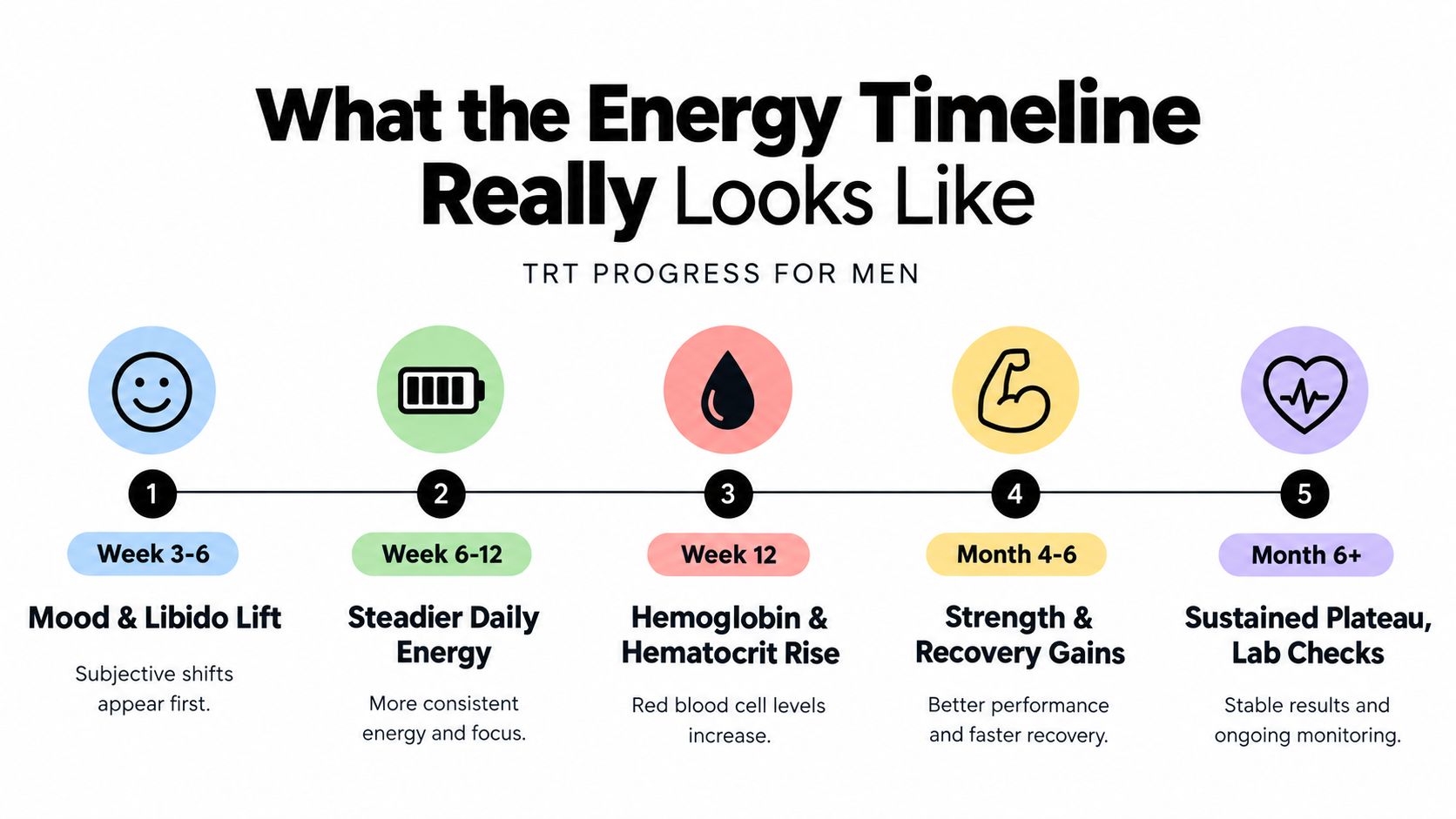
Most men want a date on the calendar. The honest answer is that different symptoms move at different speeds, and subjective energy is one of the least reliable outcomes to predict. Mood or libido may shift before exercise tolerance, blood-count changes, or a stable daily pattern becomes clear.
Early changes aren't the same as stable energy
During the early treatment period, some men notice changes in mood, motivation, or sexual interest. Those changes can be subtle and can fluctuate with sleep, expectations, injection timing, stress, and adherence. A temporary lift shouldn't automatically be interpreted as proof that the dose is correct, just as a slow start doesn't prove that treatment has failed.
Over the following months, clinicians can compare symptoms with testosterone exposure and laboratory monitoring. Physical recovery and training capacity may change more gradually than subjective mood. If energy varies sharply between injections, the pattern may be more informative than a single good or bad day, but dose frequency should be reviewed with a prescriber rather than changed independently.
The six-month TRAVERSE checkpoint offers a useful expectation. 41.0% of testosterone-treated men reported improved energy at six months, versus 27.5% on placebo (the published TRAVERSE energy analysis). That result supports a real treatment effect while making clear that response isn't the usual experience for every patient.
Measure the pattern instead of chasing a feeling
Use the same short daily rating, taken at a consistent time, and record sleep duration, exercise, alcohol, major stress, and injection timing. A simple record can answer practical questions:
- Morning function: Are you waking more refreshed, or only feeling a short afternoon lift?
- Physical capacity: Can you complete normal activities with less exhaustion?
- Mood and motivation: Are you less flat, irritable, or disengaged?
- Sleep: Are you sleeping more soundly, or waking with headaches and daytime drowsiness?
- Consistency: Is the change present across weeks, or only around dosing days?
The older Testosterone Trials provide an important counterexample. In older men with morning testosterone below 275 ng/dL, testosterone gel didn't produce a statistically significant improvement in fatigue or overall vitality compared with placebo over one year (Testosterone Trials vitality results). If energy remains poor despite appropriate exposure, repeating the dose increase isn't a timeline strategy. It's a reason to reassess the diagnosis and the other causes of fatigue.
Dosing, Lab Targets, and What Moves Energy
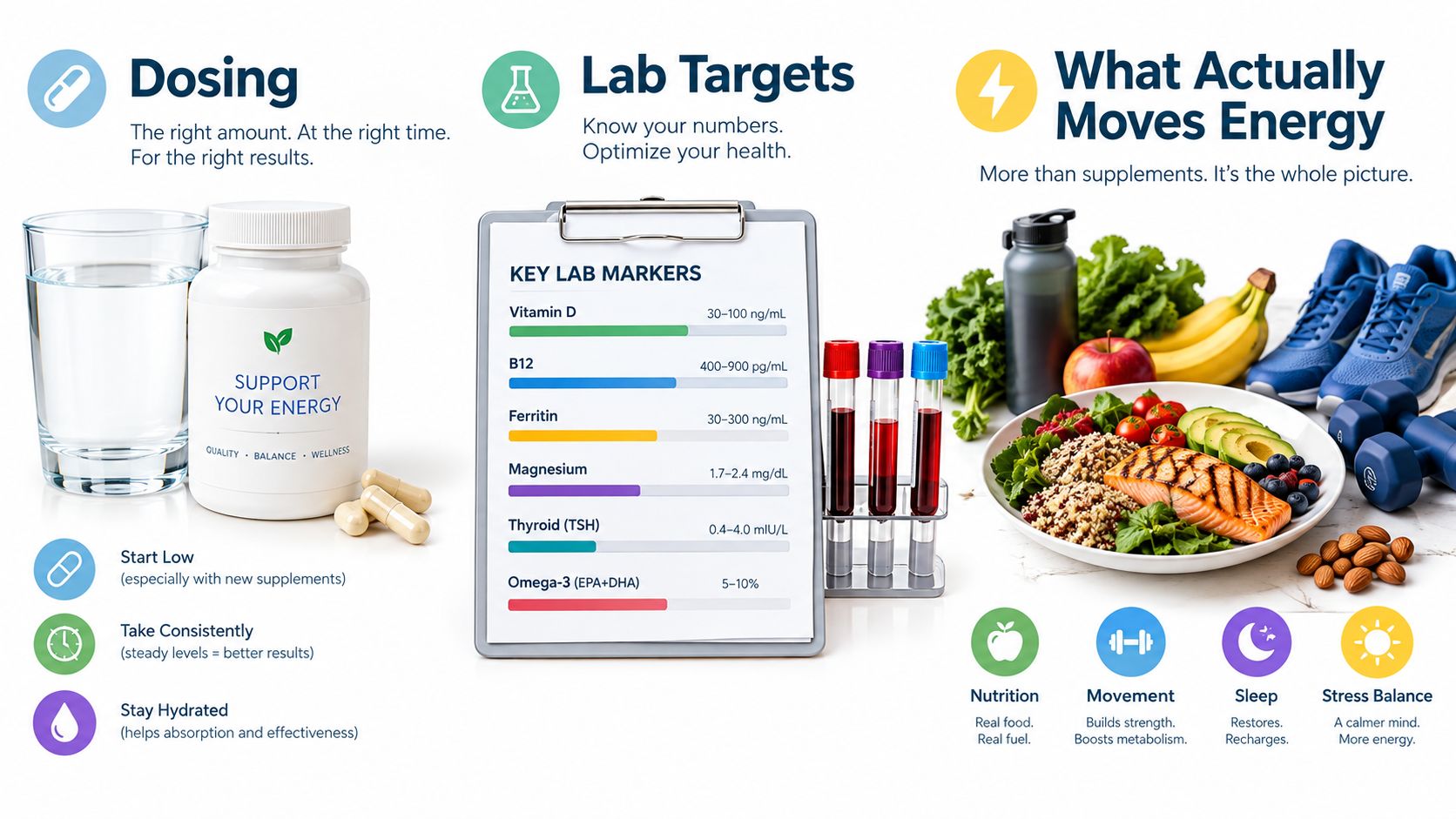
Energy improves, when it improves, because treatment corrects a real deficiency at an exposure the patient can sustain, while sleep, mood, blood counts, and other contributors are addressed. The dose is only one part of that equation.
A useful review examines more than total testosterone:
- Total testosterone shows the overall amount circulating in the blood, but not how much may be available to tissues.
- Free testosterone adds context when SHBG changes the relationship between total testosterone and active hormone.
- SHBG helps explain why two men with similar total testosterone can have different free testosterone results and symptoms.
- Hematocrit matters because TRT can raise red blood cell concentration, affecting safety and, in some patients, how they feel.
- Estradiol and symptoms require context. The result should be considered alongside mood, sexual function, breast symptoms, fluid retention, and other findings.
A better dose review
Route, injection schedule, technique, and adherence all shape exposure. Missed doses, inconsistent timing, incorrect administration, or confusion about concentration can create fluctuations that resemble treatment failure. Gels and injections also produce different exposure patterns, so the clinician should interpret results according to the treatment form and the timing of the blood draw.
The highest possible testosterone result is not the treatment goal. A higher number can occur alongside sleep problems, mood instability, or a rising hematocrit. Persistent fatigue should prompt a review of response, adverse effects, and adherence, as summarized in the Endocrine Society's clinical practice guideline on testosterone therapy in men with hypogonadism. That review helps distinguish inadequate treatment from fatigue driven by another factor.
Before a follow-up, record the exact product, dose, schedule, injection site, missed doses, and the date and timing of the blood draw. This information gives the clinician a clearer picture of whether the prescribed exposure was consistent. If you are comparing care options, Cost Plus TRT's TRT service is one telemedicine option that reviews labs and provides clinician-supervised treatment. The relevant standard is a transparent review connecting laboratory results with symptoms and safety monitoring.
Other Causes of Fatigue That TRT Will Not Fix
A man can have low testosterone and still be tired mainly because he isn't sleeping well. The two findings can coexist without one causing the other. That distinction becomes especially important when testosterone rises into an appropriate range but energy remains flat.
Sleep apnea deserves early attention, particularly with loud snoring, witnessed breathing pauses, morning headaches, dry mouth, or daytime sleepiness. TRT doesn't replace a sleep evaluation. In some patients, treating disrupted breathing changes daytime energy more than adjusting testosterone.
Use a competing-cause checklist
Work through the possibilities with a clinician rather than trying to diagnose yourself from a symptom search:
- Sleep quantity and quality: Short sleep, shift work, insomnia, and frequent awakenings can all drain energy.
- Obstructive sleep apnea: Repeated breathing interruptions can leave someone exhausted despite spending enough time in bed.
- Mood conditions: Depression and anxiety can reduce motivation, concentration, and physical drive.
- Blood and thyroid problems: Anemia, iron-related problems, and hypothyroidism can mimic androgen-related fatigue.
- Medication and substance effects: SSRIs, beta-blockers, sedating medicines, and alcohol may contribute.
- Cardiometabolic illness: Diabetes, cardiovascular disease, obesity, and poor conditioning can limit stamina.
A normal testosterone result doesn't make persistent fatigue imaginary. It changes the next question.
Consider a man whose testosterone rises on TRT but who still wakes repeatedly because of untreated sleep apnea. He may interpret the continued exhaustion as a need for more testosterone, even though the dominant problem is fragmented sleep. The same pattern can occur with depression, thyroid disease, anemia, or a medication that causes sedation.
Energy also depends on recovery. Irregular meals, inadequate sleep, heavy alcohol use, sudden training increases, and chronic stress can overwhelm any improvement attributable to hormone replacement. A careful review doesn't dismiss TRT. It protects the patient from assigning every symptom to one lab value.
Troubleshooting When Energy Does Not Improve
Persistent fatigue needs a process, not a reflexive dose increase. Start by checking the basic facts, then move toward diagnosis and treatment design.
Follow the sequence
First, confirm how treatment is being taken. Review missed doses, injection timing, storage, concentration, needle choice, injection technique, and whether the blood draw occurred at the intended point in the dosing cycle. A confusing schedule can create apparent treatment failure.
Next, interpret the full laboratory picture. Ask whether total testosterone matches free testosterone and SHBG, whether hematocrit has changed, and whether other tests are needed based on symptoms. A single testosterone value without timing and treatment context can lead to the wrong adjustment.
Then, look outside testosterone. Screen for sleep apnea, insufficient sleep, depression, anxiety, anemia, thyroid disease, medication effects, alcohol use, and cardiometabolic illness. Persistent fatigue after biochemical correction is evidence that another contributor may be active, not evidence that the prescription is automatically too weak.
Decide whether the treatment design fits
If adherence and competing causes look reasonable, discuss whether the dose and frequency produce an appropriate, stable exposure for that individual. Some patients experience peaks and troughs that affect how they feel, while others have no meaningful energy response even when levels are appropriate. The clinician should make changes based on symptoms, laboratory timing, safety markers, and the original diagnosis.
A second opinion can help when the explanation remains unclear, monitoring is inconsistent, or the patient feels pressured to escalate. If you transfer care, bring prior laboratory results, the prescription label, the treatment schedule, symptom history, and records of adverse effects. A new clinician can then decide whether repeat testing is necessary instead of assuming every evaluation must start from zero.
Use direct language at the appointment: “My energy hasn't improved. Are my testosterone results appropriate for the timing of the test? What do my free testosterone, SHBG, and hematocrit show? Which non-testosterone causes have we evaluated, and what would make you change or stop treatment?” Those questions turn a vague complaint into a clinical decision.
The Hidden Trade-Offs of Pushing the Dose Higher
More testosterone isn't the same as more energy. Once deficiency is appropriately corrected, additional exposure may add side effects without fixing fatigue caused by poor sleep, depression, anemia, medication effects, or another illness.
TRT can raise hematocrit, and sleep problems can themselves leave a patient exhausted. A dose increase that worsens snoring, sleep quality, mood, or blood-count results can move energy in the wrong direction. The sensible target is the lowest exposure that reliably treats confirmed deficiency, not the highest number a patient can obtain.
Safety findings also argue against casual escalation. A secondary TRAVERSE analysis reported higher rates of atrial fibrillation, acute kidney injury, and pulmonary embolism in the testosterone group. Over a median 3.19 years, clinical fractures occurred in 3.50% of testosterone users compared with 2.46% of placebo users (the European Journal of Endocrinology safety review).
These findings don't mean every patient will experience such events, and they don't replace individualized medical judgment. They do mean that new palpitations, breathing symptoms, swelling, unusual weakness, or other concerning changes deserve prompt clinical review rather than another dose adjustment.
Fertility also belongs in the conversation before treatment or escalation. Men planning children should discuss the effect of exogenous testosterone on sperm production with a clinician, as explained in this guide to TRT and fertility considerations.
When to Consult a Clinician and How to Move Forward
Arrange a clinical review if fatigue persists after an appropriate treatment interval despite suitable testosterone exposure, or if you develop rising hematocrit, new sleep problems, mood changes, palpitations, breathing symptoms, or other cardiovascular concerns. Don't stop or increase TRT on your own. Bring your dosing record, laboratory results, symptom ratings, sleep notes, and medication list.
A practical plan has three rules:
- Don't start or continue TRT for energy alone without confirming the diagnosis.
- Don't judge success from one good day or one testosterone result.
- Don't increase the dose until adherence, laboratory timing, safety markers, and competing causes have been reviewed.
If your current clinic isn't providing clear follow-up, a supervised transfer may be appropriate. Cost Plus TRT charges $119 a month, month to month, with lab work, provider visits, testosterone cypionate, and supplies included, and patients transferring care can share recent labs for review. See how to get started. Confirm current eligibility, pricing, and clinical requirements directly with the provider.
Cost Plus TRT offers physician-supervised telemedicine TRT with lab review, ongoing provider consultations, testosterone cypionate, and injection supplies for eligible patients. If your energy hasn't improved and you want a more structured review of adherence, labs, dosing, and competing causes, visit Cost Plus TRT to begin a consultation.