
You notice the change gradually. Your workouts feel less productive, your morning erections are less reliable, and sexual desire no longer arrives with the same consistency. Fatigue and mental fog follow, but you can't tell whether the cause is testosterone, poor sleep, stress, medication, depression, or just a demanding life.
Then the online search begins. One clinic promises energy and confidence. A forum warns that testosterone replacement therapy can cause a heart attack. Neither answer explains the decision that matters most: do your symptoms and laboratory results point to treatable hypogonadism, or are you looking for optimization despite having normal testosterone?
TRT can provide meaningful benefits for men with confirmed deficiency, but it isn't a general-purpose anti-aging treatment or a guaranteed upgrade. The safest decision depends on diagnosis, fertility plans, cardiovascular and prostate history, blood pressure, sleep, and ongoing laboratory monitoring.
Table of Contents
- Why Men Are Searching for TRT Answers Right Now
- What Low Testosterone Actually Means
- The Real Benefits TRT Can Deliver
- How the Cardiovascular Risk Story Has Changed
- Common and Serious Risks Worth Knowing
- Who Is a Good Candidate and Who Should Wait
- Monitoring, Follow-Up, and the Telemedicine Option
- Practical Next Steps and Common Questions
Why Men Are Searching for TRT Answers Right Now
A man in his late 30s, 40s, or 50s may arrive at this topic after months of small changes rather than one dramatic symptom. His gym progress has softened. His libido is lower. He feels less decisive and more tired, even though his calendar, diet, and responsibilities haven't changed much. He may have already watched advertisements describing testosterone as the missing explanation for every frustrating part of aging.
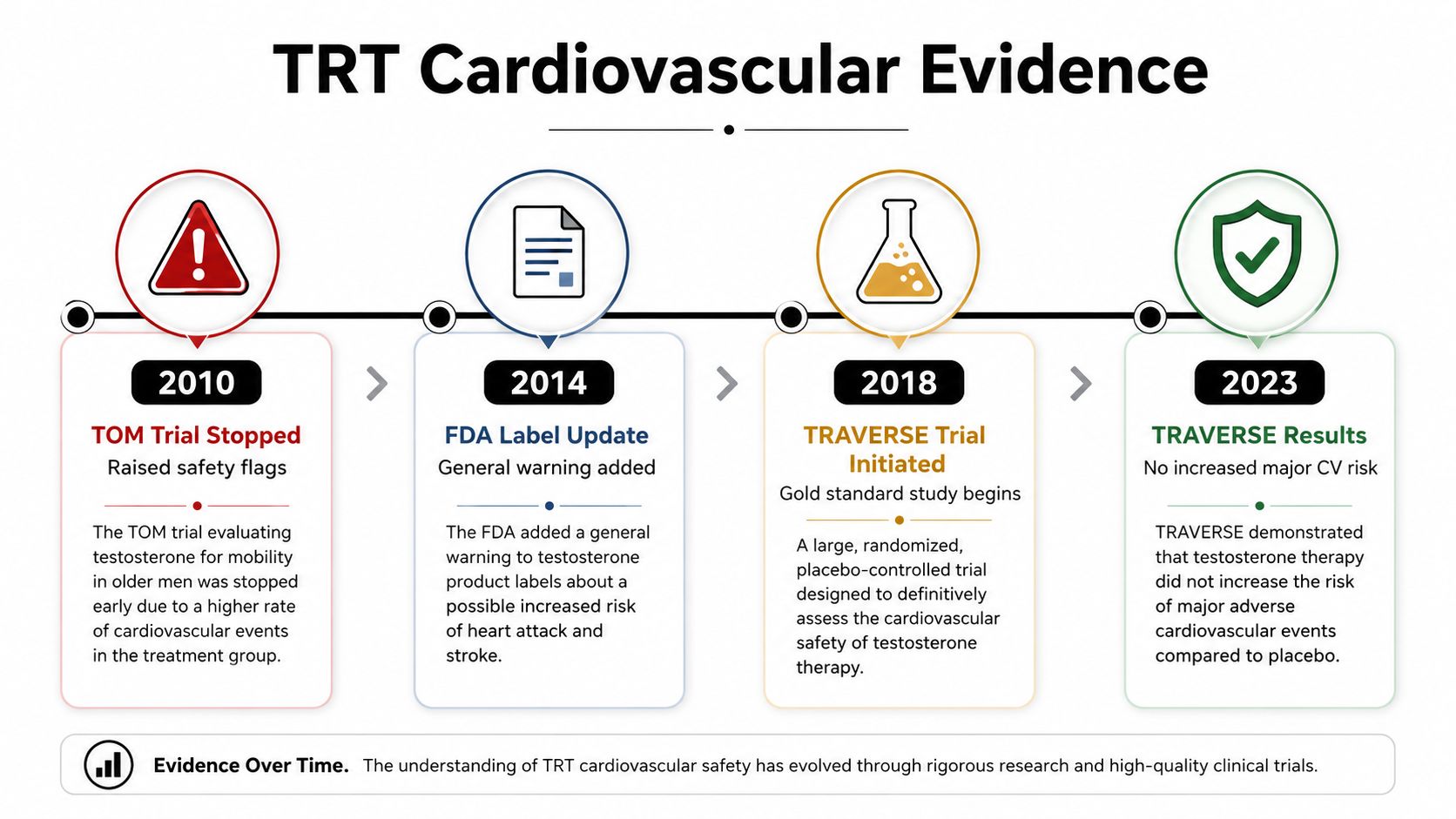
The confusion grows when he finds an older headline linking TRT with heart attacks or strokes. That concern wasn't invented. In March 2015, the U.S. Food and Drug Administration required labeling changes for testosterone products after its advisory process in 2014, highlighting a possible cardiovascular risk and narrowing approved use mainly to men with known causes of hypogonadism. The history is summarized in a peer-reviewed review of testosterone therapy and cardiovascular risk.
The central distinction: treating documented testosterone deficiency is a medical decision. Raising testosterone beyond a normal physiologic range for “optimization” is a different proposition.
The modern discussion is more nuanced than either extreme. Later evidence has reduced the force of blanket cardiovascular warnings, while monitoring has clarified which adverse effects commonly change treatment. A 2024 NIHR meta-analysis included 14 studies and 3,158 men, reporting all-cause mortality of 0.4% with TRT versus 0.8% with placebo, but its confidence interval was wide and didn't establish a definitive mortality reduction. You can review those findings in the NIHR Health Technology Assessment report.
This guide focuses on the practical boundary between a legitimate treatment case and a weak optimization case. It explains how clinicians confirm hypogonadism, what benefits are most reproducible, which risks deserve attention, and how monitoring turns a prescription into an ongoing clinical decision rather than a one-time purchase.
What Low Testosterone Actually Means
“Low testosterone” isn't a diagnosis by itself. Hypogonadism means the body isn't producing enough testosterone for normal function, and clinicians generally look for two signals together: compatible symptoms and consistently low morning testosterone results.
The first signal can include low libido, erectile changes, reduced vitality, depressed mood, loss of lean mass, anemia, or reduced bone density. None of these symptoms belongs exclusively to testosterone deficiency. Sleep apnea, obesity, depression, thyroid disease, medication effects, alcohol excess, and chronic illness can create a similar pattern.
The second signal comes from laboratory testing. Current guidance emphasizes two separate early-morning total testosterone tests, with the strongest benefit evidence generally appearing in men with clear biochemical deficiency, often when total testosterone is below about 300 ng/dL, as described in this review of testosterone deficiency and treatment. A single afternoon result isn't enough because testosterone changes during the day and can fall temporarily during acute illness, sleep deprivation, or other physiologic stress.
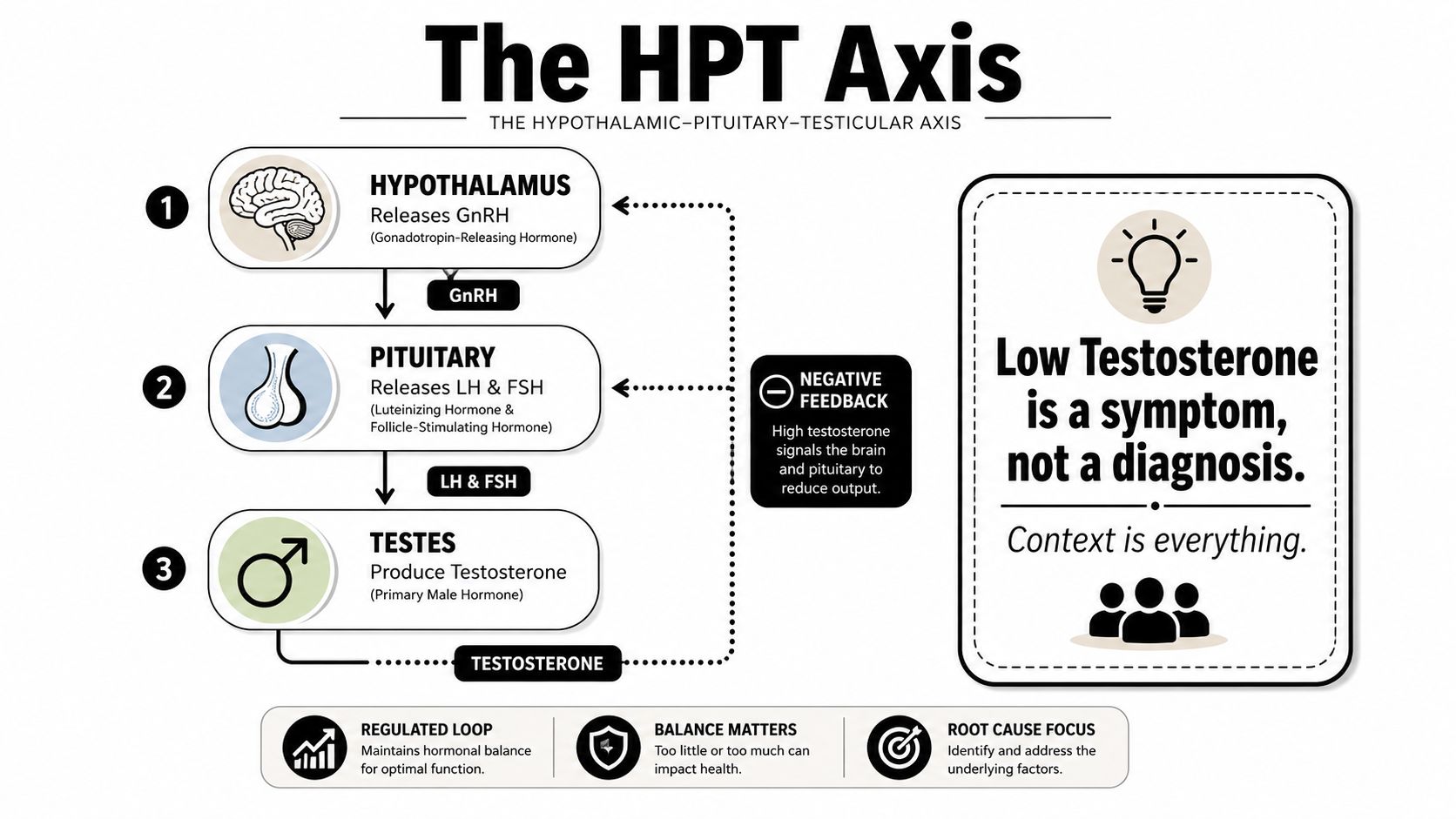
The thermostat analogy
The hypothalamus-pituitary-testes axis, often called the HPT axis, works like a thermostat. The hypothalamus senses the hormonal environment and releases gonadotropin-releasing hormone. The pituitary responds by releasing luteinizing hormone and follicle-stimulating hormone. LH signals the testes to produce testosterone, while FSH helps support sperm production.
When testosterone rises, feedback signals tell the hypothalamus and pituitary to reduce stimulation. If the testes fail despite strong signaling, the pattern can suggest primary hypogonadism. If the brain or pituitary sends insufficient signals, the pattern can suggest secondary hypogonadism. LH and FSH help clinicians investigate that distinction.
Free testosterone can add context when total testosterone is near a diagnostic boundary or when sex hormone-binding globulin may be altered. The purpose of this testing isn't to create a more impressive lab report. It's to identify whether testosterone deficiency is the likely cause of the symptoms and whether another condition deserves attention first.
The Real Benefits TRT Can Deliver
TRT's most reproducible role is symptom-directed replacement. It restores testosterone toward the physiologic range in men whose symptoms and laboratory findings support hypogonadism. The largest benefits generally appear in men with clear biochemical deficiency rather than men whose results are borderline.
Sexual symptoms often provide the clearest reason to consider treatment. Men with low libido and erectile difficulties may experience better sexual desire and function, although erections can still depend on vascular health, relationship factors, medications, and conditions such as diabetes. TRT isn't a universal erectile dysfunction treatment, and it won't correct every cause of sexual dysfunction.
Mood and vitality can improve, particularly when low testosterone is accompanied by depressed mood or reduced drive. The response varies, and subjective symptoms can also improve when men address sleep, exercise, alcohol use, or depression. A man shouldn't treat a testosterone number while leaving those contributors unexamined.
Matching the benefit to the person
TRT can support lean body mass and muscle protein synthesis through androgen receptor signaling in muscle tissue. The effect is more useful when paired with resistance training and adequate nutrition. It isn't a shortcut that replaces training, and it isn't a reliable stand-alone weight-loss drug.
Bone is another important target. Testosterone supports bone remodeling, so restoring deficiency can improve bone mineral density, especially in men whose low testosterone contributes to skeletal loss. Anemia may also improve when testosterone deficiency is responsible and other causes have been assessed.
| Symptom domain | Evidence strength | Expected benefit | Best responder |
|---|---|---|---|
| Libido and sexual function | Strongest when deficiency and sexual symptoms are both present | Improved desire and potentially erectile function | Men with confirmed hypogonadism and sexual symptoms |
| Mood and vitality | Moderate and variable | Better mood, motivation, or energy in some men | Men with deficiency plus reduced vitality or depressed mood |
| Lean body mass | Reproducible but dependent on training | Support for muscle mass and body composition | Men with deficiency who perform resistance exercise |
| Bone mineral density | Clinically meaningful in selected patients | Improved bone density and skeletal support | Men with deficiency and low bone density risk |
| Anemia | Useful when testosterone deficiency is causal | Increased red-cell production and correction of anemia | Men with unexplained anemia after appropriate evaluation |
| Cognition and weight loss | Limited as a primary treatment rationale | Not guaranteed | Men shouldn't start TRT solely for these goals |
The optimization case is different. A man with technically normal testosterone, nonspecific fatigue, and no consistent biochemical deficiency may not receive the same benefit signal. Pursuing supraphysiologic levels can also increase exposure to hematocrit, blood pressure, fertility, acne, and other risks without a clearly established medical advantage.
How the Cardiovascular Risk Story Has Changed
A man with confirmed hypogonadism, troublesome symptoms, and stable cardiovascular disease faces a different decision from a man with normal testosterone who wants more energy or athletic performance. Earlier safety signals created legitimate concern, but they did not prove that TRT causes cardiovascular events in every patient. The practical question now includes the diagnosis, dose, achieved testosterone level, blood pressure, hematocrit, and recent cardiac history.
The FDA's March 2015 labeling action followed years of debate and highlighted a possible increase in cardiovascular events. It also narrowed approved use mainly to men with known causes of hypogonadism, leaving age-related or idiopathic use effectively off-label. The FDA labeling history is summarized in this clinical review of testosterone replacement therapy.
Later evidence made the story more specific. The 2023 TRAVERSE randomized trial, published in the New England Journal of Medicine, found testosterone therapy noninferior to placebo for major adverse cardiac events in men with hypogonadism and cardiovascular risk. The result does not show that TRT protects the heart, and it does not remove the need for follow-up. It does weaken the idea that appropriately prescribed TRT automatically creates an unacceptable cardiovascular danger.
A 2026 meta-analysis reported no increase in all-cause mortality, cardiovascular mortality, stroke, or myocardial infarction, although it found more cardiac arrhythmias. A separate 2024 systematic review and meta-analysis of prospective cohorts reported an 18% lower risk of cardiovascular events among men receiving TRT compared with placebo. These findings may reflect differences among patient groups and do not justify treating normal testosterone to prevent heart disease.
The FDA updated testosterone labeling in 2025, noting higher blood pressure without an observed increase in adverse cardiovascular outcomes. Blood pressure therefore belongs in the treatment decision, not just the follow-up checklist. Uncontrolled hypertension, a recent heart attack or stroke, unstable heart disease, high hematocrit, or symptoms suggesting clotting or arrhythmia deserve careful review before therapy.
Practical interpretation: “No clear increase in major events” means clinicians can weigh TRT more precisely. It does not mean “no risk,” especially when blood pressure, hematocrit, or cardiovascular stability is already a concern.
Common and Serious Risks Worth Knowing
The risk that most often changes day-to-day TRT management is erythrocytosis, an excessive rise in red blood cells and hematocrit. Testosterone stimulates erythropoiesis, which can increase blood viscosity. Injectable formulations and higher achieved testosterone levels tend to produce the largest hematocrit increases.
Major guidance recommends checking hematocrit at baseline, again 3 to 6 months after starting treatment, and then annually. A commonly used action threshold is above 54%, when clinicians typically hold testosterone, evaluate contributors such as hypoxia or sleep apnea, and consider restarting at a lower dose after the cause is addressed, according to the American Urological Association follow-up laboratory guidance.pdf).
Risks that affect daily decisions
TRT suppresses pituitary LH and FSH through feedback. That can reduce testicular testosterone production and sperm production, so men trying to conceive shouldn't treat fertility as an afterthought. Discuss semen preservation and alternative fertility-directed strategies with a specialist before starting. This guide to TRT and infertility explains why replacement therapy can conflict with near-term family plans.
Other common or clinically relevant effects include:
- Sleep apnea: TRT may worsen untreated obstructive sleep apnea, so severe untreated disease should be evaluated before treatment.
- Skin changes: Acne and oily skin can occur as androgen activity increases.
- Breast symptoms: Aromatization can contribute to breast tenderness or enlargement.
- Fluid retention: Swelling or edema deserves assessment, particularly in men with cardiac or kidney concerns.
- Mood changes: Irritability can occur, and hypomanic symptoms are more concerning when doses produce supraphysiologic levels.
- Prostate monitoring: TRT doesn't appear to cause prostate cancer, but it can raise PSA or worsen symptoms from existing prostate disease. Active or suspected prostate cancer requires careful specialist evaluation.
| Risk | Frequency | Trigger threshold | Typical response |
|---|---|---|---|
| Erythrocytosis | Common clinically meaningful concern | Hematocrit above 54% | Hold or reduce TRT, investigate hypoxia or sleep apnea |
| Fertility suppression | Expected pharmacologic possibility | Declining sperm production or conception plans | Reassess treatment and discuss fertility-directed options |
| Blood-pressure elevation | Relevant ongoing safety signal | Sustained elevation on repeated checks | Review dose, formulation, cardiovascular risk, and other causes |
| Sleep apnea worsening | More concerning with untreated disease | Worsening snoring, witnessed pauses, or daytime sleepiness | Evaluate and treat sleep apnea before continuing |
| Prostate symptoms or PSA change | Requires individualized surveillance | Concerning symptoms or PSA pattern | Coordinate urologic evaluation |
| Thromboembolic or cardiac symptoms | Less common but urgent | Chest pain, sudden breathlessness, unilateral leg swelling, fainting | Seek urgent medical evaluation |
Who Is a Good Candidate and Who Should Wait
The strongest candidate has consistent symptoms plus consistently low morning testosterone, with no better reversible explanation. Low libido, reduced erectile function, loss of lean mass, unexplained anemia, or bone loss can strengthen the medical rationale when laboratory results confirm deficiency.
A man should pause when the lab result is borderline, symptoms are mild or nonspecific, or the treatment goal is only to feel younger despite normal testosterone. The decision also deserves extra caution with recent myocardial infarction or stroke, unstable heart disease, active or suspected prostate cancer, untreated severe sleep apnea, uncontrolled polycythemia, or a near-term plan to conceive.
Compare the likely paths
| Situation | More reasonable next step |
|---|---|
| Symptoms match hypogonadism and two morning tests are consistently low | Discuss medically supervised TRT |
| Testosterone is borderline and fatigue is the main symptom | Investigate sleep, mood, thyroid, medications, and metabolic health |
| Fertility is a near-term priority | Avoid starting routine TRT until fertility options are discussed |
| Hematocrit is already elevated | Identify the cause and correct it before considering TRT |
| Sleep apnea is untreated | Evaluate and treat the sleep disorder first |
| Recent cardiovascular instability | Defer treatment and coordinate with the treating clinician |
Several conditions can mimic low testosterone or alter its measurement. Obesity can suppress sex hormone-binding globulin and lower total testosterone. Obstructive sleep apnea, depression, hypothyroidism, hyperprolactinemia, alcohol excess, opioid use, SSRIs, and finasteride may also contribute to symptoms or laboratory changes.
The recent guidance discussion on testosterone therapy candidacy reinforces the central boundary: low numbers alone aren't enough. A clinician needs to determine whether replacement is likely to solve the problem or whether another condition should be treated first.
Monitoring, Follow-Up, and the Telemedicine Option
A safe TRT program begins before the first prescription. Baseline evaluation commonly includes total and free testosterone, LH and FSH, hematocrit, metabolic testing, and a prostate discussion. PSA may be appropriate based on age, family history, symptoms, and clinician judgment.
Follow-up should combine laboratory results with the patient's experience. A number can look acceptable while libido remains unchanged, or symptoms can improve while hematocrit or blood pressure becomes problematic. Injection timing also matters because testosterone levels can fluctuate, and the clinician needs to know when the sample was collected relative to the dose.
| Time point | Labs or checks | Action threshold |
|---|---|---|
| Before treatment | Symptoms, two morning testosterone results, hematocrit, relevant hormonal and prostate evaluation | Don't start without a clear diagnosis and safety review |
| Early follow-up | Symptoms, adverse effects, testosterone, hematocrit, blood pressure | Reassess dose or formulation if levels or symptoms are unsuitable |
| Ongoing follow-up | Hematocrit, testosterone, blood pressure, symptom response, prostate surveillance when appropriate | Hematocrit above 54% requires action and evaluation |
| Long-term review | Periodic laboratory monitoring and cardiovascular, sleep, fertility, and prostate review | Continue only when benefits still outweigh risks |
The exact cadence varies by formulation and patient risk. The key threshold is hematocrit above 54%, while the FDA's 2025 labeling update adds higher blood pressure as a specific safety concern. A clinician may also respond to persistent symptoms, excessive testosterone levels, worsening sleep apnea, new edema, or prostate findings rather than waiting for a single numeric trigger.
Telemedicine can handle questionnaires, laboratory review, prescribing, and scheduled follow-up when local rules and clinical circumstances allow. It shouldn't replace in-person evaluation for concerning cardiovascular symptoms, prostate findings, severe sleep apnea, or unexplained abnormal blood counts. A structured pathway such as Cost Plus TRT's telehealth consent process can fit into care when the patient understands the monitoring requirements and continues coordinating appropriate primary or specialty care.
Practical Next Steps and Common Questions
Start with the diagnosis, not the prescription. Write down the symptoms that affect your life, arrange two early-morning total testosterone tests, and ask a clinician to interpret them alongside free testosterone, LH, FSH, hematocrit, medication history, sleep quality, and relevant prostate or cardiovascular factors.
Before choosing TRT, investigate sleep apnea, obesity, thyroid disease, depression, alcohol excess, opioid use, and medications that may affect sexual function or energy. If you have a high hematocrit, fertility plans, recent cardiovascular events, or prostate concerns, those issues should shape the consultation from the beginning.
A few answers are especially important:
- Does TRT cause prostate cancer? Current evidence doesn't support the claim that TRT itself causes prostate cancer, but existing or suspected prostate disease requires surveillance.
- How quickly will benefits appear? Sexual symptoms, mood, body composition, bone health, and anemia don't necessarily change on the same schedule. Your clinician should judge progress over follow-up visits rather than one early impression.
- Does TRT affect fertility? It can suppress sperm production, so men planning conception need a different discussion before treatment.
- Is treatment lifelong? Not automatically. The decision depends on the underlying cause, symptom response, safety results, and changing goals.
- What happens with high hematocrit? Treatment is usually held or adjusted, and contributors such as sleep apnea or hypoxia are evaluated.
Cost and convenience also matter, but they shouldn't replace clinical standards. You can review practical pricing questions in this guide to how much TRT costs. This article is educational and can't substitute for individualized advice from a licensed clinician who has reviewed your history and test results.
Cost Plus TRT offers online evaluation, prescription management, laboratory coordination, and ongoing follow-up for eligible patients considering medically supervised TRT. Visit Cost Plus TRT to review the process and decide whether a clinician consultation is the appropriate next step for your symptoms and risk profile.