

You notice it after ejaculation and pause for a second. The semen looks thicker than usual, maybe stringy, clumpy, or more gel-like than you expected. Most men don't get taught what normal semen changes look like, so it's easy to jump straight to worst-case thinking.
The first useful thing to know is that semen consistency can vary. A temporary change often comes down to hydration, how long it's been since you last ejaculated, or a short-term shift in your body. But if you keep seeing the same pattern, especially with fertility concerns or other symptoms, thick semen can be worth taking seriously.
This matters for two reasons. One is mechanical: sperm need to move through fluid well enough to reach their destination. The other is broader: sometimes what thick sperm means has less to do with the semen itself and more to do with what's happening in the prostate, seminal vesicles, or hormone balance.
Table of Contents
- What Thick Sperm Means for Your Health
- Understanding Semen Viscosity and Liquefaction
- Common Causes From Dehydration to Hormonal Changes
- How Semen Viscosity Affects Fertility and Health
- What You Can Do at Home and When to See a Doctor
- Medical Treatments for Semen Hyperviscosity
- Frequently Asked Questions About Semen Viscosity
What Thick Sperm Means for Your Health
If you're seeing thicker semen once in a while, that alone usually doesn't tell the whole story. Semen changes from one ejaculation to the next, and a single episode isn't automatically a sign of disease. What matters more is whether the change keeps happening, whether the semen stays unusually dense, and whether you also have symptoms like pain, urinary burning, fever, or fertility trouble.
In practice, thick sperm means one of two broad things. It may reflect a temporary concentration issue, such as dehydration or a longer gap between ejaculations. Or it may be a signal from the reproductive system that something isn't functioning normally, such as inflammation, infection, or a hormone-related problem affecting how seminal fluid is produced.
One reason this topic gets misunderstood is that men often judge semen by appearance alone. But semen is a mixed fluid made from sperm plus secretions from the prostate and seminal vesicles. So when texture changes, the question isn't just “Are the sperm okay?” It's also “Are the glands and hormones that produce the fluid working the way they should?”
Thick semen is often a body clue, not a diagnosis by itself.
A useful way to think about it is this:
- Occasional thickness can be normal variation.
- Persistent thickness deserves context.
- Thickness with other symptoms deserves medical attention sooner.
Another important point is reassurance. Thick semen is common enough that it shouldn't trigger panic. What it should trigger is observation. Pay attention to whether it improves with better hydration, more regular ejaculation, and time. If it doesn't, that's when the finding becomes clinically useful.
For men concerned about overall health, not just fertility, the topic takes on greater significance. Sometimes what thick sperm means is that the body is showing an early visible sign of a deeper issue, especially if low testosterone is starting to affect energy, libido, erections, mood, or body composition in parallel.
Understanding Semen Viscosity and Liquefaction
What viscosity actually refers to
Semen viscosity means how thick or resistant to flow semen is. Immediately after ejaculation, semen is supposed to be somewhat thick and gel-like. That part is normal. The body designs semen this way for a reason.
The easiest analogy is gelatin. It starts off set and cohesive, then loosens over time. Semen behaves similarly. Right after ejaculation, it coagulates. Then enzymes from the prostate and seminal vesicles break that gel structure down so it becomes more fluid.

That second step matters. Sperm don't benefit from being trapped in a dense matrix for too long. They need the fluid to loosen enough for movement. Normal semen should liquefy within 15 to 30 minutes, while semen hyperviscosity is defined by liquefaction taking more than 60 minutes, as explained in this review of semen hyperviscosity and liquefaction timing.
When thickness becomes a medical issue
The problem is rarely that semen is thick at the beginning. The problem is that it doesn't thin out on time. When that happens, clinicians think about enzyme dysfunction and the possibility that sperm are getting mechanically trapped.
A practical distinction helps:
| Observation | What it usually suggests |
|---|---|
| Thick right after ejaculation, then loosens | Often part of the normal process |
| Remains very stringy, clumpy, or gel-like well past the usual window | May reflect hyperviscosity |
| Repeated thickening over multiple ejaculations | Worth assessing in context of symptoms and fertility goals |
This is why home observation has limits. You can notice consistency, but you can't measure liquefaction precisely or determine whether the issue comes from enzymes, inflammation, hormones, or sperm characteristics. That's what formal semen analysis is for.
Practical rule: If the semen repeatedly looks abnormally dense and doesn't seem to become more fluid in a reasonable time, don't guess. Get it checked.
Common Causes From Dehydration to Hormonal Changes
A man usually notices this in a very ordinary moment. He sees semen that looks thicker than usual, then wonders whether he just needs more water or whether something deeper is going on. Both possibilities are real.
Some causes are temporary and low-risk. Others deserve a proper workup because semen can reflect what is happening in the prostate, seminal vesicles, hormones, or reproductive tract as a whole.
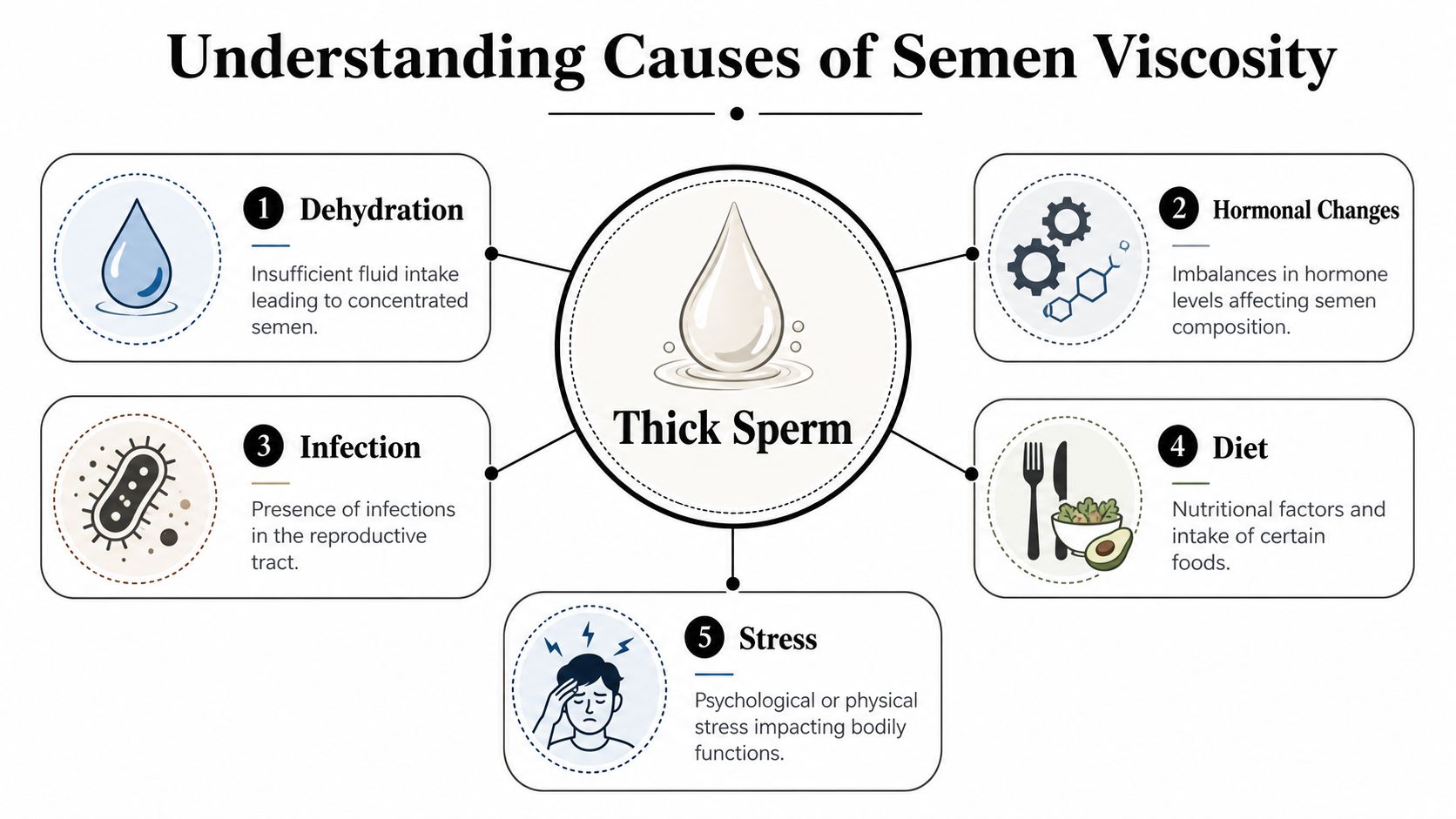
Common and often reversible causes
Dehydration is one of the simplest explanations. Semen is partly fluid, so if the body is running dry, the sample can look more concentrated, sticky, or dense. In practice, this is one of the first things to correct because it is easy to test. Improve fluid intake for several days, then see whether the pattern changes.
Infrequent ejaculation can also make semen look thicker. After a longer gap, the sample may be more concentrated and sometimes more clumpy at first glance. Men often miss this detail because they focus on the appearance of one ejaculation instead of the timing pattern over the previous week or two.
Diet, fever, recent illness, and short-term stress can play a role as well. These do not always change semen in a dramatic way, but they can shift fluid balance and gland function enough to alter consistency for a short period.
Some samples look thick because they contain a higher sperm concentration or more cellular material. The World Health Organization manual for semen examination discusses how semen characteristics vary with sperm content and other lab parameters in its guidance on semen assessment and related factors. That does not automatically mean the sample is healthier. It means appearance alone has limits.
When thick semen points to an underlying condition
Persistent thick semen gets more interesting medically because it may be a visible clue, not just a nuisance.
Infection or inflammation is a common example. Prostatitis, urinary tract infection, and some sexually transmitted infections can add inflammatory cells and proteins to semen, which can make it look unusually dense, cloudy, clumpy, or stringy. If you also have burning with urination, pelvic pain, foul odor, blood, or fever, stop guessing and get evaluated.
Hormonal imbalance matters more than many men realize, especially low testosterone. Testosterone helps maintain the organs that add fluid to semen, including the prostate and seminal vesicles. If hormone support drops, semen volume and fluid quality can change. In some men, thicker semen shows up alongside lower libido, fatigue, reduced morning erections, loss of muscle, or fertility concerns.
That is the bigger clinical point. Thick sperm can be a hydration issue. It can also be an early visible sign that hormone production is off.
I tell patients to look for patterns, not one isolated sample. Semen that is repeatedly thick plus low sex drive or low energy deserves a hormone review. Semen that is thick plus pain or urinary symptoms deserves an infection workup. Semen that is thick after a long abstinence period and then returns to normal is usually less concerning.
If fertility is part of the picture, be careful with self-treatment. Men considering testosterone should understand how TRT can affect fertility before starting therapy, because the plan for symptom relief and the plan for preserving sperm production are not always the same.
The practical takeaway is simple. Correct the obvious factors first, such as hydration and ejaculation timing. If the change persists or comes with other symptoms, treat it as useful information about your overall health, not just a cosmetic change in semen.
How Semen Viscosity Affects Fertility and Health
One of the most common myths is that thicker semen means stronger fertility. It sounds intuitive, but it often points in the wrong direction.
Why thicker does not mean more fertile
Many men assume dense semen signals potency or a high-performing sample. But this review of thick semen and fertility concerns notes that sperm hyperviscosity often correlates with reduced sperm motility and a higher risk of infertility because the thick fluid physically makes it harder for sperm to move through the female reproductive tract.
The simplest analogy is swimming through mud versus water. Even healthy sperm struggle if the surrounding fluid is too dense. A normal sperm count doesn't fully solve that problem. If movement is restricted, the path to fertilization still gets harder.
That's why fertility specialists don't judge semen quality by thickness alone. They care about whether sperm can move, whether the sample liquefies appropriately, and whether the fluid environment supports transport rather than working against it.
If semen is too thick, the issue isn't just what's in the sample. It's whether sperm can get out of it and move efficiently.
For men dealing with erection issues at the same time, it's also worth separating two different problems. Semen viscosity affects sperm transport. Erections affect sexual performance. They may overlap in the same patient, but they aren't the same mechanism. If erectile support is part of the bigger picture, physician-guided options like ED medications belong in a separate conversation.
Why this can reflect more than fertility alone
The fertility angle gets the most attention, but it's not the only reason to care. Persistent changes in semen texture can be a marker of what's happening upstream.
If the cause is infection, you want to identify and treat it before it lingers. If the cause is inflammation, the semen change may be one of several signs the reproductive tract is irritated. If low testosterone is involved, thick semen may appear before a man fully connects his other symptoms, such as lower libido, lower energy, weaker erections, or slower recovery.
That makes semen viscosity a useful clinical clue. It's not a stand-alone diagnosis, and it doesn't replace lab work. But it can be the thing that prompts a man to get evaluated earlier instead of waiting until fertility struggles or more obvious hormone symptoms force the issue.
What You Can Do at Home and When to See a Doctor
A reasonable first step is to treat this like a short observation period, not an emergency. Thick semen frequently serves as a clinical indicator of underlying hormonal imbalance, especially low testosterone, and persistent thick semen that doesn't improve with hydration or increased ejaculation frequency after a few days warrants a formal semen analysis, according to this clinical discussion of semen thickness and low testosterone.
What to try first at home
Start with the basics that have a clear physiological rationale.
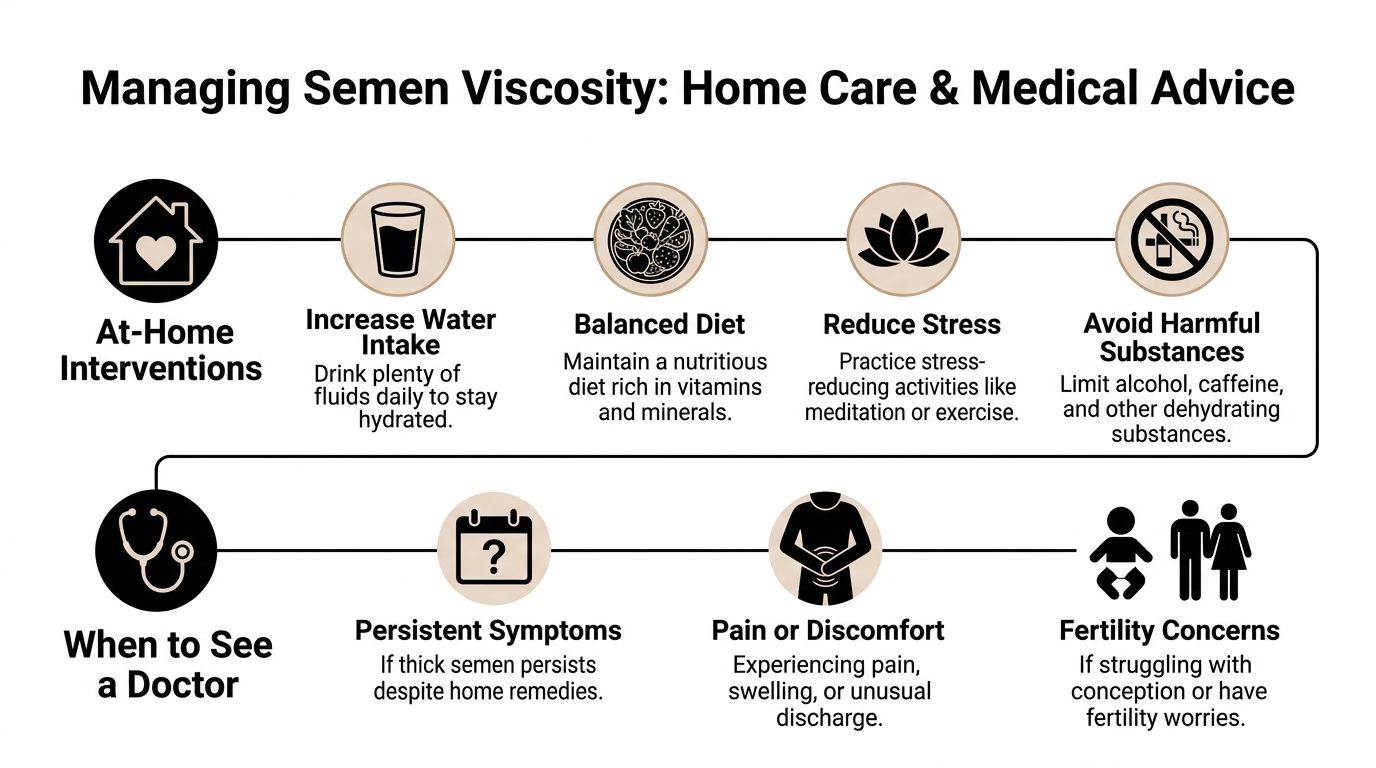
- Increase fluids: If dehydration is contributing, better hydration can reduce concentration and improve consistency.
- Ejaculate more regularly: A long abstinence period can make semen look denser. Returning to a more regular pattern may normalize it.
- Watch for patterns: Note whether the issue is isolated or keeps recurring. A one-time change and a repeated pattern are not the same thing.
- Notice associated symptoms: Pain, burning, odor, or systemic symptoms matter more than appearance alone.
Some men also benefit from cleaning up obvious lifestyle strain during this observation window. That means sleeping better, reducing heavy alcohol intake, and eating more consistently. These aren't magic fixes, but they can remove noise from the picture.
This short video gives a useful overview before you decide whether to book an evaluation.
Signs you should get evaluated
Don't stay in DIY mode if any of the following apply:
- Persistence: The semen stays thick despite a few days of hydration and more regular ejaculation.
- Pain or urinary symptoms: Burning, painful ejaculation, pelvic discomfort, or lower urinary tract symptoms suggest more than simple concentration.
- Fever: A fever over 101°F (38.3°C) can point toward infection and should not be brushed off.
- Fertility concerns: If you're trying to conceive, repeated abnormal semen consistency deserves formal testing sooner rather than later.
When you do see a clinician, expect the workup to be straightforward. A semen analysis can assess viscosity and liquefaction behavior. Depending on the rest of the history, clinicians may also order hormone testing, including testosterone, and evaluate for infection or prostatitis.
A good consultation should answer three questions clearly:
| Question | Why it matters |
|---|---|
| Is this temporary or persistent? | Temporary changes often behave differently from true hyperviscosity |
| Is there evidence of infection or inflammation? | Treatment changes quickly if these are present |
| Could hormones be contributing? | This shifts the focus from symptom control to root-cause care |
Medical Treatments for Semen Hyperviscosity
Treatment works best when it follows the cause. There isn't one universal fix for semen hyperviscosity, because the thickening can come from very different problems.
Treatment depends on the cause
If infection is driving the change, clinicians generally target the infection directly. That may mean antibiotics when a bacterial process is identified. If inflammation in the prostate or related structures is part of the picture, treatment may also include measures directed at that inflammatory source rather than the semen texture itself.
If the issue reflects dehydration or infrequent ejaculation, the “treatment” is often behavioral. Better hydration and a more regular ejaculation pattern may be enough. That's why it's worth trying simple corrections first before assuming the worst.
Some men ask whether there's a quick medication that merely thins semen. In practice, treatment is usually more targeted than that. The goal is to correct the condition creating the abnormal consistency, not just change the sample's appearance.
Why hormone evaluation can matter
An underappreciated point is that thick sperm can be an early, non-specific marker of low testosterone, because reduced testosterone can lower fluid production from the prostate and seminal vesicles, as explained in this discussion of thick sperm as a visible sign of hypogonadism.
That matters because low testosterone is treatable. If a man's semen has become persistently thick and he also has symptoms such as reduced libido, lower energy, mood changes, or erectile difficulty, hormone assessment becomes a logical next step.
For men also exploring broader sexual health treatments, therapies are often combined thoughtfully, but only after the diagnosis is clear. As one example of how specialized treatment categories can fit into a men's health plan, some patients discuss options like PT-141 peptide therapy with their clinician. That doesn't treat hyperviscosity directly, but it shows how symptom clusters often need a complete evaluation rather than one isolated fix.
Frequently Asked Questions About Semen Viscosity
Is clumpy or jelly-like semen the same as thick semen
Often, yes. Men use different words for the same change they can see after ejaculation. “Clumpy,” “stringy,” “jelly-like,” and “thick” often describe semen that looks denser than expected or takes longer to thin out.
The point to watch is persistence. Semen normally starts out gel-like, then should liquefy within a reasonable period. If it stays unusually dense or sticky over and over, that is more meaningful than a one-time change.
Does diet affect semen thickness
Diet affects semen consistency mostly through overall health, not through one specific food. Dehydration is the simplest example, but I also look at the bigger pattern. Poor sleep, weight gain, heavy alcohol use, and a low-quality diet can all show up in hormone health, and that matters because testosterone helps regulate fluid production from the prostate and seminal vesicles.
So yes, food choices can matter. Usually they matter because they reflect whether the body is running well overall.
The practical advice is simple. Drink enough water, eat regularly, and treat persistent thick semen as a health signal, not a supplement-shopping problem.
Can you test semen viscosity at home
You can monitor it at home, but you cannot confirm semen hyperviscosity by appearance alone.
What home observation does well is pattern tracking. If semen repeatedly looks unusually dense, forms long strings, or stays gel-like longer than before, write that down along with other symptoms such as low libido, reduced energy, or erection changes. That combination is often more useful than the semen change by itself, especially if a hormone issue is developing in the background. A semen analysis is still the test that determines whether viscosity is abnormal.
Does thick semen always mean high sperm count
No. Thick semen can show up with different sperm patterns, including higher concentration in some men and poorer movement or abnormal forms in others. The American Urological Association and the American Society for Reproductive Medicine note in their male infertility guideline that semen findings need to be interpreted as a whole, not judged by appearance alone.
That is the right way to read thick sperm. It is a clue. Sometimes the explanation is temporary and straightforward. Sometimes it is an early visible sign that hormone balance, especially testosterone, needs a closer look.
If the change keeps showing up, measure it properly and match it to the rest of your health picture.
If you're dealing with persistent thick semen along with low libido, lower energy, erection changes, or other symptoms that make you wonder about hormone imbalance, Cost Plus TRT offers physician-supervised telemedicine care focused on men's health. Their team can help you review labs, evaluate whether testosterone or related issues may be contributing, and discuss treatment options with transparent pricing.