

You've finally done the hard part. You got evaluated, your labs were reviewed, and low testosterone is no longer a vague suspicion. Then the next question lands: What type of TRT should I use?
That's where many men get stuck. One clinic talks about weekly shots. Another pushes gel. You read about pellets, nasal options, oral testosterone, and fertility concerns, and suddenly a straightforward treatment decision starts to feel technical and high stakes.
The good news is that most of the confusion comes from presentation, not from the options being impossible to understand. The major testosterone replacement therapy types all aim at the same goal. They just get there through different delivery routes, different dosing schedules, and different trade-offs around convenience, flexibility, and family planning.
Table of Contents
- Navigating Your TRT Options Without the Overwhelm
- The Three Main Pathways for Testosterone Delivery
- Testosterone Injections The Gold Standard for Cost and Control
- Transdermal Gels and Patches For Needle-Free Daily Dosing
- Testosterone Pellets The Long-Term TRT Solution
- Emerging TRT Types and Fertility-Sparing Options
- How to Choose the Right TRT Type for Your Goals and Budget
Navigating Your TRT Options Without the Overwhelm
Most men start in the same place. They want better energy, better sexual function, better recovery, and a treatment plan that doesn't take over their life. What they don't want is a chemistry lesson every time someone explains testosterone.
Here's the practical truth. There isn't one universally best TRT method. There's the best fit for your life. A man who travels every week may choose differently than someone who wants the lowest ongoing cost. A man who hates needles may accept daily application. A man trying to conceive needs a very different conversation from a man who's done having children.
That's why I prefer to frame this decision around three questions:
- How much flexibility do you want: Some methods are easy to fine-tune. Others are harder to adjust once started.
- How often do you want to think about treatment: Daily, weekly, or every few months all feel very different in real life.
- What constraints matter most: Budget, home administration, privacy, fertility, and comfort with procedures all matter.
If you're early in the process, it helps to look at a straightforward overview of TRT treatment options and care pathways before narrowing in on one route.
Practical rule: The best TRT plan is the one you can follow consistently, monitor properly, and live with comfortably.
Most men end up choosing between injections, skin-based options, or longer-acting formats. A smaller group needs to think carefully about oral or nasal options, or about alternatives to testosterone altogether if fertility is still a priority.
The Three Main Pathways for Testosterone Delivery
A new TRT patient usually asks some version of the same question. “What am I signing up for each week?”
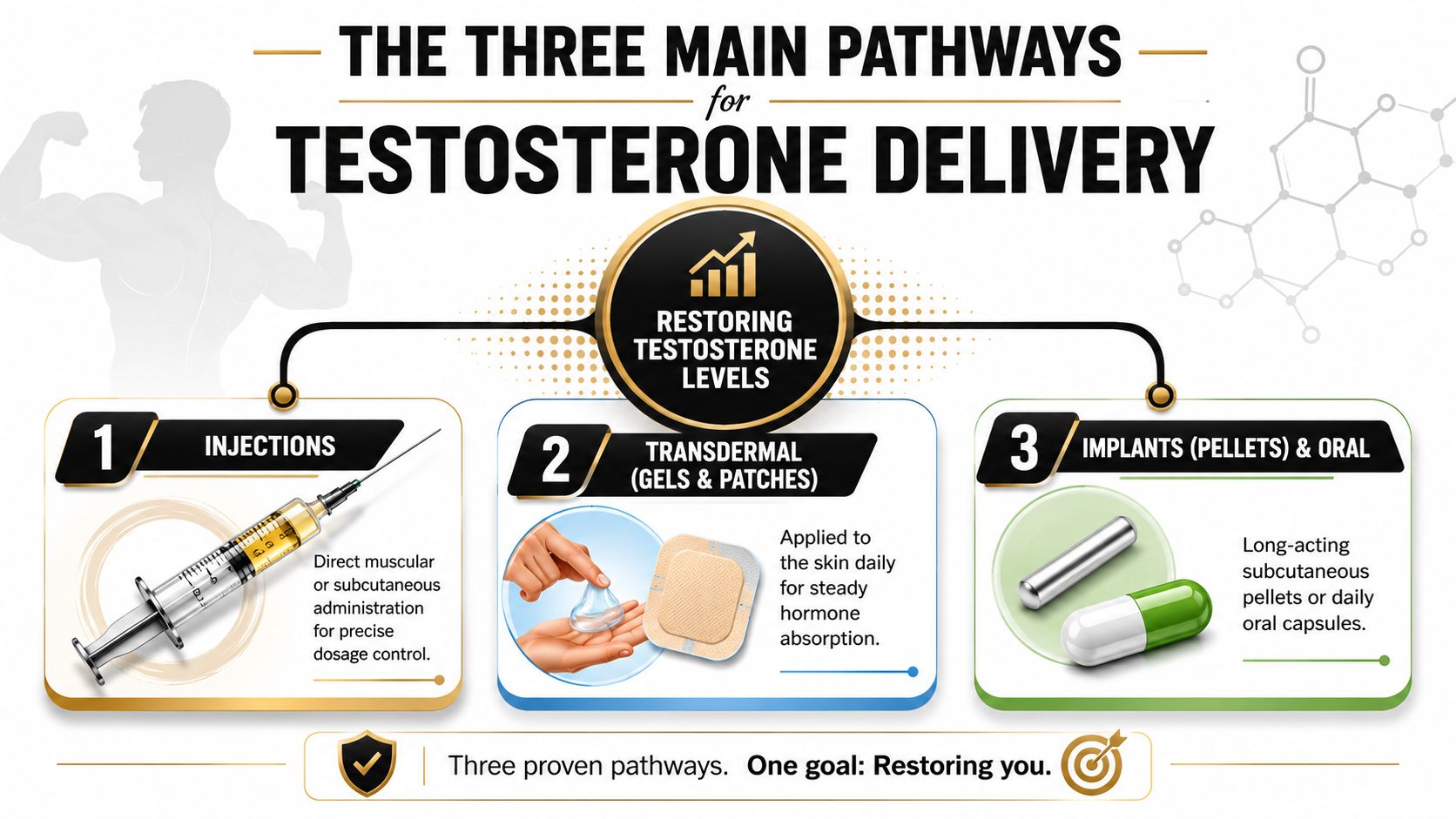
That is the right question. Every TRT method aims to raise testosterone to an effective range, but the day-to-day experience can look very different depending on the route. Some options are low-cost and easy to adjust at home. Others reduce how often you have to think about treatment, but give up some flexibility.
Current clinical guidance from the American Urological Association describes several accepted testosterone delivery routes, including injectables, transdermal preparations, pellets, nasal therapy, and oral formulations, in its testosterone deficiency guideline.
Injections
Injections are the most common starting point because they are practical. They usually cost less than newer or procedure-based options, they work well with telemedicine follow-up, and dose changes are relatively straightforward.
That matters in real practice. Early TRT often involves adjustment. If energy improves but estradiol rises, if levels swing too much between doses, or if a patient wants a simpler schedule, injections are easier to fine-tune than longer-acting formats.
They also fit home administration well. For many men, that means fewer office visits and a lower ongoing cost.
Transdermal options
Gels and patches deliver testosterone through the skin and avoid needles entirely. For the right patient, that can make treatment feel simpler and less intimidating.
The trade-off is daily attention. You have to apply them correctly, allow time for absorption, and avoid transfer risk to partners or children. Men with irregular mornings, frequent skin irritation, or close household contact often find those details more important than they expected.
Some men still prefer them because they like steady daily dosing and do not want to self-inject.
Long-acting and specialty options
Pellets, oral testosterone, nasal gel, and buccal systems are less common starting points, but they are legitimate options in selected cases. The main question is not whether they work. It is whether their dosing pattern, cost, and logistics fit your life.
Pellets reduce treatment frequency but require a procedure and are harder to adjust once placed. Nasal, oral, and buccal options may appeal to men who want to avoid both injections and skin transfer concerns, though they can involve more frequent dosing or higher monthly cost.
The best route is the one you can afford, manage consistently, and monitor safely.
That is why route selection is never just a medical decision. It is also a schedule decision, a budget decision, and sometimes a fertility decision. Telemedicine has made some forms of TRT easier to access and manage from home, but convenience still has to match the treatment plan itself.
Testosterone Injections The Gold Standard for Cost and Control
If you want the most established option in routine TRT practice, injections usually top the list.
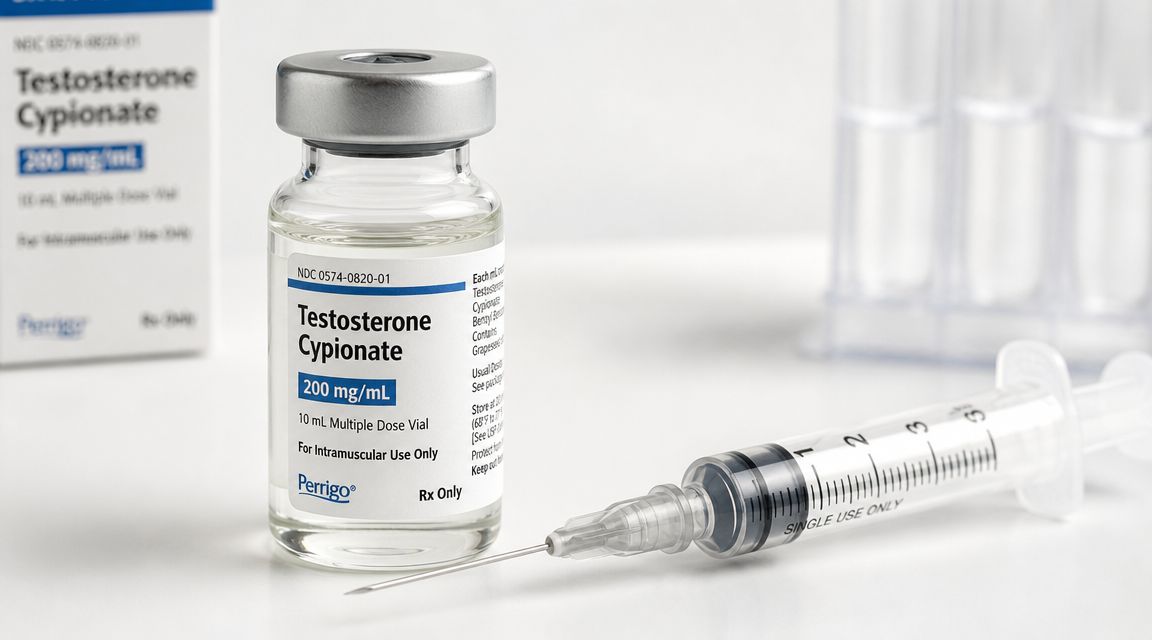
Injectable testosterone is the most established TRT category in practice and includes testosterone cypionate, testosterone enanthate, and testosterone undecanoate. Clinical references note that shorter-acting injections are commonly given every 1 to 2 weeks, while longer-acting injectable options can go much longer between doses, as outlined in this injectable testosterone overview.
For most new patients, the common names they hear first are testosterone cypionate and testosterone enanthate. These are familiar workhorses in men's health. They're widely used, relatively straightforward to dose, and practical for home administration.
Why injections work so well in real life
The biggest strength of injections is control. If a patient feels great but labs need small adjustment, or if symptoms are inconsistent across the dosing interval, the dose and timing can often be modified without changing the entire treatment model.
That flexibility matters more than people expect. Men rarely stay on the exact same plan forever. Weight changes, stress, sleep, training volume, and medication tolerance can all shift what works best. Injections make that easier to manage.
They also tend to fit telemedicine well. Once a man is properly evaluated and taught the technique, home dosing is simple for many patients. That avoids repeat office visits just to receive medication administration.
What patients usually worry about
Needles are the obvious concern. Some men are anxious before the first few doses and then settle into the routine quickly. Others never love it, but still prefer injections because the dosing is efficient and the plan is easy to monitor.
The second concern is fluctuation. Some men notice symptom swings between doses, especially if injections are spaced too far apart for their individual response. That doesn't mean injections are a poor choice. It usually means the schedule needs refinement.
Here's a helpful visual if you want to see the basics of administration and what the process looks like in practice.
Best fit for injections
Injections tend to suit men who value these priorities:
- Lower cost focus: This route is often the most practical starting point when affordability matters.
- Dose flexibility: Adjustments are more straightforward than with pellets.
- Home treatment: Many men like handling therapy privately without frequent office procedures.
- Comfort with a routine: Weekly or otherwise scheduled dosing works well if you don't mind consistent self-administration.
Clinical takeaway: If cost and dosing control are your top priorities, injections are usually the benchmark other TRT types get compared against.
What doesn't work well is choosing injections while knowing you'll constantly postpone doses, travel without supplies, or avoid the needle every week. The right treatment isn't just medically sound. It has to match your habits.
Transdermal Gels and Patches For Needle-Free Daily Dosing
For men who want to avoid syringes entirely, gels and patches are often the first alternative worth considering.

These options deliver testosterone through the skin. In practical terms, that means a daily routine rather than an intermittent one. Some men love that because it feels simple and familiar. Others find that daily adherence becomes the weak point.
What the day-to-day experience is like
Gels typically fit men who are organized in the morning and don't mind adding one more step to the routine. Patches appeal to men who prefer a defined application format rather than measuring or spreading gel.
The upside is obvious. No injections. No procedural visits. No pellet insertion. For the right patient, that lowers the barrier to starting treatment.
The downside is that this route requires consistency. Missed applications matter. So does proper absorption. If your schedule is chaotic or your mornings change every day, transdermal therapy can become less reliable than it sounded on paper.
The safety and lifestyle trade-offs
The major practical issue with gels is transfer risk. If the product hasn't fully absorbed and your skin contacts someone else, that exposure can become a real concern. That matters most for men with partners, children, or frequent skin-to-skin contact at home.
Patches avoid some of that concern, but they can create their own hassles. Skin sensitivity, patch adhesion, and local irritation often decide whether a patch user stays with the method.
A simple way to think about skin-based therapy is this:
- Best for needle-averse men: If injections are a nonstarter, this can be a strong option.
- Best for routine-driven schedules: Men with predictable mornings usually do better.
- Less ideal for close-contact households: Transfer precautions need to be taken seriously with gels.
- Less ideal for men who want minimal maintenance: Daily treatment is still daily treatment.
A good gel candidate isn't just someone who hates needles. It's someone who can apply it correctly, consistently, and safely around other people.
For some men, transdermal TRT feels smoother and less medicalized. For others, the daily burden becomes more annoying than a brief injection would have been. That's why the route should match your actual behavior, not your idealized version of your schedule.
Testosterone Pellets The Long-Term TRT Solution
A common pellet patient is the man who travels often, works long shifts, or knows he will not stay consistent with weekly injections or daily application. He wants fewer treatment touchpoints, even if that means giving up some dosing flexibility.
Pellets are placed under the skin during an in-office procedure, then release testosterone over time. The practical appeal is obvious. After placement, there is very little to do at home. No weekly supplies. No daily routine to remember. For men who value convenience above all else, that can be a real advantage.
The trade-off starts with control. Pellets are harder to adjust than injections, and they are a poor fit for men who are still early in treatment and trying to find the right dose. If symptoms improve too little or side effects show up, changes are not as simple as lowering the next weekly shot.
What the procedure actually involves
Current prescribing references for Testopel describe small testosterone pellets implanted subcutaneously in the office, with dosing based on the number of pellets inserted rather than a week-to-week adjustment model, as outlined in this review of testosterone therapy options for men.
In plain terms, pellet therapy asks for more commitment up front. You schedule a visit, undergo a minor procedure, and then live with that dose plan until the pellets wear down. Some men like that structure. Others feel boxed in by it.
Cost matters here too. Pellets often carry higher upfront procedure costs than self-administered injections, even if they reduce the number of treatment days you think about each month. Men comparing formats should look at the full picture, not just convenience. Procedure fees, follow-up visits, and how often re-implantation is needed all affect the actual price of care. A detailed breakdown of TRT costs by treatment type can help set expectations before you commit.
Where pellets fit best
In practice, pellets tend to work best for men who already know they do well on testosterone and want less day-to-day involvement. They are often a better second-step option than a starting option.
Pellets make sense if these points match your situation:
- You want low home maintenance: After placement, there is little to manage between visits.
- You are comfortable with an office procedure: Convenience later comes with a minor procedure first.
- You have a stable routine and stable goals: This route fits men who are not expecting frequent dose changes.
- You are willing to pay more for fewer treatment tasks: Convenience often costs more with pellets than with injections.
The wrong pellet candidate is not someone who dislikes procedures. It is the man who needs tight dose control, wants to stop quickly, or is still figuring out how his body responds to TRT.
For the right patient, pellets can simplify treatment. For the wrong patient, they can feel restrictive and expensive. That is why I usually frame pellets as a convenience-first option, not a flexibility-first one.
Emerging TRT Types and Fertility-Sparing Options
A common real-world scenario is the man who knows he wants treatment, but does not want weekly injections, daily skin transfer precautions, or a long-term commitment before he knows how he will respond. That is where the newer and less commonly discussed options enter the conversation.
Standard TRT discussions often stop at shots, gels, patches, and pellets. In practice, the menu is wider. A major health system overview includes newer oral testosterone undecanoate products such as Jatenzo, Tlando, and Kyzatrex in its TRT treatment overview. For the right patient, these can widen access to treatment, especially for men using telemedicine who want home-based care without injections or skin application.
Oral, nasal, and buccal options
These options solve one problem and create another. They avoid needles or skin transfer, but they usually require closer attention to timing, routine, and refill cost.
Oral testosterone undecanoate appeals to men who want a familiar format and no injection training. Nasal testosterone can suit men who prefer a short-acting option and do not mind dosing several times a day. Buccal testosterone exists as well, though it is less commonly chosen because many patients find gum or mouth irritation hard to tolerate over time.
In clinic, I frame these as lifestyle-fit treatments. A man who travels often, wants home administration, and hates needles may do well with an oral option if the price is manageable. A man who struggles with midday dosing usually will not love a nasal product for long. Convenience is not just about route. It is also about whether the schedule fits real life.
Fertility changes the plan
Fertility should be part of the first conversation, not an afterthought after symptoms improve.
The American Urological Association notes in its testosterone deficiency guideline that men interested in future fertility need counseling before starting testosterone, because exogenous testosterone can suppress spermatogenesis. That point changes treatment selection in a very practical way. If a man may want children in the near future, standard TRT may be the wrong first move even if his symptoms are real and his labs are low.
A more detailed explanation of how TRT can affect fertility and which alternatives may preserve sperm production can help set expectations before treatment starts.
Options that may preserve fertility
Men in this group are often better served by treatments that stimulate the body's own testosterone production instead of replacing testosterone directly.
Common alternatives include:
- hCG: Often used to support intratesticular testosterone production and help preserve sperm production.
- SERMs such as clomiphene: Can raise endogenous testosterone in selected men.
- Aromatase inhibitors: Sometimes used in narrower situations, especially when estradiol balance is part of the problem.
These are not interchangeable, and they are not ideal for every patient. They also require monitoring, symptom follow-up, and a clear goal. The goal might be fertility preservation, symptom relief, or buying time before a couple starts trying to conceive.
Who should slow down before starting standard TRT
A more careful plan makes sense if any of the following apply:
- You are actively trying to conceive
- You think you may want children soon
- You want a treatment you can stop or adjust quickly
- You want symptom relief but are not committed to long-term testosterone replacement
- You need a home-based option and want to compare convenience against monthly medication cost
Good telemedicine can help. It gives men access to broader discussions about route, fertility goals, monitoring, and total cost instead of forcing a quick choice between shots and gel alone.
For some men, the best answer is a newer TRT format. For others, the better answer is treating low testosterone symptoms without starting testosterone itself.
How to Choose the Right TRT Type for Your Goals and Budget
A common first visit goes like this. A man wants better energy, libido, and body composition, but he also wants to know what this will cost each month, whether he can do it from home, and how hard it will be to stay consistent six months from now.
That is the right way to choose TRT.
The best route is the one you can afford, follow, and adjust without fighting your schedule or your long-term goals.
TRT Types Comparison
| TRT Type | Typical Cost | Dosing Frequency | Pros | Cons |
|---|---|---|---|---|
| Injections | Often the most budget-friendly option in practice | Usually scheduled at regular intervals, with shorter-acting injections commonly given every 1 to 2 weeks | Strong dose control, established use, works well for home administration | Needles, possible peaks and troughs, requires comfort with self-injection |
| Gels | Often higher ongoing cost than injections | Daily | Needle-free, simple application, can fit a steady routine | Daily commitment, transfer precautions, absorption and lifestyle issues |
| Patches | Often variable and commonly limited by tolerability | Daily | Needle-free, straightforward format | Skin irritation, daily wear issues |
| Pellets | Higher upfront procedural cost | Long acting, then repeat insertion | Very convenient after placement, low day-to-day maintenance | Procedure required, harder to adjust, stopping may require removal |
| Oral or nasal options | Varies by product and access | More frequent dosing for short-acting options | Avoid injections, broader route choices | More frequent dosing, may be less practical for some schedules |
| Fertility-sparing alternatives such as SERMs or hCG | Varies by regimen and monitoring | Depends on protocol | Better suited when fertility remains a goal | Not classic TRT, requires an individualized plan |
Use your real life as the filter
Start with the constraint that matters most.
If monthly cost is the main issue, injections usually deserve the first serious look. In practice, they often offer the best balance of price, dose control, and home use. That matters for men using telemedicine, because treatment is easier to maintain when follow-up, prescribing, and refills do not depend on repeated office visits.
If you want to avoid needles, gels and patches can work well. The trade-off is consistency. Daily application sounds simple, but men who travel often, shower at irregular times, train early, or have close skin contact with partners or children may find that routine harder than expected.
Pellets appeal to men who want fewer treatment tasks on their calendar. They are convenient after insertion, but they are less flexible if the dose needs to change or side effects show up early. I usually frame pellets as a fit for men who value low day-to-day effort more than fine-tuning.
Questions that narrow the choice fast
A few practical questions usually make the decision much easier:
- Do I want to treat at home, or am I comfortable coming in for procedures
- Will I reliably stick to a daily routine
- Do I want easy dose adjustments
- Am I trying to protect fertility right now or in the near future
- What monthly cost can I sustain without stopping treatment halfway through the year
Telemedicine can help on both cost and access. Men in smaller towns, men with busy work schedules, and men who want home delivery often do better when care is built around remote follow-up and self-administration where appropriate. If you are comparing options, this breakdown of what TRT can cost in different care models is a useful place to start.
One more point matters in real practice. Short-acting options usually ask more of your routine. Long-acting options reduce day-to-day effort, but they can be slower to adjust once treatment is underway. Fertility goals can also change the best choice, as noted earlier, so men who may want children soon should make that part of the decision before starting a standard TRT plan.
Good TRT selection is rarely about chasing the most popular option. It is about matching the treatment to your budget, your tolerance for maintenance, your family plans, and your willingness to stay consistent.