
You wake up tired even after a full night of sleep. Your workouts don't move the needle. Sex drive is down. Focus feels softer than it used to, and by midafternoon you're running on caffeine and willpower. At some point, you type “low testosterone symptoms” into a search bar and land in a mess of hype, fear, and half-truths.
That's where many men start.
Some are dealing with true testosterone deficiency. Some aren't. Some would benefit from treatment. Some would be better served by fixing sleep, weight, alcohol intake, medications, stress, or another medical issue that can look like low testosterone. The hard part is that the symptoms overlap, and the internet tends to flatten everything into two bad answers: TRT is a miracle, or TRT is dangerous.
Neither is good medicine.
Testosterone replacement therapy benefits and risks make the most sense when you look at TRT the way a physician does. It's not a shortcut and it's not a one-time decision. It's a managed medical therapy used to correct a real hormonal deficiency, with expected benefits, known trade-offs, and a monitoring plan designed to keep treatment both effective and safe. If cost is part of your decision, it also helps to understand how much TRT can cost before you commit to a program.
Table of Contents
- Is TRT the Right Path for You
- What Is TRT and Who Is a Candidate
- The Evidence-Based Benefits of Testosterone Therapy
- Understanding and Managing the Risks of TRT
- The Importance of Ongoing Monitoring and Adjustments
- Exploring Alternatives to TRT
- How to Talk to Your Doctor About Low Testosterone
Is TRT the Right Path for You
A common first visit goes like this. A man in his forties, fifties, or sixties says he doesn't feel like himself anymore. He's not in crisis. He's still working, still showing up, still handling family life. But his baseline has shifted. Energy is down. Recovery is slower. Motivation is off. Libido isn't where it used to be. He may even say, “I'm functioning, but I'm dragging.”
That story matters, but symptoms alone don't diagnose low testosterone.
The reason so many men get confused is that low testosterone symptoms are real, but they're not specific. Poor sleep, untreated sleep apnea, depression, chronic stress, obesity, excess alcohol, certain medications, and thyroid problems can all produce a similar picture. Good care starts by taking the symptoms seriously without assuming the answer too early.
The right question isn't just “Would TRT help”
The better question is, “What's causing these symptoms, and is testosterone deficiency part of the problem?” If the answer is yes, TRT may be a useful tool. If the answer is no, taking testosterone can distract from the underlying issue.
A good TRT evaluation doesn't chase a lab number by itself. It matches symptoms, blood work, medical history, and long-term goals.
That's why men who do best with TRT usually approach it as a medical decision, not a lifestyle trend. They want clarity. They want a plan. They want to understand what they may gain, what they may give up, and how a doctor keeps the therapy on track over time.
What Is TRT and Who Is a Candidate
Testosterone replacement therapy, or TRT, is treatment used to restore testosterone to a healthy physiologic range in men who have a genuine deficiency. The process is similar to topping off engine oil in a car that's running low. The goal isn't to flood the engine. The goal is to bring the level back to where the system runs properly.
That distinction matters. TRT is not designed to create “superhuman” hormone levels. It's meant to treat clinical hypogonadism, which is the medical condition of testosterone deficiency.
What defines a true candidate
A man is usually considered a candidate when two things line up:
- He has symptoms consistent with low testosterone
- Blood testing confirms low levels
Without both, the diagnosis is shaky. A tired man with normal testosterone doesn't automatically need TRT. A man with one borderline lab value and no meaningful symptoms usually doesn't either. Good clinicians look for a pattern, not a shortcut.
In randomized placebo-controlled trials of testosterone therapy in middle-aged and older men, the most consistent benefits were modest but clinically relevant gains in sexual function, mood and vitality, insulin sensitivity, anemia correction, and musculoskeletal endpoints, according to an expert review in the European Journal of Endocrinology. That wording is important. The benefits are real, but they're not magic.
Who often fits the picture
Typical candidates often have several of the following:
- Persistent sexual symptoms, such as lower libido or weaker erectile quality
- Reduced vitality, including fatigue, lower drive, and reduced recovery
- Body composition changes, such as less lean mass and more central fat
- Objective low levels on testing, confirmed in a proper clinical workup
Men who want future fertility need a separate conversation. Exogenous testosterone can suppress sperm production, so treatment planning changes when preserving fertility is a priority.
Who may need a different plan first
TRT may not be the first move when the bigger issue is untreated sleep apnea, major weight gain, heavy alcohol use, certain medications, or another endocrine problem. In those cases, starting testosterone too early can blur the picture.
A strong evaluation also looks at what you're trying to accomplish. Some men want symptom relief. Some want sexual function to improve. Some want better energy and recovery. The answer isn't always testosterone, but when the diagnosis is correct, TRT can be an appropriate and effective therapy.
The Evidence-Based Benefits of Testosterone Therapy
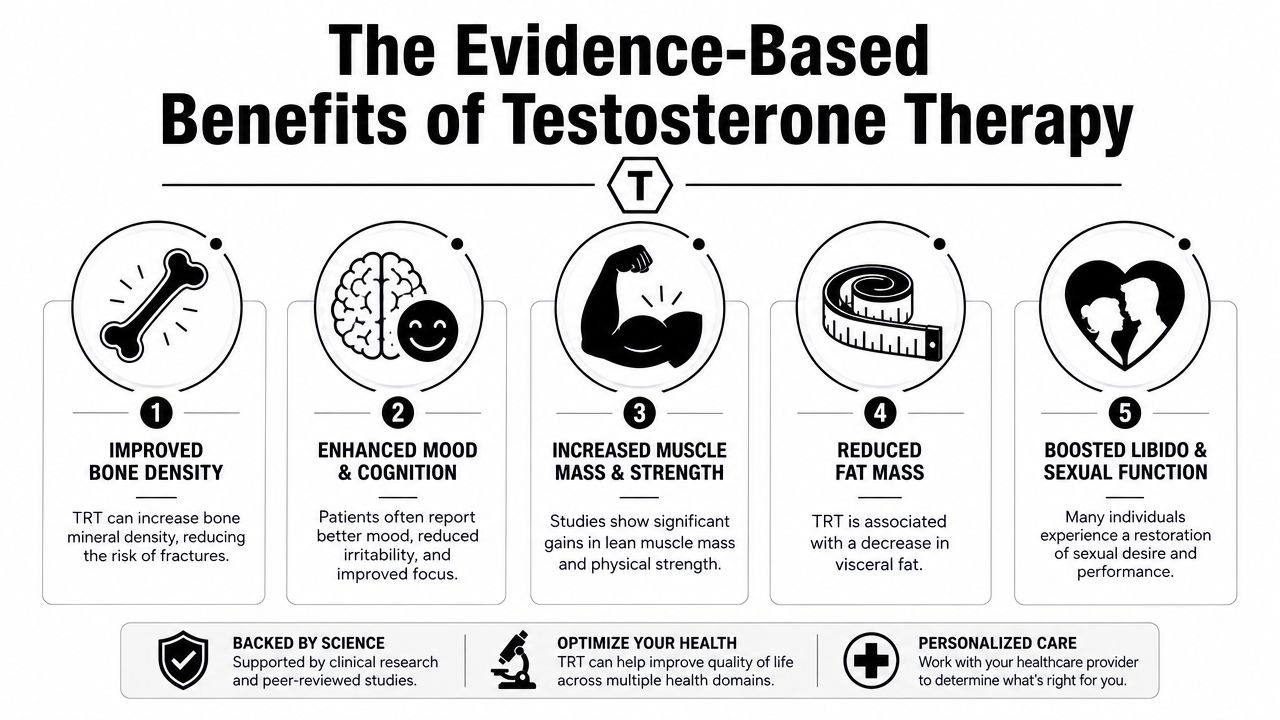
When TRT is prescribed for the right patient, the upside is broader than many men expect. The benefits aren't limited to sex drive or gym performance. Testosterone acts in multiple tissues, so restoring a deficient level can improve several areas at once.
A major review of TRT in men aged 50 and above found consistent benefits across several domains, including improved sexual desire, erectile function, lean body mass, bone mineral density, insulin sensitivity, and vitality, with the clearest benefits seen in men whose baseline testosterone was below 300 ng/dL. The same review noted that target levels maintained between 500 and 800 ng/dL were associated with measurable gains, as reported in this 2023 to 2024 review of TRT in older men.
Physical effects you can often feel
Many men first notice changes in energy, recovery, and body composition. That doesn't mean TRT melts fat away on its own or replaces training. It means the body is often more responsive when hormone levels are no longer deficient.
Here's what tends to improve most reliably in the right patient:
| Area | What improvement may look like |
|---|---|
| Lean body mass | Better response to resistance training, easier maintenance of muscle |
| Bone health | Stronger support for bone mineral density over time |
| Insulin sensitivity | Better metabolic response in some men |
| Vitality | More stable energy and less “running on fumes” feeling |
TRT works best when paired with basics that still matter. Sleep, training, protein intake, and weight management don't become optional after treatment starts.
Sexual benefits are often the clearest
For many men, libido improves first. Erectile function may improve too, especially when low testosterone is a real contributor. That said, not every erection problem is a testosterone problem. Blood flow, nerve function, stress, medication effects, and relationship factors all play a role.
Clinical reality: TRT can improve sexual desire and sexual function in the right patient, but it won't fix every cause of erectile dysfunction.
That's one reason experienced clinicians set expectations early. If low testosterone is only one piece of the problem, hormone treatment may help, but it may not be the entire answer.
Mental and motivational changes
Many men describe the mental shift less as euphoria and more as a return to baseline. They feel steadier. Less flat. More interested in doing normal things again. The evidence supports improvements in vitality and mood in appropriately selected patients, but those gains are usually modest, not dramatic overnight changes.
That's an important point in any honest discussion of testosterone replacement therapy benefits and risks. Good TRT often feels like getting your footing back, not becoming a different person.
Understanding and Managing the Risks of TRT
A common first visit goes like this. A man feels better after starting testosterone, then sees a headline online about heart risk, blood clots, or infertility and wonders if he made a mistake. The honest answer is that TRT has real risks, but they are usually predictable, visible, and manageable when treatment is handled like ongoing medical care instead of a one-time prescription.
Common trade-offs that matter in real life
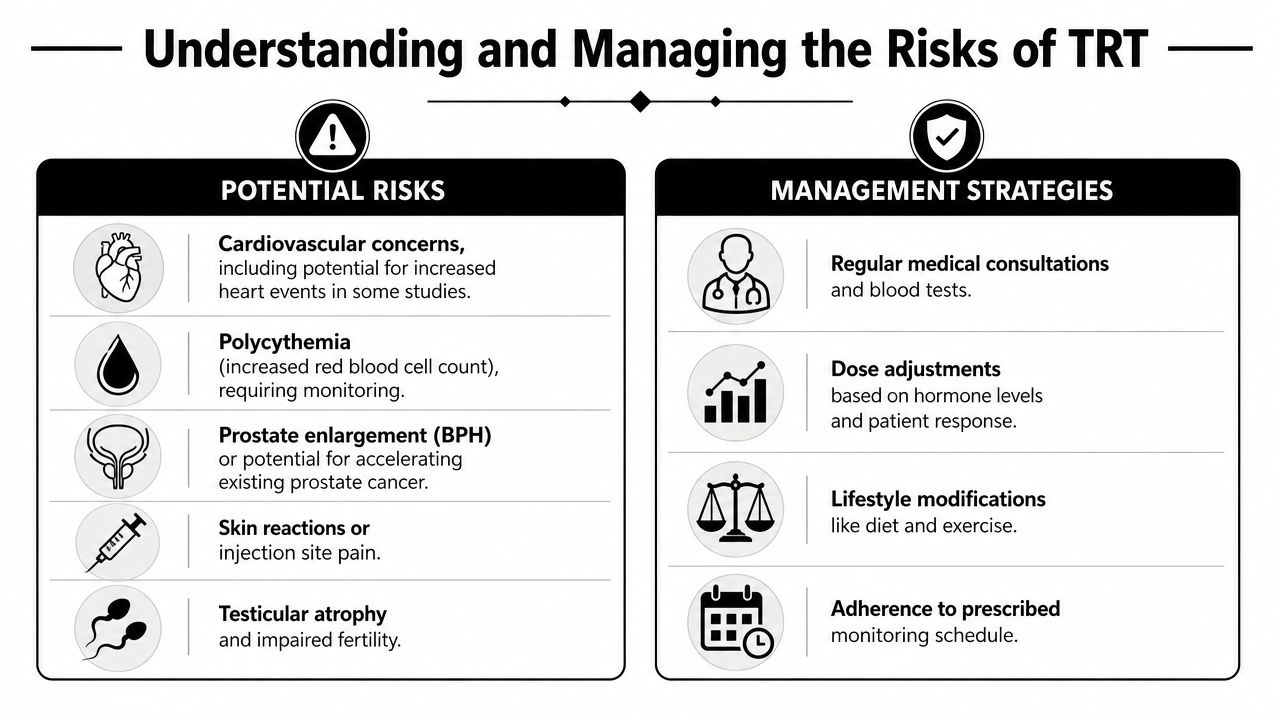
The main risks on TRT are not mysterious. In practice, physicians watch for a short list of known problems: higher red blood cell counts, reduced sperm production, acne or oily skin, breast tenderness or enlargement, fluid retention in some men, and possible worsening of untreated sleep apnea. The Endocrine Society's clinical practice guideline on testosterone therapy in men with hypogonadism outlines this same pattern and emphasizes patient selection and follow-up.
Some of these issues are minor. Some can change the treatment plan.
- Skin changes often show up early, especially in men already prone to acne.
- Fertility suppression matters a great deal if pregnancy is a goal. Exogenous testosterone can lower the brain signals that drive testicular sperm production. Men who may want children should review whether TRT can affect fertility before they start.
- Sleep apnea deserves respect. If a man snores heavily, feels unrefreshed, or has witnessed pauses in breathing, that history needs attention before and during treatment.
The risk that gets watched closely
The lab issue that changes management most often is erythrocytosis, meaning an increase in red blood cell mass. Testosterone can push the bone marrow to produce more red cells. If hematocrit rises too far, blood becomes more viscous, which can increase risk in the wrong patient.
Good care responds early. A physician may lower the dose, split injections more evenly, change the formulation, look for contributors such as sleep apnea or smoking, or pause therapy if the numbers warrant it. That is how TRT is meant to be managed.
Trouble usually comes from poor follow-up, not from pretending side effects do not exist.
What the newer heart data actually says
Cardiovascular risk still causes the most confusion. The older conversation was too polarized. Some sources treated TRT as broadly dangerous, while others brushed off every concern.
A more useful reading is narrower. In men with confirmed hypogonadism who are treated and monitored, recent evidence has been more reassuring about major cardiovascular events than many patients expect. At the same time, specific concerns have not disappeared. Harvard Health's summary of the TRAVERSE trial notes no increase in heart attack or stroke compared with placebo, while also describing a slightly higher rate of atrial fibrillation.
That is how I discuss it in clinic. TRT is not a blanket heart danger, and it is not a free pass either. A man with untreated sleep apnea, prior arrhythmia, high hematocrit, clotting history, or significant cardiometabolic disease needs a more careful plan than a healthy 42-year-old with clear lab-confirmed hypogonadism.
What poor TRT management looks like
Problems tend to show up in familiar situations:
- Starting treatment without confirming low testosterone
- Using the same dose indefinitely despite symptoms or lab drift
- Overlooking fertility goals before treatment begins
- Missing repeat blood work
- Waiting too long to respond to side effects
Well-run TRT accepts the trade-offs upfront. The goal is not to pretend risk away. The goal is to get symptom benefit while actively reducing avoidable harm.
The Importance of Ongoing Monitoring and Adjustments
A common clinic scenario goes like this. A man starts TRT, feels better for a few weeks, then assumes the job is done. In reality, that is the point when treatment starts to prove itself. Testosterone therapy works best when it is managed like blood pressure or thyroid treatment. You do not judge it by the prescription alone. You judge it by follow-up, response, and course correction.
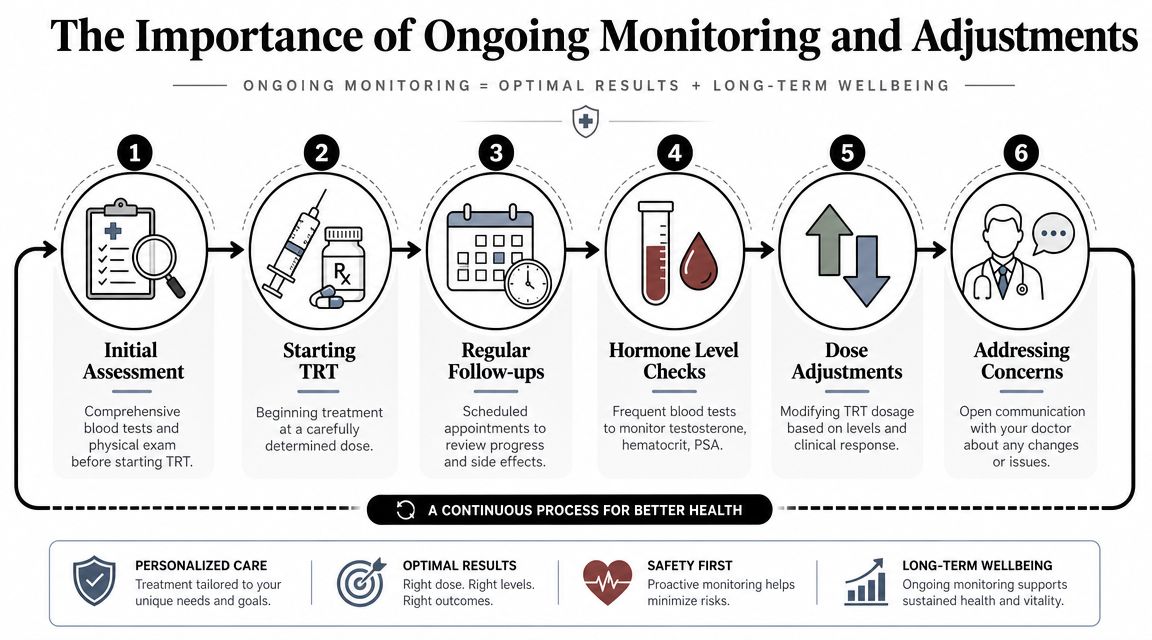
Good TRT care has two jobs at the same time. It aims to improve symptoms such as libido, energy, mood, and recovery. It also watches for predictable treatment effects, such as rising hematocrit, acne, fluid retention, changes in blood pressure, or fertility suppression. Those trade-offs are manageable, but only if someone is paying attention.
What doctors usually monitor
The exact schedule varies by patient, age, medical history, and the form of testosterone used. The framework is usually the same.
| What gets reviewed | Why it matters |
|---|---|
| Testosterone levels | Shows whether the dose is replacing too little, enough, or too much |
| Hematocrit and related blood counts | Helps catch excess red blood cell production before it becomes a bigger issue |
| PSA and prostate-related history | Adds context for prostate follow-up, especially in older men or men with prior concerns |
| Symptoms and side effects | Shows whether the lab result matches how you actually feel |
That last point matters more than many patients expect.
A lab value can look acceptable while the patient still has fatigue, low libido, irritability, or end-of-dose crashes. The reverse can also happen. A man may report a strong early boost, but his blood counts drift up or his estradiol-related side effects become bothersome. Good management puts the numbers and the lived experience in the same frame.
What adjustments look like in practice
Dose changes are routine. They do not mean treatment failed.
Some men metabolize testosterone faster. Some do better with smaller, more frequent dosing to avoid swings. Others need a lower dose because they feel overstimulated, develop acne, or see their hematocrit rise. If fertility becomes a priority, the plan may need a larger change because exogenous testosterone can suppress sperm production.
This is why I tell patients to expect refinement, not a one-time fix. TRT works like a thermostat, not a light switch. The goal is to keep you in a stable, useful range, not to chase the highest number on a lab report.
For some men, the follow-up conversation also broadens into other parts of a men's health plan, such as sleep, body composition, sexual function, or physician-guided peptide therapy options. That is separate from TRT itself, but it reflects the same principle. Symptoms rarely exist in isolation.
The practical target is straightforward. Use the lowest dose that improves symptoms and keeps monitoring markers in an acceptable range. That is how benefits are maintained and avoidable problems are caught early, before they turn into setbacks.
Exploring Alternatives to TRT
Not every man with low-energy symptoms needs testosterone. Some need a cleaner foundation first. Others need a different medical strategy because fertility matters, the diagnosis isn't clear, or the risks outweigh the benefit.
Lifestyle changes that can move the needle
If sleep is poor, body weight has climbed, alcohol intake is high, or training is erratic, fixing those issues may improve testosterone status and symptoms without replacement therapy. Lifestyle work isn't glamorous, but it matters because hormones respond to overall health.
Useful targets often include:
- Sleep quality: especially if snoring, choking, or daytime sleepiness suggest sleep apnea
- Resistance training: not endless cardio alone
- Body composition: particularly central weight gain
- Stress load: chronic stress can flatten mood, libido, and recovery
Medical alternatives for selected patients
Some men want to preserve fertility and avoid exogenous testosterone. In those cases, physicians may discuss alternatives that aim to stimulate the body's own production rather than replace it directly. Which option fits depends on age, fertility goals, symptoms, and lab pattern.
If you're exploring a broader men's health plan, some patients also look into physician-supervised peptide therapy options as part of a separate conversation about recovery, wellness, or sexual health. That isn't the same as treating true hypogonadism, but it's part of the broader range of treatments some men ask about.
The right question isn't “TRT or nothing.” It's “Which path fits my physiology, goals, and risk profile best?”
How to Talk to Your Doctor About Low Testosterone
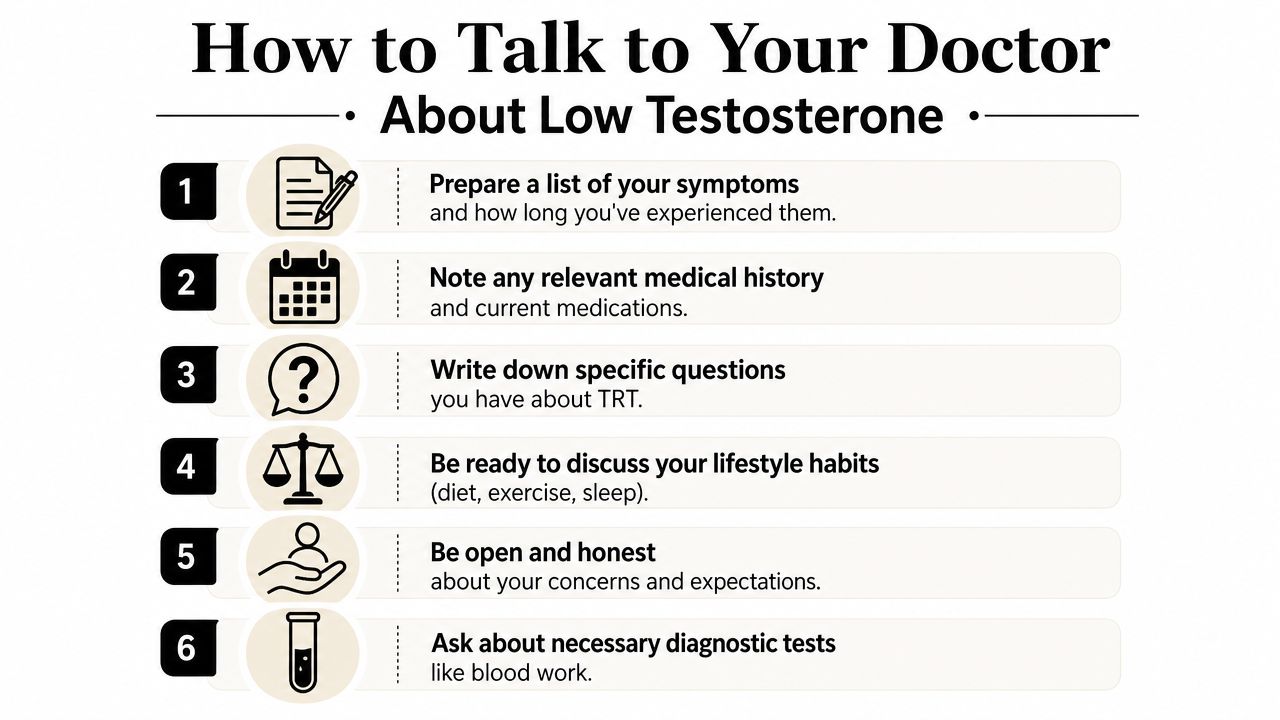
A productive TRT consult starts before the appointment. Men who get the clearest answers usually come prepared with symptoms, timeline, medical history, and realistic goals. That turns the visit from a vague complaint into a useful clinical discussion.
Bring the information that actually helps
Before your visit, write down:
- Your main symptoms and when they started
- Changes in libido, erections, energy, mood, sleep, and recovery
- Current medications and supplements
- Relevant history, especially fertility goals, sleep apnea, blood clot history, and prostate history
Don't try to self-diagnose. Just bring the pattern.
Ask better questions
A good consult gets stronger when you ask precise questions instead of only asking whether TRT is “good” or “bad.”
Consider asking:
- Do my symptoms and lab results support a diagnosis of hypogonadism?
- How will we measure whether treatment is working?
- What side effects do you watch most closely?
- How often will labs be checked and what markers matter most?
- If I want children, what are my options?
- What would make you lower the dose, pause treatment, or change the plan?
“I want a treatment plan that improves symptoms and has a clear monitoring strategy.”
That sentence alone changes the tone of the conversation. It tells your doctor you're not looking for a quick prescription. You're looking for sound care.
TRT can be life-improving for the right patient. It can also be the wrong treatment when the diagnosis is weak or the follow-up is sloppy. The best outcomes usually come from men who understand that testosterone replacement therapy benefits and risks are inseparable from proper evaluation, clear expectations, and ongoing supervision.
If you're ready to explore treatment with transparent pricing and physician-guided follow-up, Cost Plus TRT offers telemedicine-based TRT care, lab coordination options, home delivery, and ongoing consultations designed for men who want a straightforward, medically supervised process.