

A patient often notices water retention before he has a name for it. His wedding ring feels tight, his socks leave deeper marks, and his ankles look puffy by late afternoon. The scale rises quickly, yet his diet hasn't changed enough to explain the difference.
That pattern can occur after starting testosterone replacement therapy, especially when symptoms appear soon after treatment begins or after a dose change. Testosterone can alter how the kidneys handle sodium and water, leading to expansion of extracellular fluid. The result may be mild ankle edema, facial puffiness, or a temporary increase in scale weight. It isn't automatically fat gain, and it isn't automatically dangerous.
The important distinction is between a predictable, mild treatment effect and swelling that points to a cardiac, kidney, liver, vascular, or medication-related problem. A practical TRT evaluation looks at timing, distribution, blood pressure, symptoms, laboratory results, and the dose or injection schedule. If you're considering treatment or want to review an existing protocol, testosterone replacement therapy care should include this kind of monitoring from the beginning.
Table of Contents
- What Testosterone and Water Retention Really Mean Together
- How Testosterone Triggers Fluid Retention at the Kidney
- Estrogen Conversion and the Role of Aromatase
- How to Tell TRT-Related Swelling Apart From Other Causes
- Managing Water Retention on TRT Without Panic
- A Realistic Example of Managing Early TRT Bloating
- Key Signals and When to Talk to a Provider
What Testosterone and Water Retention Really Mean Together
Consider a common presentation. A man starts TRT, feels better in some respects, and then notices that his shoes fit more tightly in the evening. His face looks slightly fuller in the morning. The scale moves upward even though his waist measurement hasn't changed much. He may reasonably wonder whether the treatment is causing fat gain or whether something more serious is happening.
Water retention is an accumulation of extracellular fluid, meaning fluid held outside cells in the bloodstream and tissues. It isn't the same as body fat, and it isn't the same as the firmer muscle fullness that can accompany improved training and glycogen storage. Soft puffiness around the ankles, hands, face, or lower legs fits an edema pattern more closely than a change in lean tissue.
Testosterone can shift sodium handling in the kidney. When the body retains more sodium, water follows, expanding the fluid compartment outside cells. A randomized crossover study of testosterone and extracellular water provided direct human evidence that testosterone increases extracellular water, with an even greater effect when testosterone was combined with growth hormone.
The range from nuisance to warning sign
Mild, symmetrical swelling that begins after treatment starts or after a protocol change is often manageable. It may fluctuate with the injection cycle, improve overnight, and settle as the body adjusts or the prescribing clinician refines the regimen.
The same symptom becomes more concerning when it is severe, rapidly progressive, one-sided, or accompanied by breathlessness, chest discomfort, reduced urine output, or abdominal swelling. A person with heart, kidney, or liver disease has less room for a fluid shift to remain merely cosmetic. The Endocrine Society guidance on testosterone therapy recognizes fluid retention and edema as clinically relevant adverse effects, including the possibility of worsening edema in people with heart failure or other edematous conditions.
The practical goal isn't to frighten patients away from TRT. It's to recognize the pattern early, check the right variables, and avoid treating every pound on the scale as either muscle or an emergency.
How Testosterone Triggers Fluid Retention at the Kidney
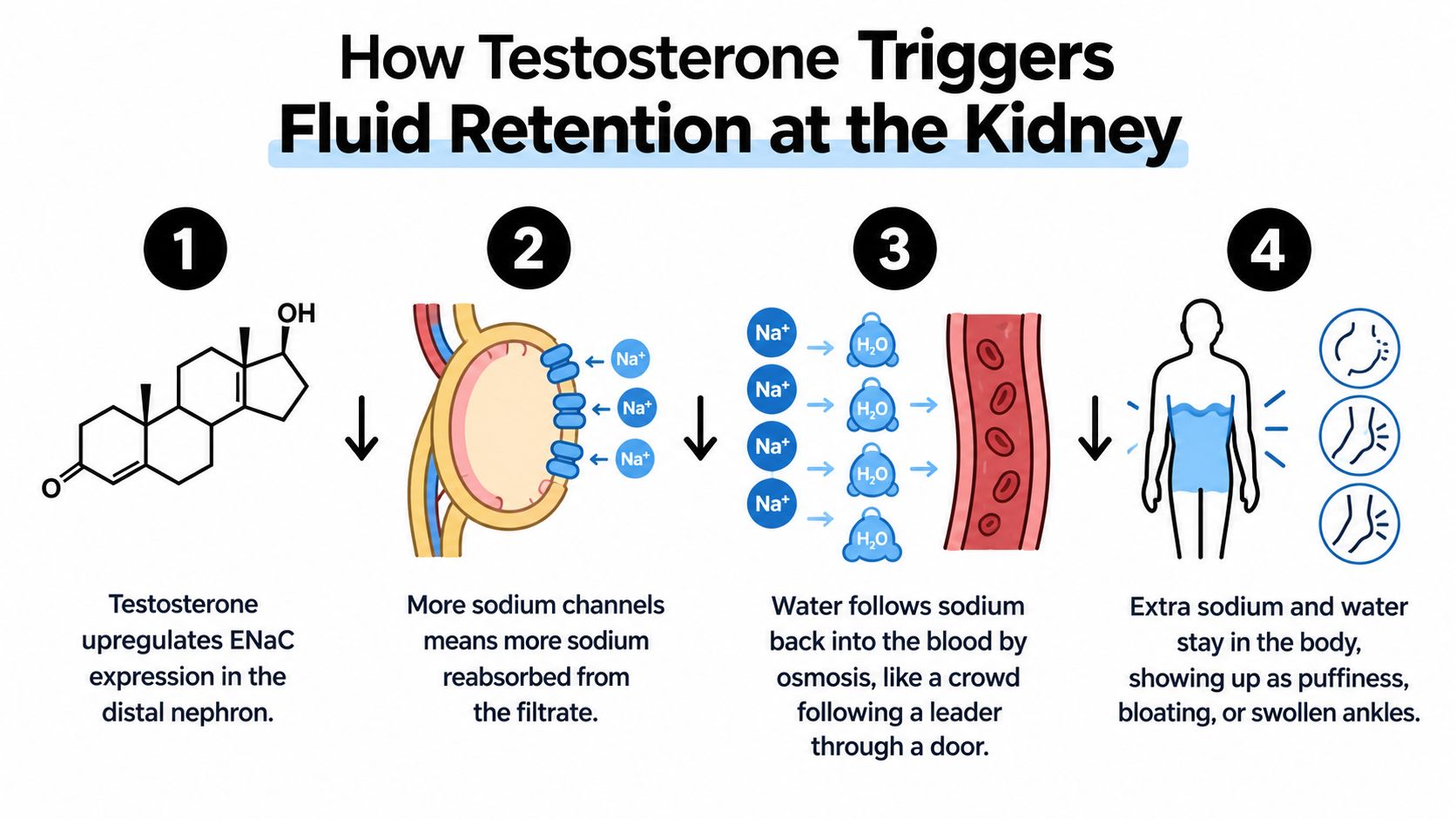
The kidney constantly decides how much sodium to return to the bloodstream and how much to remove in urine. Testosterone can influence that balance through renal tubular effects. The clearest human evidence shows an increase in extracellular water, while clinical reviews and experimental work support a connection between androgen exposure, sodium retention, and fluid expansion.
Sodium is the first part of the chain
Think of the kidney as a careful recycling system. It filters fluid, then selectively retrieves substances the body wants to keep. When testosterone promotes greater sodium reabsorption in the renal tubules, less sodium leaves in the urine. Water tends to follow retained sodium, so the extracellular compartment expands.
That extra fluid can collect in dependent tissues. A person may wake with mild facial fullness, notice tighter rings during the day, or see sock marks around the ankles after standing. These symptoms reflect where fluid settles, not necessarily how much muscle or fat has changed.
A review of testosterone-related adverse effects describes salt and water retention as a recognized effect, particularly in older men, with possible contributions to edema and blood-pressure changes. Experimental findings also support the mechanism. In an animal study summarized in the review of testosterone, sodium handling, and fluid retention, exogenous testosterone reduced sodium excretion compared with controls.
Why peaks can matter
The kidney responds to hormone exposure, and some patients notice more bloating when their treatment produces pronounced peaks and troughs. A clinician may therefore review the total dose, injection interval, and delivery method rather than assuming that the entire treatment must stop.
Shorter dosing intervals can create a steadier exposure for some patients, but more frequent injections also require more effort. A lower overall dose may reduce the fluid effect but can also reduce symptom control if the adjustment is too aggressive. The right change depends on symptoms, measured hormone levels, blood pressure, and the original reason for treatment.
Testosterone's direct renal effect is only part of the discussion. Conversion to estradiol can add another layer, but it shouldn't be assumed to explain every case of swelling.
Estrogen Conversion and the Role of Aromatase
Aromatase converts some testosterone into estradiol. The conversion occurs in several tissues, including adipose tissue, muscle, and skin, so two men receiving the same testosterone regimen can have different estradiol exposure and different symptoms.
Estradiol has important physiological roles. The clinical mistake is treating it as a hormone that must always be suppressed. A patient with puffiness and a high estradiol result may benefit from a protocol review, but an aromatase inhibitor isn't a default response to any swelling. Excessive estradiol suppression can create its own problems, including joint discomfort and an unfavorable overall treatment experience.
Read the pattern, not one result
A useful assessment combines symptoms with the timing of the blood draw. A result taken near a peak may tell a different story from a result taken near the end of the dosing interval. The clinician also needs to know whether the patient has breast tenderness, mood changes, reduced libido, generalized swelling, or only mild dependent ankle puffiness.
| Estradiol, sensitive assay | Common fluid retention picture | Other signs |
|---|---|---|
| Lower or stable for the patient | Little or no visible edema, or mild swelling driven mainly by the direct testosterone effect | No clear estrogen-related symptoms |
| Mildly elevated with symptoms | More noticeable puffiness, especially after a protocol change or pronounced peak | Breast tenderness, mood changes, or increased sensitivity to hormonal fluctuations |
| Persistently elevated with ongoing symptoms | Generalized bloating or edema that doesn't settle with time and basic protocol review | Recurrent estrogen-related symptoms, requiring clinician assessment rather than automatic suppression |
Dose and body composition change the context
Higher androgen exposure can increase the amount available for conversion, and individual body composition affects aromatase activity. Injection frequency also matters because a larger peak may produce a different subjective experience than a steadier exposure. These factors explain why one patient may develop swelling while another on a seemingly similar regimen doesn't.
The first practical move is usually to review the prescribed dose and schedule, confirm the timing of testing, and assess blood pressure and competing causes. Only then should a clinician decide whether estradiol management has a role. Treating a laboratory value without treating the patient is poor hormone management.
How to Tell TRT-Related Swelling Apart From Other Causes
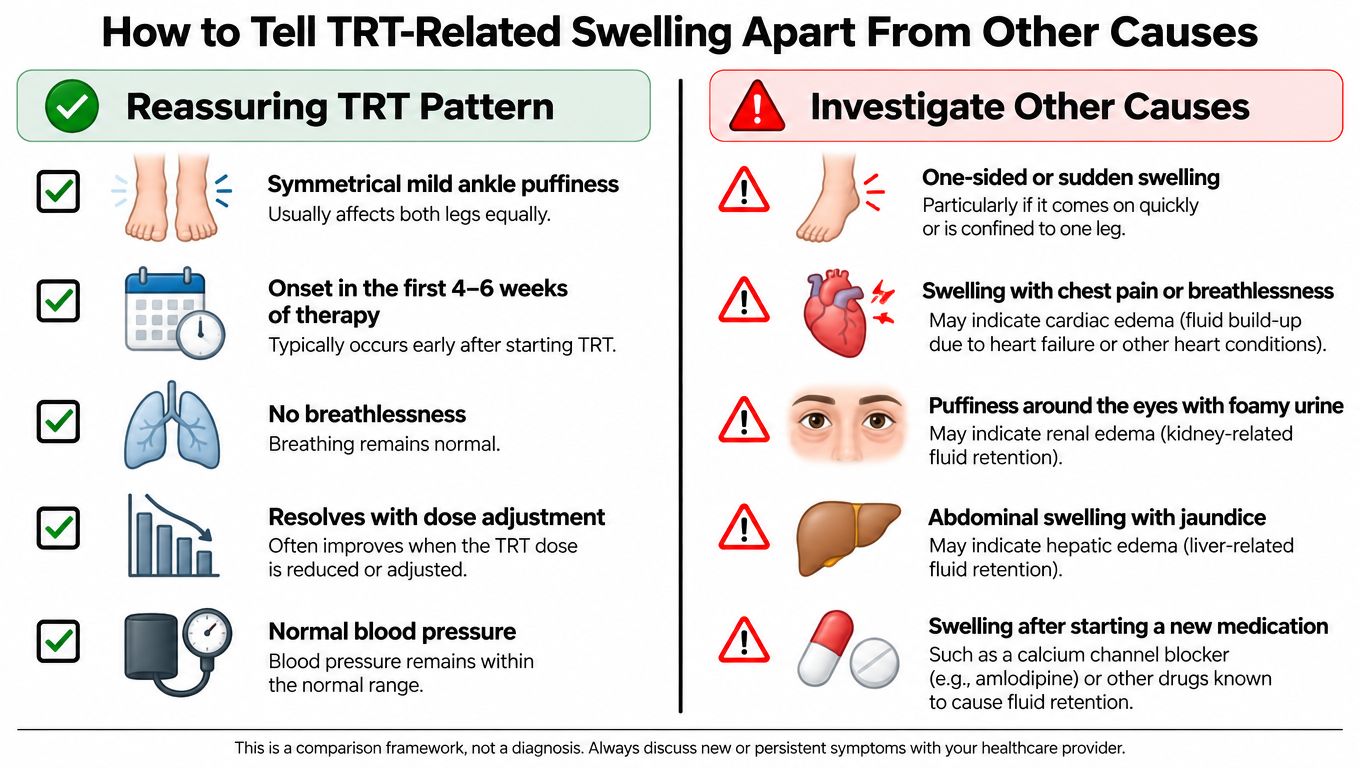
The most reassuring pattern is mild, symmetric ankle puffiness that appears after treatment begins or after a dose change, without breathlessness or other systemic symptoms. It may be worse after standing and less noticeable after overnight rest. That pattern can fit testosterone-related extracellular fluid expansion, but it isn't a diagnosis by itself.
Use timing and distribution as clinical clues
Timing relative to the injection is often the most useful first clue. If swelling repeatedly appears or worsens after administration, the prescriber may review peak exposure, dose size, and dosing interval. If swelling progresses independently of the injection schedule, the evaluation needs to widen.
Distribution matters too. Swelling in both ankles is different from sudden swelling in one calf. Facial puffiness with foamy urine raises a different question from ankle swelling after a long day. Abdominal distension, jaundice, or a major change in urination should not be dismissed as ordinary TRT bloating.
A clinician may consider tests such as:
- Heart assessment: BNP can help evaluate whether cardiac strain may be contributing to edema.
- Kidney assessment: A basic metabolic panel and urine protein testing can identify fluid-balance or kidney concerns.
- Liver assessment: Liver enzymes and albumin can help assess hepatic causes of swelling.
- Thyroid assessment: TSH is useful because hypothyroidism can mimic some features of fluid retention.
Know when self-monitoring ends
Contact a provider promptly for one-sided swelling, rapid progression, shortness of breath on level ground, difficulty breathing when lying down, chest discomfort, abdominal swelling, facial or scrotal edema, or reduced urine output. Those findings need medical assessment rather than an informal experiment with salt restriction or a skipped injection.
Clinical rule: The more widespread, sudden, or symptomatic the edema, the less reasonable it is to assume that testosterone is the only cause.
Managing Water Retention on TRT Without Panic
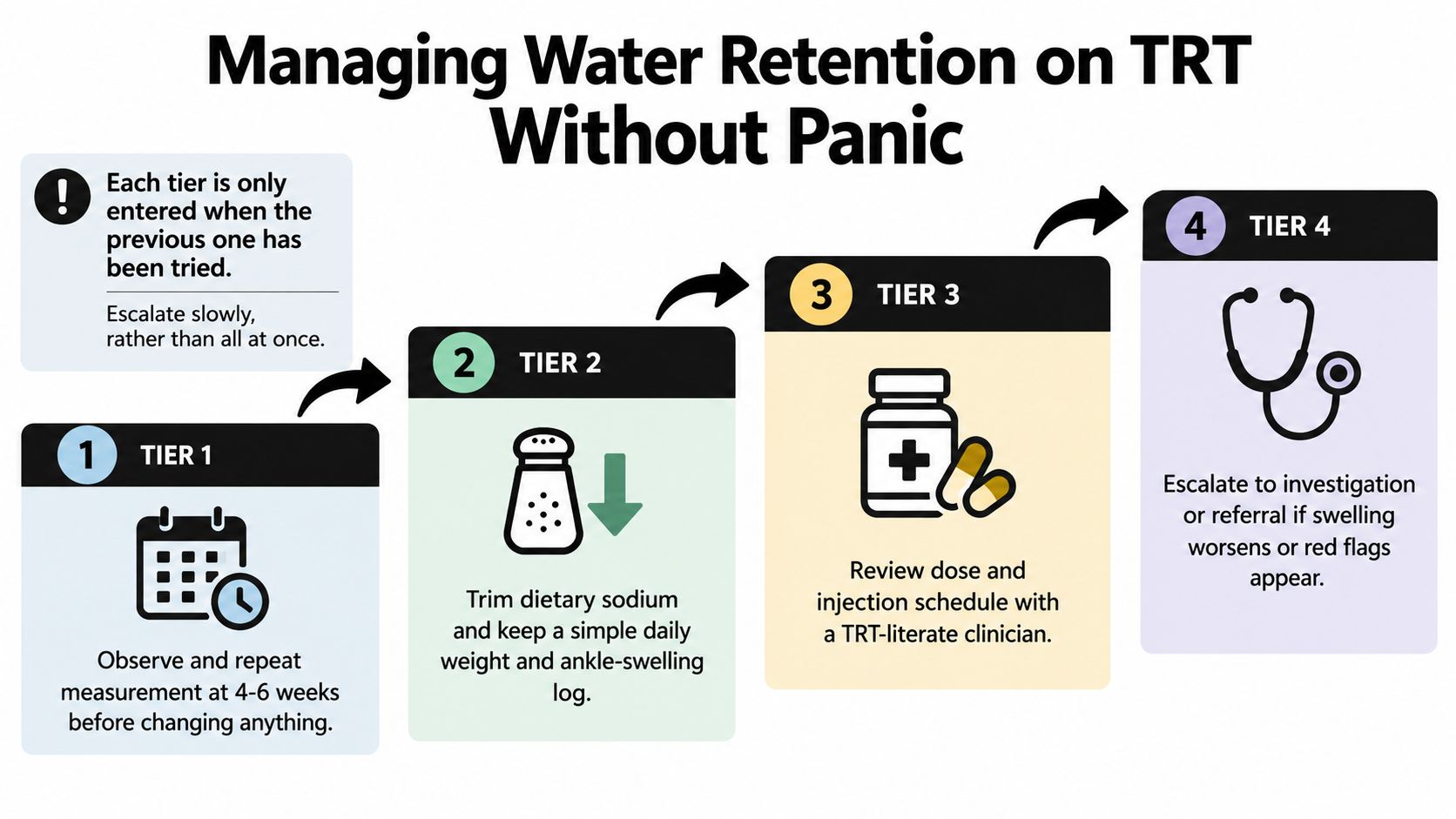
A sensible management plan escalates gradually. Mild swelling doesn't always require an immediate medication change, while serious or progressive edema may require prompt investigation. The correct response depends on severity, timing, blood pressure, medical history, and laboratory findings.
Start with measurement
For mild symptoms, begin with a simple record. Note morning weight, ankle appearance, ring or shoe tightness, blood pressure, and the relationship between symptoms and injections. Repeat the assessment with the prescribing clinician before making several changes at once.
That record separates a persistent trend from a single salty meal, a long day on the feet, or normal day-to-day variation. It also gives the clinician something more useful than the statement, “I feel bloated.”
Reduce avoidable contributors
Moderating high-sodium processed foods can reduce the load on a system already tending toward sodium retention. Consistent hydration, potassium-rich foods when medically appropriate, regular walking, and movement that improves dependent circulation may help with mild peripheral swelling.
These measures support management. They don't replace a dose review, and they aren't appropriate as the only response to breathlessness, rapidly worsening edema, or reduced urination. People with kidney disease, heart disease, or medications that affect potassium should ask their clinician before making major dietary or supplement changes.
Review the TRT protocol
If symptoms persist, the prescribing clinician may consider reducing total testosterone exposure, dividing the dose into smaller administrations, or changing the delivery method. Each option has trade-offs. A lower dose may improve swelling but reduce symptom relief, while more frequent administration may smooth peaks but add inconvenience.
Estradiol management belongs later in the decision process and only when symptoms, properly timed testing, and the overall clinical picture support it. An aromatase inhibitor can cause harm when used reflexively, especially if estradiol falls too low.
A diuretic may be appropriate for a diagnosed medical condition, but using one to counteract an unreviewed TRT protocol can obscure the cause and create electrolyte or kidney problems. The upstream issue needs attention first.
For ongoing education about treatment monitoring and related concerns, the TRT information and guidance library can complement, but not replace, individualized medical advice.
A Realistic Example of Managing Early TRT Bloating
Consider an illustrative patient who develops ankle puffiness and a noticeable scale increase soon after beginning testosterone injections. The swelling is mild, affects both ankles, and is more obvious after standing. He has no chest discomfort, no breathlessness, and no reduction in urination.
The clinician first confirms the timeline. Symptoms began after the treatment change and appear to fluctuate during the dosing interval, which makes the TRT protocol relevant. Blood pressure is checked, the legs are examined, and the clinician reviews medical history, other medications, kidney risk, and any cardiac symptoms before assuming the swelling is hormonal.
The initial laboratory review may include a metabolic panel, kidney markers, a properly timed testosterone and estradiol assessment, thyroid testing, and a blood count. The purpose isn't to chase every possible abnormality. It's to determine whether the patient has a straightforward exposure-related pattern or evidence of another condition that requires a different pathway.
The adjustment comes before the add-on
If the findings support a dose or peak-related effect, the clinician may first reduce total exposure or divide the prescribed amount across the dosing interval. The patient continues a consistent log of morning weight, blood pressure, injection timing, and swelling. That approach tests whether a simpler protocol change addresses the upstream trigger.
If symptoms improve, no additional medication may be necessary. If swelling continues and estradiol is high on a properly timed sensitive assay, the clinician can discuss whether targeted estradiol management is justified. An aromatase inhibitor should be introduced only with a clear reason and follow-up plan.
Referral becomes more urgent if the patient develops breathlessness, difficulty lying flat, chest symptoms, asymmetric leg swelling, reduced urine output, or progressive abdominal or facial edema. In those circumstances, the question isn't how to make TRT more comfortable. The question is whether the patient has a cardiac, vascular, renal, or hepatic problem that needs direct evaluation.
Key Signals and When to Talk to a Provider
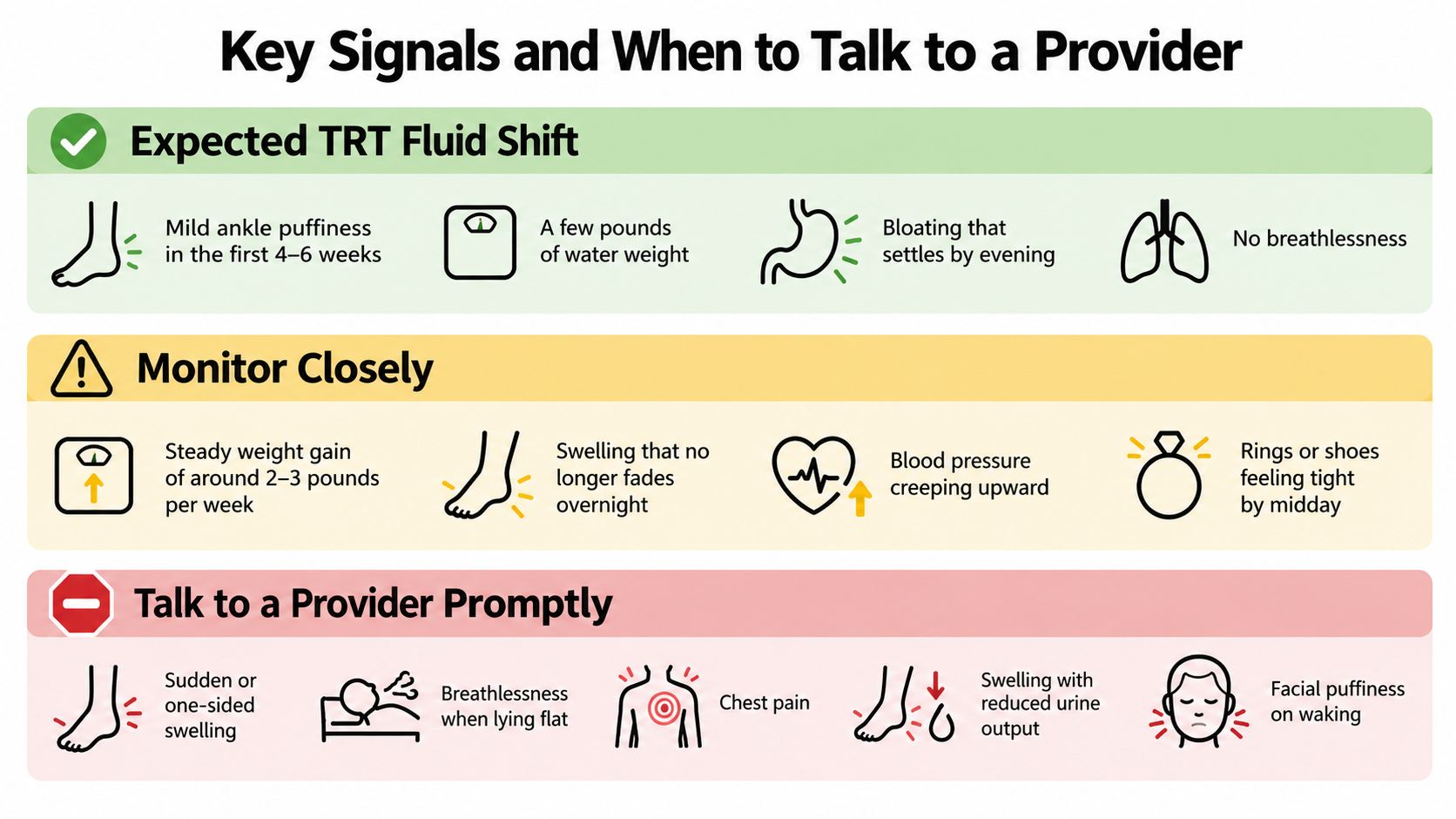
Mild, symmetric ankle puffiness early in treatment can be a manageable TRT effect, particularly when it improves with rest and isn't accompanied by breathing symptoms. Keep tracking it rather than reacting to one isolated change.
Persistent or progressive swelling deserves a message to the prescribing clinician. Bring a morning weight trend, home blood-pressure readings, injection dates, symptom timing, and recent laboratory results, including hematocrit and estradiol when those tests are part of your monitoring plan.
Contact your provider promptly for
- Worsening dependent edema: Swelling leaves a clear indentation, stops improving overnight, or keeps spreading.
- Breathing symptoms: Shortness of breath with activity, difficulty breathing while lying flat, or chest tightness needs prompt assessment.
- Kidney-related changes: Reduced urine output or new facial puffiness shouldn't be attributed to TRT without testing.
- Blood-pressure changes: A new or sustained rise in home readings deserves review, especially alongside swelling or headaches.
- Asymmetric symptoms: Sudden or one-sided leg swelling requires urgent medical guidance.
Your clinician may start with an examination, medication review, blood-pressure assessment, basic metabolic panel, urine studies, and a heart-failure marker such as BNP when the symptoms warrant it. The exact workup depends on your history and presentation.
Predictable early bloating isn't necessarily a failure of therapy. Patterned, persistent, or symptomatic swelling is never something to just ride out. The TRT frequently asked questions can help you prepare, but your prescribing provider should make decisions about dose changes, testing, and referrals.
Cost Plus TRT provides physician-supervised testosterone replacement therapy, pharmaceutical-grade testosterone cypionate, lab review, and ongoing online consultations for eligible patients. If you're experiencing swelling on TRT, visit Cost Plus TRT to discuss your symptoms, monitoring needs, and treatment options with a licensed provider.