
If testosterone can raise blood pressure at high levels, why do many men with low testosterone also show up with hypertension?
That's the gap in conventional thinking. Most men hear a simplified warning about testosterone and blood pressure and assume the hormone only pushes pressure up. Real clinical practice is more nuanced. The relationship is non-linear. Very low testosterone can be associated with worse cardiometabolic health and a higher prevalence of high blood pressure. Very high testosterone, especially from supraphysiologic dosing or misuse, can push in the other direction and create risk through different mechanisms.
That middle ground matters. In men with confirmed hypogonadism, medically supervised testosterone replacement therapy often behaves very differently from abuse-level exposure. The goal isn't to drive testosterone as high as possible. The goal is to restore it to a normal physiologic range, monitor the body's response, and adjust when needed.
For patients, that distinction changes the conversation from fear to strategy. Instead of asking, “Does testosterone raise blood pressure?” the better question is, “What's my baseline, what range are we targeting, and how will we monitor safety?”
Table of Contents
- The Real Story on Testosterone and Blood Pressure
- The Surprising Link Between Low T and High Blood Pressure
- How Testosterone Acts as a Dual-Action Regulator
- What Clinical Trials Show About TRT and Blood Pressure
- Understanding When TRT Can Affect Blood Pressure
- How to Monitor and Manage Blood Pressure on TRT
- Key Questions to Ask Your Doctor About TRT and Your Heart
The Real Story on Testosterone and Blood Pressure
The short answer is that testosterone and blood pressure don't follow a straight line.
Low testosterone isn't automatically protective. High testosterone isn't automatically dangerous. What matters is where a man starts, whether he has hypogonadism, how treatment is dosed, and whether anyone is tracking the physiologic response. In practice, the riskiest scenarios tend to happen at the extremes. Men with substantially low endogenous testosterone often carry more body fat, more insulin resistance, and more metabolic dysfunction. Men pushing testosterone above physiologic range may trigger mechanisms that make blood pressure harder to control.
Why the middle range matters
A useful way to think about this is a U-shaped relationship. On one end, severely low testosterone is linked with poorer cardiovascular risk patterns. On the other end, excessive androgen exposure can promote vasoconstriction, fluid retention, and thicker blood. The target isn't “more.” It's normal and stable.
That's why supervised TRT is different from bodybuilding cycles, underground products, or self-directed dosing. A good protocol aims to normalize hormone levels, not chase extremes or symptoms alone.
Clinical reality: I worry more about unstable dosing and poor follow-up than I do about the idea of TRT itself.
What patients usually get wrong
Men often assume blood pressure changes from TRT are immediate and obvious. Sometimes they are. Often they aren't. The more common pattern is that blood pressure reflects the whole picture:
- Baseline health: sleep apnea, weight gain, insulin resistance, and existing hypertension matter.
- Dose quality: physiologic replacement behaves differently from supraphysiologic exposure.
- Monitoring discipline: hematocrit, symptoms, home blood pressure readings, and follow-up visits tell you whether the plan is working.
- Expectations: TRT is not a blood pressure treatment, but in the right patient it doesn't necessarily worsen pressure and may fit into an overall improvement in health markers.
If you're evaluating testosterone and blood pressure, don't look for a one-size-fits-all rule. Look for a clear diagnosis, a reasonable dose, and a provider who treats monitoring as part of the therapy, not an afterthought.
The Surprising Link Between Low T and High Blood Pressure
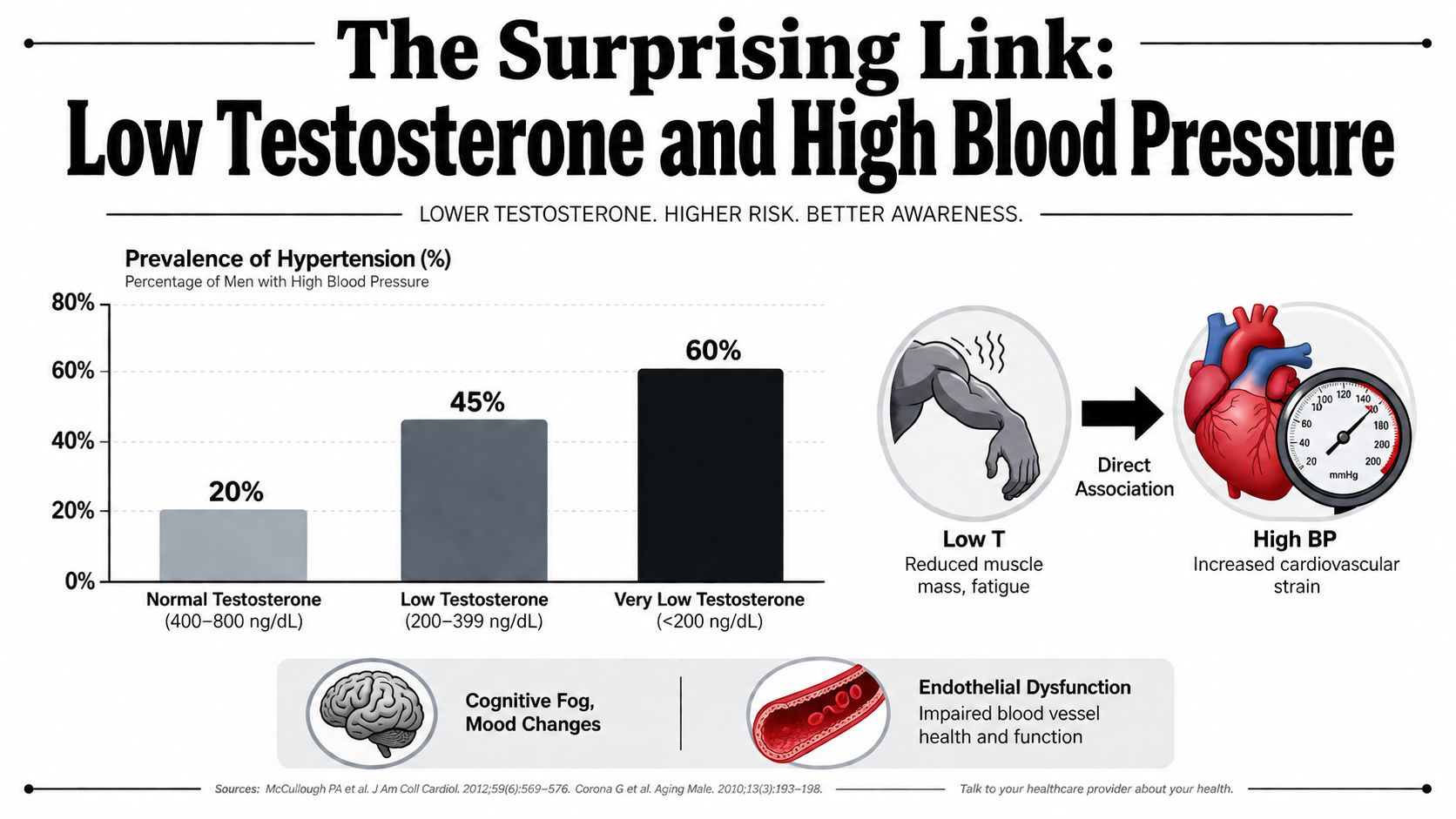
The most overlooked part of this topic is that low natural testosterone is often associated with higher blood pressure, not lower.
A landmark cohort study of 1,132 men aged 30 to 79 found that men with clinically defined hypertension had significantly lower endogenous testosterone levels than non-hypertensive peers. Blood pressure fell stepwise with each increasing quartile of testosterone, and the inverse correlation was statistically significant at r = -0.17 for systolic pressure (P < 0.001) and r = -0.15 for diastolic pressure (P < 0.001), according to the PubMed study on testosterone and hypertension.
Low T often travels with other blood pressure drivers
This doesn't mean low testosterone directly “causes” hypertension in a simple one-step way. It means low testosterone often shows up in the same men who are dealing with problems that push blood pressure upward. In clinic, that usually includes increased visceral fat, reduced insulin sensitivity, low energy, worse exercise tolerance, and a broader picture of metabolic dysfunction.
When men feel exhausted, lose muscle mass, and gain abdominal weight, they often become less active. Sleep quality worsens. Recovery worsens. Food choices drift. Blood pressure rarely changes because of one hormone in isolation. It usually changes because the whole metabolic environment shifts.
Why this changes the TRT discussion
This is why restoring testosterone in a deficient man is not the same thing as “adding extra testosterone” to a healthy one. Those are biologically different situations.
A man with low testosterone may already be in an unfavorable cardiovascular pattern. In that case, bringing him back into a normal physiologic range can be part of a broader plan that includes weight control, sleep evaluation, exercise, and blood pressure monitoring. A man who already has normal testosterone and pushes it higher is playing a different game, with different risks.
Men often come in worried that treatment itself will create hypertension, when the more immediate issue is that untreated hypogonadism may be part of the reason their cardiometabolic picture already looks worse.
What to take from the low T data
The takeaway is practical:
| Situation | Blood pressure concern |
|---|---|
| Untreated low testosterone | Often overlaps with obesity, insulin resistance, and higher hypertension risk |
| Physiologic TRT for confirmed hypogonadism | Needs monitoring, but doesn't behave like hormone abuse |
| Excessive androgen exposure | More likely to drive pressure upward through pro-hypertensive mechanisms |
If you want an accurate discussion about testosterone and blood pressure, start with diagnosis. The right question isn't whether testosterone is “good” or “bad” for blood pressure. It's whether the man in front of you is deficient, normal, or overexposed.
How Testosterone Acts as a Dual-Action Regulator
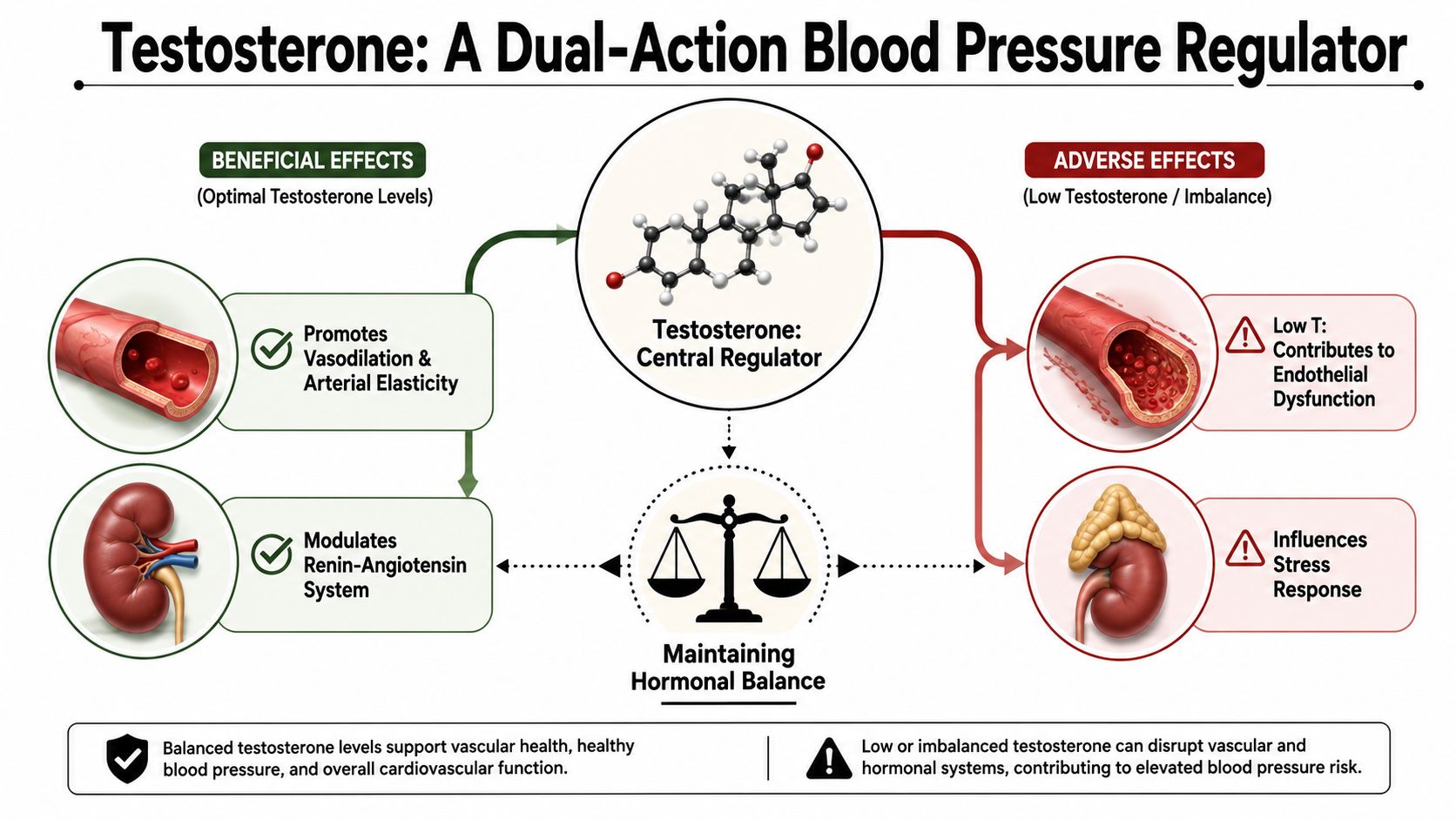
Testosterone acts less like an on-off switch and more like a dual-action regulator. In one setting it can relax blood vessels. In another, especially over time and at excessive levels, it can support the very systems that raise blood pressure.
The short-term vessel effect
At physiologic levels, testosterone can have an acute vasorelaxing effect. Mechanistically, it has been shown to block L-type voltage-operated calcium channels and activate neuronal nitric oxide synthase, which can relax vascular smooth muscle. That's one reason the hormone can look temporarily favorable from a blood vessel standpoint.
Many simplified online explanations often stop here. They tell men testosterone “improves circulation” and leave out the other half of the picture.
For a broader treatment overview, men who are comparing options often review a medical TRT overview for common protocols and care pathways.
The long-term pressure effect
Over time, and especially with supraphysiologic exposure, androgens can push in the opposite direction. Testosterone has been shown to upregulate thromboxane A2, norepinephrine, angiotensin II, and endothelin-1, while also interacting with the renin-angiotensin-aldosterone system. Those are not small details. They're the kinds of pathways that support vasoconstriction, vascular reactivity, fibrosis, and higher arterial pressure.
That duality is captured well in the PubMed review on androgen effects and blood pressure regulation.
Here's a simple way to understand it:
- Normal physiologic action: can support vasorelaxation in the short term.
- Chronic excess exposure: can promote pro-hypertensive signaling.
- Clinical implication: dose, duration, and baseline hormone status determine which side dominates.
A visual summary helps tie those mechanisms together:
Why this matters for real patients
Men don't experience testosterone in a lab dish. They experience it inside a whole-body system with kidneys, blood vessels, sleep quality, stress, medications, and body composition all in play.
That's why “testosterone lowers blood pressure” and “testosterone raises blood pressure” can both sound true depending on who's talking about whom. The man with genuine deficiency receiving replacement to a normal range is not physiologically equivalent to the younger man with normal levels trying to push them higher. Same hormone. Different context. Different outcome.
The dose doesn't just change the amount of testosterone in the bloodstream. It changes which physiologic effects dominate.
What Clinical Trials Show About TRT and Blood Pressure
When patients ask whether TRT is dangerous for the heart, I focus on what higher-quality clinical evidence shows in men treated for hypogonadism, not on fear-based summaries.
The largest modern safety signal comes from the TRAVERSE trial, which enrolled 5,198 men with hypogonadism and preexisting or high-risk cardiovascular disease. Over a mean follow-up of 22 months, testosterone-replacement therapy was noninferior to placebo for major adverse cardiac events, and cardiovascular death rates were roughly 7% in both groups, as reported in the New England Journal of Medicine publication on TRAVERSE.
What that means in plain language
The trial didn't study a low-risk fantasy population. It looked at men clinicians worry about. If TRT were broadly causing major cardiovascular harm when prescribed appropriately, that's the kind of study where you'd expect to see it.
That doesn't mean TRT is harmless in every patient. It means the old blanket assumption that testosterone therapy creates major cardiac danger isn't supported by this trial.
Blood pressure trends over longer follow-up
Longer-term testosterone undecanoate data have also shown significant reductions in systolic blood pressure, diastolic blood pressure, and pulse pressure, with the most pronounced decreases appearing after 12 months and pulse pressure stabilizing further by 48 months, according to the verified clinical summary tied to the same NEJM reference. Those reductions were seen regardless of concurrent antihypertensive therapy, and larger reductions were noted in men already receiving blood pressure medication.
That pattern is very different from the idea that medically supervised TRT consistently drives pressure up. In hypogonadal men, especially those starting from a worse metabolic baseline, normalizing testosterone may fit into a broader improvement in vascular tone and cardiometabolic status.
Why the labeling changed
The same body of evidence led to a regulatory shift. The FDA removed black box warnings regarding increased cardiovascular risk from testosterone labeling and required inclusion of TRAVERSE findings in drug labeling, based on the verified data associated with the NEJM publication above.
For patients, the practical takeaway is straightforward:
- Confirmed hypogonadism matters: treatment should match a real diagnosis.
- Medical supervision matters: trial results don't justify self-dosing.
- Range matters: physiologic replacement is not the same as excess exposure.
If you're weighing testosterone and blood pressure risk, modern evidence supports a more balanced view. Appropriate TRT in hypogonadal men is not the cardiovascular threat it was once assumed to be.
Understanding When TRT Can Affect Blood Pressure
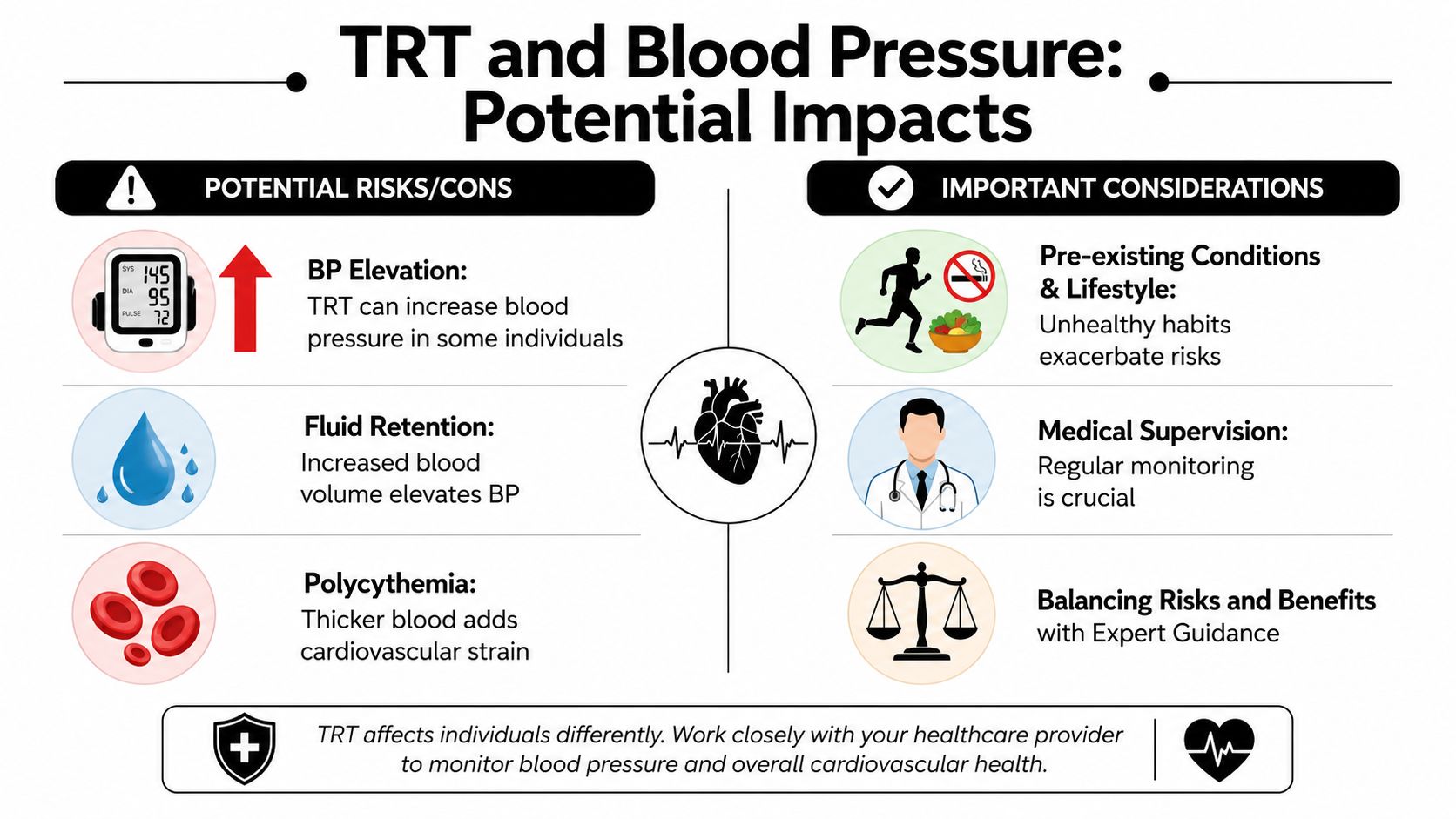
Balanced counseling matters. TRT can affect blood pressure in some men. The key is understanding when, why, and how clinicians respond.
The main mechanism is erythrocytosis. Testosterone can stimulate red blood cell production, which raises hematocrit. If hematocrit climbs too high, blood becomes more viscous, and that can increase cardiovascular strain. A secondary mechanism is mild fluid and sodium retention, which can expand intravascular volume and nudge blood pressure upward.
The threshold that gets attention
This is one of the most useful practical guardrails in TRT care. A hematocrit above 54% is commonly used as the threshold for action, with the need for dose reduction, increased injection frequency, or a pause in therapy described in this clinical review of TRT and blood pressure monitoring.
That's why responsible providers don't judge treatment by symptoms alone. A man may say he feels excellent while his hematocrit is drifting into an unsafe range. Good care requires both.
Who needs extra caution
Some men deserve tighter oversight from the start. In practice, I pay closer attention when a patient has:
- Pre-existing hypertension: even small shifts matter more.
- High baseline hematocrit: there's less room for upward movement.
- Supraphysiologic dosing history: prior self-treatment can distort expectations and lab patterns.
- Signs of fluid retention: swelling, rapid weight shifts, or changes in blood pressure trend.
A quick comparison helps:
| Scenario | Blood pressure risk profile |
|---|---|
| Physiologic replacement with monitoring | Usually manageable with routine follow-up |
| High dose or unstable dosing | Greater chance of hematocrit rise and BP issues |
| Existing hypertension plus poor follow-up | Higher-risk combination |
Practical rule: TRT risk usually becomes a management problem when dosing outruns monitoring.
What doesn't work
What fails most often is casual care. Men get started on testosterone, feel better, and assume feeling better means everything is safe. Then no one checks home blood pressure, hematocrit creeps up, sleep apnea goes untreated, and the patient blames the hormone alone.
What works is less dramatic. Use an appropriate dose. Recheck labs. Adjust early. Treat the patient's whole cardiovascular profile instead of pretending the testosterone prescription exists in isolation.
How to Monitor and Manage Blood Pressure on TRT
Good TRT care is active, not passive. You don't start therapy and hope things stay fine. You track the markers that tell you whether the treatment is helping, neutral, or creating friction.
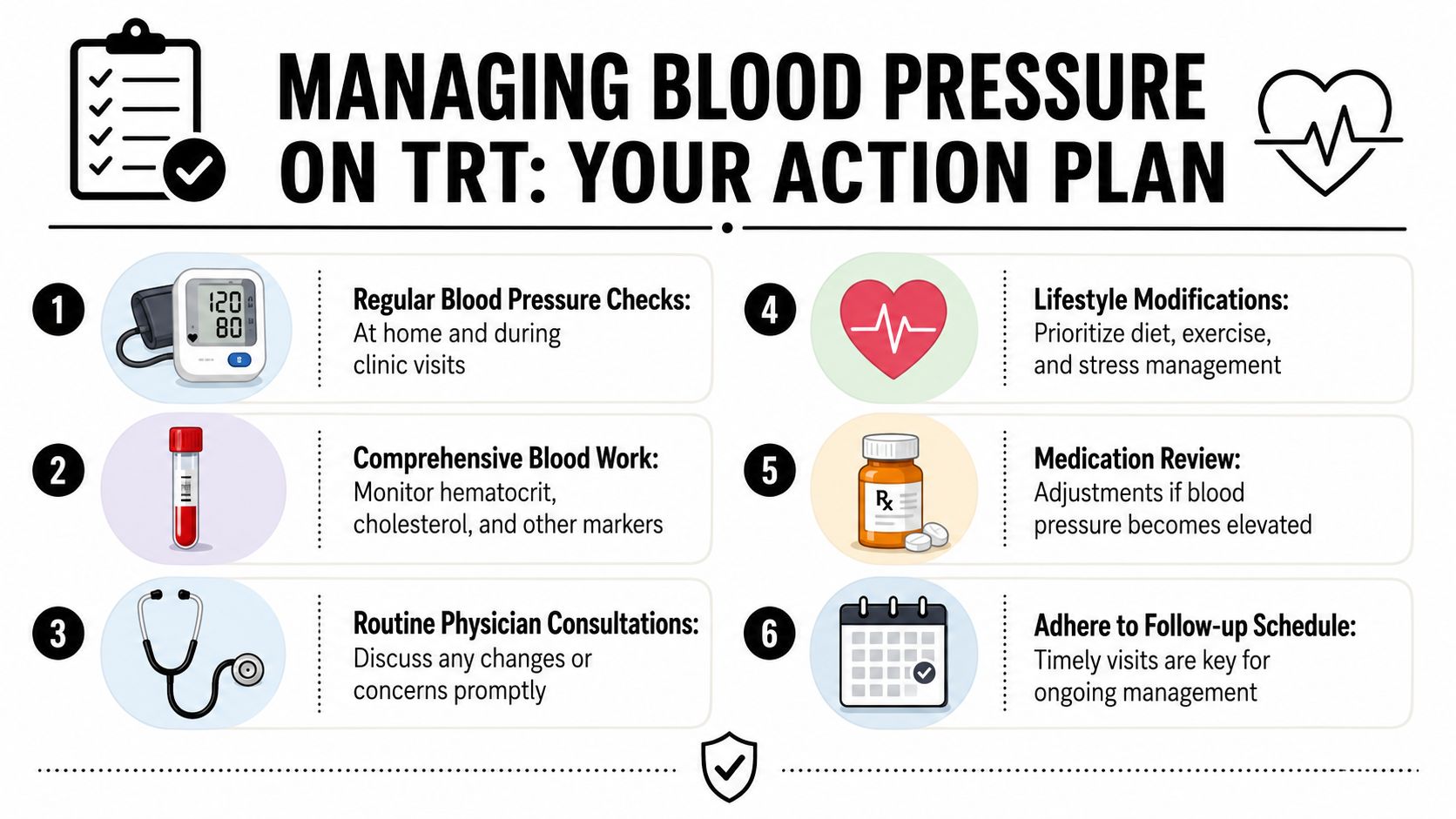
What to monitor consistently
The basics are straightforward, but they need to be done reliably.
- Blood pressure at home: use a validated upper-arm cuff, check under similar conditions, and look for trends rather than reacting to one isolated reading.
- CBC and hematocrit: this is essential because erythrocytosis is the most important TRT-related blood pressure mechanism to catch early.
- Symptoms that suggest fluid shifts: swelling, headaches, facial flushing, shortness of breath, or a sudden change in exercise tolerance deserve discussion.
- Sleep quality: untreated sleep apnea can make blood pressure harder to control and can confuse the picture during TRT.
Patients with questions about logistics, follow-up cadence, and common treatment issues often find a clinic TRT FAQ page helpful before their visit.
Lifestyle habits that support the protocol
TRT doesn't replace basic cardiovascular care. It works better when the rest of the plan is solid.
- Protect sleep. Poor sleep pushes blood pressure in the wrong direction and makes symptom tracking less reliable.
- Keep sodium intake reasonable. This matters more if you notice fluid retention.
- Train regularly. Resistance work and aerobic work both help the broader metabolic environment.
- Address weight gain directly. If body composition is worsening, pressure control usually gets harder.
- Review other medications and supplements. Stimulants, decongestants, and unreported anabolic compounds can muddy the waters.
Why younger men need a careful diagnosis
One caution point doesn't get enough attention. The age-dependent paradox matters. Testosterone supplementation reduced blood pressure in older hypertensive rats but increased it in young rats, likely through renin-angiotensin system activation, according to the Journal of the American Heart Association study on age-dependent testosterone effects.
That finding reinforces a practical rule in clinic. Don't supplement a young, healthy man because he wants “optimization” unless he has a real diagnosis and a real reason. The same intervention can behave differently depending on age and baseline hormone status.
If blood pressure starts climbing on TRT, the answer usually isn't panic. It's reassessment.
Key Questions to Ask Your Doctor About TRT and Your Heart
The best TRT conversations are specific. You want a doctor who can explain your individual risk, not someone who gives you a blanket reassurance or a blanket warning.
Bring these questions to your visit and ask for direct answers.
Questions that clarify safety
- How are you confirming that I have hypogonadism? Symptoms matter, but diagnosis needs more than symptoms alone.
- What is my baseline cardiovascular picture? Ask how your blood pressure history, weight, sleep, family history, and current medications change the decision.
- How will you monitor my hematocrit and blood pressure over time? A vague answer is a red flag.
- What is your plan if my hematocrit rises too high? You want to hear about dose adjustment, schedule adjustment, or pausing therapy when indicated.
Questions that improve treatment quality
- What testosterone range are you targeting for me, and why?
- How do you avoid pushing me into supraphysiologic levels?
- Could my sleep, body composition, or blood pressure meds affect how I respond to TRT?
- What symptoms should prompt me to contact you between visits?
Questions that make follow-up more productive
A short written list helps. Patients often forget key details once the appointment starts.
| Ask this | Why it matters |
|---|---|
| How often should I check blood pressure at home? | Home trends can catch changes before clinic visits do |
| What changes would make you adjust my dose? | It tells you whether the provider has real guardrails |
| What else should I improve besides testosterone? | Most blood pressure outcomes depend on more than hormones |
If you're preparing for treatment or transferring care, it also helps to review the clinic's getting started process for TRT evaluation so you know what records, labs, and questions to bring.
Choose the provider who treats testosterone and blood pressure as a long-term management issue, not a sales script. That's usually the difference between safe, effective care and a preventable problem.
Cost Plus TRT offers physician-supervised telemedicine care for men who want straightforward testosterone treatment without hidden fees or subscription games. If you're looking for affordable, transparent care with ongoing provider oversight, visit Cost Plus TRT to learn more.