
You're using a salicylic acid wash, maybe a benzoyl peroxide spot treatment, maybe a retinoid you bought after reading three different skincare threads. The breakouts still keep coming back in the same places. They're deep, sore, slow to heal, and they don't behave like the random pimples you had as a teenager.
That pattern often points to hormonal acne. In adults, it tends to be stubborn because the problem isn't only sitting on the surface of the skin. The signal is coming from underneath, through hormone-driven oil production and inflammation. For men, that conversation is often missing from mainstream advice. Most articles lean heavily toward female hormone patterns and barely address what happens when male androgen shifts, stress, or Testosterone Replacement Therapy change the skin's behavior.
If you're a man dealing with breakouts that worsened after starting TRT, or you're considering treatment and already struggle with oily, inflamed skin, you need more than generic advice to “wash better” or “manage stress.” You need skincare for hormonal acne that respects the biology behind it and the actual trade-offs involved. Some products help quickly but irritate the barrier. Some routines look perfect on paper but fail because the hormone driver was never addressed. Some men think their regimen stopped working when the underlying issue is that their skin environment changed.
Table of Contents
- Your Guide to Winning the Battle with Hormonal Acne
- How to Identify Hormonal Acne on Your Face
- Understanding the Hormonal Drivers of Acne
- Evidence-Backed Treatments That Actually Work
- How to Build Your Daily Skincare Routine
- Lifestyle Strategies and When to See a Doctor
Your Guide to Winning the Battle with Hormonal Acne
A common story goes like this. A man in his 30s starts breaking out along the jaw and neck, assumes it's sweat, shaving, or a bad cleanser, and keeps rotating products. Another starts TRT, feels better in the gym and at work, then notices painful bumps that weren't there before. Both think the same thing. “My skincare routine must be failing.”
Sometimes it is. Often, it isn't.
Hormonal acne behaves differently from routine clogged pores. It tends to recur in predictable areas, linger longer, and flare when internal signals shift. That's why a product that helped with ordinary whiteheads may barely touch the deeper lesions driven by oil gland stimulation and inflammation.
Practical rule: If your breakouts are deep, repetitive, and concentrated around the lower face, treat this like a hormone-influenced problem until proven otherwise.
For women, those shifts may track with menstrual cycles or contraceptive changes. For men, the pattern is usually less cyclical and more persistent. Stress can intensify it. Androgen sensitivity can intensify it. TRT can change the picture again, especially early on, when hormone levels are moving and the skin hasn't settled.
That doesn't mean you're stuck with it.
What works is a combination of clear identification, realistic product selection, and knowing when skincare alone isn't enough. The right plan usually includes a small number of dependable tools used consistently, not a bathroom shelf full of aggressive actives layered at once. In practice, the biggest wins come from reducing oil congestion, improving skin cell turnover, protecting the barrier, and recognizing when a medical approach needs to join the routine.
Here's the reassuring part. Adult hormonal acne is frustrating, but it's treatable. The key is matching the treatment to the driver, especially if you're male, under stress, or navigating hormone therapy.
How to Identify Hormonal Acne on Your Face
The easiest mistake is calling every adult breakout “hormonal.” Not all acne is. Some cases are mostly friction from helmets or collars. Some are shaving-related. Some are simple comedonal acne from heavy products. Hormonal acne has a pattern, and if you know what to look for, it becomes easier to spot.
Look at where it shows up
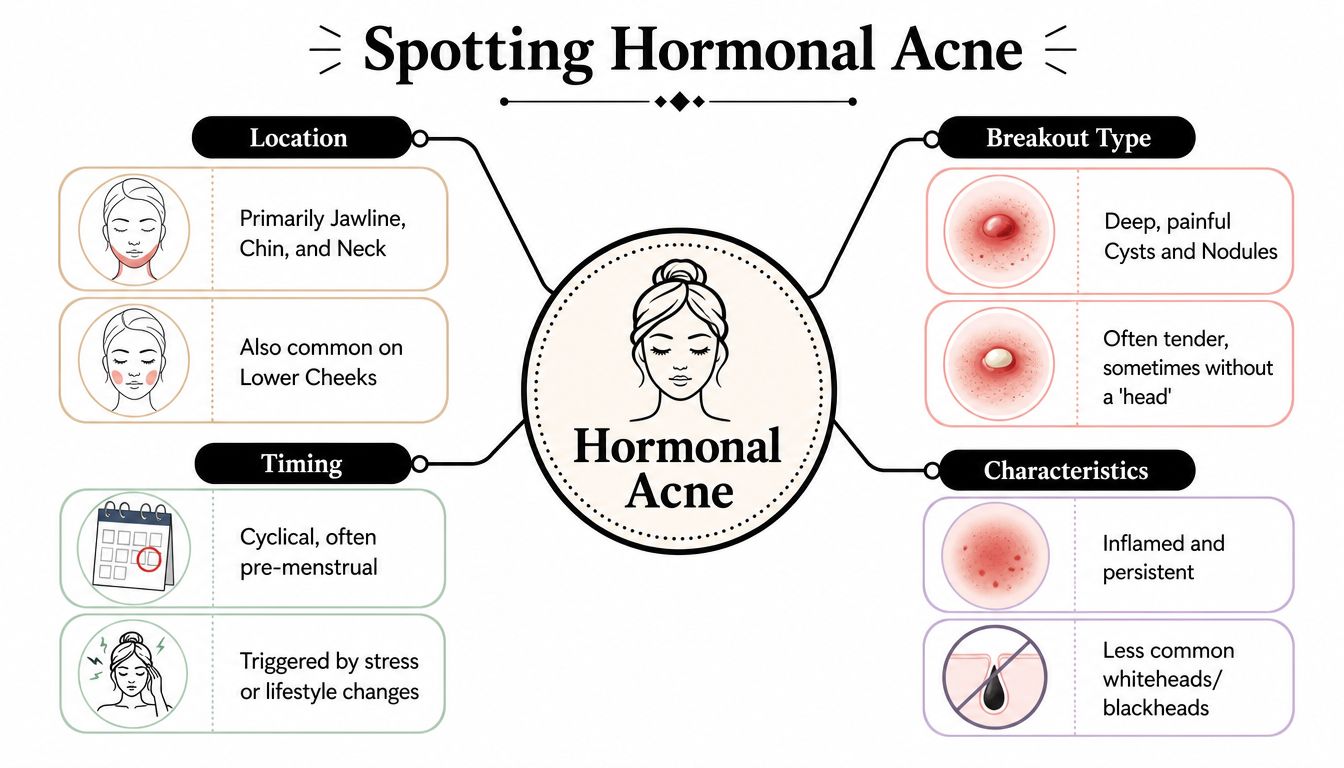
Start with the map on your face. Hormonal acne often favors the jawline, chin, lower cheeks, and neck. That lower-face pattern matters because it's different from the forehead-heavy acne many people remember from adolescence.
If your breakouts sit mostly around the mouth, along the mandibular line, or under the beard area and they keep returning there, hormonal influence moves higher on the list.
A quick self-check helps:
- Jawline focus means the same band of skin gets inflamed again and again.
- Chin involvement often shows up as tender bumps that feel larger under the skin than they look on the surface.
- Neck extension is common in men, especially where beard growth, sweat, and oil production overlap.
Pay attention to the kind of lesions
Hormonal acne usually isn't just a field of tiny whiteheads. It's more often made up of deep, painful cysts or nodules, sometimes with redness but no obvious “head.” They can feel hot, swollen, and stubborn.
That feature separates it from milder congestion.
| Breakout type | More suggestive of hormonal acne | Less suggestive of hormonal acne |
|---|---|---|
| Deep tender lump | Yes | |
| Recurrent cyst on jawline | Yes | |
| Small scattered whiteheads on forehead | More often non-hormonal | |
| Uniform itchy bumps | Consider a different cause | |
| Surface pustules that heal quickly | Often less hormone-driven |
Deep lesions that keep reappearing in the same lower-face zones deserve a different level of suspicion than a few surface pimples after a workout.
Track the timing instead of guessing
Timing gives the strongest clue. In women, hormonal acne often behaves cyclically. In men, it tends to be more persistent, with flares linked to stress, sleep disruption, or hormone treatment changes. If acne worsened after beginning TRT or after a dose adjustment, that timing matters.
You should also compare it with your product behavior. If benzoyl peroxide helps a little but never prevents the deep lesions, or a retinoid reduces texture but not the painful jawline bumps, that mismatch suggests the routine is only addressing part of the problem.
A simple phone note can help you connect the dots:
- Mark flare days with location and severity.
- Note stress and sleep changes because they often line up with inflammation.
- Log hormone changes such as starting TRT, changing dose timing, or adding other treatments.
If that pattern becomes clear, you're no longer guessing. You're making decisions based on how your skin behaves.
Understanding the Hormonal Drivers of Acne
A common male pattern looks like this. Your skin was manageable for years, then stress climbs, sleep drops, or TRT starts, and suddenly you are dealing with deeper, more inflamed breakouts that sit along the jaw, chin, and neck. That shift usually reflects hormone signaling in the skin, not just a bad cleanser or dirty pillowcase.
Why androgens change your skin
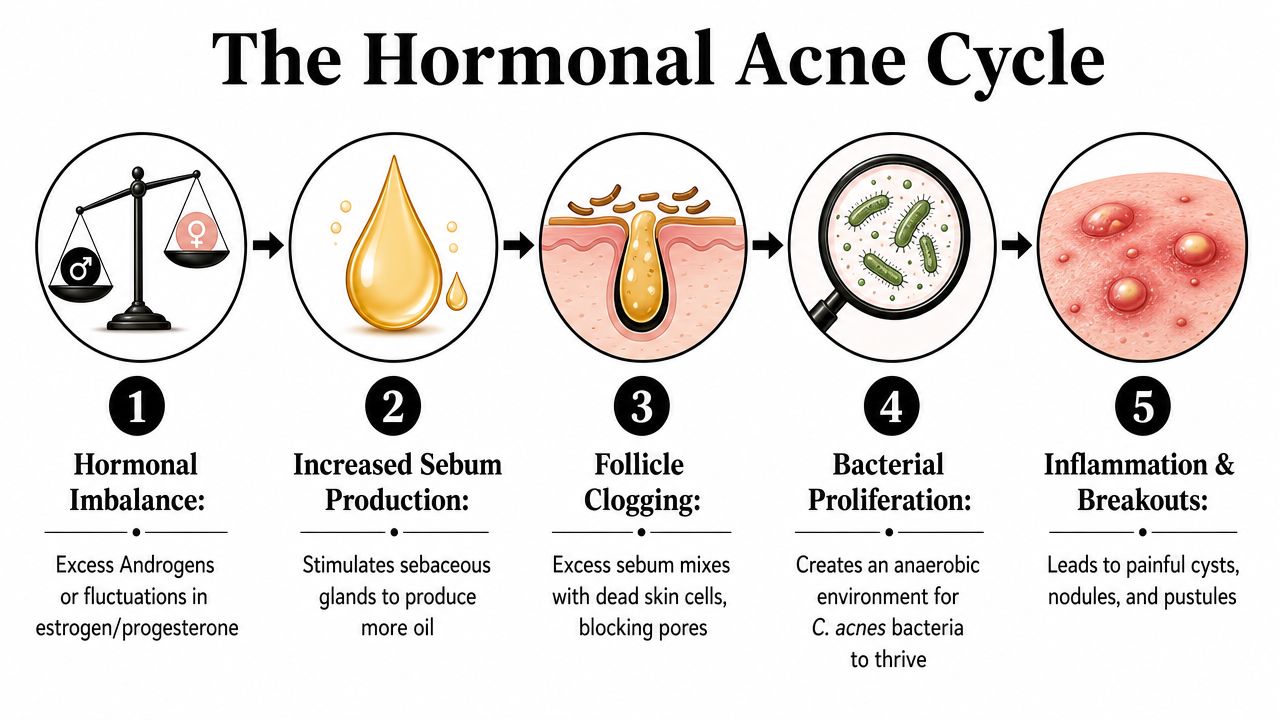
Hormonal acne begins in the sebaceous gland. Androgens, especially testosterone and DHT, bind to receptors in sebocytes and push the gland to produce more oil. More oil alone does not guarantee acne, but it makes clogged pores more likely and creates a better environment for inflammation and Cutibacterium acnes.
That is why these breakouts often feel different. They form deeper, stay tender longer, and are slower to flatten than a few surface pimples after sweat or shaving irritation.
Men are often underserved here because acne advice is usually written around menstrual cycling. Male hormonal acne is usually less cyclical and more persistent. The trigger is often a change in androgen exposure, chronic stress physiology, or both.
TRT adds a real trade-off. Improving low testosterone can help energy, mood, libido, and body composition, but the skin may react first to the androgen shift, especially early on or after dose changes. If you are weighing TRT treatment options for low testosterone, understand that acne can worsen even when the therapy is otherwise doing what it should.
How cortisol and stress make acne harder to control
Stress affects acne through more than habit changes. It changes hormone signaling. Higher cortisol can increase inflammation, influence oil production, and intensify the same androgen-sensitive pathways that already make some men prone to acne.
This matters in practice.
I see men flare during periods of poor sleep, heavy work strain, aggressive calorie cuts, intense training blocks, and frequent travel. Those situations raise physiologic stress, and the skin often reflects it quickly. In someone already prone to androgen-driven acne, cortisol acts like fuel on an existing fire.
There is also a second problem. Stressed skin is often treated too aggressively. Patients add more scrubs, stronger pads, or extra spot treatments, then end up with barrier irritation on top of hormonal inflammation. The result is more redness, more burning, and no real control of the deeper lesions.
A useful way to frame the biology is simple:
- Androgens increase oil output, which makes pore blockage easier.
- Cortisol raises inflammatory pressure, which can make each breakout angrier and slower to heal.
- TRT can temporarily worsen acne, especially during initiation or dose adjustments.
- Overtreating the skin barrier can make a hormone-driven problem look even worse.
For men, especially those on TRT, the goal is not to blame hormones for every breakout. The goal is to recognize the pattern early so treatment matches the cause instead of chasing random products.
Evidence-Backed Treatments That Actually Work
A man in his 30s starts TRT, keeps using the same face wash and spot treatment he used before, and three months later his jawline and cheeks are breaking out more, not less. That pattern is common. The treatment plan usually needs to match the biology, not just the bumps you see in the mirror.
Most adult hormonal acne improves with a layered approach. Start with topicals that keep pores from clogging, lower inflammation, and protect the skin barrier. Step up to prescription treatment when breakouts are deep, persistent, or likely to scar. For men, that decision often comes earlier than expected, especially if androgen levels have shifted with TRT or if stress is amplifying oil production and inflammation at the same time.
Topicals that deserve a place in the routine
Topical retinoids are the backbone for many adult acne plans. They help normalize shedding inside the pore, reduce clogged comedones, and improve the environment that lets hormonal acne persist. They also require patience. Early dryness or peeling is common, and many patients stop during the adjustment phase, right before the medication has had enough time to help.
Benzoyl peroxide works best when inflamed lesions are part of the picture. It lowers bacterial burden and can calm angry papules and pustules, but more is not better. In clinic, I see men damage their barrier with high-strength washes or frequent leave-on use, then assume the acne is getting worse when part of the problem is irritation.
Azelaic acid is a strong option for adults with redness, sensitive skin, or lingering post-acne marks. It is often easier to tolerate than harsher combinations and fits well when the goal is steady control without provoking more inflammation.
Salicylic acid helps with oil and pore maintenance. It can be useful, especially in a cleanser or a low-strength leave-on product, but it is usually not enough on its own for the deeper, tender lesions that often show up in male hormonal acne.
A practical order of use looks like this:
- Retinoid at night if your skin tolerates it.
- Benzoyl peroxide for inflamed acne-prone areas.
- Azelaic acid when redness, irritation, or discoloration are major issues.
- Salicylic acid as support for oil control and congestion.
When prescription treatment becomes the right move
Topicals have limits. If acne is cystic, painful, widespread, or leaving scars, it often needs prescription treatment rather than more over-the-counter experimentation.
For women, spironolactone is a common hormonal option. For men, it usually is not an appropriate parallel because blocking androgens creates a different set of trade-offs. That gap matters. A lot of acne guidance is built around female hormonal patterns, while men with androgen-driven flares are told to keep cycling through cleansers, acids, and spot treatments long after it is clear that skin care alone will not carry the case.
Prescription options for men often center on stronger topical retinoids, topical or oral antibiotics in selected cases, and isotretinoin for severe or scarring disease. Isotretinoin can be highly effective, but it deserves a serious discussion about side effects, lab monitoring, dryness, mood history, and whether the severity of acne justifies treatment at that level.
The best plan is the one you can stay on long enough to change the pattern.
If you are also using physician-supervised therapies such as peptide treatment options, your prescribing team should know. Skin changes make more sense when hormone therapy, recovery agents, supplements, and prescription acne treatment are reviewed together.
What changes when you are on TRT
TRT can improve energy, body composition, libido, and mood. It can also worsen acne in some men, especially early on or after dose changes. That does not mean TRT was the wrong choice. It means the sebaceous glands are responding to a stronger androgen signal.
The practical mistake is treating TRT-related acne like random adult breakouts. Men start scrubbing harder, switch products every week, or pile on multiple acids at once. That usually adds irritation without controlling the deeper driver.
A better approach is more disciplined:
- Keep the cleanser gentle.
- Use a retinoid consistently.
- Add benzoyl peroxide or azelaic acid based on whether inflammation or irritation is the bigger problem.
- Get assessed early if lesions are deep, widespread, or leaving dark marks or scars.
For men on TRT, acne management often works best when both sides are addressed. One side is the skin itself. The other is the hormonal context, including dosing changes, stress load, sleep disruption, and other factors that can intensify the cortisol-androgen mix behind the flare.
How to Build Your Daily Skincare Routine
A good routine should feel boring in the best way. You know what goes on in the morning, what goes on at night, and what you'll stop using if your skin barrier starts getting angry.
Use this visual as the backbone.
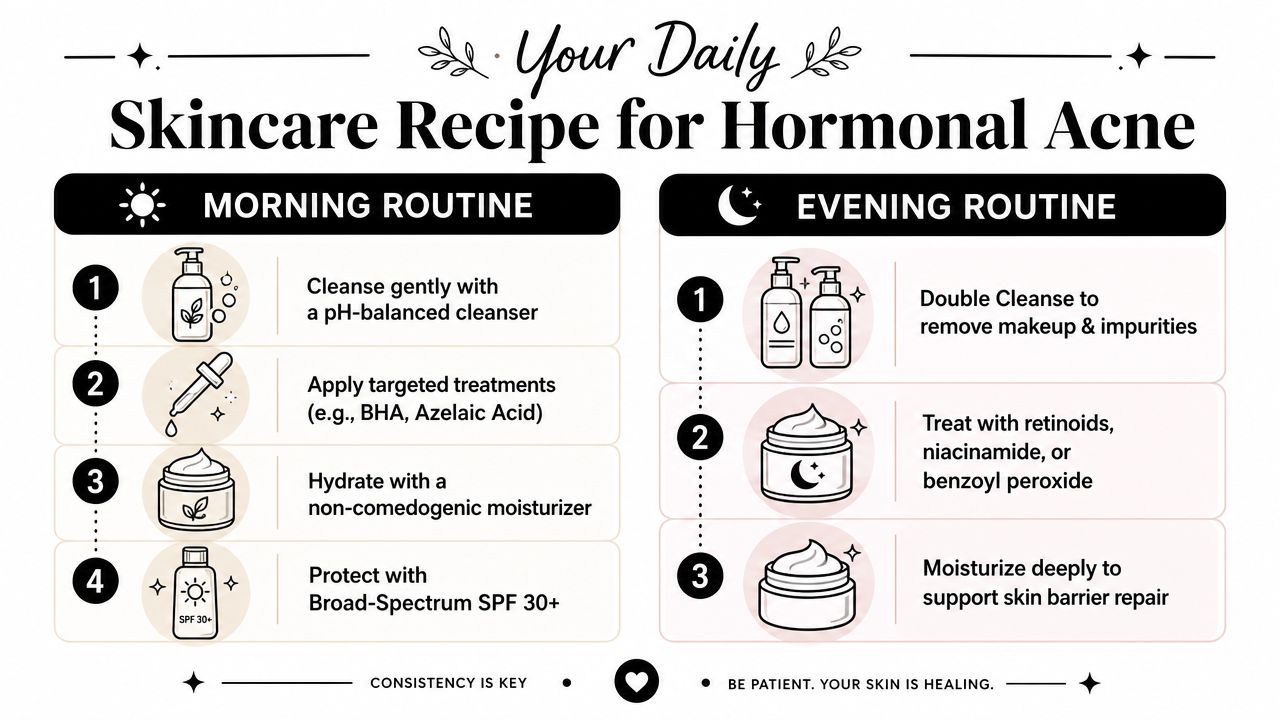
A simple morning structure
Morning care is about keeping oil, irritation, and UV exposure from undermining the rest of the plan.
Wash with a gentle cleanser.
If your face feels tight after washing, the cleanser is too aggressive. Gel or cream cleansers labeled non-comedogenic are usually better than harsh acne scrubs.Apply one targeted treatment.
For oily, congestion-prone skin, salicylic acid can work well here. If you run red and irritated, azelaic acid is often the smarter morning choice.Use a lightweight moisturizer.
Men with acne often skip this step because they think moisturizer causes breakouts. In reality, under-moisturized skin gets irritated more easily, especially if you're using active treatments.Finish with broad-spectrum SPF.
If you use retinoids or azelaic acid and skip sunscreen, you make it harder for inflammation and marks to fade.
A basic morning formula for most men is cleanser, treatment, moisturizer, sunscreen. That's enough.
A night routine that does the heavy lifting
Night is where you put your strongest acne-control step.
Here's the practical order:
- Cleanse well if you wore sunscreen, sweat heavily, or have a lot of oil buildup by evening.
- Use your retinoid on dry skin. Start a few nights per week if you're new to it, then increase as tolerated.
- Moisturize after treatment to reduce irritation and support the barrier.
If you're also using benzoyl peroxide, don't force it into every night automatically. Some men do better alternating nights, especially if the skin gets flaky or hot.
| Skin pattern | Better night choice | Common mistake |
|---|---|---|
| Oily and resilient | Retinoid, then moisturizer | Adding too many exfoliants |
| Inflamed with active red lesions | Benzoyl peroxide or azelaic acid, then moisturizer | Using strong scrub products |
| Sensitive and peeling | Moisturizer-first or reduced retinoid frequency | Pushing through obvious barrier damage |
Barrier-first routine for irritated skin
This matters more than people think. If your face burns when you apply “acne products,” or you're red, flaky, and still breaking out, your routine may be too aggressive for the skin you have.
A barrier-first reset usually looks like this:
Morning
Gentle cleanser, azelaic acid if tolerated, moisturizer, sunscreenEvening
Gentle cleanser, retinoid only on selected nights, moisturizer every nightWhat to remove temporarily
Harsh exfoliating pads, grainy scrubs, multiple acids layered together, alcohol-heavy toners
Skincare for hormonal acne works best when your skin can tolerate it consistently. Irritation is not proof that a product is working.
Men on TRT sometimes need a slightly stronger active strategy because oilier, thicker skin can tolerate more. But don't confuse that with a license to overdo it. The right amount is the one that controls lesions without pushing you into chronic peeling, rawness, or rebound inflammation.
Lifestyle Strategies and When to See a Doctor
Skincare matters, but lifestyle still changes the terrain your skin is operating in. If you ignore sleep, stress, diet, and hormone context, you'll keep trying to solve an internal problem with surface tools alone.
Lifestyle habits that support treatment
One useful principle is to remove obvious aggravators before you add another serum.
This dermatology guidance on hormonal acne routines notes that low glycemic and low dairy dietary patterns, along with stress management, are important, while also pointing out the lack of guidance on how male-specific hormonal fluctuations such as those seen in TRT candidates affect skin response. That gap is real in practice. Men often follow broad wellness advice and still feel confused because their skin is reacting to androgen changes that weren't addressed directly.
Focus on the basics that move the needle:
- Keep blood sugar swings lower by building meals around protein, fiber, and less processed carbs.
- Watch dairy if you suspect it worsens breakouts and track your own response carefully.
- Protect sleep because poor sleep and high stress often arrive together, and your skin notices both.
- Train hard, but cleanse smart after sweating. Don't sit in dried sweat and friction for hours.
If you're on TRT or evaluating fertility-related trade-offs, it's also reasonable to understand the broader hormone picture, including topics such as how TRT may affect fertility, because treatment decisions often overlap more than patients expect.
When self-treatment is no longer enough
Some red flags mean it's time to stop self-experimenting.
See a dermatologist if:
- You're getting cysts or nodules that are painful or deep
- You're starting to scar
- Your acne is spreading beyond a manageable pattern
- Your routine has been consistent for about 3 months and you're still not improving
See the clinician managing your hormones, or an endocrinology-minded physician, if:
- Acne changed sharply after starting TRT
- The timing matches a dose change or hormone shift
- You have other hormone-related symptoms that don't fit a purely skin-level problem
Don't wait for severe scarring to prove that the problem is medical. Hormonal acne often responds better when treatment is escalated early and thoughtfully.
If you're dealing with low testosterone, TRT-related skin changes, or you want a physician-guided men's health plan that doesn't ignore the hormonal side of acne, Cost Plus TRT offers telemedicine care built around transparent pricing and ongoing medical support. It's a practical option for men who want experienced guidance without the usual clinic friction.