

Most discussions of taking sildenafil and tadalafil together stop at “don't combine them.” That warning is incomplete. A randomized study of 180 men found that tadalafil 5 mg once daily plus sildenafil 50 mg as needed improved several erectile-function and intercourse measures more than tadalafil alone, with no difference in adverse-event incidence between groups over 12 weeks (Andrologia trial). The finding doesn't make the sildenafil tadalafil combination routine or self-directed. It does show that, for carefully selected men, the question is whether two different exposure patterns can solve a problem that one PDE5 inhibitor hasn't solved.
Table of Contents
- Why Combining Sildenafil and Tadalafil Is a Clinical Question, Not Just a Safety One
- How Sildenafil and Tadalafil Work and Why They Complement Each Other
- What the Clinical Trials Show
- Safety Boundaries Every Patient Must Understand
- Dosing Strategies Clinicians Use for Combination Therapy
- Alternatives Worth Considering Before Combining
- When to Involve a Clinician and What to Ask
- Accessing Combination Therapy Through a Telemedicine Clinic
Why Combining Sildenafil and Tadalafil Is a Clinical Question, Not Just a Safety One
A patient asking about this combination usually isn't looking for a pharmacology lecture. He wants to know why tadalafil gives him background confidence but not enough firmness at the right moment, or why sildenafil works inconsistently despite correct use. Those are treatment-strategy questions.
Both medicines belong to the same PDE5 inhibitor class, so combining them doesn't create two unrelated mechanisms. The proposed rationale is more practical: daily tadalafil can provide ongoing support, while on-demand sildenafil can provide a stronger time-specific effect. That may matter when a single drug is limited by planning, timing, food, duration, or treatment fatigue.
Combination treatment makes the most sense only after a clinician confirms that monotherapy was optimized. Before considering two medicines, I'd want to know:
- How the drug was taken: Was there adequate sexual stimulation, appropriate timing, and enough treatment attempts?
- Whether the dose was appropriate: A weak response at a low or poorly tolerated dose doesn't prove drug failure.
- What might be interfering: Heavy meals can affect sildenafil timing, while other medicines, alcohol, vascular disease, hormonal problems, and anxiety can affect results.
- What the patient wants: Some men need spontaneity, others need predictable performance for planned encounters.
Clinical principle: A combination should address a defined treatment problem. It shouldn't compensate for an incorrect diagnosis, unsafe prescribing, or poor instructions.
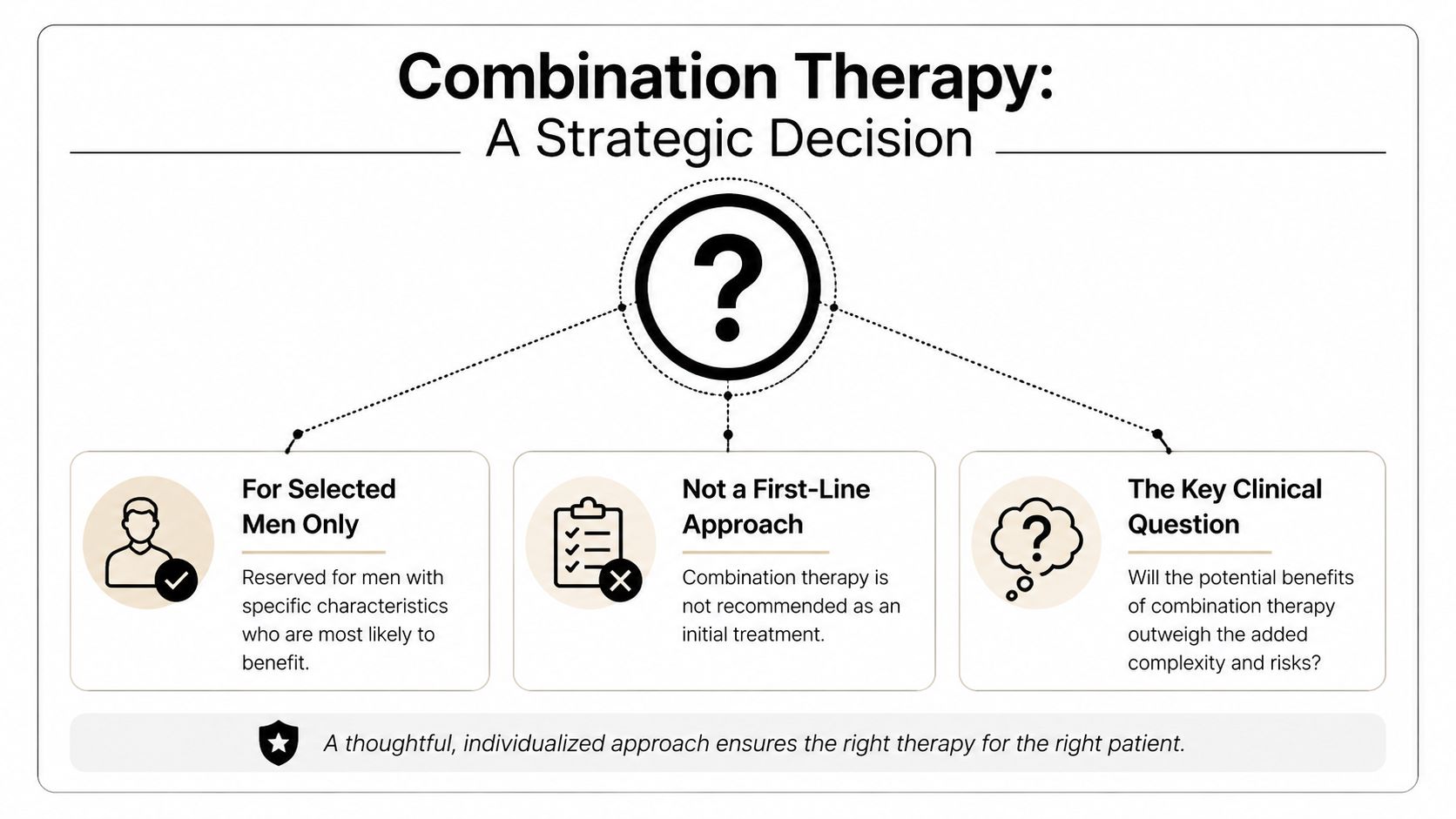
This approach remains off-label in many settings, and separate prescriptions shouldn't be combined casually. A clinician needs to review cardiovascular status, medication interactions, blood pressure concerns, and prior treatment response before deciding whether the possible benefit justifies the added complexity.
How Sildenafil and Tadalafil Work and Why They Complement Each Other
Sildenafil and tadalafil work through the same basic pathway. During sexual stimulation, nitric oxide helps increase cyclic guanosine monophosphate, or cGMP, which relaxes smooth muscle and supports penile blood flow. The PDE5 enzyme breaks down cGMP, while these medicines inhibit PDE5 and help preserve the erectile signal.
A useful analogy is two keys for the same lock. They don't open two different doors, but they differ in how quickly they become useful and how long their effect remains available. Sildenafil is commonly used for a defined sexual window, while tadalafil is suited to a broader period of possible activity.
Sildenafil can start working within 30 to 60 minutes and generally lasts about four to six hours. Tadalafil may begin within 30 to 120 minutes and can remain active for up to 36 hours. High-fat meals can delay sildenafil absorption, while tadalafil is less affected by food. These practical differences help explain why clinicians may consider a daily-plus-on-demand structure.
| Feature | Sildenafil | Tadalafil |
|---|---|---|
| Drug class | PDE5 inhibitor | PDE5 inhibitor |
| Typical role in a proposed combination | On-demand support for planned activity | Daily baseline support |
| Onset profile | Often quicker, with timing affected by food | Broader window of activity |
| Duration | About four to six hours | Up to 36 hours |
| Main limitation when combined | Adds to shared vasodilatory effects | Remains active while sildenafil is added |
Neither medicine creates sexual desire by itself, and neither eliminates the need for arousal or stimulation. Their differences can complement each other pharmacologically, but their shared effects still matter. Headache, flushing, nasal congestion, dizziness, and blood-pressure effects can become more relevant when exposure overlaps.
For a practical overview of available erectile dysfunction treatments, patients can review ED medication options, then discuss which, if any, fits their medical history with a prescriber.
What the Clinical Trials Show
The most relevant direct evidence comes from a randomized study of 180 men with erectile dysfunction. Participants received either tadalafil 5 mg once daily or tadalafil 5 mg once daily plus sildenafil 50 mg as needed, with follow-up lasting 12 weeks (trial report).
The combination did not improve every outcome equally. Its clearest advantage appeared among men with severe erectile dysfunction, whose total International Index of Erectile Function, or IIEF-5, scores improved significantly compared with tadalafil alone. Individual IIEF-5 questions also favored combination treatment in men with moderate and severe ED.
The practical implication is limited but important. Two PDE5 inhibitors do not guarantee a better erection for every patient. The findings support considering daily tadalafil with on-demand sildenafil for men with more difficult ED, particularly when either medicine alone has produced an inadequate response.
| Outcome | What was assessed | Interpretation |
|---|---|---|
| Total IIEF-5 score | Overall erectile-function severity and performance | Combination treatment showed a significant advantage in men with severe ED |
| Individual IIEF-5 questions | Specific areas of erectile function | Improvements appeared in moderate and severe ED groups |
| Sexual Encounter Profile responses | Penetration, successful intercourse, and partner-reported encounter outcomes | More favorable responses supported practical sexual benefit |
| Adverse-event incidence | Reported unwanted effects in both treatment arms | No difference was reported between groups in this study |
The regimen studied was specific. The trial included a relatively small, selected population and does not establish a universally safest dose or schedule. Results may not apply to men with unstable cardiovascular disease, nitrate exposure, or complex medication regimens, whose risks can differ from those of trial participants.
The wider evidence base is still limited. A 2021 systematic review found that oral combination approaches involving PDE5 inhibitors can improve erectile function without increasing adverse events, while noting that evidence for particular drug combinations and difficult-to-treat cases remains scarce (systematic review).
Research continues, including a registered study examining daily tadalafil with on-demand sildenafil in men who did not respond adequately to PDE5 inhibitors. For clinical practice, the evidence supports a supervised rescue or optimization strategy, not routine stacking for every patient.
Safety Boundaries Every Patient Must Understand
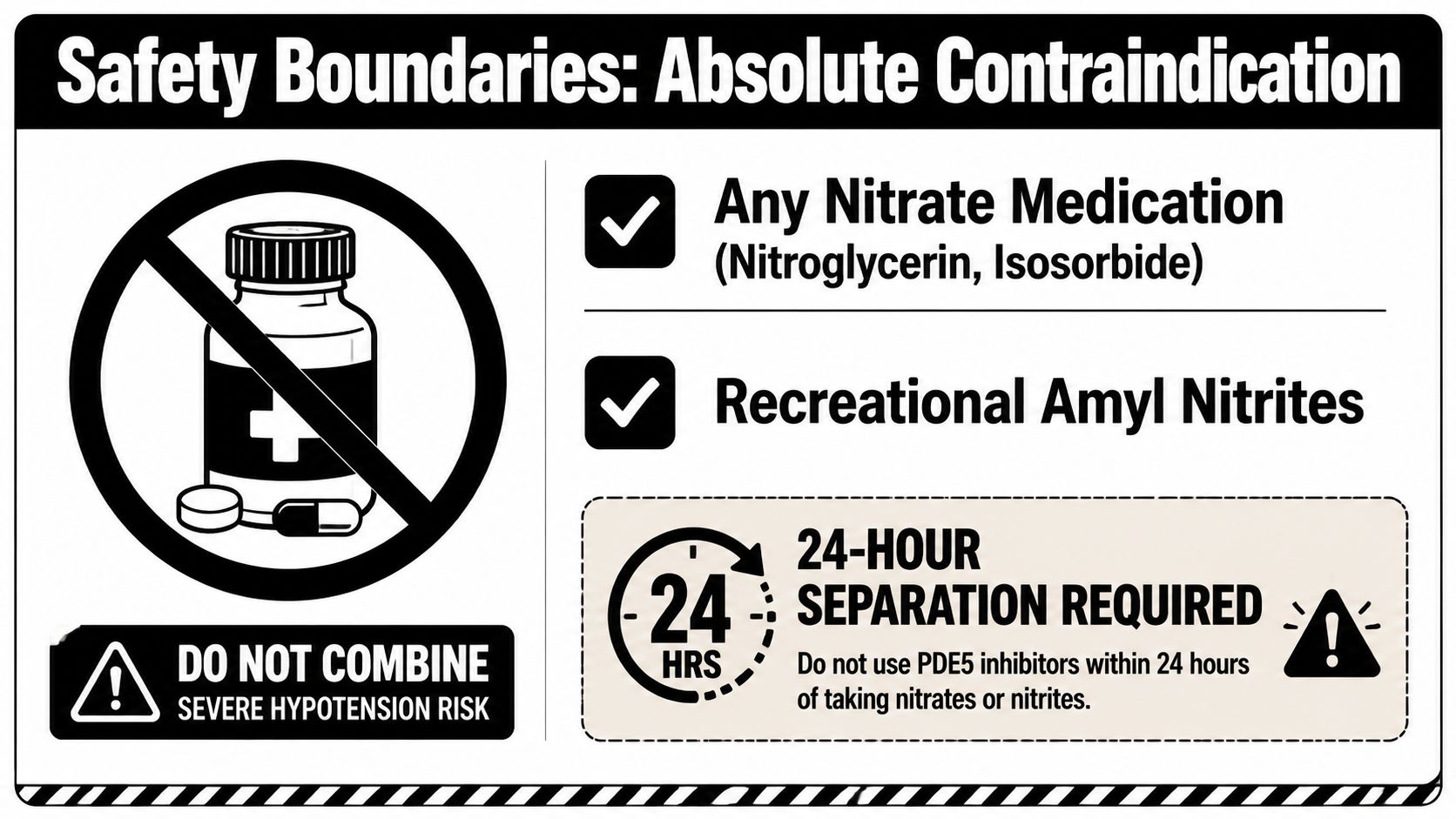
The most important safety rule is simple: never combine either PDE5 inhibitor with nitrates. Nitrates include medicines such as nitroglycerin and isosorbide, as well as recreational amyl nitrites, often called poppers. Sildenafil and tadalafil can both increase vasodilation, and adding a nitrate can produce a dangerous fall in blood pressure.
Cardiovascular guidance specifies that nitrates are contraindicated within 24 hours after sildenafil and 48 hours after tadalafil (American Heart Association guidance). Because tadalafil remains active longer, the longer separation window is clinically important. Anyone who might need nitrate rescue for angina shouldn't improvise a combination regimen.
Other risks require a medication review rather than an automatic ban. Alpha-blockers can compound blood-pressure lowering, so clinicians may use cautious dosing and supervised adjustment. Antihypertensives, significant cardiovascular disease, and drugs that affect CYP3A4 metabolism, including some azole antifungals and protease inhibitors, also deserve explicit discussion.
Seek urgent medical care for chest pain during sexual activity, fainting, severe dizziness, sudden vision or hearing changes, or an erection that doesn't resolve. Don't wait for a routine telemedicine message if symptoms suggest a cardiovascular event, serious hypotension, or priapism.
A clinician should also confirm that you're not taking riociguat, nitrates under another name, or recreational poppers. Bring every prescription, over-the-counter medicine, supplement, and recreational product to the review. The danger often comes from an interaction the patient didn't realize was relevant.
Dosing Strategies Clinicians Use for Combination Therapy
There isn't one approved combination schedule that applies to everyone. A prescriber may consider different patterns depending on whether the patient needs spontaneous coverage, planned intensity, or limited exposure.
| Strategy | Tadalafil dose | Sildenafil dose | Best candidate |
|---|---|---|---|
| Daily baseline plus on-demand support | Low-dose daily tadalafil, commonly 2.5 to 5 mg | Sildenafil as needed, commonly 50 to 100 mg | Men who want ongoing support with additional help for selected encounters |
| Alternate-day tadalafil plus as-needed sildenafil | Tadalafil on a spaced schedule | Sildenafil on days requiring planned support | Men concerned about continuous exposure, when a clinician believes spacing is appropriate |
| Same-event stacking | Tadalafil and sildenafil before one sexual event | Both used in the same planned window | A narrowly selected patient under explicit prescriber instructions, not self-directed use |
Most clinicians who consider combination therapy favor the daily-plus-on-demand pattern because it separates the roles. Tadalafil provides a baseline, while sildenafil is reserved for a particular encounter. That structure is easier to monitor than taking both medicines together without a clear reason.
Dosing should begin with the lowest effective doses judged appropriate for that patient. A clinician may adjust one medicine only after reviewing response, tolerability, blood pressure, and timing. The patient should never add a second tablet because the first dose felt slow, especially when tadalafil may still be active from an earlier dose.
The practical instructions need to be written down. They should specify which medication is daily, which is optional, the maximum prescribed use, what to do after a missed dose, and which symptoms require stopping and seeking care. Since combination use isn't covered as a standard FDA-approved label regimen, informed consent should include the off-label nature of treatment and the uncertainty in long-term evidence.
Alternatives Worth Considering Before Combining
Combination therapy shouldn't be the first escalation after one disappointing attempt. A poor result may reflect timing, inadequate stimulation, food effects, an unsuitable dose, untreated medical disease, or anxiety rather than true pharmacologic failure.
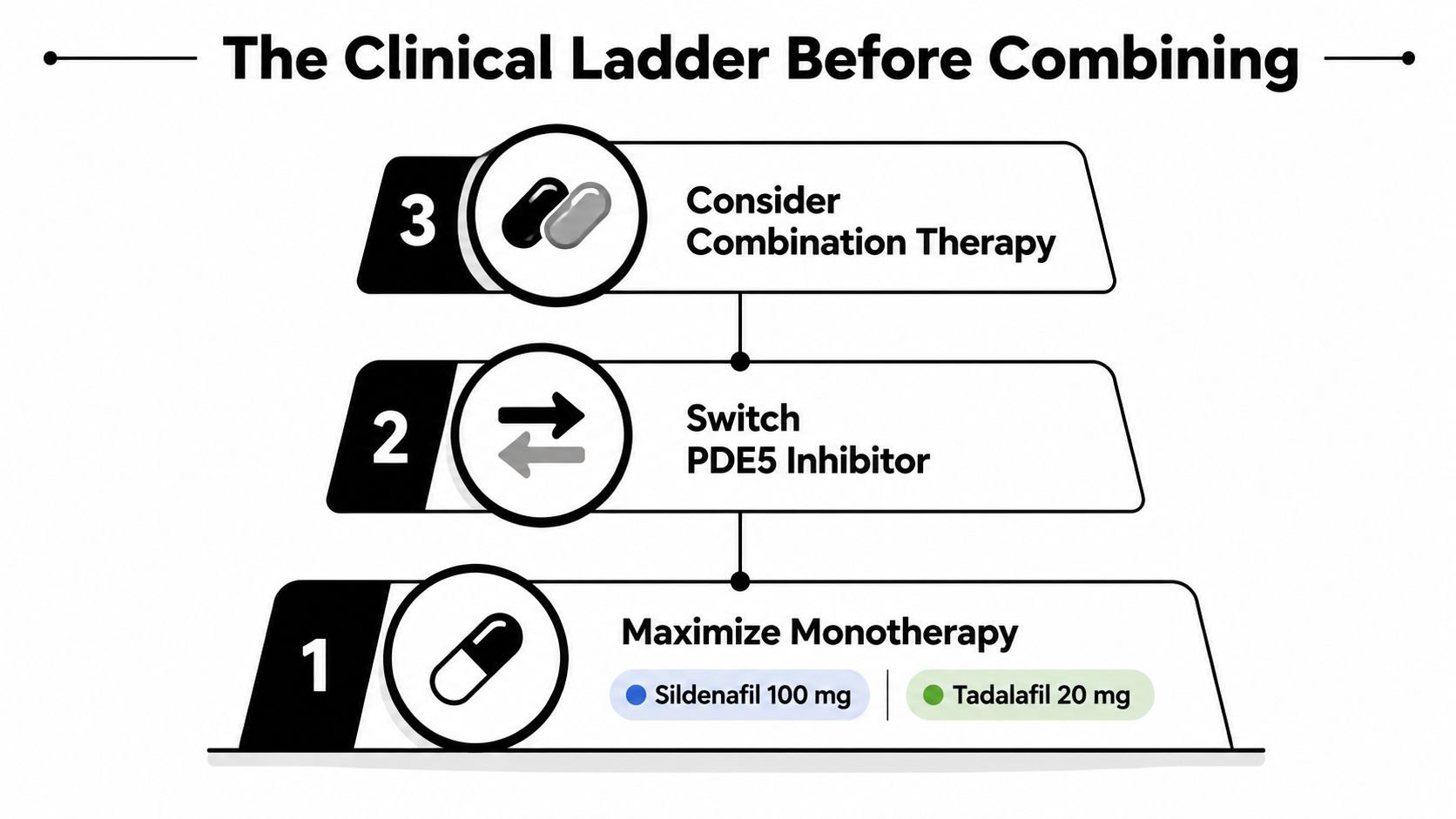
The usual clinical ladder is more straightforward:
- Maximize monotherapy. A prescriber may consider titrating sildenafil toward 100 mg or tadalafil toward 20 mg, when medically appropriate and tolerated. These dose figures are treatment options described in the requested clinical pathway, not instructions for self-adjustment.
- Switch the PDE5 inhibitor. Some men respond better to tadalafil after sildenafil has disappointed, or the reverse. The duration and timing profile can matter as much as perceived strength.
- Address reversible contributors. Sleep problems, excess alcohol, weight, vascular risk, medication effects, low testosterone when clinically confirmed, and relationship or performance anxiety can all change the outcome.
- Add a non-PDE5 option. A vacuum erection device, intraurethral alprostadil, or referral for psychological or sex therapy may be more useful than adding another medicine.
- Consider combination therapy selectively. This is most defensible after documented inadequate response to optimized monotherapy and a review of safety risks.
A higher dose of one medicine may be simpler and safer than stacking two agents. Switching may solve a duration or food-timing problem without adding overlapping vasodilation. A vacuum device may help a man who can't use PDE5 inhibitors because of nitrate therapy, although it requires a different kind of commitment and instruction.
Combination treatment becomes more reasonable when the patient has used one or both medicines correctly, has a persistent functional goal, and understands the safety boundaries. It becomes less reasonable when the underlying cause hasn't been evaluated or when the patient wants a quick fix for an inconsistent diagnosis.
When to Involve a Clinician and What to Ask
A clinician should be involved before combining sildenafil and tadalafil, not after an adverse effect occurs. The review should establish what you've tried, how you took it, what happened, and whether your cardiovascular status makes sexual activity and vasodilator treatment appropriate.
Bring a concise medication and symptom record:
- List every medication: Include nitrates, alpha-blockers, antihypertensives, riociguat, azole antifungals, protease inhibitors, and recreational poppers.
- Describe prior trials: Record the PDE5 inhibitor, prescribed dose, timing, food exposure, number of attempts, erection quality, and adverse effects.
- Define the goal: Tell the clinician whether you want spontaneous intimacy, predictable planned activity, or improved firmness after partial response.
- Ask about the workup: Discuss blood pressure, cardiovascular risk, hormone testing when indicated, glucose or lipid evaluation, and whether a physical examination is necessary.
Chest pain, syncope, sudden vision or hearing loss, severe symptomatic hypotension, and a prolonged erection require urgent evaluation. Don't treat those symptoms as routine side effects or wait for a prescription portal response.
An in-person assessment is particularly important with new-onset ED in a younger man, suspected pelvic or hormonal disease, significant cardiac symptoms, or a need for physical or cardiac clearance. Telemedicine can support established, uncomplicated cases, but a questionnaire alone can't replace an examination when the history raises a red flag.
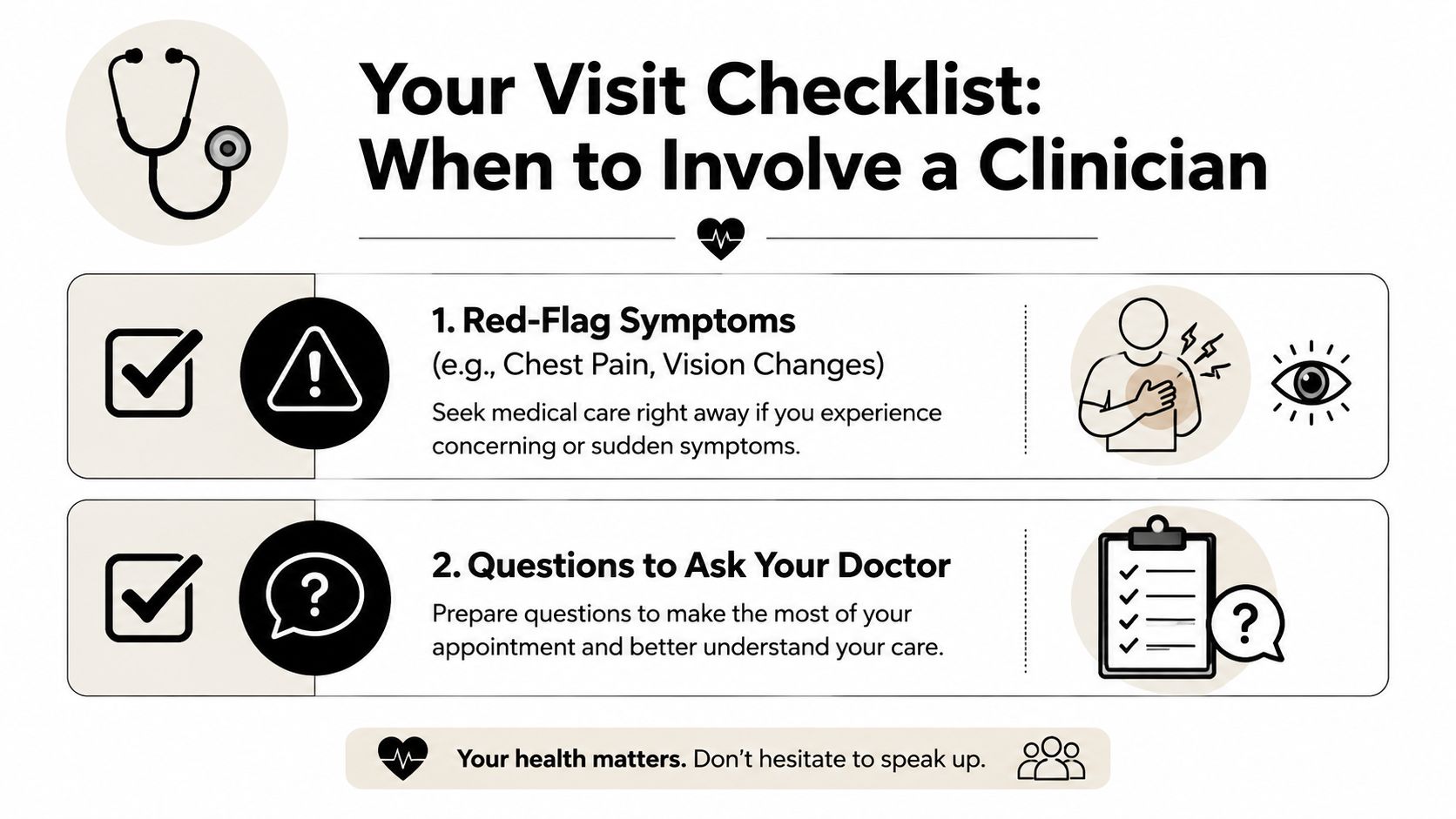
Use the appointment to ask directly: “Did I use monotherapy correctly?”, “Is my cardiovascular risk compatible with this plan?”, “Which drug is daily and which is optional?”, and “What should I do if I need emergency chest-pain treatment?” Clear answers are more valuable than receiving two prescriptions.
For a confidential starting point and clinician review, you can use the Cost Plus TRT contact page.
Accessing Combination Therapy Through a Telemedicine Clinic
Telemedicine can be a reasonable first step for a man with established ED when the service performs real clinical screening. A remote intake can review prior prescriptions, symptoms, blood-pressure readings, cardiovascular history, and medication interactions. Clinicians can also coordinate laboratory testing, including testosterone, lipid, and HbA1c testing when those tests fit the presentation.
A compliant intake should ask for more than a checkbox confirming erectile difficulty. It should document:
- Current medications and allergies, with specific questions about nitrates, alpha-blockers, antihypertensives, riociguat, poppers, azole antifungals, and protease inhibitors.
- Previous PDE5 use, including dose, timing, food, response, and side effects.
- Blood-pressure information, especially if the patient uses antihypertensives or has experienced dizziness.
- Relevant medical history, including cardiovascular symptoms, diabetes risk, pelvic disease, and hormonal concerns.
- Treatment objectives, such as daily spontaneity versus planned sexual activity.
If a clinician believes combination treatment is appropriate, the prescriptions should come with separate, explicit instructions for daily tadalafil and on-demand sildenafil. The patient should understand the timing, limits, contraindications, and follow-up plan. A review after several weeks can assess erectile-function scores, adverse effects, blood pressure, and whether the added sildenafil is providing meaningful benefit.
Telemedicine shouldn't be used to bypass necessary care. Chest pain, fainting, sudden sensory changes, suspected priapism, unstable cardiovascular disease, or an unclear diagnosis should prompt in-person evaluation. Legitimate care also includes follow-up and appropriate laboratory coordination when the broader history suggests metabolic or hormonal contributors.
Men who want to discuss ED medication options through a remote clinical pathway can get started with Cost Plus TRT. The service offers clinician-prescribed sildenafil and tadalafil formulations, with treatment selected after medical review rather than by self-combining products.
Cost Plus TRT offers telemedicine consultations for men's health, including physician-supervised erectile dysfunction treatment and prescription review. If you're considering a sildenafil tadalafil combination, visit Cost Plus TRT to complete the intake and discuss whether a monitored plan fits your health history and treatment goals.