

“Peptide therapy” isn't one treatment, and peptide therapy injections aren't interchangeable. That popular advice skips the question that matters most: which molecule, for which indication, with what human evidence and under what medical supervision?
An FDA-approved peptide drug is not equivalent to a compounded wellness product, and neither is equivalent to a vial sold online for “research.” The evidence can change sharply by compound, route, formulation, and intended use. A practical discussion therefore starts with classification, not promises about anti-aging, fat loss, recovery, or vitality.
The route also matters more than many marketing pages admit. Subcutaneous administration can bypass digestion, but it doesn't guarantee that the entire injected amount reaches circulation. Local tissue breakdown, diffusion through the interstitial space, formulation, and blood or lymphatic uptake all influence exposure.
Table of Contents
- The Reality of Peptide Therapy Injections
- Why Injections Dominate Peptide Delivery
- Core Peptides Used in Men's Health and Wellness
- The Biology of Subcutaneous Absorption
- Safety Protocols and Physician Supervision
- Navigating Telemedicine Peptide Delivery
- Evaluating Your Readiness for Peptide Therapy
The Reality of Peptide Therapy Injections
The safest assumption is that all peptides are different until proven otherwise. Peptides are short chains of amino acids that can act as signaling molecules, but a shared chemical category doesn't create shared clinical evidence. A peptide drug approved for a defined disease or indication has passed through a regulatory process that a compounded or research product may not have undergone.
That distinction is especially important in wellness marketing. Recent physician coverage notes that many injectable peptides promoted for anti-aging and wellness still lack thorough FDA review, while long-term or frequent dosing effects remain poorly characterized. A physician-focused review of injectable peptides also highlights the difference between approved peptide drugs, including GLP-1 medicines, and compounded or “research” peptides.
Evidence belongs to the compound
A clinician shouldn't answer “Are peptides effective?” as though peptide therapy were a single medicine. The useful questions are narrower:
- What is the exact molecule? A named compound has a clearer evidence trail than a vague “recovery blend.”
- What is the intended indication? Evidence for a diagnosed endocrine disorder doesn't automatically support anti-aging or performance use.
- What route and formulation are being used? Oral, subcutaneous, intravenous, and intramuscular delivery can produce different exposure patterns.
- What human data exist? Animal findings and patient anecdotes can generate hypotheses, but they don't replace controlled human safety and efficacy evidence.
A 2026 PubMed review found that many unapproved peptides look promising in animal models while rigorous human safety data remain scarce, with the possibility of serious harm. That makes compound-by-compound assessment essential rather than academic.
Practical rule: If a seller describes a peptide by its benefits but can't clearly identify its regulatory status, human evidence, source, and monitoring plan, you don't have enough information to make a safe decision.
Approved peptide drugs and physician-supervised compounded therapies also shouldn't be collapsed into one category. A prescription may be clinically appropriate in a specific context, but the prescription itself doesn't turn an unapproved molecule into an approved one. Patients deserve a direct explanation of what is established, what is off-label, and what remains uncertain.
Why Injections Dominate Peptide Delivery
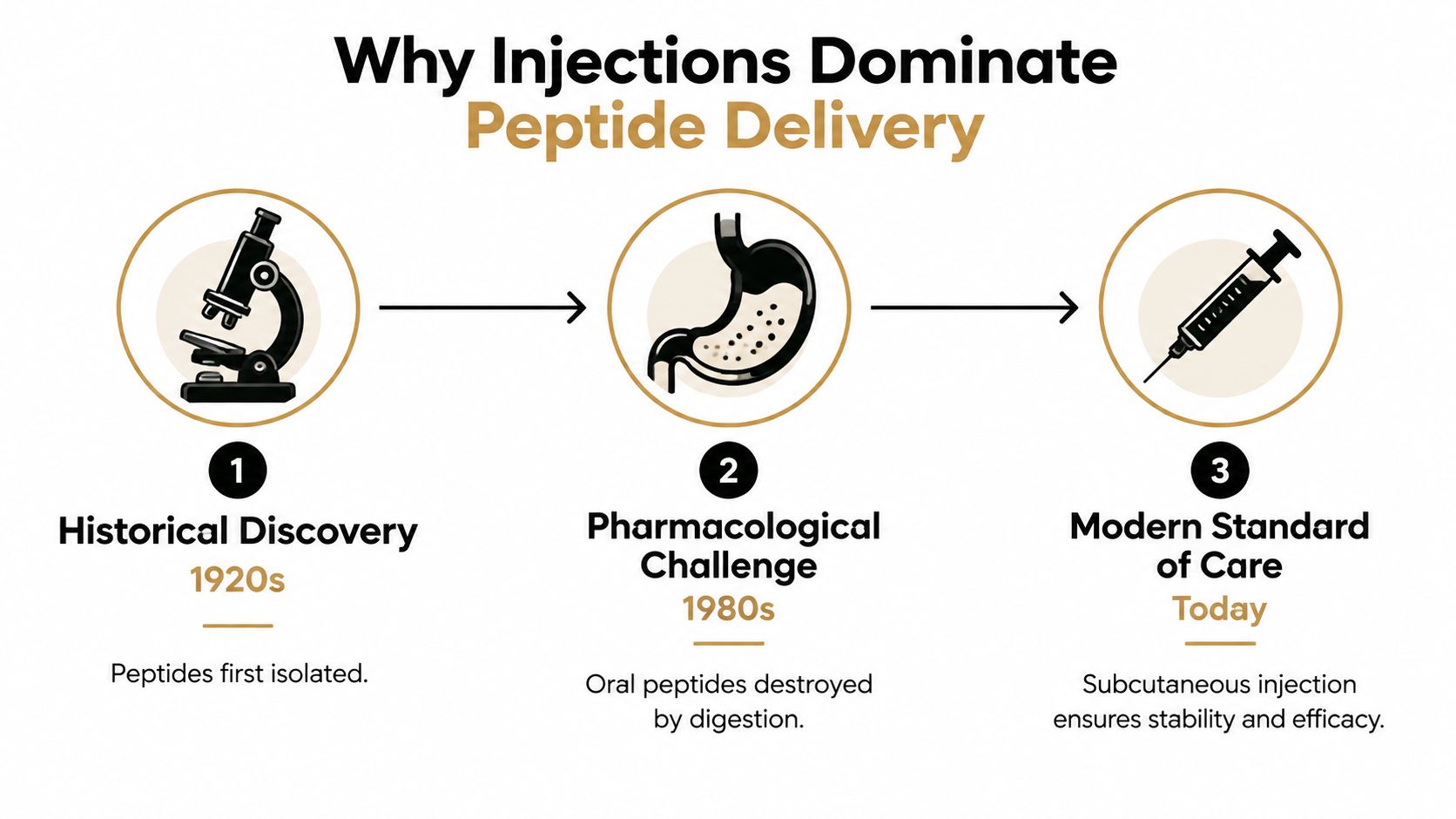
Most therapeutic peptides are fragile in the gastrointestinal tract. Digestive enzymes can break down peptide structures before they reach the bloodstream, and the gut presents a formidable absorption barrier for molecules that need to act systemically. For many compounds, an injection isn't a lifestyle preference. It's a way to avoid degradation and create a more predictable path to systemic exposure.
A broad review of therapeutic peptides found that FDA, EMA, and PMDA regulators had collectively approved more than 70 peptide therapeutics since the 1950s, and more than 75% were administered by injection (therapeutic peptide review). Among injection routes, subcutaneous delivery represented almost 36% of total injections, intravenous delivery about 26%, and intramuscular delivery about 14%, as reported in the same analysis.
The route reflects the molecule
Each route creates a different pharmacokinetic profile:
- Subcutaneous injection deposits medication into tissue beneath the skin. It's commonly used when a slower absorption phase is clinically useful and when patients need a practical home-administered method.
- Intravenous delivery places the compound directly into circulation, which can produce rapid exposure but requires appropriate clinical infrastructure and monitoring.
- Intramuscular delivery uses muscle tissue as the absorption site and may be selected based on the formulation and prescribing protocol.
The choice isn't interchangeable. Molecular size, stability, concentration, tissue perfusion, and desired exposure all affect the route a clinician selects. Even subcutaneous delivery, often described as a simple bypass of the gut, has its own biological losses before the peptide reaches blood or lymphatic vessels.
An early regulatory precedent
Sermorelin provides useful historical context. It's a growth-hormone-releasing hormone analog that was first approved by the U.S. FDA in 1990 for diagnostic use and approved again in 1997 as Geref for idiopathic growth hormone deficiency in children with growth failure. The treatment used subcutaneous injection and was later withdrawn from the U.S. market in 2008 for commercial reasons rather than safety concerns, according to a historical review of sermorelin.
That timeline shows how injectable peptide therapy moved from specialized endocrine testing into therapeutic use by the late 1990s. It does not validate every modern wellness peptide, but it demonstrates that injectable peptide treatment has a genuine regulatory and clinical history.
Core Peptides Used in Men's Health and Wellness
Telemedicine menus often group several very different products under “peptide therapy.” That can be convenient for browsing, but it can also hide major differences in mechanism and evidence. NAD+, sermorelin, PT-141, and methylene blue should be discussed as separate therapies, not as interchangeable tools for “optimization.”
| Peptide or compound | Primary mechanism | Common indication |
|---|---|---|
| NAD+ | Participates in cellular redox and energy-related processes | Wellness programs focused on energy or cellular function |
| Sermorelin | Acts as a growth-hormone-releasing hormone analog | Selected endocrine or growth-hormone-related protocols |
| PT-141 | Melanocortin receptor agonism involved in sexual desire pathways | Sexual health and desire-related treatment |
| Methylene blue | Redox-active compound with effects tied to mitochondrial and cellular energy pathways | Selected mitochondrial or cognitive wellness protocols |
Sermorelin has the clearest historical context
Sermorelin is the outlier in this group because its development and regulatory history are documented in endocrine medicine. As described earlier, it received FDA approvals for diagnostic use and for treating idiopathic growth hormone deficiency in children with growth failure. That history supports a more grounded conversation than broad claims that any growth-hormone-related peptide automatically improves body composition, sleep, or aging.
PT-141 addresses a different clinical question
PT-141 is discussed in sexual medicine because its mechanism relates to melanocortin receptors and sexual desire pathways. That is not the same as treating low testosterone, erectile mechanics, relationship stress, medication effects, or vascular disease. A responsible evaluation must first identify whether the primary problem is desire, erection, ejaculation, medication-related dysfunction, or a broader health issue.
Men already managing testosterone treatment may find it useful to keep these questions separate from their hormone plan. A TRT consultation can address testosterone-related care, but it doesn't replace an assessment of a peptide's specific indication, contraindications, and evidence.
NAD+ and methylene blue need careful framing
NAD+ is involved in cellular energy processes, while methylene blue has redox activity that has led to interest in mitochondrial and cognitive applications. Those mechanisms can sound persuasive, but a plausible mechanism isn't the same as proof of a meaningful clinical outcome for a particular patient.
For both compounds, the practical standard is specificity. Ask what problem the treatment is intended to address, what outcome will be measured, what alternatives exist, and what would cause the clinician to stop or change the protocol. A compound-by-compound answer is more useful than a promise of generalized vitality.
The Biology of Subcutaneous Absorption
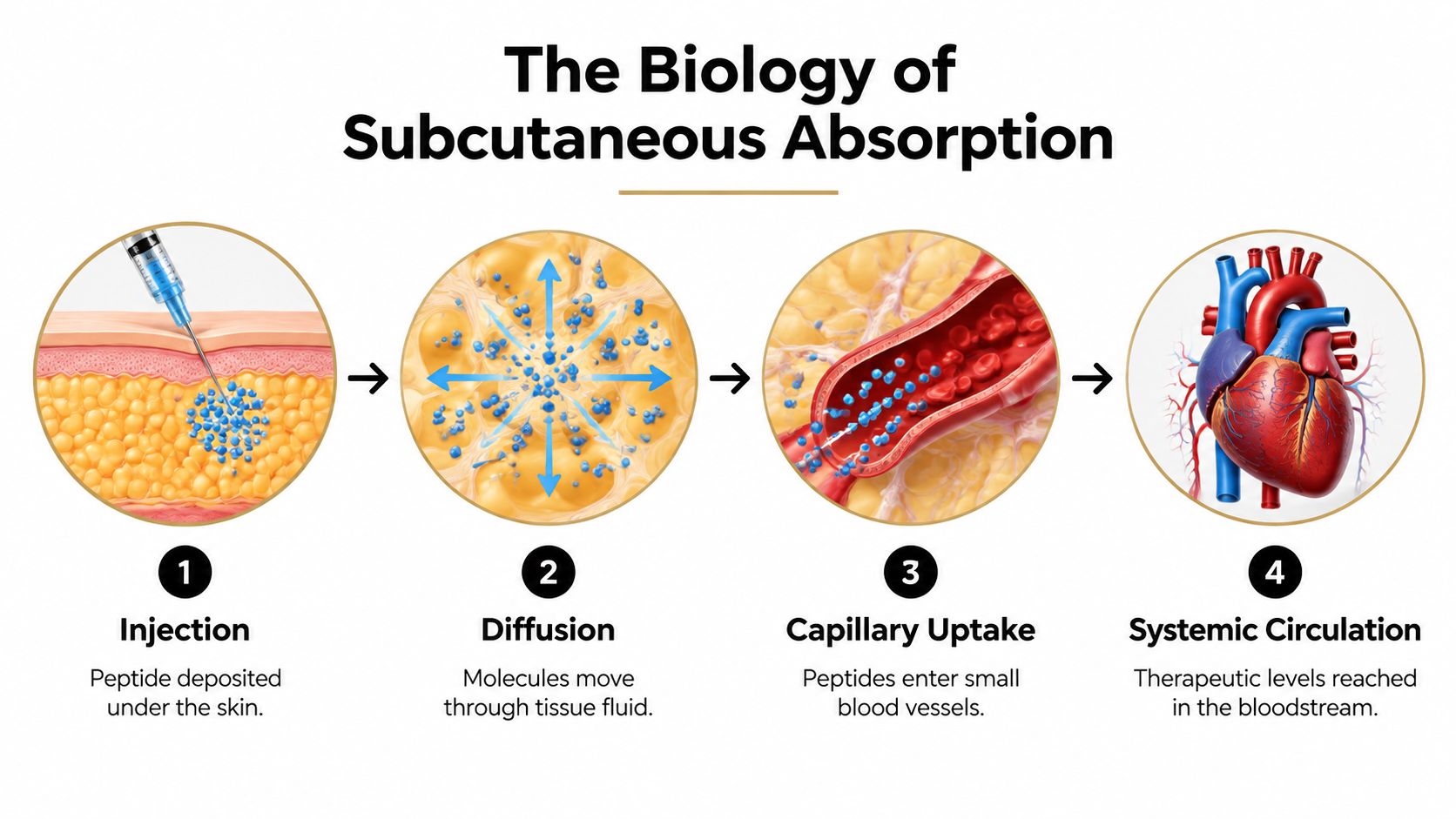
Injecting a peptide under the skin is only the beginning. The medication must move through local tissue, survive degradation, reach capillaries or lymphatics, and enter systemic circulation in a form that can still act at its target.
A 2018 LC-HRMS study found that catabolism at the injection site can be a major degradation pathway for subcutaneously administered therapeutic peptides. A broader pharmacokinetic discussion also describes how injected peptides must cross the interstitial matrix before reaching capillaries or lymphatics. These findings are summarized in the review of post-injection peptide transport and degradation.
Four biological steps
- Injection: The needle deposits the formulation into subcutaneous tissue. The nominal amount in the syringe isn't necessarily the amount that will reach circulation.
- Diffusion: Molecules move through tissue fluid and the interstitial matrix. Concentration, viscosity, tissue structure, and local perfusion influence this movement.
- Capillary or lymphatic uptake: The peptide approaches small blood vessels or lymphatic channels. The relative contribution depends on the molecule and formulation.
- Systemic circulation: The fraction that survives local breakdown and enters circulation becomes available for distribution to target tissues.
Small, rapidly degradable molecules can lose a meaningful portion of their potential exposure before systemic uptake. Local proteolysis, formulation characteristics, and tissue perfusion all contribute to that variability.
Why technique and formulation matter
Injection-site selection isn't a cosmetic detail. Repeatedly using irritated, scarred, inflamed, or poorly perfused tissue can change how a medication disperses and may increase local reactions. Rotating sites according to the prescribing instructions, using the specified needle and volume, and avoiding improvised dilution protect consistency.
Concentration matters too. A higher concentration doesn't automatically mean a better treatment, and a larger injected volume doesn't guarantee greater absorption. The formulation must be compatible with the intended route, storage conditions, and dosing instructions.
The dose written on the prescription describes what is administered. It doesn't always describe what reaches the bloodstream.
Patients should report persistent pain, increasing redness, marked swelling, fever, allergic symptoms, or unexpected systemic effects. Those findings need clinical assessment rather than a self-directed dose change.
Safety Protocols and Physician Supervision
The risky part of peptide therapy often begins before the injection. Products marketed as “research use only” may be sold without a clinician evaluating the patient, confirming the intended compound, reviewing interactions, or monitoring the response. A vial can look professional while still leaving fundamental questions about identity, sterility, concentration, storage, and suitability unanswered.
Independent physician coverage reports that many wellness peptides lack thorough FDA review and that long-term or frequent dosing effects remain minimally studied. The 2026 PubMed review cited earlier also warns that promising animal data don't establish human safety.
What supervised care should include
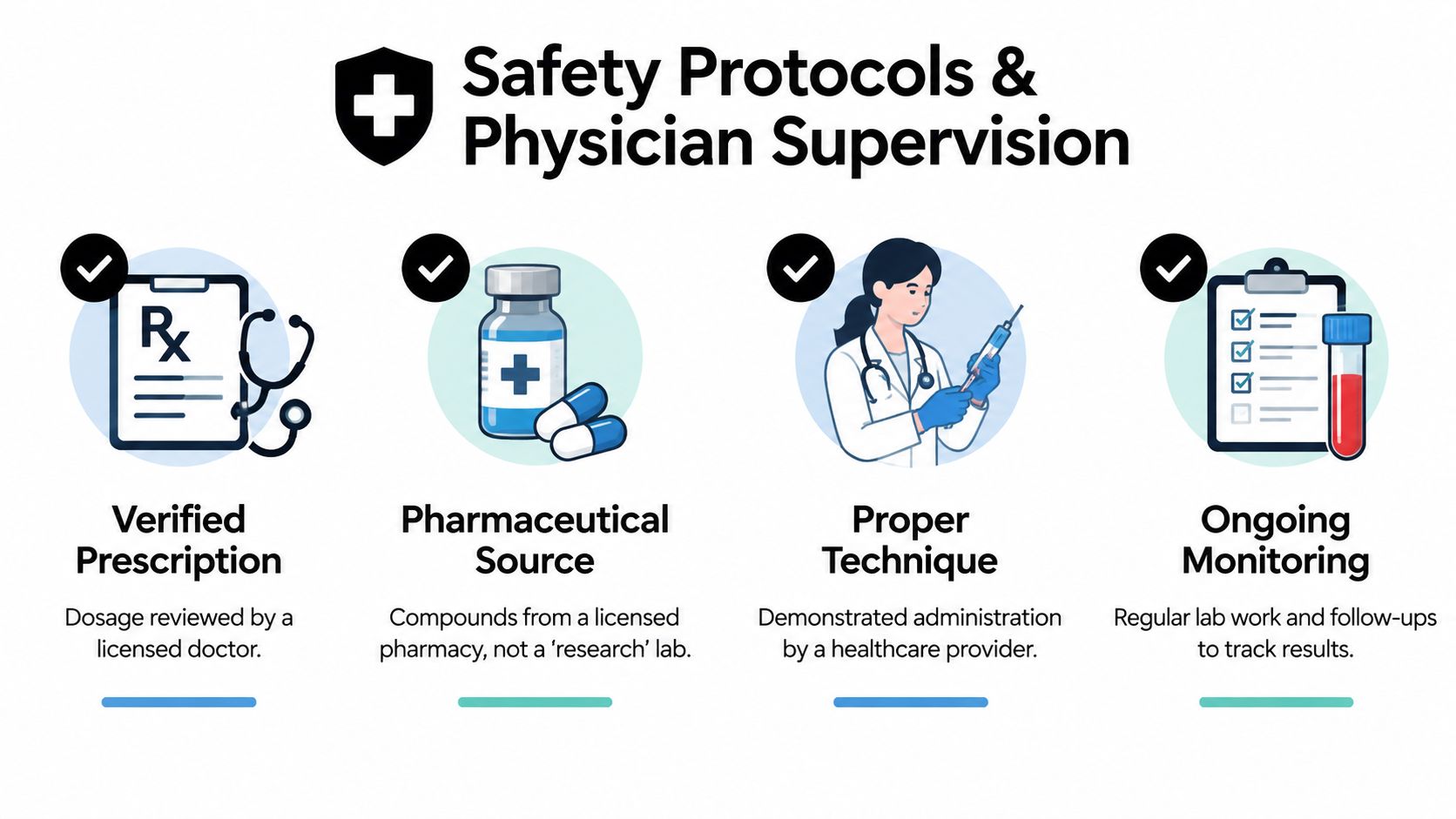
- Verified prescription: A licensed clinician identifies the target condition, reviews the dose, and documents why the compound is being considered.
- Pharmaceutical source: The dispensing pharmacy and product identity should be clear. “Research” labeling isn't a substitute for a clinically appropriate supply chain.
- Technique instruction: Patients should know how to prepare, inject, store, and dispose of the medication. They shouldn't have to infer those steps from a vendor's product page.
- Ongoing monitoring: Follow-up visits and appropriate laboratory testing help the clinician assess response, adverse effects, and whether continued treatment makes sense.
Baseline testing depends on the compound and the patient. It may include relevant hormone, metabolic, organ-function, or disease-specific evaluation, but testing should answer a clinical question rather than create the appearance of sophistication.
Red flags worth taking seriously
A vendor that promises universal benefits, discourages disclosure to your primary clinician, offers no meaningful medical history review, or encourages dose escalation without follow-up is not providing complete care. The same applies when the seller cannot explain whether a product is FDA-approved, compounded, investigational, or otherwise unapproved.
A vial is not a treatment plan. The plan includes diagnosis, source verification, administration instructions, follow-up, and a clear response to complications.
Supervision also protects against treating the wrong problem. Fatigue may reflect sleep disorders, anemia, medication effects, endocrine disease, depression, or other conditions. A peptide should not become a shortcut around diagnosis.
Navigating Telemedicine Peptide Delivery
A legitimate telemedicine pathway should feel less like online shopping and more like a remote medical visit. The patient starts with a health questionnaire, identifies goals and symptoms, and provides medication and medical-history details. A licensed clinician then decides whether a consultation is appropriate and whether existing laboratory results are sufficient.

For a busy professional, the advantage is coordination. Lab work can be arranged through a local service such as Quest Diagnostics, or recent results may be uploaded for review when clinically acceptable. The clinician should still connect the results to the treatment decision rather than approve a product request.
The patient journey
The consultation should establish a specific objective. “I want more energy” is a starting complaint, not a complete indication. The clinician may ask about sleep, alcohol, exercise, medications, sexual function, cardiovascular history, endocrine symptoms, and prior treatment response.
After review, the provider may prescribe, recommend a different evaluation, or decide that the requested peptide isn't appropriate. If treatment proceeds, the patient should receive clear instructions about dose, timing, injection technique, storage, side effects, and follow-up.
A telemedicine consent process should explain the remote-care relationship and what information the patient must provide. Delivery to the home can simplify logistics, but convenience doesn't remove the need to confirm the label, concentration, expiration information, and pharmacy instructions when the package arrives.
A short educational video can help patients understand the broader workflow before a visit.
The important distinction is end-to-end accountability. A platform should make it possible to identify the prescriber, dispensing source, follow-up process, and route for reporting adverse effects. If the only interaction is a checkout page followed by a vial, the clinical safeguards are missing.
Evaluating Your Readiness for Peptide Therapy
Readiness starts with a defined health question, not curiosity generated by social media. You should be able to state what you want to improve, how the problem affects you, what you've already tried, and how success will be judged. A vague goal makes it difficult to choose a compound or determine whether it helped.
Use this checkpoint before scheduling a consultation:
- Specific objective: Are you addressing an endocrine diagnosis, sexual-health concern, weight-related condition, recovery issue, or a general wellness goal?
- Evidence tolerance: Are you prepared to hear that a requested peptide may have limited human evidence or may not be appropriate?
- Medical disclosure: Can you provide a complete medication list, relevant diagnoses, allergies, previous treatments, and laboratory history?
- Monitoring commitment: Will you complete recommended testing and follow-up rather than adjusting the dose independently?
- Source verification: Do you know whether the product is approved, compounded, or marketed for research use?
Your answers may point toward a consultation, but they shouldn't predetermine the prescription. The clinician still needs to separate the symptom from its cause and compare peptide therapy with established treatments. For men already using testosterone or erectile-dysfunction medication, the review should include the full regimen so the provider can consider interactions, overlapping effects, and unnecessary duplication.
Expect uncertainty to be part of good care. The honest outcome may be a prescription, a request for more testing, a different treatment, or a recommendation not to use the requested compound. You can begin that evaluation through Cost Plus TRT's online intake, where the next step is a medical review rather than an automatic product purchase.
Cost Plus TRT offers physician-supervised peptide therapies for eligible patients, with online consultations, lab coordination, and home delivery as part of its telemedicine model. If you want to discuss peptide therapy injections alongside your broader men's health goals, visit Cost Plus TRT to start a clinician-guided evaluation.