

You cleaned up your diet. You're training consistently. You might already be on TRT, and your labs look better than they did a year ago. But you still feel like a few pieces haven't clicked. Recovery is slower than it should be. Libido is inconsistent. Sleep isn't restorative. Body composition has stalled.
That's where many men start looking at peptides.
Some arrive with realistic questions. Others arrive after reading clinic pages that promise fat loss, better sex, sharper cognition, faster healing, and anti-aging from a single vial. The truth sits in the middle. Peptide therapy for men is a real part of modern medicine, but it's not one thing, and it's not all equally evidence-based.
For men who are already on TRT or thinking about it, the important question isn't “Are peptides good?” It's more specific. Which peptide is being used, for what purpose, how does it fit with hormone therapy, and what do you need to monitor so you don't mistake marketing for medicine?
Table of Contents
- What Is Peptide Therapy for Men
- Understanding How Peptides Work in Your Body
- Four Key Peptide Therapies for Men's Health
- The Benefits and Risks of Peptide Therapy
- Is Peptide Therapy Right for You
- What to Expect from the Treatment Process
- Peptide Therapy FAQs and Next Steps
What Is Peptide Therapy for Men
A common scenario looks like this. A man in his late thirties or forties has done the obvious things first. He cleaned up alcohol, fixed some of his nutrition, started lifting again, maybe even began testosterone therapy after confirmed low levels. He feels better than before, but not fully where he wants to be. He starts hearing about Sermorelin for recovery, PT-141 for libido, or other compounds pitched as “next-level optimization.”
Peptide therapy for men refers to the use of short chains of amino acids that act as signaling molecules in the body. They aren't the same as testosterone. They aren't anabolic steroids. They also aren't just another supplement stack.
The practical way to think about peptides is this: they try to nudge a specific body process rather than push the whole system broadly. One peptide may be used because the goal is sexual function. Another may be discussed because the goal is recovery or hormone signaling. That's why the category can feel confusing. Men use the single phrase “peptide therapy,” but they're often talking about very different tools.
If you're evaluating options, it helps to start with a provider page that separates peptide categories instead of lumping them together, such as this overview of physician-supervised peptide options for men.
Clinical reality: A peptide should be matched to a specific symptom, lab pattern, or treatment goal. If the plan starts with “this helps everything,” that's a warning sign.
Another reason this topic matters is that peptide-based medicine is no longer a fringe concept. A major review noted that 33 non-insulin peptide drugs had been approved worldwide since 2000, and more than 170 peptides were in active clinical development at the time of the review, with approved peptides spanning multiple areas including urology (review of therapeutic peptide development).
That said, a growing drug class is not the same thing as proof for every wellness protocol now being marketed to men. In practice, some uses are better grounded than others. If you're on TRT already, that distinction matters even more because adding a peptide changes what should be monitored, what expectations are reasonable, and what symptoms might still point to a different root cause.
Understanding How Peptides Work in Your Body
Peptides work best when you understand them as messages, not as raw fuel.
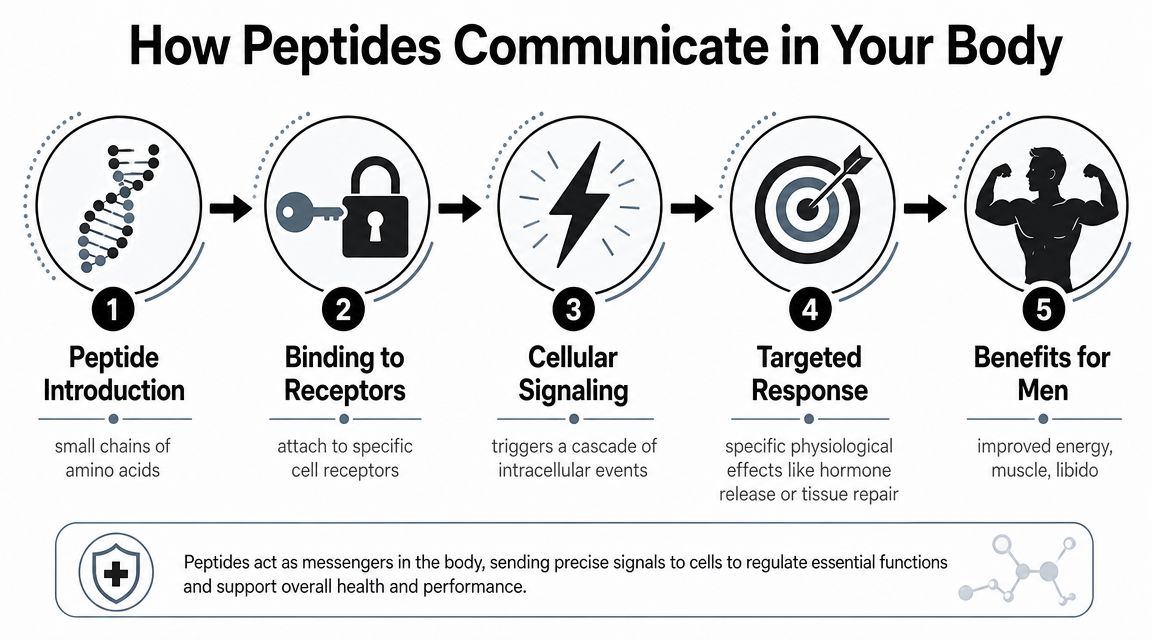
Testosterone is more like changing the amount of a major hormone in circulation. A peptide is closer to sending a carefully worded text to one tissue or signaling pathway. The body receives that message through a receptor, then starts a downstream response.
Why specificity matters
A useful analogy is key and lock biology. The peptide is the key. The receptor is the lock. If the key fits, the cell responds.
That response might involve hormone release, appetite signaling, tissue repair pathways, or nervous system effects. The important point is that peptides don't all do the same thing. Lumping them into one category creates bad expectations. Men hear “peptides” and assume every option will improve muscle, libido, energy, sleep, and fat loss at once. That's not how signaling biology works.
Some peptide-related compounds can influence the hypothalamic-pituitary-gonadal axis rather than acting like injected testosterone. WebMD's overview of peptides notes that in one study kisspeptin-10 increased average serum testosterone within 24 hours of injection, and another study found gonadorelin increased testosterone as well. That doesn't mean all peptides raise testosterone, or that they replace TRT. It means some can affect upstream signaling.
For men considering TRT, this distinction is useful. A signaling peptide may ask your body to do something. TRT directly supplies testosterone. Those are different strategies, and they require different monitoring.
Why the field gets confusing fast
The peptide conversation gets muddy because medical peptide pharmacology and online peptide marketing are not the same world.
The approved-drug pipeline tells us peptide science is legitimate. But the broader injectable peptide market often moves faster than the evidence. The American Medical Association reports that many injectable peptides sold for recovery, energy, libido, or anti-aging have not been thoroughly tested or reviewed by the FDA, and reported side effects include skin irritation at the injection site, fatigue, headaches, and GI issues (AMA guidance on injectable peptides).
Think of peptides as targeted instructions. That's their strength, but it also means each one deserves its own evidence review. There's no shortcut from “peptides can work” to “this peptide is right for me.”
For men already managing hormone health, the practical takeaway is simple. Don't evaluate a peptide by category. Evaluate it by mechanism, indication, source, expected effect, and follow-up plan.
Four Key Peptide Therapies for Men's Health
Different compounds serve different jobs. That's the only sensible way to discuss peptide therapy for men, especially when TRT is already part of the picture.
Sermorelin
Sermorelin is generally discussed when the goal is to stimulate natural growth hormone signaling rather than replace testosterone. In plain language, it tries to tap the shoulder of the pituitary and ask for more activity. Men usually ask about it when they care about recovery, sleep quality, body composition, or the sense that TRT fixed one layer of symptoms but not all of them.
The reason some clinicians pair this conversation with TRT is that the goals are often complementary rather than redundant. Testosterone and growth hormone signaling are not the same system. If a man on TRT still struggles with recovery or sleep, a peptide that works through a different pathway may be worth discussing.
What Sermorelin does not do is act like a direct testosterone booster in the way people often assume. It should never be presented as a shortcut that makes monitoring unnecessary.
PT-141
PT-141 is usually brought up for libido and sexual function, especially when the complaint isn't just erection firmness but desire, responsiveness, or a disconnect between normal hormone levels and poor sexual performance.
Unlike standard ED drugs that focus on blood flow, PT-141 is discussed as working through the nervous system. That makes it a different kind of conversation. Some men on TRT have adequate testosterone levels but still don't feel normal sexually. In those cases, a targeted libido-focused option can make more sense than further increasing testosterone.
For readers comparing options, this is the dedicated PT-141 treatment page.
Practical rule: If low libido persists on TRT, don't assume you need more testosterone. Ask whether the issue sounds hormonal, vascular, psychological, medication-related, sleep-related, or more directly libido-centered.
NAD+
NAD+ sits a little outside how most patients think about “peptides,” but in men's health clinics it's often grouped into the same broader optimization conversation. The usual reason it comes up is cellular energy.
That doesn't mean it's a cure for burnout, aging, or under-recovery. It means some providers use it when the complaint is fatigue, reduced resilience, or poor sense of energy despite otherwise reasonable basics. For men already on TRT, NAD+ is usually considered an add-on conversation, not a substitute for correcting low testosterone, sleep debt, or metabolic issues.
Discipline is essential. Fatigue is one of the easiest symptoms to oversell and one of the easiest to misdiagnose. If a man is sleeping poorly, drinking heavily, overtrained, depressed, or insulin resistant, adding a performance-oriented therapy without addressing the root issue usually disappoints.
Methylene Blue
Methylene Blue is typically discussed for mitochondrial support and cognitive or energy-related goals. In practice, that means men ask about it when they want sharper mental performance or better day-to-day energy, especially if they already feel their TRT protocol is otherwise stable.
This is not the same as saying it's broadly indicated for every man on hormone therapy. It's better thought of as a niche tool with a narrower purpose.
The safest way to approach all four is to compare the goal first, then the mechanism.
| Therapy | Primary Goal | Mechanism of Action | Common Use Case |
|---|---|---|---|
| Sermorelin | Growth hormone signaling support | Stimulates endogenous hormone signaling pathways | Men focused on recovery, sleep, or body composition |
| PT-141 | Libido and sexual function | Works through central nervous system pathways | Men with low desire or mixed sexual-performance complaints |
| NAD+ | Cellular energy support | Supports energy-related cellular processes | Men reporting fatigue or reduced resilience |
| Methylene Blue | Mitochondrial support | Used for targeted energy and cognitive discussions | Men seeking cognitive or energy-focused support |
A good comparison question is not “Which one is strongest?” It's “Which one matches the problem I'm trying to solve?” That's especially true if you're already on TRT and don't want to pile therapies on top of an unclear diagnosis.
The Benefits and Risks of Peptide Therapy
A common telemedicine scenario looks like this: a man is already on a stable TRT plan, his testosterone numbers are no longer the main problem, but he still has one stubborn complaint. Recovery is lagging. Libido is inconsistent. Energy drops off by midafternoon. That is usually when peptides enter the conversation.
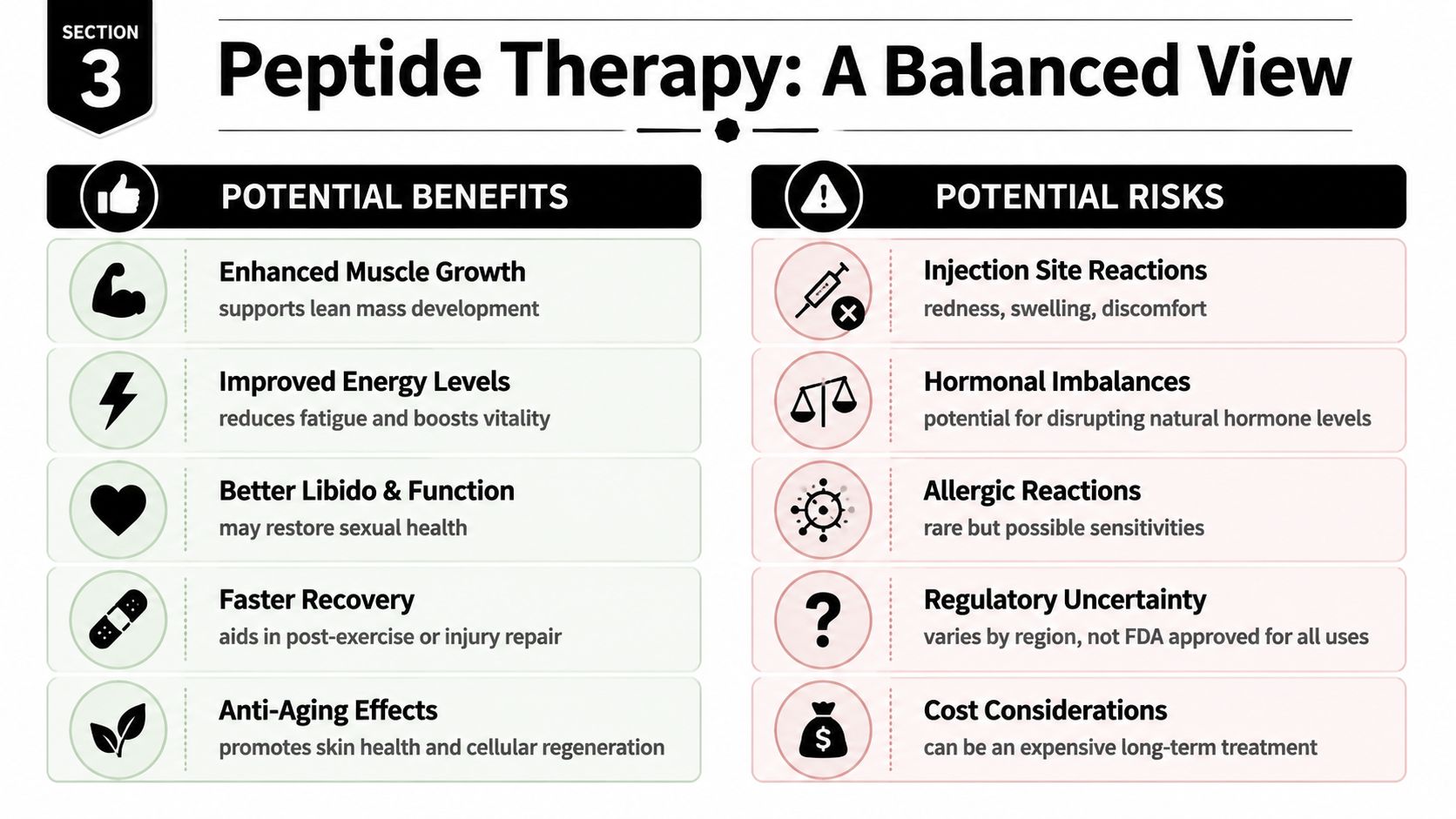
Used well, peptide therapy can fill a narrow gap. Used poorly, it turns into stack-on-stack prescribing where no one can tell what is helping, what is causing side effects, or what problem is being treated.
Potential benefits men seek
For men on TRT, the main benefit is precision. Instead of changing an otherwise effective testosterone protocol, a provider can target a specific pathway tied to a specific complaint.
That can matter in practical ways:
- Better recovery: Some men want help with training tolerance, muscle soreness, or getting back on track after hard exercise.
- Improved sexual function: This may mean support for desire, arousal, or sexual consistency when testosterone levels alone have not solved the issue.
- More stable energy: The goal is a steadier baseline, not a stimulant effect that fades a few hours later.
- Sleep support: Better sleep can improve recovery, body composition, and day-to-day function, especially when poor sleep is part of the pattern.
- Less disruption to TRT: A targeted add-on may be more reasonable than repeatedly adjusting testosterone dose when the original protocol is otherwise working.
The key point is fit. PT-141 is discussed for sexual function. Sermorelin is discussed for growth hormone signaling and recovery-related goals. NAD+ and methylene blue are usually framed around energy or cellular support. If the proposed benefit does not match the compound, the treatment plan is already drifting off course.
Understanding the risks and side effects
Peptides are often marketed as if they are precise, natural, and therefore low risk. That is not a safe assumption. Many injectable peptides promoted for recovery, libido, anti-aging, or energy remain lightly studied, variably regulated, and uneven in quality depending on where they come from.
The first trade-off is simplicity versus uncertainty. Every added therapy makes the clinical picture harder to read, especially in men already on TRT.
A few risk categories matter most in practice:
- Sourcing risk: Product quality matters. If a peptide comes from an unverified source, dose accuracy and purity become open questions.
- Side effect risk: Depending on the compound, men may report injection-site irritation, headache, fatigue, nausea, water retention, tingling, joint discomfort, or changes in blood sugar.
- Monitoring risk: Symptoms can improve, worsen, or shift for reasons unrelated to the peptide. Without follow-up, it is easy to give credit to the wrong therapy.
- TRT overlap: If estradiol, hematocrit, sleep quality, weight, or training load are already affecting how a man feels, adding a peptide can blur the cause of new symptoms.
- Delay in proper diagnosis: Low libido and fatigue are not always hormone problems. Sleep apnea, depression, medication effects, insulin resistance, and relationship stress still need to be considered.
This is where careful monitoring matters most. In men on TRT, I want a clear baseline before adding anything new. That usually means reviewing symptoms, current dosing, recent labs, blood pressure, sleep, and body weight trends. Once a peptide starts, follow-up should ask a simple question: did the specific problem improve enough to justify the cost, inconvenience, and risk?
That standard sounds strict because it should be. A treatment that adds injections, expense, and monitoring burden should earn its place.
One practical rule helps cut through the marketing. The broader the promise, the more caution is warranted. If one peptide is being pitched as a solution for libido, fat loss, sleep, mood, muscle gain, and longevity at the same time, the sales message is stronger than the evidence.
A balanced approach is straightforward. Define the target problem, choose the therapy that matches it, monitor for benefit and side effects, and stop if the treatment no longer makes medical sense.
Is Peptide Therapy Right for You
The best candidate for peptide therapy for men is not the man who wants “more optimization.” It's the man with a defined problem, a realistic goal, and a treatment plan that fits around the rest of his health picture.
Men who may be reasonable candidates
If you're already on TRT, peptides can make sense when testosterone has improved part of the picture but not all of it. Examples include persistent libido issues despite a stable testosterone protocol, or recovery complaints that don't line up with low testosterone alone.
Men considering TRT but not yet started may also ask whether a signaling-based therapy is appropriate for a narrower complaint. That can be a worthwhile discussion, but only if the provider is honest about what the peptide can and cannot address.
Candidates tend to do best when they approach treatment this way:
- They can name the target: Libido, recovery, sleep quality, or energy, not “everything.”
- They're willing to track response: Symptoms matter, but so do labs and follow-up.
- They've done basic work first: Sleep, weight, alcohol intake, training load, and current medications have been reviewed.
- They understand the role of TRT: Peptides may complement hormone care, not replace proper diagnosis.
Who needs extra caution or may need to avoid it
Independent medical content notes that peptide therapy may be inappropriate for some men with active cancer, uncontrolled diabetes, or cardiovascular disease, and also highlights concerns such as water retention, joint pain, tingling, increased blood sugar, and possible hormonal suppression (clinical discussion of peptide risks and exclusions).
That means candidacy is not just about interest. It's about risk tolerance and medical context.
If a man already has unstable metabolic health, swelling problems, unexplained neurologic symptoms, or a history that raises concern for hormone-sensitive disease, he needs a more careful workup before adding any injectable protocol. The same goes for men who are using TRT without adequate follow-up. Adding another variable to a poorly monitored hormone plan usually makes the picture harder, not easier.
One more point matters. Some men don't need a peptide conversation yet. They need a diagnosis. If fatigue, erectile issues, or slow recovery are being driven by poor sleep, untreated low testosterone, medication side effects, or depression, the right move is to fix the driver before adding another layer of therapy.
What to Expect from the Treatment Process
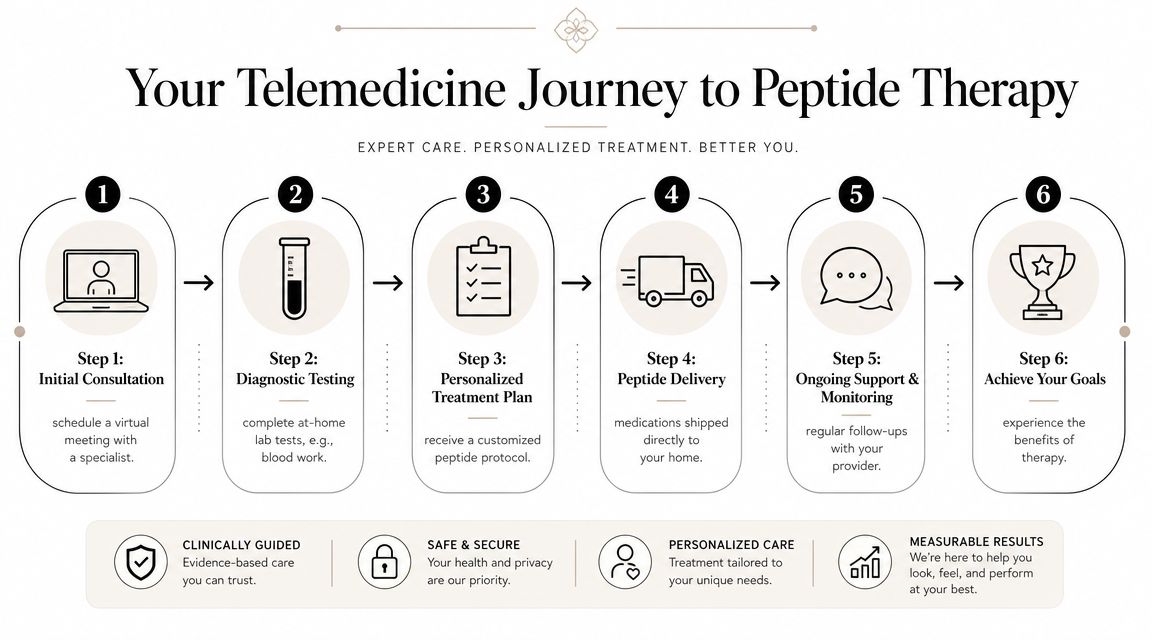
You fill out a telemedicine intake because energy is down, recovery is lagging, and you are already on TRT or considering it. The right next step is not an automatic peptide order. It is a medical review that clarifies what problem is being treated, how that plan fits with testosterone care, and what will be tracked after treatment starts.
How telemedicine evaluation usually works
Most online care starts with an intake form. A good one asks about symptoms, goals, current medications, prior diagnoses, recent lab work, and whether you are already using TRT, PDE5 inhibitors, GLP-1 medication, or anything else that could change the picture.
Then comes chart review and lab review. If recent labs are missing or incomplete, testing should be arranged before treatment decisions are made. For men on TRT, that review matters more because peptides can blur the cause of both benefits and side effects. If sleep improves, was it the peptide, a testosterone dose change, or better recovery habits? If edema or numbness shows up, someone needs to sort out whether that points to estradiol, fluid retention, glucose issues, or the peptide itself.
A transparent telemedicine process includes a licensed clinician, clear eligibility criteria, and a plan for monitoring. Cost Plus TRT is one example of this care model in men's hormone treatment. Patients who want to review practical questions before booking can use the peptide and hormone treatment FAQ page.
The video below gives a sense of how remote care can be structured.
What follow-up should actually look like
Follow-up needs to be specific.
A sound plan usually includes:
- Clear dosing instructions: How to take it, how often, how to store it, and what side effects mean you should message the clinic or stop treatment.
- A defined target: Better libido, improved workout recovery, appetite control, or another measurable goal tied to the reason it was prescribed.
- Monitoring that fits the drug: Symptom review, repeat labs when appropriate, and a timeline for reassessment instead of open-ended refills.
- Adjustment or discontinuation: If the treatment is not helping, the answer may be dose adjustment, a different diagnosis, or stopping it altogether.
I tell men on TRT to treat peptides like adding another instrument to a song that is already playing. Sometimes the mix improves. Sometimes it gets noisy fast. Without follow-up, it becomes hard to tell which therapy is helping, which one is creating side effects, and which problem was never hormonal in the first place.
Good telemedicine care keeps that confusion to a minimum. The process should make it easy to ask questions, report side effects early, review labs on schedule, and change course when the clinical picture says to change course.
Peptide Therapy FAQs and Next Steps
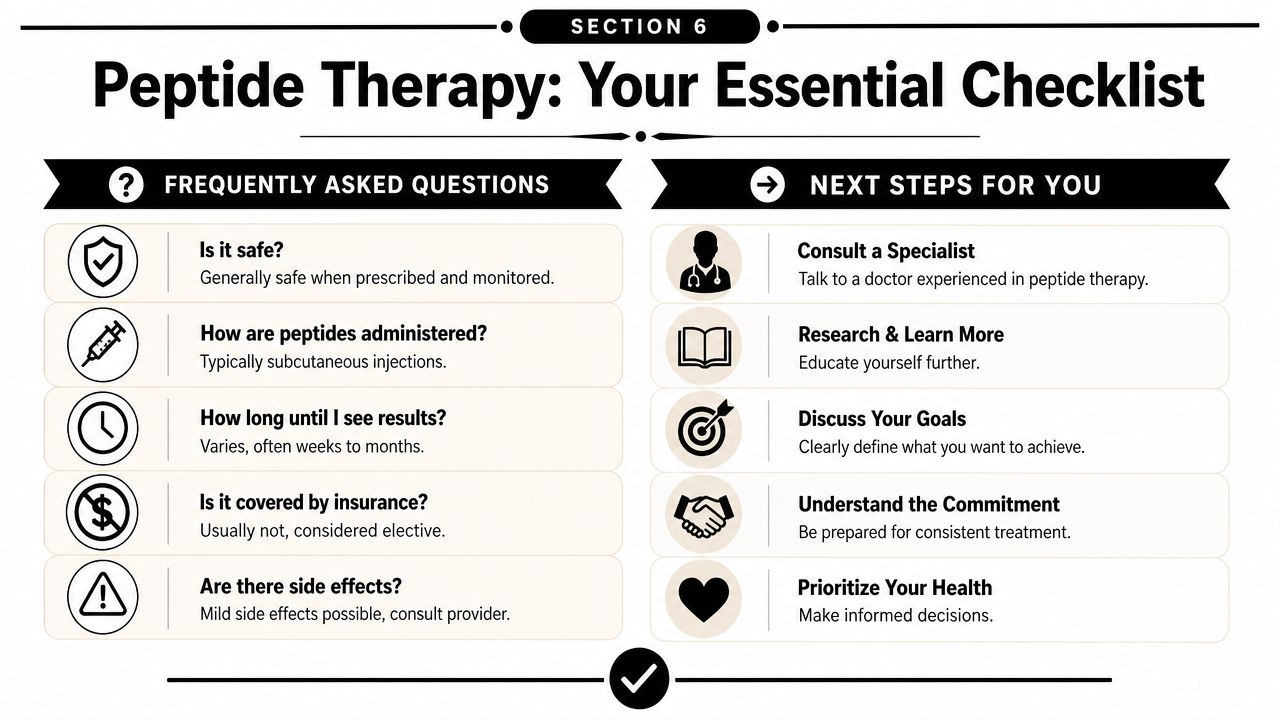
Most men end up with the same practical questions. That's a good sign. It means you're thinking like a patient, not a shopper.
Common questions men ask
How fast do peptides work?
It depends on the compound, the reason it's being used, and whether the original problem was diagnosed correctly. Some men notice changes sooner than others. In real practice, fast claims are often oversimplified. Expectations should be set by mechanism and indication, not by ad copy.
Are they legal or FDA-approved?
Some peptide-based drugs are approved for specific indications, while many wellness-focused injectable peptide uses are off-label or not thoroughly reviewed for the way they are being marketed. That's why sourcing and physician oversight matter.
Can peptides replace TRT?
Sometimes men ask this because they want a “natural” alternative. That question only makes sense after clarifying the diagnosis. If you have true hypogonadism, a peptide aimed at another pathway may not solve the problem.
How are they usually administered?
Many are discussed as subcutaneous injections, though the route depends on the therapy. Administration matters less than whether the treatment is medically appropriate and properly monitored.
Why do some men get disappointed?
Because peptides are often used to chase symptoms that were never properly explained in the first place. Independent medical commentary points out that some symptom clusters may be better explained by sleep apnea, obesity, insulin resistance, depression, medications, or low testosterone itself, so peptides may work better as adjuncts than substitutes for root-cause diagnosis (clinical perspective on peptide hype versus diagnosis).
For additional practical questions, a general men's health FAQ page can help frame what to ask before treatment starts.
Questions to bring to your consultation
Bring a short list. It changes the quality of the visit.
- What exact problem are we treating? Ask for one defined goal, not a vague promise.
- Why this peptide instead of adjusting TRT or treating the root cause first? This quickly reveals whether the plan is thoughtful.
- What labs or symptoms will we monitor? You want a method, not guesswork.
- What side effects should make me pause treatment? Know the stop signs in advance.
- How long do we try it before deciding whether it's worth continuing? Every treatment needs an exit rule.
- Could my symptoms be coming from sleep, weight, medication effects, or untreated hormone issues instead? That question often saves men months of frustration.
A good peptide plan is never built on hype. It's built on a narrow goal, a clean diagnosis, safe sourcing, and follow-up that can prove whether the treatment is helping.
If you're already on TRT or deciding whether peptides belong in your plan, Cost Plus TRT is one telemedicine option for men who want physician-supervised hormone and peptide care with clear pricing, lab review, and home delivery. The right next step is a medical conversation that defines the problem first, then decides whether a peptide fits.