
You're probably here because something feels off, but not dramatically off. You're still working, training, handling family responsibilities, and getting through the week. But the edge you used to count on isn't as reliable. Energy takes longer to come online. Focus fades earlier. Recovery isn't what it was. If you're on TRT, or considering it, you may also be asking a more specific question: is there anything beyond testosterone that helps with cellular energy, resilience, and aging without drifting into wellness fantasy?
That's where NAD+ therapy enters the conversation. It's one of the most talked-about options in longevity and men's health right now, and it's also one of the most misunderstood. Some claims are grounded in human data. Others come from animal work, early-stage studies, or aggressive marketing. If you're considering NAD+ injections, the useful question isn't whether the internet says they're amazing. It's which NAD plus injection benefits are supported, which are still speculative, and where this therapy fits into a real treatment plan for performance, recovery, and long-term health.
Table of Contents
- The Modern Man's Dilemma Energy Focus and the NAD+ Buzz
- What Is NAD+ and Why Is Your Cellular Fuel Tank Low
- Evaluating the Evidence for NAD+ Injection Benefits
- Choosing Your Path Injections vs IVs vs Oral Supplements
- Your NAD+ Treatment Journey Timeline and Outcomes
- Safety Profile Adverse Effects and Contraindications
- Is NAD+ Therapy the Right Move for You
The Modern Man's Dilemma Energy Focus and the NAD+ Buzz
A common scenario looks like this. A man in his forties or fifties is doing many of the right things. He lifts regularly, tries to keep his weight under control, pays attention to testosterone, and still notices that his baseline has changed. The workday feels heavier. Sleep doesn't restore him the same way. Mental sharpness is less predictable, especially under stress.
That experience doesn't automatically mean low testosterone. It doesn't automatically mean burnout either. Sometimes it's a mix of age, poor sleep, alcohol, chronic stress, inconsistent nutrition, medication burden, or the cumulative wear of a demanding life.
NAD+ gets attention because it sits at the center of that conversation. It's often marketed as a fix for fatigue, brain fog, aging, and recovery. Some patients come in expecting a dramatic reboot. Others dismiss it as another boutique wellness trend.
Clinical reality: NAD+ is neither magic nor nonsense. It's a biologically important molecule with some credible signals in human research and plenty of claims that still outrun the data.
For men focused on performance, the practical question is where NAD+ belongs. It's not a replacement for sleep, metabolic health, blood pressure control, proper TRT management, or resistance training. It may, however, be useful as an adjunct in selected cases, especially when the goal is better support for energy systems, recovery, or broader healthy aging strategy.
The mistake I see most often is treating NAD+ like a stand-alone answer. Men who do best with it usually treat it as one part of a larger plan. They clean up the basics, assess hormones appropriately, address cardiometabolic risks, and then decide whether adding NAD+ makes sense.
What Is NAD+ and Why Is Your Cellular Fuel Tank Low
NAD+ stands for nicotinamide adenine dinucleotide. That sounds technical, but the practical version is simple. It's a coenzyme your body makes and uses in every cell. If you want a working analogy, think of NAD+ as part fuel shuttle, part repair crew. It helps cells turn nutrients into usable energy, and it also supports basic maintenance functions that keep cells working properly over time.
Why NAD+ matters in plain English
When patients ask what NAD+ does, I usually bring it back to three jobs:
- Energy transfer: It helps move the chemistry of food toward ATP production, which is the energy currency your cells use.
- Cellular maintenance: It supports repair pathways, including DNA repair.
- Stress response: It helps cells respond to metabolic and oxidative stress.
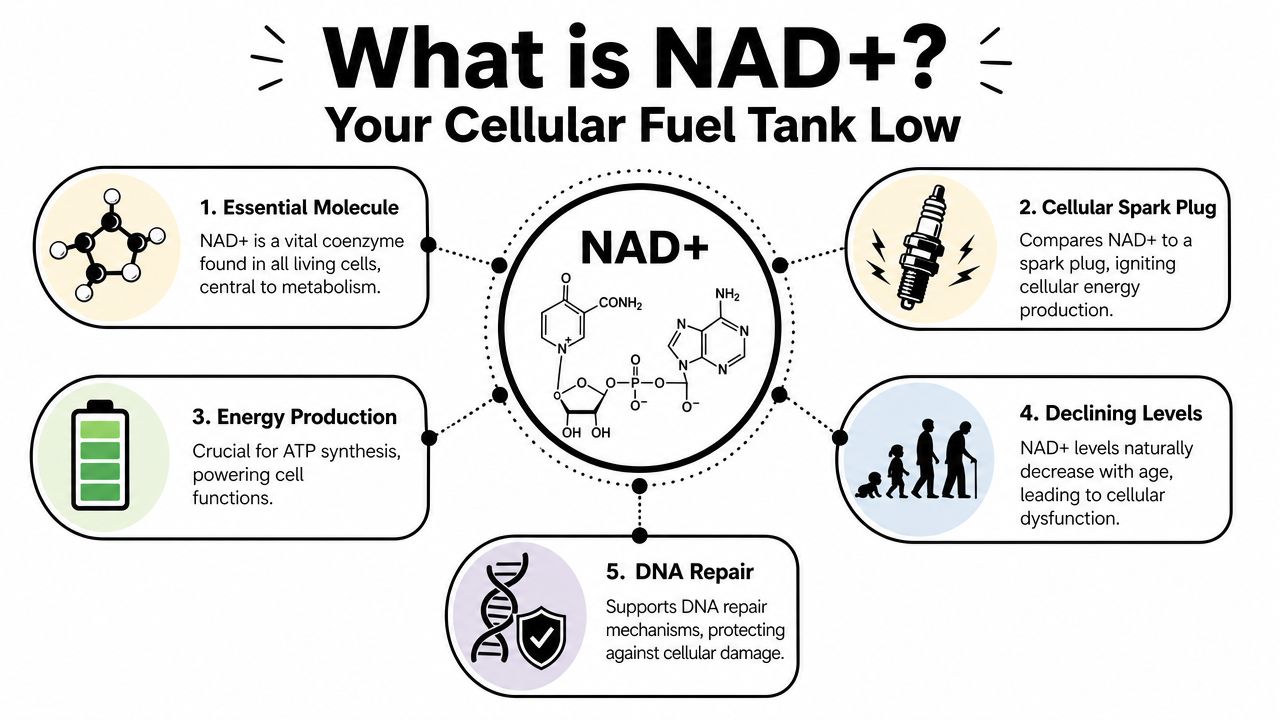
This is one reason NAD+ keeps showing up in conversations about aging, recovery, and resilience. In preclinical research on NAD+ decline and restoration, NAD+ levels were reduced twofold by mid-age in mice, and restoring youthful levels reversed metabolic conditions and improved muscle endurance by boosting mitochondrial ATP production.
That doesn't mean a man getting an injection will automatically feel like he did at twenty-five. Animal physiology isn't human clinical proof. But it does explain why the topic has traction, especially among men who already think in terms of performance, training recovery, and long-term function. If you're comparing NAD+ with other physician-supervised options, it also helps to understand how it differs from broader peptide therapy approaches.
Why levels fall in real life
NAD+ tends to become more relevant with age because the body's balance shifts. Production, recycling, and demand no longer work as efficiently as they once did. Real-world factors can push that further.
Common pressures include:
- Aging: Cellular repair demand rises over time.
- Stress load: Chronic physiologic stress can increase wear on metabolic systems.
- Alcohol use: Heavy or regular use can drain recovery capacity.
- Poor sleep and diet: These don't just affect willpower. They affect the cellular environment your body has to operate in.
When a patient says, “I don't feel broken, just less resilient,” that's often the right lens for the NAD+ discussion.
For many men, especially those already dialed into hormones and training, the appeal of NAD+ isn't cosmetic. It's the possibility of supporting the machinery underneath energy, focus, and recovery.
Evaluating the Evidence for NAD+ Injection Benefits
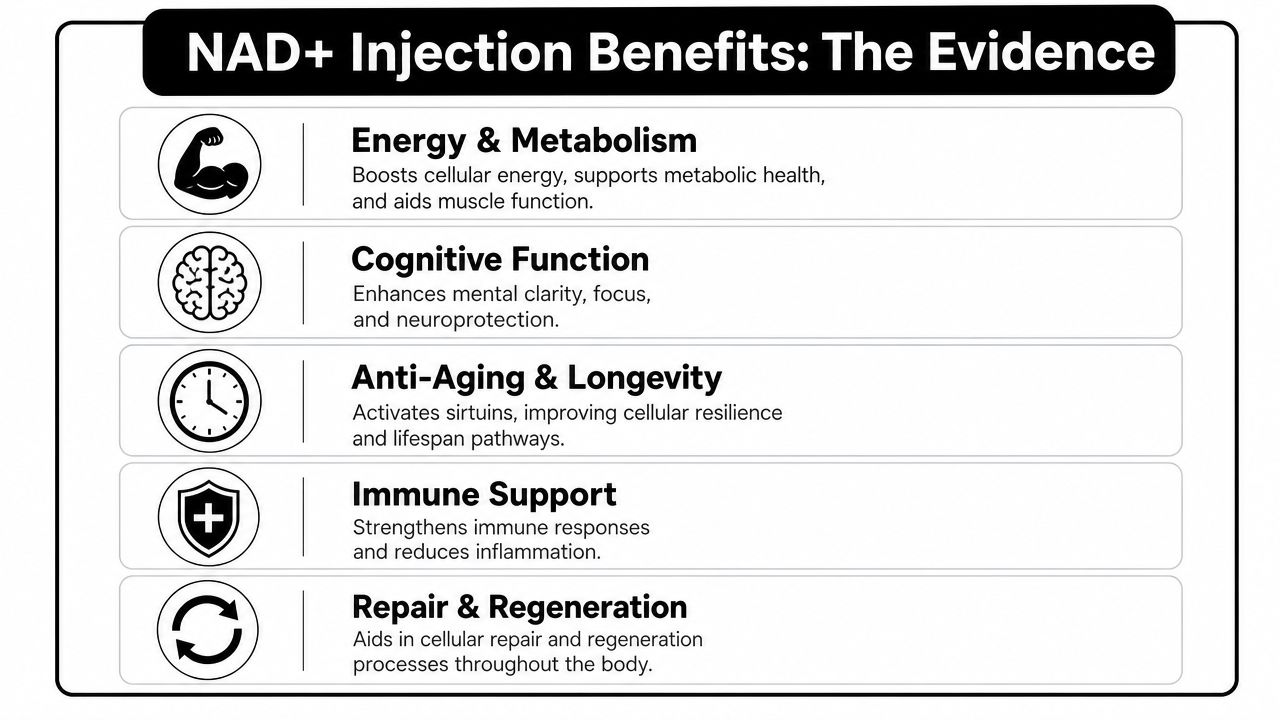
The phrase NAD plus injection benefits gets used loosely. Some benefits have real human evidence behind them. Others are interesting but early. A few are mostly extrapolation from animal models. If you want a medical answer, those categories need to stay separate.
To ground the discussion, here's a visual summary of the claims people hear most often.
Where the human evidence is strongest
The clearest human signal in the data provided is addiction recovery support. A 2022 clinical study involving 50 patients receiving NAD+ infusions showed statistically significant reductions in craving scores, anxiety, and depression, with benefits tied to emotional stability and cognitive support during recovery, as described in this summary of the 2022 NAD+ infusion study.
That matters for two reasons. First, it's human data, not just theory. Second, it shows that NAD+ may affect meaningful psychological markers in a clinical setting. That's not the same thing as saying NAD+ treats every mood or cognitive issue, but it does support the idea that this therapy can have real physiologic impact in selected patients.
A separate human line of evidence comes from aging biomarkers. In a double-blind, randomized, crossover trial published in Nature, the supplement Nuchido TIME+® increased whole blood NAD+ concentration and showed an average reduction of 1.26 years in biological age, measured by IgG glycosylation patterns, along with decreases in pro-inflammatory cytokines including IL2, as reported in the Nature trial on NAD+ restoration and biological age markers. That's not an injection study, but it does support the broader concept that raising NAD+ can influence measurable human aging markers.
A short clinical discussion can also help separate hope from hype:
What looks promising but still needs restraint
Energy, stamina, and metabolic support are plausible targets. They fit the biology of NAD+ and align with preclinical work. But in men asking for direct functional guarantees, the correct answer is still caution.
Human trials suggest safety, but functional outcome data remain preliminary. A recent review-style report noted that while oral, IV, and injectable approaches appear generally safe in human studies, clinical evidence for major functional benefits is still early, and large-scale confirmation hasn't been established. That same report also noted that IV infusions may be relatively inefficient at elevating cellular NAD+ compared with plasma increases.
This is why I'd avoid claiming that NAD+ injections reliably boost gym performance, melt fat, fix sleep, or sharpen executive function in every patient. Some men report meaningful improvement. Others feel subtle change. Some feel very little unless the rest of their health plan is already well managed.
The same caution applies to neurodegeneration. Marketing often implies that if NAD+ helps cognition in animal models, it must protect humans from Alzheimer's disease. That leap isn't justified. The available background material makes clear that human evidence for neurodegenerative protection remains preliminary, and active investigation is not the same thing as proven prevention or treatment.
Don't confuse “biologically interesting” with “clinically established.” That's where most NAD+ disappointment starts.
The fertility question men actually ask
This topic gets neglected in generic anti-aging content, but it matters for men on TRT or thinking about TRT. Many are rightly concerned about fertility, sperm quality, or whether adding therapies helps or hurts reproductive goals.
Here's the honest answer. The most specific fertility data cited in your source set comes from a 2022 review in Regenerative Medicine highlighting that NAD+ strategies improved oocyte quality and restored fertility in aged mice. That's noteworthy because it suggests NAD+ availability matters in reproductive biology. It does not prove that NAD+ injections improve male fertility outcomes in humans.
Still, the question is reasonable. If NAD+ affects cellular energy, oxidative stress, and repair pathways, clinicians should pay attention to whether it may eventually have a role as a fertility adjunct in men. At present, that remains a promising but unanswered area rather than a settled clinical indication.
For men on TRT, the practical point is simple:
- If fertility matters now: don't assume any wellness add-on offsets TRT-related suppression.
- If you're building a fertility-conscious plan: ask specifically about sperm preservation, semen analysis, and whether every added therapy has human reproductive data.
- If a clinic overpromises: that's a red flag.
Choosing Your Path Injections vs IVs vs Oral Supplements
Not every NAD+ strategy works the same way in real life. Delivery method changes convenience, tolerance, cost, and often the patient experience. Most men don't care about abstract theory. They want to know what fits their schedule, budget, and goals.
What matters most when choosing a delivery method
Injections usually appeal to men who want a practical middle ground. They're more convenient than sitting for an IV and generally easier to incorporate into a weekly routine. Subcutaneous use is often chosen for that reason.
IV infusions attract patients who want a supervised, higher-touch treatment. The trade-off is time. They also tend to bring more side-effect concerns for some people, which matters if your workday doesn't allow downtime.
Oral supplements are the easiest option to start. They're simple, familiar, and attractive for men who aren't ready for injections. The downside is that oral options are often where marketing gets ahead of certainty. They may influence NAD+ biology, but expectations should stay measured.
A treatment only works in the real world if you'll actually stick with it.
One useful comparison for patients already considering advanced wellness therapies is how administration burden affects adherence. The same practical issue comes up with therapies such as methylene blue protocols in physician-supervised care. Convenience isn't a minor detail. It often determines whether a treatment becomes part of your routine or gets abandoned after early enthusiasm fades.
NAD+ Delivery Method Comparison
| Method | Bioavailability | Convenience | Typical Cost | Common Side Effects |
|---|---|---|---|---|
| Subcutaneous injections | Direct delivery, though human functional outcome data are still developing | High for men who want short at-home administration | Varies by clinic and protocol | Usually local injection-site reactions |
| IV infusions | Direct systemic delivery, but available reporting suggests IV may be inefficient at raising cellular levels compared with plasma | Lower, due to chair time and scheduling | Often higher because of in-clinic administration | Can include abdominal cramping, nausea, and vomiting in some participants |
| Oral supplements | Most convenient entry point, but effects depend on formulation and individual response | Highest for day-to-day use | Varies widely by brand | Usually milder tolerance issues, though efficacy expectations should stay conservative |
A few practical rules help:
- Choose injections if you want a balance of convenience and physician-guided therapy.
- Choose IVs if you value direct supervision and accept the time commitment.
- Choose oral options if you want the lowest-friction entry point and understand that clinical payoff may be less predictable.
The best method isn't the most expensive one. It's the one that fits your physiology, goals, and consistency.
Your NAD+ Treatment Journey Timeline and Outcomes
Men often ask the wrong first question. They ask, “How fast will I feel it?” The better question is, “What am I trying to improve, and how will I know if this is working?”
How treatment is usually approached
Most clinicians think in phases rather than one-off doses. There's usually an initial period where treatment is given more consistently, followed by a maintenance approach if the patient responds and tolerates it well. Exact protocols vary by provider and formulation.
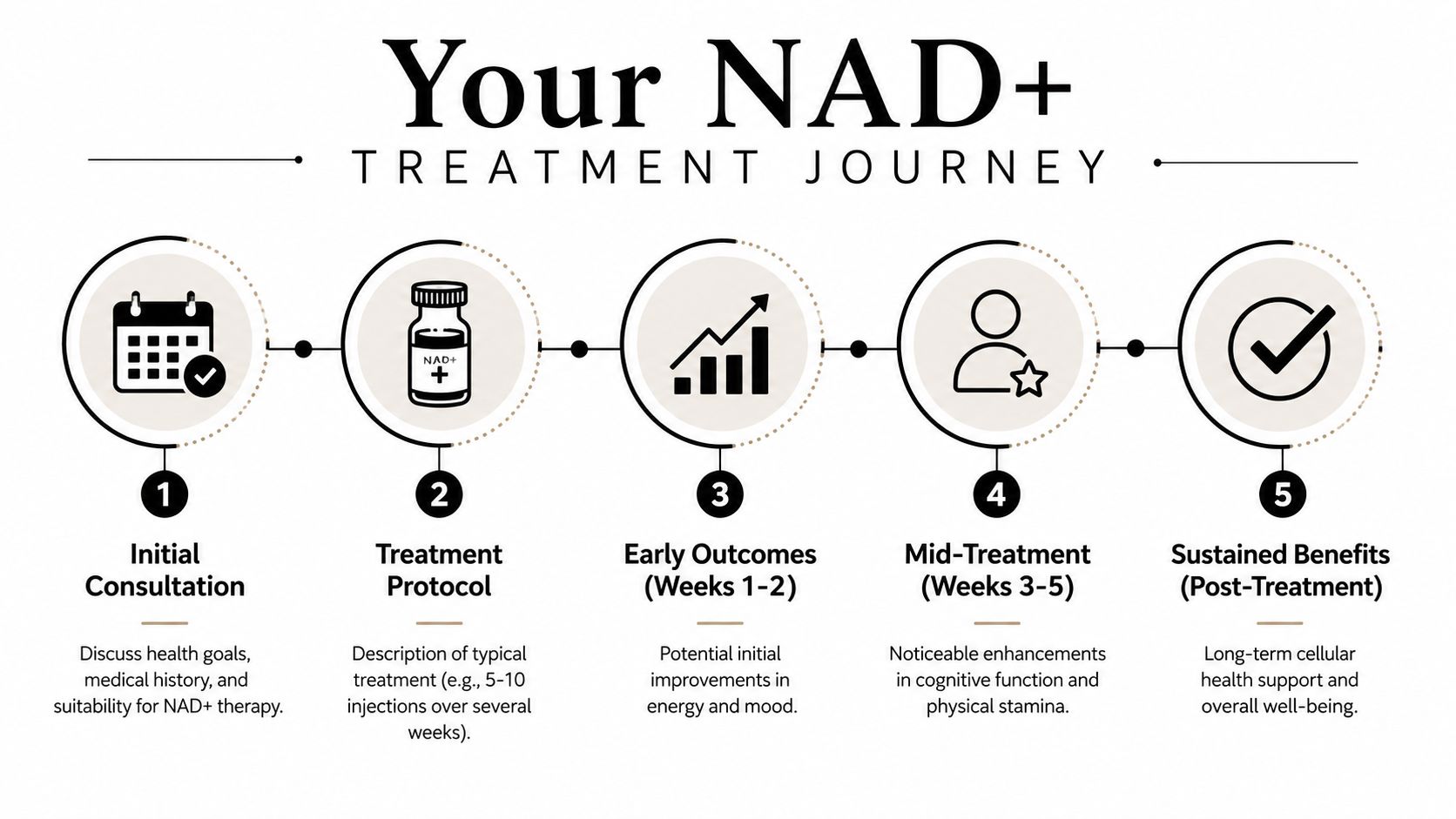
That pattern makes sense clinically. You're trying to see whether a patient notices meaningful change in daily function, not just whether he enjoys the idea of doing something proactive. Good monitoring beats enthusiasm every time.
A sensible treatment journey usually includes:
- A baseline discussion about goals such as mental clarity, recovery, stamina, or support during a demanding period.
- A review of competing factors like sleep debt, alcohol use, poorly controlled testosterone dosing, overtraining, or untreated sleep apnea.
- A trial period long enough to judge whether there's a repeatable effect.
- A maintenance decision based on actual benefit, not hope.
What outcomes to watch for
The most useful outcomes are functional and personal. Can you sustain focus better through the afternoon? Do you recover from training with less drag? Do you feel more stable under work stress? Is your sleep quality improving subjectively, even if it's not perfect?
What you shouldn't expect is an overnight transformation or a permanent reset from a single treatment cycle. NAD+ is better viewed as support for underlying cellular processes than as a stimulant. If a patient feels noticeably better, the change is often described as steadier energy or cleaner mental bandwidth rather than a jolt.
Judge NAD+ the same way you'd judge any serious therapy. Look for durable changes in function, not a dramatic first impression.
If there's no clear benefit after an appropriate trial, that matters too. Stopping an underperforming therapy is good medicine.
Safety Profile Adverse Effects and Contraindications
NAD+ discussions should include safety early, not as an afterthought. Most patients tolerate treatment reasonably well, but route of administration matters.
What side effects are most realistic

According to NPR's review of human NAD+ safety and delivery issues, NAD+ supplementation appears generally safe in human trials, but IV infusions can be inefficient at raising cellular levels and may cause moderate-to-severe abdominal cramping, nausea, and vomiting in some participants. The same report notes that subcutaneous injections typically have a milder side effect profile limited to local reactions.
That distinction matters. If a man wants physician-guided NAD+ support without sitting through a potentially uncomfortable infusion, subcutaneous treatment often makes more sense from a practical tolerance standpoint.
Who should pause and get medical guidance first
Any patient considering NAD+ should review the full picture with a qualified clinician first. That's especially true if you have active medical issues, a complex medication list, or overlapping treatment goals involving fertility, TRT, and metabolic health.
A few common-sense reasons to slow down include:
- Unclear symptoms: Fatigue and brain fog may come from anemia, thyroid disease, sleep apnea, depression, or poor testosterone management.
- Multiple concurrent therapies: Stacking treatments makes it harder to know what's helping or causing side effects.
- Expectations that don't match evidence: If you're hoping NAD+ will prevent neurodegenerative disease or replace foundational care, expectations need recalibration.
Patients who want more detail on treatment logistics and common questions should review a clinic's men's health treatment FAQ before starting.
Is NAD+ Therapy the Right Move for You
NAD+ therapy makes the most sense when you view it as an adjunct, not a shortcut. For the right patient, it may support a broader plan focused on energy, recovery, aging, and physiologic resilience. But it doesn't replace hormone evaluation, sleep optimization, cardiometabolic risk control, good training, or nutrition that matches your goals.
If you're a man on TRT or considering it, the decision becomes more specific. You're not just chasing wellness points. You're asking whether a therapy supports performance and long-term health without distracting from the basics. That's the right way to evaluate NAD+.
Bring these questions to your consultation:
- What exactly am I trying to improve? Energy, focus, recovery, mood stability, or support during a high-stress period?
- What's already been ruled out? Low iron, thyroid issues, poor sleep, excess alcohol, overtraining, or suboptimal testosterone management?
- Which delivery method fits my life? Injection, IV, or oral precursor?
- How will we measure success? Daily function, training recovery, mental clarity, or another defined outcome?
- Does fertility matter for me right now? If yes, how does this fit with the rest of my plan?
- What would make us stop? Side effects, no clear response, or better alternatives?
A careful answer to those questions tells you far more than any marketing headline about NAD plus injection benefits ever will.
If you want a physician-guided conversation about whether NAD+ belongs in your men's health plan, Cost Plus TRT offers telemedicine consultations focused on practical, evidence-based care. If you're already managing TRT or exploring options for energy, recovery, and performance, a no-obligation consult can help you decide whether NAD+ is a sensible add-on or just unnecessary noise.