
You finish your testosterone shot, clean up, and a few minutes later you notice it. A small firm spot under the skin. Maybe it's tender. Maybe it wasn't there last time. Maybe now you're wondering if you did something wrong, if the oil is stuck, or if you should be worried.
That reaction is common. Men self-administering TRT often feel a lump at the injection site at some point, especially early on or after a technique change. Most of the time, it's a short-lived local tissue response, not a dangerous complication. The key is knowing the difference between a routine post-shot lump and one that needs medical attention.
Technique is crucial. Small changes in speed, site choice, depth, and aftercare often determine whether a shot settles without discomfort or leaves you sore for days.
Table of Contents
- That Small Lump After Your Shot What Does It Mean
- Why Lumps Form After an Injection
- Normal Lumps vs Signs of a Problem
- How to Treat a Simple Injection Lump at Home
- Preventing Lumps with Better Injection Technique
- Specific Guidance for Testosterone TRT Injections
- When You Must Contact Your Doctor
That Small Lump After Your Shot What Does It Mean
A typical scenario goes like this. You inject into the thigh, glute, or belly fat, everything seems fine, and then later that day you feel a small knot. It may be sore when you press on it. It may feel like the oil is sitting there. That's enough to make anyone second-guess the shot.
In most cases, that lump is a benign local reaction. The tissue was punctured, medication was placed into an area that now has to absorb it, and your body answered with a small amount of inflammation. With testosterone, that reaction is especially common because the medication is suspended in oil rather than water.
A lot of men assume a lump means they injected incorrectly. Sometimes technique does contribute, but not every lump means you missed the mark. Some are the price of putting a thick oil into tissue that doesn't love being disturbed.
A small, firm, mildly sore lump after a testosterone injection is usually more annoying than dangerous.
What matters is the pattern. A routine lump is usually limited to the injection site, doesn't steadily worsen, and improves with time. A problematic lump tends to become hotter, redder, more painful, or persist longer than it should.
Here's the practical takeaway. Don't panic over the first firm spot you notice. Do pay attention to how it changes over the next several days. That timeline often tells you more than the lump itself.
Why Lumps Form After an Injection
The body creates a temporary workspace
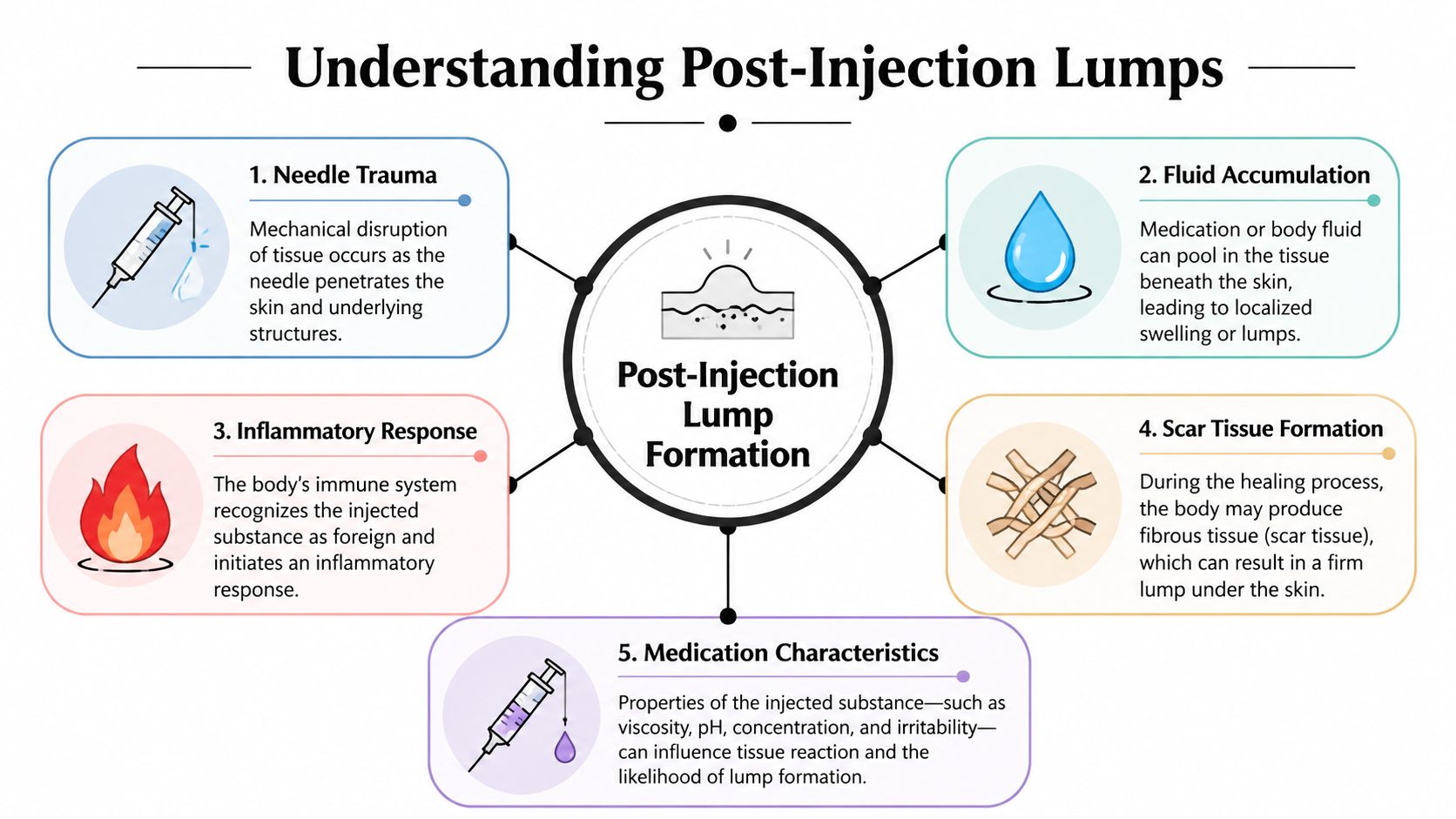
A post-shot lump makes more sense once you think of the injection site as a temporary workspace. The needle causes minor mechanical trauma. Then the medication enters tissue that has to absorb it, distribute it, and settle down afterward.
Most injection-site lumps are temporary, benign immune responses that resolve within days to two weeks, and clinical guidance notes that 9 out of 10 nodules fade in just a couple of days without intervention, according to clinical guidance on injection-site lumps.
That firmness comes from a mix of local fluid movement, inflammation, and the medication itself sitting in tissue while absorption begins. In plain terms, the area gets busy. Blood flow increases, immune cells show up, and the injected oil takes time to disperse.
Why testosterone shots are more likely to do this
Testosterone cypionate and testosterone enanthate are commonly oil-suspended medications. That oil is useful because it slows release into the bloodstream. It also makes the shot more likely to leave behind a temporary sore spot or firm nodule than a thinner, water-based injection would.
Several factors make lump formation more likely:
- Thicker medication: Oil moves and absorbs more slowly than water-based solutions.
- Larger volume: More oil in one spot gives tissue more to handle.
- Repeated use of the same area: Tissue that hasn't fully recovered becomes easier to irritate.
- Shallow placement for the intended route: If part of the medication ends up sitting where it absorbs poorly, you may feel it longer.
Practical rule: If a lump forms, think first about tissue irritation and slow absorption, not immediate disaster.
There's a trade-off here. The same oil vehicle that allows a sustained testosterone release can also cause localized soreness, swelling, or firmness for a few days. What works best is reducing tissue trauma while helping the oil disperse predictably. What doesn't work is forcing the shot quickly, using the same exact spot over and over, or treating every lump like an emergency.
Normal Lumps vs Signs of a Problem
What a harmless lump usually feels like
A normal post-injection lump is usually small, localized, and mildly tender. It may feel firm rather than soft. Pressing on it may remind you it's there, but it shouldn't feel like the area is actively getting worse hour by hour.
With a routine TRT shot reaction, men often notice one or more of these features:
- Mild soreness: The site aches a bit, especially when you sit on it or bump it.
- Firmness under the skin: It feels like a knot or small bead rather than a fluid-filled pocket.
- Stable appearance: The skin may look normal or only slightly irritated.
- Gradual improvement: The area becomes less noticeable over time, not more dramatic.
Symptom Checker Is Your Injection Lump Normal
| Symptom | Normal Benign Lump | Potential Complication (See a Doctor) |
|---|---|---|
| Pain | Mild soreness or tenderness | Worsening pain or severe pain |
| Heat | Little to no warmth | Localized warmth or a hot area |
| Redness | None or minimal | Spreading redness |
| Size trend | Stable or shrinking | Enlarging lump |
| Drainage | None | Pus or other drainage |
| Body symptoms | You otherwise feel fine | Fever or feeling systemically unwell |
| Time course | Improves over days | Persists or worsens instead of settling |
What the warning signs can mean
Most lumps are harmless, but rare complications do happen. Clinical guidance on injection side effects that require a doctor notes that severe problems such as abscesses can occur, and warns that localized warmth, spreading redness, worsening pain, or fever require prompt medical attention.
An abscess is a pocket of infection with pus trapped under the skin. It's usually more painful than a routine lump and often comes with increasing swelling, heat, and sometimes drainage. Cellulitis is a spreading skin and soft tissue infection. It tends to show up as redness that expands, tenderness, and warmth.
If the area is getting hotter, redder, and more painful instead of calmer, stop watching and start calling.
That's the dividing line I want patients to remember. Benign lumps settle. Infected or otherwise complicated lumps announce themselves by progressing.
How to Treat a Simple Injection Lump at Home
What to do the same day
If the lump is small, localized, and not showing warning signs, simple care is usually enough. Start with measures that reduce irritation rather than aggressive attempts to “break it up.”
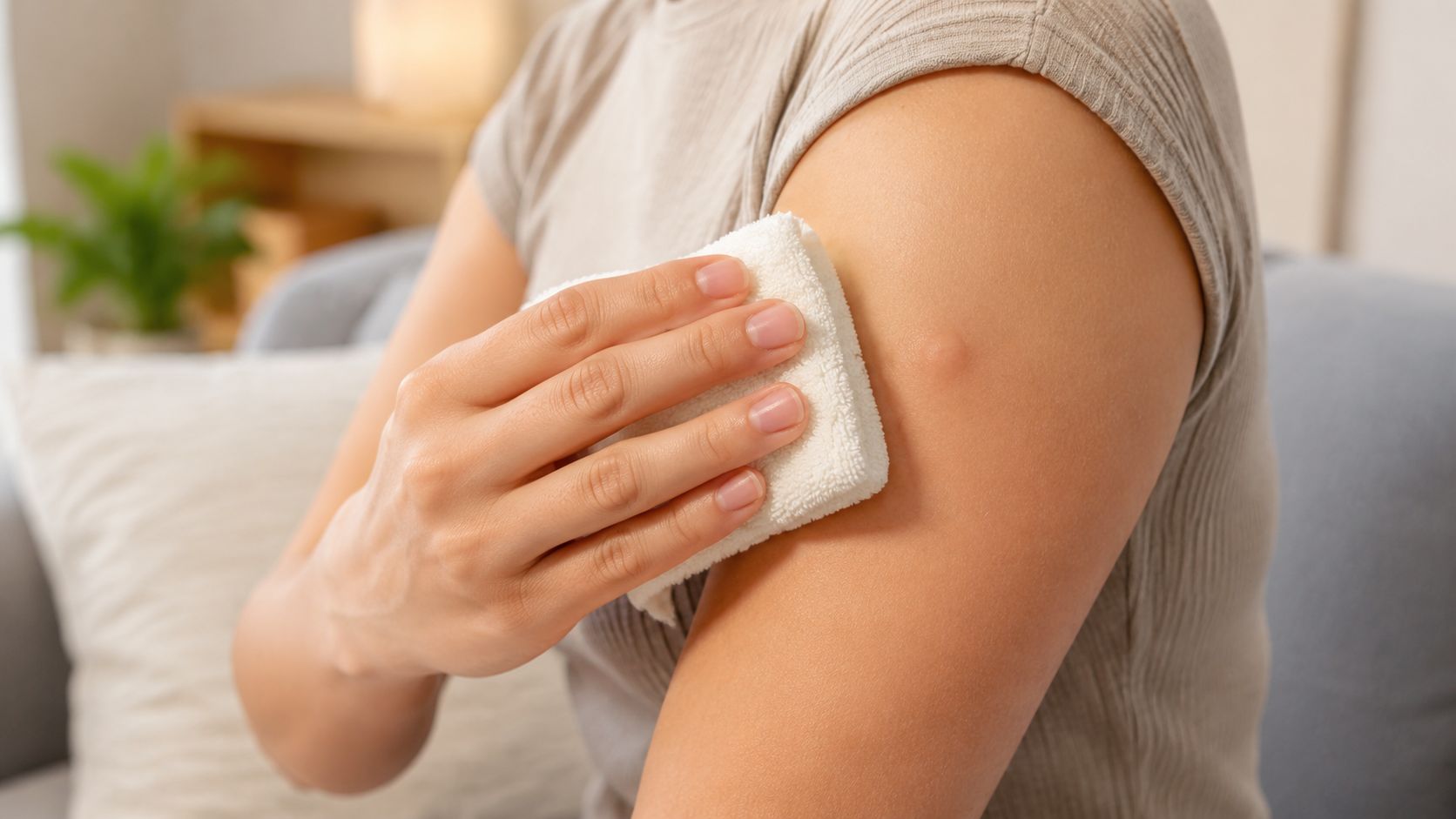
Use a cold pack early if the area feels swollen or freshly irritated. Keep it gentle. You're trying to calm tissue, not freeze it.
A practical same-day approach:
- Leave it alone for a bit: Don't keep pressing on it to check whether it's still there.
- Apply cool compresses: This helps settle initial swelling.
- Avoid hard training on that area: Heavy leg work after a sore thigh injection often makes the site angrier.
- Watch the trend: Mild discomfort that stabilizes is very different from escalating pain.
What helps over the next several days
As the initial irritation fades, some men find a warm compress later more comfortable because warmth can help the area relax and support absorption. Gentle movement often feels better than guarding the muscle all day.
Helpful habits include:
- Gentle massage only if it isn't painful: Light pressure may help disperse oil. Aggressive rubbing usually makes tissue more inflamed.
- Keep the site clean: Don't apply random creams or home remedies.
- Give it time: Most uncomplicated lumps improve without intervention.
What doesn't help is squeezing, digging at the area, or repeatedly re-injecting nearby because “that side already hurts anyway.” Irritated tissue doesn't become more cooperative when you challenge it again.
Preventing Lumps with Better Injection Technique
The technique mistakes that create lumps
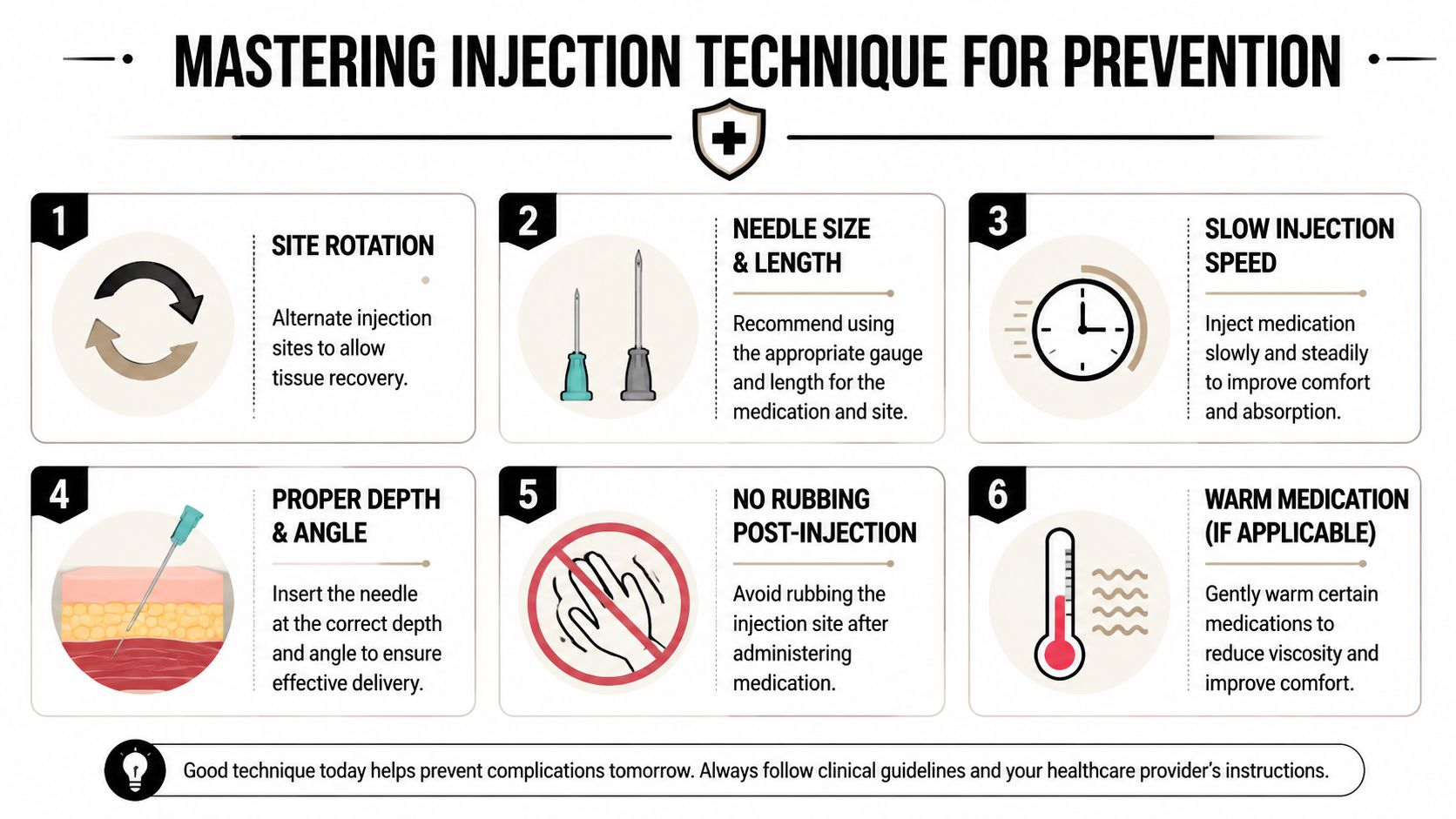
Most recurring injection-site lumps come from a short list of issues. Men inject too fast. They pull the needle out immediately. They use the same favorite site repeatedly. Or they rush prep and jab through wet alcohol, which stings and irritates tissue.
Patient-reported data suggests that injecting too rapidly or failing to count to eight before needle withdrawal increases lump formation and slows absorption, as discussed in this patient discussion on post-shot lump duration and technique. That's not polished textbook advice, but it matches what many experienced TRT users notice in real life. Slow, controlled injections usually go better.
Fast injections save a few seconds and often buy you days of irritation.
A lot of generic guides stop at “rotate sites” and “warm the vial.” Those are useful, but they miss the details that separate a smooth weekly routine from a pattern of chronic sore spots.
A better routine for your next TRT shot
A few practical upgrades make a real difference:
- Rotate deliberately: Don't rely on memory. Use a simple note in your phone and alternate left and right sides.
- Let alcohol dry fully: Wet alcohol on the skin can increase stinging.
- Warm the medication slightly: Holding the syringe or vial in your hands for a short time can make thick oil easier to inject.
- Inject slowly: Steady pressure is better than forcing oil through tissue.
- Pause before withdrawing: A brief count helps limit backtracking of oil through the needle path.
- Don't mash the site afterward: Gentle pressure is fine. Vigorous rubbing is not.
For readers exploring broader physician-guided men's health support, supervised peptide care options can matter too, especially if you're managing multiple injectable therapies and want consistent injection education.
Here's a visual walkthrough of better technique:
For intramuscular shots
Use a stable position and a site you can reach without twisting. If you're straining to see or reach the area, technique usually suffers. The Z-track method can help with IM injections by slightly displacing the skin and subcutaneous tissue before insertion, which may reduce leakage back through the track.
For subcutaneous shots
SubQ injections often produce smaller superficial lumps because the oil sits in fat and absorbs more slowly. That doesn't automatically mean the shot was bad. It means you need consistency. Smaller volumes, slow injection speed, and avoiding the exact same patch of tissue repeatedly usually work better than trying to force a larger amount into one familiar spot.
Specific Guidance for Testosterone TRT Injections
Why oil-based TRT behaves differently
Testosterone cypionate is not just “a shot.” It's an oil-based depot injection, and that changes how the tissue responds. Oil moves more slowly than water-based medication, so it's more likely to linger, feel firm, and create a palpable knot if technique or site selection isn't ideal.
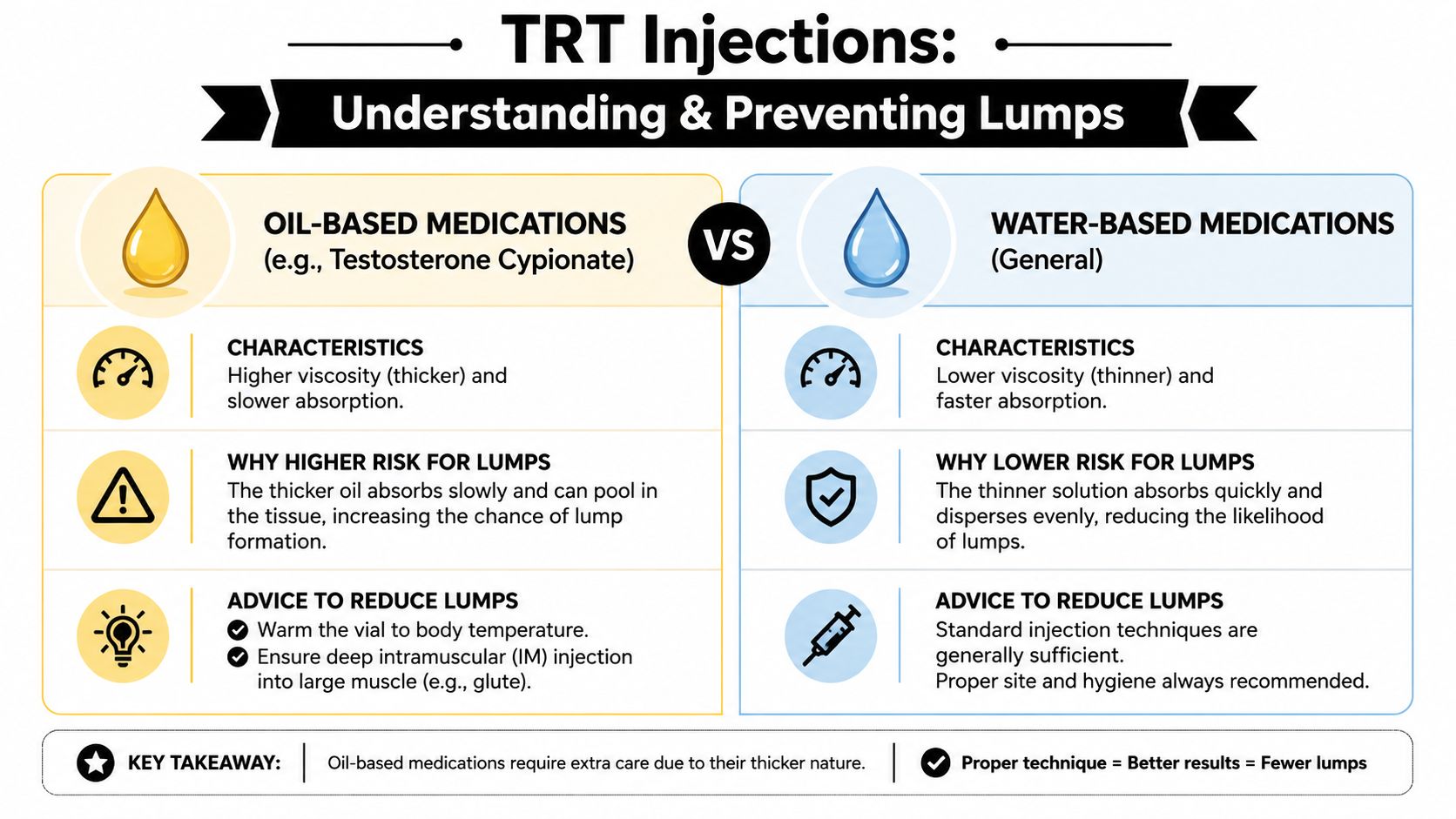
That's one reason men on TRT should be more thoughtful about volume, site rotation, and injection pace than someone receiving a thinner medication. If you're receiving physician-supervised TRT care, these are the practical details worth reviewing with your prescriber, not just the prescription itself.
SubQ vs IM and how lumps differ
Subcutaneous TRT tends to produce more noticeable small surface lumps because the oil sits in fatty tissue and takes longer to absorb. These are often more visible and easier to feel, but not necessarily more dangerous.
Intramuscular TRT usually leaves less of a surface bump when done well, but if the shot is too shallow, too fast, or repeatedly placed in irritated tissue, the soreness can be deeper and more persistent.
So there's a real trade-off:
- SubQ: Easier access, often smaller needles, but more little palpable nodules.
- IM: Deeper placement and often less visible lumping, but technique errors can produce more muscle soreness.
The uncommon problem long-term users should know
The less discussed issue is the oleoma, sometimes described as an oil cyst or granulomatous cyst. A temporary lump that settles is one thing. A persistent nodule that remains well beyond the usual window, or appears to evolve over time, deserves a different level of attention.
A review in the medical literature reports that oil-suspended testosterone cypionate can cause granulomatous cysts (oleomas) and even necrosis months after injection, and that larger oil volumes increase risk, as outlined in this published discussion of delayed oleoma formation from oil-based injections.
Many patient guides focus solely on common post-injection lumps, failing to explain that a long-standing, persistent, or changing lump might indicate more than just “slow absorption.” For long-term TRT users, recognizing that distinction is valuable.
When You Must Contact Your Doctor
Contact a clinician promptly if any of the following happens:
- The lump lasts beyond two weeks: Especially if it isn't clearly shrinking.
- The area becomes red, purple, hot, or more painful: Those changes suggest more than a routine reaction.
- You notice pus or drainage: That raises concern for abscess or infection.
- You develop fever or feel ill: Systemic symptoms change the picture.
- The lump is enlarging or feels unusual months later: That deserves evaluation.
If you need direct guidance, use the Cost Plus TRT contact page to reach a licensed provider. Your health and safety are the top priority. When in doubt, contact your healthcare provider.
If you're on TRT and want physician-guided care with transparent pricing, Cost Plus TRT offers online evaluations, ongoing provider support, testosterone therapy, and home delivery designed for busy men who want straightforward treatment without the usual clinic friction.