
Low testosterone isn't a niche issue reserved for a tiny group of men. In one review, 20% of men in their 60s, 30% in their 70s, and 50% of men over 80 had total serum testosterone below 325 ng/dL PMC review. That's why the key question isn't whether low testosterone exists in aging men, it's whether the numbers, symptoms, and health risks point to a problem that deserves action.
Table of Contents
- What Low Testosterone Actually Means
- Health Risks Linked to Untreated Low Testosterone
- Is Low Testosterone the Cause or Just a Warning Sign
- When to Get Tested and How to Read Your Results
- Treatment Options and Their Trade-Offs
- Why Ongoing Monitoring Matters More Than the Prescription
- How to Start Your Evaluation and Get Answers
What Low Testosterone Actually Means
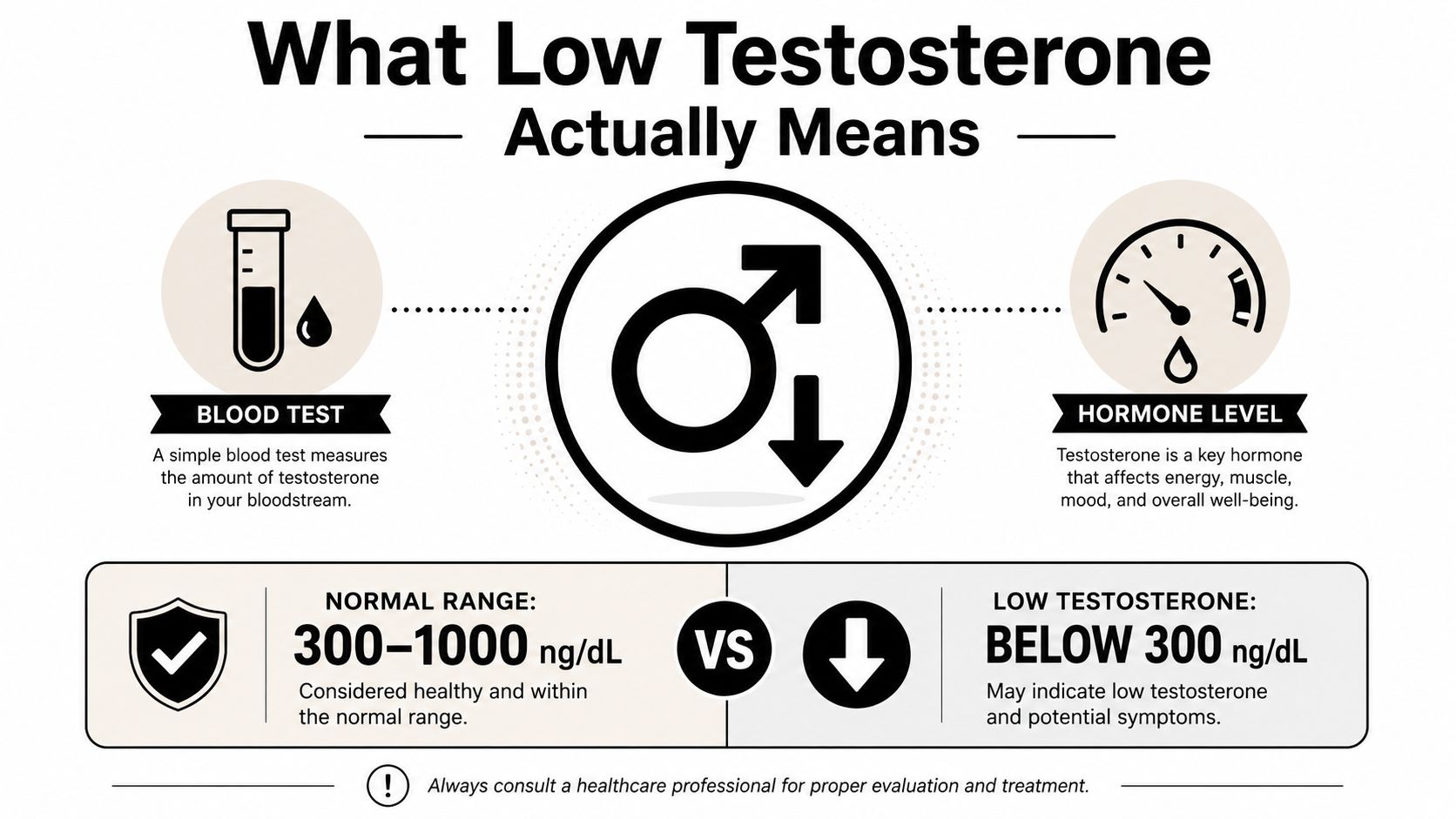
A low testosterone result is only the beginning of the workup. Total testosterone below 300 ng/dL is a common clinical cutoff, but one lab value does not define the whole picture. Testosterone also varies through the day, so the time of testing matters, and symptoms matter just as much as the number. A man with a borderline result and no symptoms may only need follow-up, while a man with fatigue, low libido, erectile dysfunction, and loss of muscle mass deserves a closer look.
Understanding low testosterone risks starts with recognizing that a low result is a starting point, not a verdict. The review at PMC review found testosterone deficiency below 300 ng/dL in 30.8% of men overall and 34.6% of older men. It also reported symptomatic androgen deficiency in 5.6% of men aged 30 to 79 in the BACH survey, with prevalence rising substantially with age.
Total Testosterone and Free Testosterone
Total testosterone measures what is circulating in the blood overall. Free testosterone is the portion that is not tightly bound and is more available to tissues, which matters when SHBG is unusually high or low. Two men can have the same total testosterone and still feel very different, and a normal-looking total level does not always end the evaluation.
One mistake I see often is overreacting to a single afternoon draw. Poor sleep, recent food intake, and late-day testing can all skew the result. A real diagnosis comes from repeat morning testing, symptoms, and a clinician who looks at the whole picture instead of chasing one number. The infographic showing normal testosterone levels between 300-1000 ng/dL and low levels below 300 ng/dL helps frame the cutoff, but the cutoff alone still does not tell you whether the hormone level is causing trouble.
Health Risks Linked to Untreated Low Testosterone
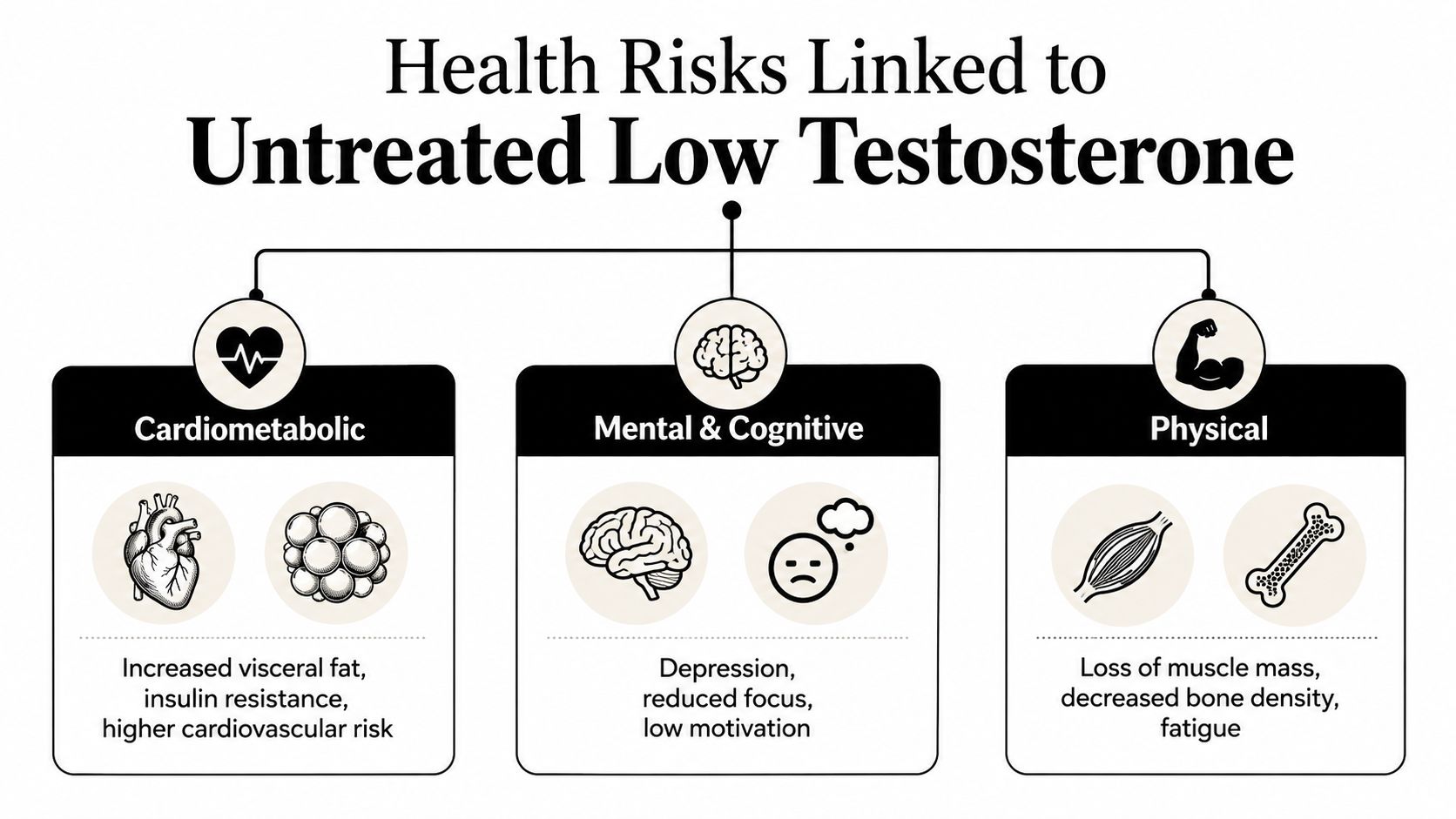
Low testosterone can seem manageable at first, especially when a man is still getting through work, training, and daily life. The problem is that the biology does not stay still. Over time, the pattern often shifts toward fatigue, loss of muscle, reduced training response, lower libido, and worsening cardiometabolic health. The low testosterone risks that matter most are the ones that build and eventually show up as disease.
Cardiometabolic strain
The strongest long-term signal is in mortality and cardiovascular risk. A meta-analysis summarized in Annals of Internal Medicine found that men in the lowest testosterone quintile had higher all-cause mortality and cardiovascular mortality in age-adjusted analyses, and the risk looked stronger at very low levels MedPage Today summary of the meta-analysis. Earlier evidence also linked testosterone below the 25th percentile, around 241 ng/dL, with a 40% higher risk of death over 20 years JCEM review.
Low testosterone is not the only cause of heart disease. It is still a meaningful warning sign, especially when a man also has obesity, diabetes, or sleep apnea. In clinic, the pattern is often clear, the hormone number is one part of a broader metabolic problem.
Sleep apnea is a good example of why the source of low T matters. Repeated nighttime oxygen drops and fragmented sleep can blunt nocturnal testosterone release, so the lab result may reflect poor sleep physiology as much as a primary testicular problem. Visceral fat is another common driver, because more abdominal fat means more aromatase activity, which pushes testosterone toward estrogen and can deepen the hormonal decline.
Bone, muscle, and daily function
Untreated hypogonadism is also tied to bone loss and sarcopenia. That matters because muscle is not only about appearance, it helps with balance, glucose handling, and independence. The practical signs are usually subtle at first. A man gets winded sooner, lifts less, recovers more slowly, or starts avoiding the activities he used to handle easily.
Mood, libido, and sleep
Low testosterone can also affect sex drive, erections, motivation, and mood. Men often describe it as “brain fog” or feeling flat, but those symptoms are nonspecific and do not prove the diagnosis by themselves. Sleep can make the picture worse, and poor sleep can magnify how low testosterone feels even when the lab change is modest.
If erectile symptoms are part of the picture, a focused treatment review can help sort what is hormonal and what is vascular or medication-related. For some men, that means discussing testosterone evaluation alongside ED medications rather than treating every symptom as the same problem.
Untreated low testosterone is rarely one isolated problem. It often signals that the body is under strain in more than one system at once.
Is Low Testosterone the Cause or Just a Warning Sign
Low testosterone can be part of the problem, but it also shows up with the conditions that lower testosterone in the first place, especially obesity, diabetes, sleep apnea, and chronic disease. That makes the hormone level both a possible risk marker and, in some men, a real deficiency that deserves treatment.
The difference matters because it changes what you expect from treatment. If low T is being driven by excess weight, untreated sleep apnea, or uncontrolled metabolic disease, testosterone alone may help symptoms without correcting the main source of risk. In that setting, the prescription can still have a role, but it does not replace care for the underlying condition.
What the guidelines imply
The AUA tells clinicians to explain that low testosterone is a risk factor for cardiovascular disease, while also noting that current evidence does not clearly show testosterone therapy raises or lowers cardiovascular events AUA guideline PDF. The Endocrine Society is more cautious in men with overweight or obesity, saying testosterone is not indicated unless true pathological hypogonadism is present Endocrine Society hypogonadism guidance.
That is the practical takeaway I give men all the time. Treat the cause when you can, treat the deficiency when it is real, and do not confuse a hormone level with a full diagnosis.
A man with low testosterone may be dealing with one of three situations. He may have a primary testicular problem, a secondary issue from the brain or pituitary, or a reversible suppression pattern driven by lifestyle and comorbidity. Those are not the same, and they should not be treated as if they are.
When to Get Tested and How to Read Your Results
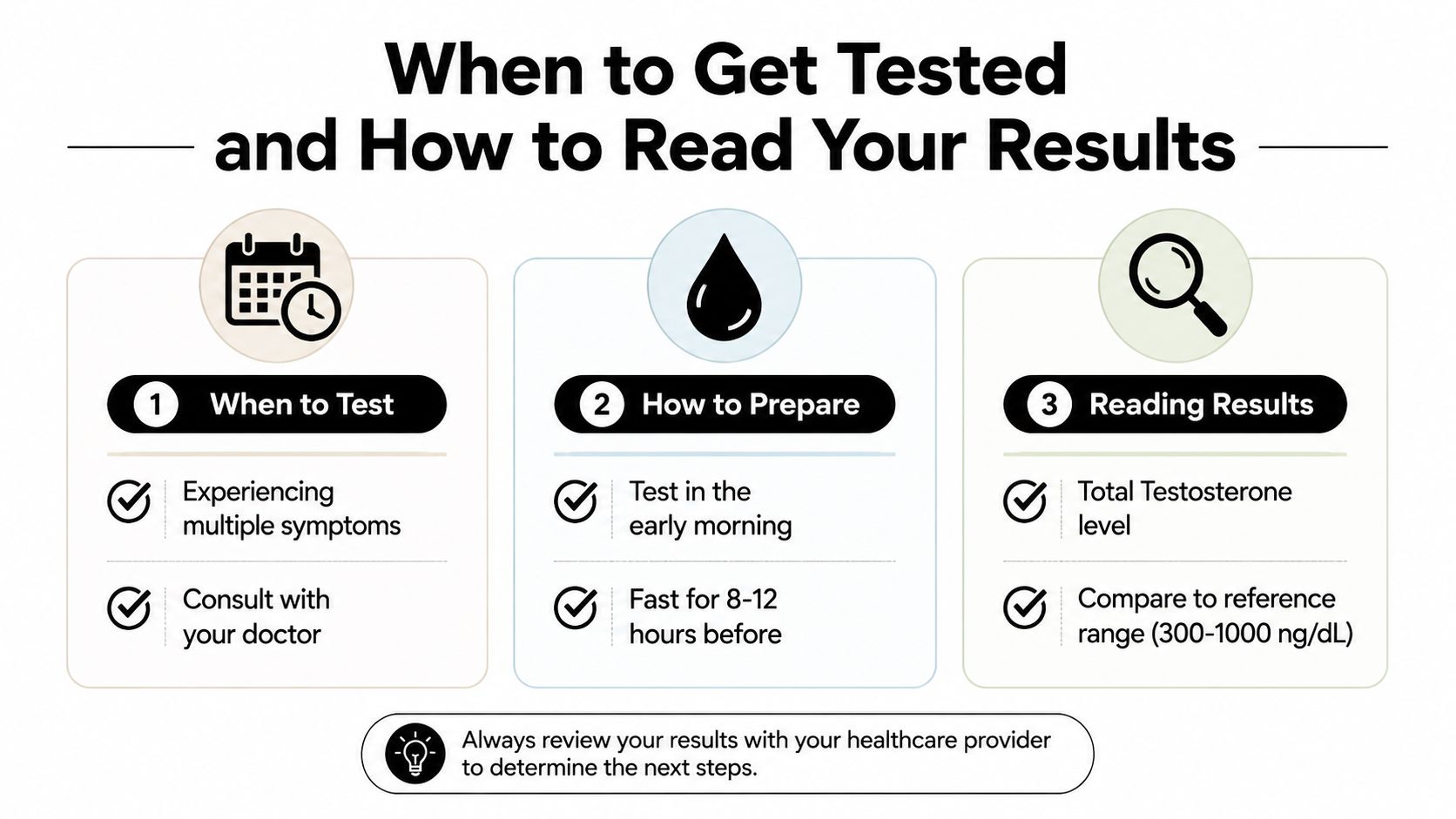
Persistent symptoms matter more than curiosity about a lab value. Low libido, erectile dysfunction, ongoing fatigue, unexplained mood changes, and loss of muscle mass are the patterns that should prompt testing, especially when they show up together. A proper evaluation starts with symptoms, then uses the lab to confirm or rule out low testosterone.
Timing matters as well. Testosterone should be drawn in the early morning, and most men need two separate tests before anyone calls the result low. One bad sample, a short night of sleep, or an off day can create a misleading result, and that can lead to unnecessary worry or treatment that never should have started.
What the guidelines say
A basic workup usually goes beyond total testosterone. Clinicians often check LH, FSH, prolactin, SHBG, and sometimes estradiol to see where the problem is starting and whether free testosterone deserves closer attention. That helps separate primary hypogonadism, where the testes are not responding properly, from secondary hypogonadism, where the signal from the brain or pituitary is off.
How to avoid bad reads
An afternoon draw is a common error. So is ignoring SHBG, especially in men whose binding proteins make total testosterone less useful than it first appears. If symptoms are strong and the result is borderline, the answer is not to stop there. It is to look harder at the pattern, the repeat test, and the likely cause.
A good workup answers two questions, is testosterone truly low, and if it is, what's driving it?
Treatment Options and Their Trade-Offs
The right treatment depends on symptoms, fertility goals, sleep issues, body composition, and how much risk a man is willing to accept for convenience and speed. Low testosterone care works best when the plan matches the problem in front of you, not when a clinic reaches for the same option every time.
Lifestyle changes still matter, even when medication is on the table. Resistance training, better sleep, weight reduction, and stress control can support healthier hormone production and also improve the conditions that often suppress testosterone in the first place. I do not treat the lab alone. I treat the health pattern around it.
Comparing the main options
| Option | Best For | Fertility Impact | Key Risks | Typical Timeline |
|---|---|---|---|---|
| Resistance training, sleep, weight loss | Men with reversible suppression or mild symptoms | None | Slow progress if underlying disease isn't addressed | Gradual |
| Testosterone injections | Men with confirmed deficiency and clear symptoms | Can suppress sperm production | Erythrocytosis, fertility suppression, possible worsening of untreated sleep apnea | Often weeks |
| Gels | Men who want steadier daily dosing | Can suppress sperm production | Skin transfer risk, fertility suppression | Often weeks |
| Pellets | Men who want less frequent dosing | Can suppress sperm production | Harder to adjust quickly, fertility suppression | Slower to adjust |
| Fertility-preserving medical alternatives | Men who want symptom support while protecting fertility | Better aligned with fertility goals | Requires careful supervision and the right diagnosis | Varies |
The fertility issue is not a footnote. Exogenous testosterone can suppress sperm production, and that matters for men who may want children later. If you want a fuller breakdown of that trade-off, this explanation of whether TRT can make you infertile is the right place to start. Sleep apnea is another concern, because testosterone can worsen untreated breathing problems during sleep, which is why sleep evaluation should be part of the plan when symptoms fit.
For men who want to preserve fertility, the better option may be a different medical approach entirely, but that depends on the diagnosis and the symptoms. The point is not to chase every complaint with testosterone. The point is to choose the tool that fits the trade-offs, including the risk of making fertility harder to protect later.
For men who want a telemedicine route, Cost Plus TRT's ED medication options show how some clinics bundle men's health care beyond testosterone itself. The point is not to chase every symptom with a prescription. The point is to match the tool to the problem.
Why Ongoing Monitoring Matters More Than the Prescription
A prescription without follow-up is where low testosterone care gets sloppy. Testosterone therapy can help the right patient, but it also needs monitoring for hemoglobin and hematocrit, because erythrocytosis is a real treatment risk and can become clinically important fast Scientific Reports. Men also need symptom tracking, lipid review, and assessment for sleep-related problems, especially if they already snore or stop breathing at night.
What good follow-up looks like
Monitoring should be routine, not optional. I want to know whether energy improved, whether erections changed, whether mood is steadier, and whether the dose is still appropriate. If the dose has to be adjusted, that's normal, not a sign of failure.
The danger isn't just taking testosterone. The danger is taking it and then disappearing.
The cardiovascular debate isn't settled into a simple yes or no. Current guidance supports careful, individualized care rather than panic, and that means checking blood counts and watching the patient, not treating the prescription like the end of the conversation. If a clinic never talks about labs after the first fill, that's a warning sign.
How to Start Your Evaluation and Get Answers
A proper evaluation begins with a symptom history, not marketing material. If you have low libido, erectile dysfunction, fatigue, mood changes, or muscle loss, write them down before the visit and be ready to explain when they started and what has changed since then. Bring any recent labs too, especially if you have already been tested elsewhere.
Telemedicine can work well when it is handled seriously. With Cost Plus TRT's start process, a man can begin with a questionnaire, move through lab review, speak with a licensed physician, and decide whether treatment makes sense. If you already have recent labs, that can make the process faster, but the order still matters, diagnosis first, treatment second.

A good clinic should explain why you meet criteria, which risks belong to untreated low testosterone, which risks come from treatment, and what follow-up looks like after therapy starts. If the conversation is only about fast shipping or a subscription, keep looking. If it covers symptoms, labs, fertility, sleep, and ongoing monitoring, you are in the right place.
If you want a careful, physician-led evaluation, Cost Plus TRT offers telemedicine care built around labs, monitoring, and clear pricing. Start with the facts, not the hype, and get answers that match your symptoms and your results.