

You've started testosterone replacement therapy, or you're considering it, and now you're searching every symptom you notice. A headache feels more serious than it did before. You're wondering whether acne, mood changes, fertility problems, or a higher blood-pressure reading could be connected to treatment. That uncertainty is common, but a long side-effect list without an action plan doesn't help much.
Low T treatment side effects make more sense when you understand what testosterone does after it enters the body. Some effects involve the heart and blood pressure, some involve red-blood-cell production, and others come from changes to the brain-testes hormone loop. Fertility, skin and breast changes, fluid retention, mood, and sleep can all be connected to those mechanisms.
Most risks can be managed more effectively when you track symptoms and laboratory results together. This guide explains why each major effect happens, what deserves routine follow-up, and what should prompt a call to your clinician. For practical questions about treatment logistics, you can also review the Cost Plus TRT FAQ.
Table of Contents
- Starting TRT and Wondering What Could Happen
- Why TRT Causes Side Effects in the First Place
- Cardiovascular and Blood Pressure Effects
- Erythrocytosis and Why Hematocrit Matters
- Fertility Changes Most Men Are Not Warned About
- Skin, Breast, Fluid, Mood, and Other Common Effects
- Your Monitoring Timeline and Lab Schedule
- Practical Next Steps for Telemedicine Patients
Starting TRT and Wondering What Could Happen
Before starting TRT, many men want a direct answer to a simple question: “How will I know whether this is helping me safely?” The answer depends less on a single symptom than on a baseline assessment, an appropriate dose, and scheduled follow-up. Testosterone may improve symptoms related to confirmed hypogonadism, but it also affects several systems beyond libido and energy.
Five categories deserve particular attention:
- Cardiovascular and blood-pressure effects: TRT hasn't been shown to increase major cardiovascular events in an appropriately selected high-risk trial population, but testosterone products can raise blood pressure in some patients.
- Erythrocytosis: Testosterone can stimulate red-blood-cell production, increasing hematocrit and blood viscosity.
- Fertility: External testosterone can improve serum testosterone while suppressing the hormonal signals required for sperm production.
- Skin, breast, and fluid changes: Androgen activity and conversion to estradiol can contribute to acne, nipple tenderness, gynecomastia, and swelling.
- Mood and sleep effects: Some men feel better, while others experience irritability, changes in sleep, or worsening obstructive sleep apnea.
Start with a safety baseline
A safe plan begins before the first dose. Your clinician should know about cardiovascular disease, prior heart attack or stroke, high blood pressure, sleep apnea, fertility goals, prostate history, current medications, and previous blood-count results. Those details can influence whether TRT is appropriate, which formulation makes sense, and how closely you need to be monitored.
Practical rule: Don't judge safety only by whether your energy or libido improves. A symptom benefit and a laboratory safety problem can occur at the same time.
The useful mindset is not “TRT has no risks” or “TRT is dangerous.” It's that testosterone has predictable effects, and a thoughtful monitoring plan lets your clinician respond before a manageable issue becomes a serious one.
Why TRT Causes Side Effects in the First Place
Your body regulates testosterone through the hypothalamic-pituitary-gonadal axis, or HPG axis. The hypothalamus releases GnRH, which prompts the pituitary gland to release LH and FSH. LH signals the testes to make testosterone, while FSH supports sperm production through Sertoli cells.
TRT supplies testosterone from outside this control system. As blood testosterone rises, the brain detects the increase and reduces GnRH, LH, and FSH. It is similar to turning down a thermostat after the room warms: the body lowers its own signal because it senses enough hormone is present.
That creates a central paradox: blood testosterone can rise while testicular activity falls. Less LH lowers testosterone inside the testes, and less FSH reduces support for sperm production. A treatment that improves the blood-testosterone result can therefore reduce sperm production and shrink testicular volume. Fertility may recover after treatment changes or stops, but the timing varies.
Three mechanisms explain many effects
| Mechanism | What changes | Side effects it can help explain |
|---|---|---|
| External testosterone | The HPG axis reduces GnRH, LH, and FSH | Lower sperm production, testicular shrinkage, variable fertility recovery |
| Aromatization | Some testosterone converts to estradiol | Nipple tenderness, gynecomastia, fluid retention |
| Bone-marrow stimulation | Red-blood-cell production increases | Higher hematocrit, headaches, flushing, possible thrombotic concern |
Androgen activity can also affect sebaceous glands, sleep physiology, fluid balance, and prostate-related monitoring. Responses differ according to dose, formulation, age, baseline hematocrit, sleep apnea, body composition, and other conditions. Injectable products can create more noticeable peaks and troughs than some other delivery methods, which may influence mood, acne, libido, or fluid symptoms.
The practical implication is to connect each symptom with a measurable check. A rising hematocrit calls for clinician review, especially if you develop headaches, flushing, or breathing problems during sleep. New breast tenderness, swelling, or rapid fluid gain warrants assessment of the dose, formulation, and possible estradiol conversion. Fertility goals should be discussed before treatment because suppressed LH and FSH can reduce sperm production even when symptoms improve.
The cardiovascular findings described in the TRAVERSE trial publication address major cardiovascular events in a selected high-risk population. They do not eliminate the need to check blood pressure or assess individual clotting, rhythm, and fluid-related concerns. Mechanism explains why a side effect can occur, while symptoms, examination, and laboratory results determine what to do next.
Cardiovascular and Blood Pressure Effects
A patient starting TRT may worry that a higher testosterone level will immediately trigger a heart attack or stroke. The evidence is more specific. In the high-risk TRAVERSE population, testosterone did not increase the combined rate of cardiovascular death, nonfatal heart attack, or nonfatal stroke compared with placebo. That result reduced concern about a broad increase in major cardiac events, but it does not make every cardiovascular risk irrelevant.
Testosterone products can raise blood pressure, so blood-pressure checks remain part of safe treatment. In TRAVERSE-related labeling data, topical testosterone raised mean systolic pressure by 1.0 mm Hg over 36 months, while placebo was associated with a 0.5 mm Hg decrease. The resulting 1.5 mm Hg between-group difference is described in the published TRAVERSE-related analysis.
Put the average in personal context
An average change cannot predict an individual response. Someone with controlled blood pressure and few risk factors may respond differently from a patient with untreated hypertension, obstructive sleep apnea, obesity, kidney disease, or several cardiovascular medicines. These conditions can already strain blood-pressure control, fluid balance, or sleep-related breathing.
Use a validated home cuff under consistent conditions. Sit still for a few minutes, support your arm, and record the date, time, reading, symptoms, recent exercise, and stimulant use. A repeated pattern matters more than one unusual measurement. Send that pattern to your prescriber, who can review the TRT dose, formulation, other medicines, and underlying conditions.
Monitoring principle: “No demonstrated increase in major events” does not mean “no cardiovascular monitoring needed.”
Contact your clinician if readings stay above your agreed treatment target or rise after TRT starts or the dose increases. Seek urgent care for new chest pain, severe shortness of breath, fainting, sudden weakness, or new trouble speaking. These symptoms need immediate assessment whether or not TRT is the cause.
TRT may also worsen fluid retention in susceptible patients. New ankle swelling, rapid unexplained weight gain, or worsening breathlessness calls for prompt clinical review, especially with heart or kidney disease. The hormonal mechanism, blood-pressure pattern, symptoms, and examination together determine the next step.
Erythrocytosis and Why Hematocrit Matters
You may feel better on TRT while a routine blood count shifts. Erythrocytosis is an abnormal rise in red-blood-cell concentration. Hematocrit shows how much of your blood volume consists of red blood cells. Testosterone can stimulate red-cell production in the bone marrow, much like turning up a factory's output. Injectable formulations, higher doses, older age, and some baseline health factors can make that response more likely.
A 2025 systematic review reported erythrocytosis rates as high as 66.7% among men prescribed testosterone. Risk was higher with intramuscular treatment, higher doses, and older age, as described in this systematic review of testosterone-associated erythrocytosis. Rates differ between studies because researchers use different definitions, formulations, follow-up periods, and patient groups.
The action threshold matters
A rising hematocrit is more than an unusual lab result. Thicker blood may contribute to headaches, facial flushing, and hypertension. It can also raise concern about thrombosis, although the exact relationship between treatment-related erythrocytosis and clotting events remains uncertain. The review reported thromboembolic events in up to 2.7% of men receiving testosterone, making the blood count an important safety signal.
Many guidelines use hematocrit above 54% as a point requiring action. The response usually involves several checks rather than automatic permanent discontinuation:
- Confirm the result: Your clinician may repeat the complete blood count and assess hydration, test timing, and other possible causes.
- Review the dose: Lowering the dose or extending the interval may reduce red-cell production.
- Review the formulation: Some patients may benefit from changing an injectable regimen that creates higher hormone peaks.
- Check contributing conditions: Low oxygen, smoking, and obstructive sleep apnea can also raise hematocrit.
- Pause treatment when needed: TRT may need to stop temporarily until the level returns to a safer range.
Endocrine Society guidance recommends measuring hematocrit before treatment, around three months after starting, and at least annually afterward. Repeat testing is also appropriate after a meaningful dose or formulation change.
Contact your clinician promptly for persistent headaches, facial flushing, unusual dizziness, visual changes, or a result near or above the action threshold. Sudden chest pain, severe shortness of breath, or one-sided leg swelling requires urgent evaluation.
Fertility Changes Most Men Are Not Warned About
Improved serum testosterone and normal sperm production are different outcomes. TRT can raise the testosterone measured in your bloodstream while lowering the testosterone concentration inside the testes, where sperm production occurs.
The mechanism is the HPG feedback loop described earlier. External testosterone reduces hypothalamic GnRH and pituitary LH and FSH. Lower LH reduces intratesticular testosterone, while lower FSH and lower local testosterone impair Sertoli-cell support. Sperm production may fall substantially and can sometimes reach azoospermia, meaning no sperm are detected in the semen, as explained in this review of testosterone therapy and male fertility.
Make fertility part of the starting decision
Tell your prescriber about plans for children before beginning long-acting or injectable TRT. Don't assume that stopping later will restore fertility immediately. Recovery after discontinuation is common but variable, and sperm production may take months or years to return. After prolonged or supratherapeutic exposure, production may not return to its previous baseline.
That doesn't mean fertility options disappear. A reproductive urologist or endocrinologist may consider treatments designed to preserve or restore the signaling pathway, depending on your goals and laboratory findings. Possible physician-supervised approaches include:
- SERMs such as clomiphene or enclomiphene: These can support the brain's stimulation of LH and FSH in selected patients.
- Gonadorelin: Pulsatile stimulation can be used in specialist-directed care to reproduce GnRH signaling.
- hCG: This can stimulate testicular testosterone production and may help maintain intratesticular testosterone in some treatment plans.
These options aren't interchangeable, and they aren't appropriate for everyone. A fertility evaluation may include a semen analysis, reproductive hormone testing, and a review of treatment history. Men already using TRT shouldn't add or stop fertility medication without medical supervision.
For a patient-friendly discussion of the issue, read whether TRT can make you infertile. The practical lesson is simple: fertility isn't a side effect to discover after treatment begins. It's a treatment-planning decision.
Skin, Breast, Fluid, Mood, and Other Common Effects
Not every TRT side effect signals an emergency. Some are uncomfortable or frustrating, while others indicate that your dose, formulation, or underlying health needs review. The useful question is what the symptom means and what threshold changes the next step.
Skin and breast changes
Acne and oily skin usually reflect increased androgen stimulation of sebaceous glands. Don't squeeze lesions, use harsh scrubs, or add multiple active products at once. A gentle cleanser and non-comedogenic moisturizer may help, but persistent, painful, or scarring acne deserves a clinician's advice about dose, formulation, or dermatology treatment.
Nipple tenderness or breast enlargement can occur when some testosterone converts to estradiol through aromatization. This conversion may be more noticeable in people with higher body fat. Report a new breast lump, persistent one-sided pain, nipple discharge, or rapid enlargement rather than self-treating with an estrogen-blocking drug.
Fluid, mood, and sleep effects
A tight ring, ankle swelling, or a sudden sense of puffiness may indicate fluid retention. Mild symptoms should still be reported if they persist, especially with hypertension, heart failure, kidney disease, or breathlessness. Severe swelling or difficulty breathing requires urgent assessment.
Mood changes range from improved well-being to irritability, agitation, or a marked change in behavior. Keep a brief symptom record that includes sleep, dose timing, and interactions with work or relationships. A new severe mood change, suicidal thinking, aggression, or confusion calls for immediate help.
TRT can worsen obstructive sleep apnea in some patients. Sleep apnea can also contribute to high hematocrit and cardiovascular strain, so loud snoring, witnessed pauses in breathing, morning headaches, or excessive daytime sleepiness shouldn't be dismissed. Ask your clinician about evaluation, particularly if your blood count rises.
Prostate monitoring also belongs in the plan. A rising PSA, new urinary difficulty, blood in the urine, or pelvic pain should prompt clinician contact rather than an assumption that the symptom is harmless.
Your Monitoring Timeline and Lab Schedule
TRT monitoring is a clinical process, not a prescription followed without review. Before the first dose, establish a baseline that can show whether a later change reflects treatment, an existing condition, or a dose problem. The schedule depends on your medical history, formulation, dose changes, fertility goals, and local prescribing requirements.
Before the first dose
Review these items with your clinician:
- Total and free testosterone, interpreted alongside symptoms and clinical context
- Complete blood count, including hematocrit
- Full metabolic panel
- Lipid panel
- Estradiol when clinically relevant
- PSA and prostate evaluation when appropriate
- LH and FSH if fertility is a current or future goal
- Home blood-pressure readings
- Sleep apnea symptoms and cardiovascular history
The starting CBC gives context for later blood-count changes. Fertility goals also change the discussion, because a normal testosterone result does not show that sperm production will remain intact.
Early follow-up
The Endocrine Society recommends checking hematocrit before treatment, around three months after initiation, and at least annually afterward. If hematocrit exceeds 54%, the Endocrine Society guidance recommends temporarily stopping therapy, evaluating for hypoxia and obstructive sleep apnea, and restarting at a reduced dose only after the hematocrit returns to a safer range.
The early visit is also a checkpoint for blood pressure, symptoms, testosterone levels, metabolic results, estradiol when relevant, and adverse effects. Testing becomes especially important after changing the dose or formulation, since those changes can alter hormone levels and side effects.
Ongoing decisions
Later appointments should connect laboratory results with how you feel and function. Your clinician may review symptom response, blood pressure, hematocrit, prostate monitoring, sleep, mood, fertility priorities, and adverse effects together. A sustained blood-pressure rise, rising PSA, or worsening blood count may call for a lower dose, a different formulation, a temporary hold, or referral.
Ask before testing what result should trigger a call. A useful plan identifies the specific lab, the testing date, and the action that follows an abnormal result. This turns monitoring into a decision process rather than a vague instruction to “watch your labs.”
Practical Next Steps for Telemedicine Patients
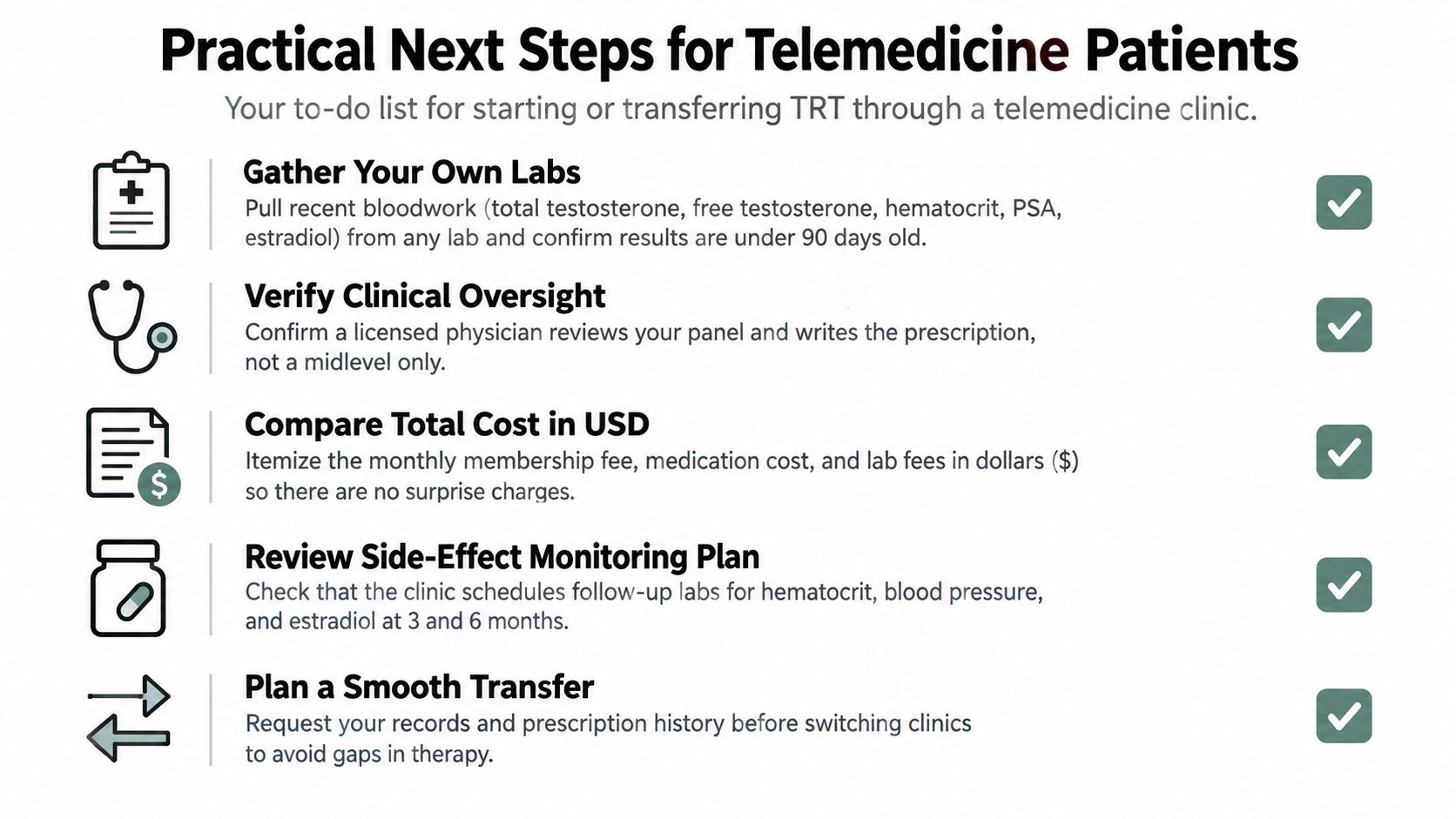
A telemedicine visit works best when you arrive with usable records and specific questions. If you're already receiving TRT, request your recent laboratory results, prescription history, dose, formulation, injection instructions, and notes about previous side effects. If you're starting from the beginning, ask which baseline tests the clinician requires and whether you can upload results or arrange testing through Quest Diagnostics.
Bring the right questions
Use the consultation to clarify decisions, not just eligibility:
- Fertility: Could this plan affect current or future conception, and should a semen analysis or reproductive referral come first?
- Hematocrit: What was my previous CBC, when will it be repeated, and what happens if it rises?
- Blood pressure: What home readings should prompt a message or medication review?
- Sleep: Do my snoring, daytime sleepiness, or prior sleep-apnea diagnosis change the plan?
- Formulation: What are the advantages and disadvantages of injections, topical products, or another delivery method for my situation?
- Transfer logistics: How will the clinic coordinate records, follow-up labs, prescription supply, and treatment gaps?
Cost Plus TRT is one telemedicine option that allows patients to upload recent laboratory results or schedule testing through Quest Diagnostics, then meet online with a licensed physician for evaluation and ongoing consultations. Review the clinic's telehealth consent information before making a decision, and compare the monitoring process as carefully as the medication cost.
Know when to escalate
Contact your provider promptly for a rising hematocrit, persistently high blood pressure, new breast changes, worsening sleep apnea symptoms, or a marked mood change. Seek urgent care for chest pain, severe shortness of breath, fainting, sudden neurological symptoms, or signs of a serious clotting event.
The difference between a difficult TRT experience and a manageable one often comes down to decisions made before the first dose. Gather your records, define your fertility goals, measure your blood pressure, establish a CBC schedule, and make sure you know exactly who to contact when a symptom changes.
Cost Plus TRT provides online physician consultations, prescription testosterone therapy, lab coordination, and transfer support for eligible patients, with a focus on transparent treatment logistics. Visit Cost Plus TRT to review your options, prepare your records, and arrange a consultation about a monitoring plan that fits your low T treatment needs.