
Are you asking whether TRT is safe for your heart, or whether it's safe for your fertility and blood? Those aren't the same question, and treating them as one is why online answers often sound contradictory.
The strongest modern cardiovascular evidence is reassuring when testosterone replacement therapy is prescribed for appropriate patients. The 2023 TRAVERSE trial found that TRT didn't increase the overall rate of major cardiovascular events compared with placebo. But that doesn't mean TRT has no meaningful risks. A rise in hematocrit, fluid retention, blood-pressure changes, rhythm problems, pulmonary embolism, and sperm suppression can all change the decision for a particular man.
So, is TRT safe? The most accurate answer is conditional. It can be a reasonable treatment for confirmed testosterone deficiency when a clinician evaluates your medical history, fertility plans, baseline tests, dose, and follow-up results. It isn't a one-time clearance, and it shouldn't be treated as a general anti-aging medication for men with normal testosterone levels.
This distinction matters especially in telemedicine. Convenient care can work well when it includes proper diagnosis, physician review, laboratory testing, and a process for changing or pausing treatment. The goal isn't to promise zero risk. The goal is to identify risks early enough to manage them.
Table of Contents
- Introduction Is TRT Safe and What Safe Really Means
- How Testosterone Replacement Therapy Works in Your Body
- What the Latest Research Says About TRT and Heart Health
- Benefits and Risks of TRT You Should Weigh Together
- Who Is a Good Candidate for TRT and Who Should Pause
- How Safety Monitoring Works From Labs to Dose Adjustments
- Making a Confident Decision About TRT Safety for You
Introduction Is TRT Safe and What Safe Really Means
Is TRT safe for your heart, fertility, and blood? Those are separate questions, so a reassuring answer in one area cannot settle the others.
Men often consider TRT after noticing reduced libido, low energy, fewer morning erections, low mood, or difficulty maintaining muscle. Those symptoms can accompany repeatedly low testosterone in the right clinical context, but they can also result from poor sleep, depression, obesity, diabetes, medication effects, stress, or another health condition.
Symptom relief alone does not establish that TRT is appropriate. A clinician needs to confirm deficiency, investigate possible causes, and weigh the likely benefit against the risks for that individual.
Safety has more than one dimension
Cardiovascular safety receives much of the attention because earlier concerns centered on heart attack and stroke. The TRAVERSE trial found no overall increase in major adverse cardiovascular events when TRT was used as indicated. It also identified complications that still require clinical attention, including atrial fibrillation, acute kidney injury, and pulmonary embolism. Because patient risks differ, the published TRAVERSE trial supports reassurance about one outcome, not a universal guarantee.
Reproductive safety follows a different pathway. Testosterone supplied from outside the body can reduce the hormonal signals that support sperm production. A man may accept that tradeoff for symptom treatment while considering reduced fertility unacceptable if he wants children later.
Blood safety adds another checkpoint. TRT can raise hematocrit, the share of blood made up of red blood cells. If it rises too far, blood can become more viscous. Repeated laboratory testing gives the clinician a way to detect that change and respond through dose adjustment or pausing treatment.
Telemedicine can address these less-discussed risks when its protocol includes medical review, baseline and follow-up labs, fertility questions, and clear instructions for changing or stopping treatment. Convenience is safe only when it is paired with that follow-up.
The practical answer: TRT safety depends on the indication, the patient, the dose, and the monitoring plan. “No overall increase in heart attack or stroke” does not mean “no monitoring needed.”
How Testosterone Replacement Therapy Works in Your Body
Your hormone system behaves somewhat like a thermostat. The brain monitors the body's testosterone environment and adjusts signals to the testes through the hypothalamus and pituitary gland. When testosterone falls, the brain can increase signaling hormones that tell the testes to produce more.
TRT changes that feedback loop. Testosterone enters the body through a prescribed form, such as an injection or another delivery method, and the brain detects the additional hormone. It then reduces some of the signals that normally stimulate the testes. That can improve symptoms caused by genuine deficiency, but it can also reduce the testes' own production and sperm-making activity.
Restoration is different from excess
The clinical aim is usually replacement, not creating unusually high testosterone levels. A clinician chooses a dose and delivery schedule based on symptoms, laboratory results, response, and side effects. Different formulations can produce different patterns of hormone exposure, which is one reason follow-up testing and symptom review matter.
A patient may feel better while taking too much testosterone, but feeling a short-term effect doesn't prove that the dose is appropriate. Higher exposure can increase the likelihood of complications such as hematocrit elevation, fluid retention, blood-pressure effects, acne, or reproductive suppression. Safe prescribing aims to address deficiency without chasing an unnecessarily high level.
This feedback-loop explanation also clarifies why fertility requires a separate conversation. The body isn't receiving a supplement while continuing every natural function unchanged. External testosterone can signal that the testes no longer need to produce as much internally, and sperm production may decline as a result. Independent medical reviews identify infertility as a recognized risk of testosterone therapy, as discussed in this review of testosterone's effects on male fertility.
Why monitoring belongs in the treatment design
Monitoring isn't an administrative extra added after prescribing. It tests whether the chosen dose is doing what it should without producing a concerning biological response. Testosterone levels help assess exposure, while a complete blood count can identify rising hematocrit. Blood pressure, symptoms, prostate-related evaluation, and relevant medical history add context that no single laboratory result can provide.
Men considering treatment can review how a telemedicine model approaches TRT through Cost Plus TRT's testosterone therapy information, then discuss whether that approach fits their medical needs with a licensed clinician.
What the Latest Research Says About TRT and Heart Health
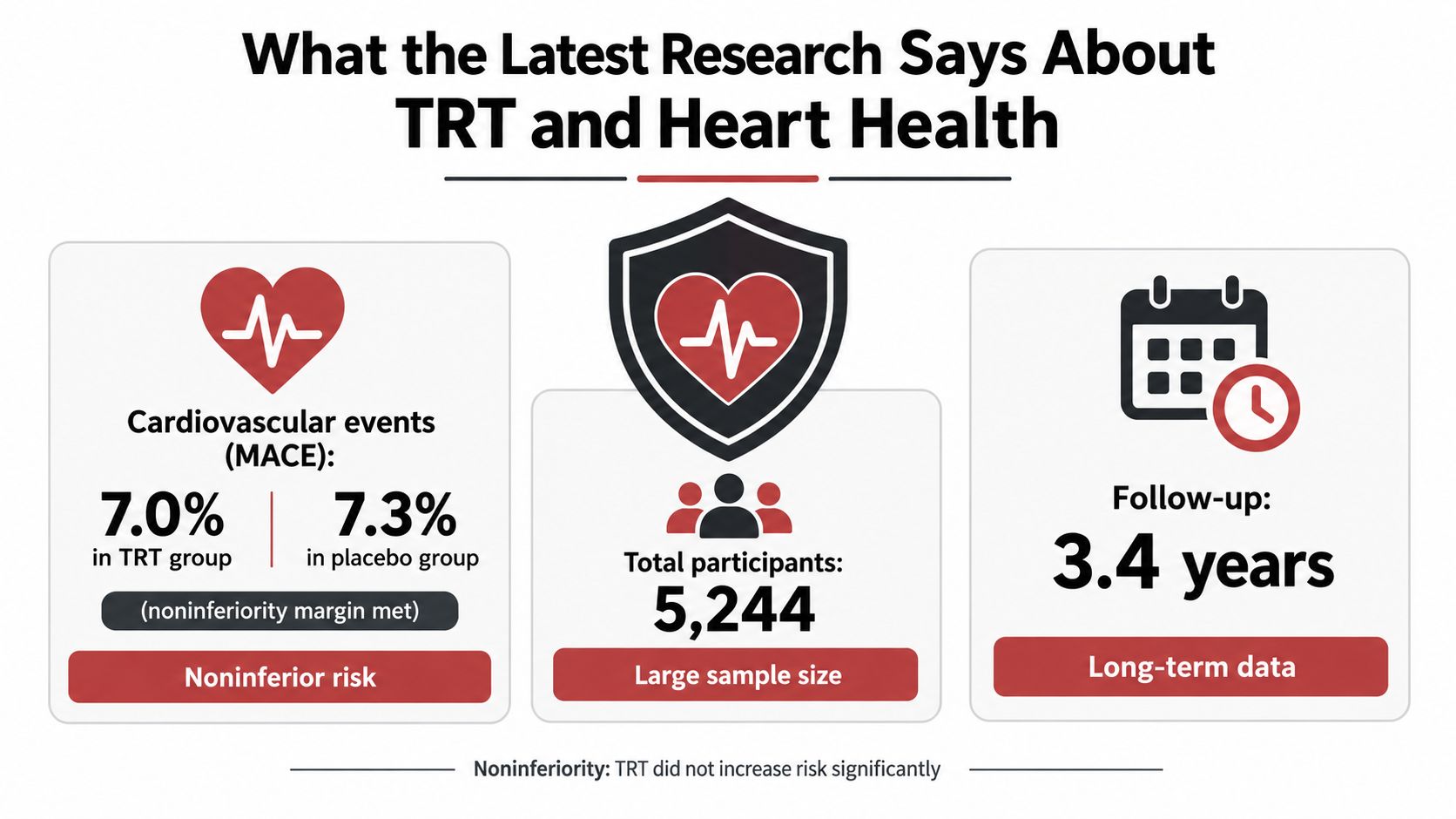
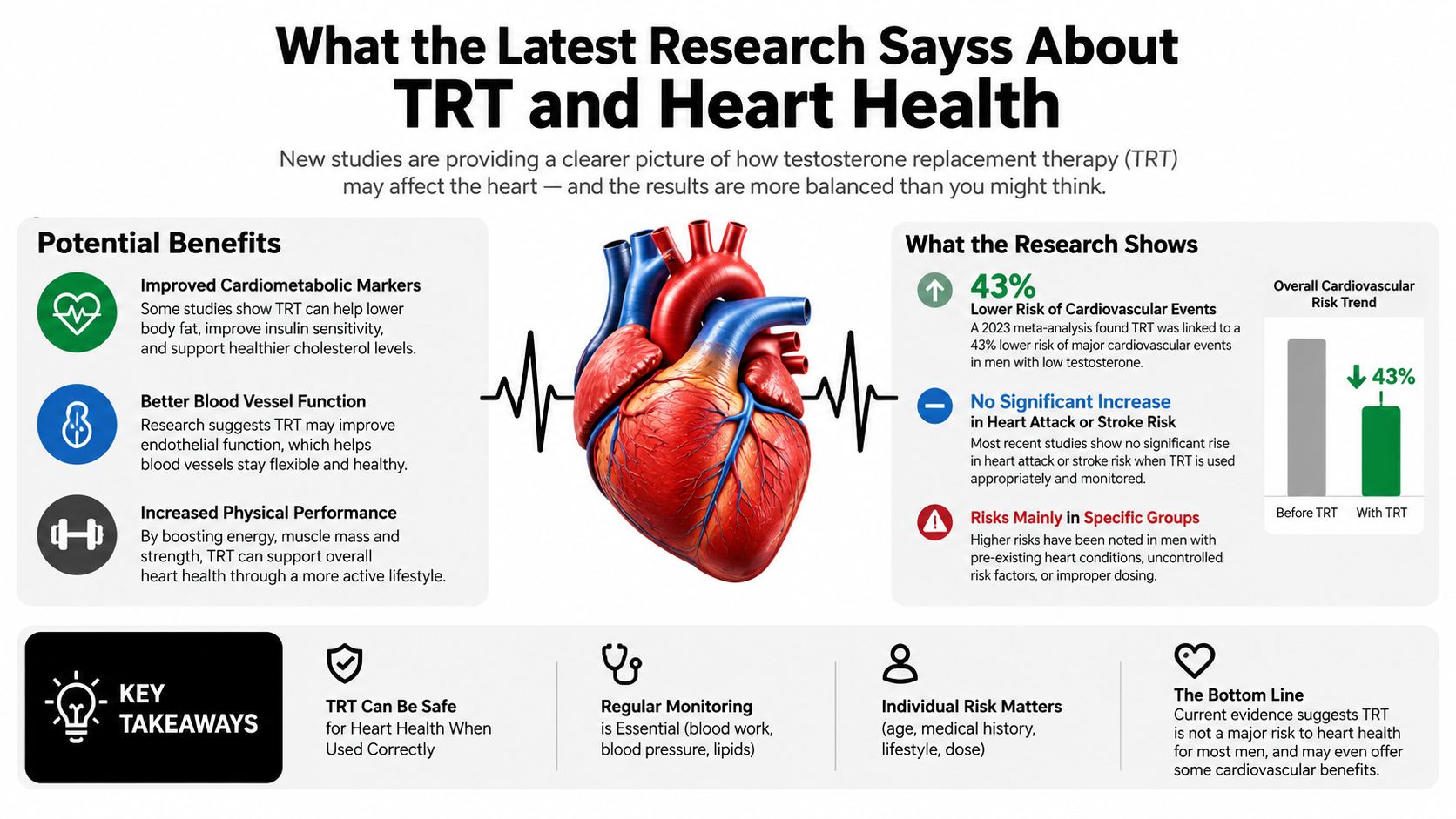
Is TRT safe for the heart? The strongest modern evidence offers a measured answer. The TRAVERSE trial, published in 2023 in the New England Journal of Medicine, studied 5,198 men aged 45 to 80 who had hypogonadism plus existing or high cardiovascular risk. Researchers compared testosterone with placebo and tracked major adverse cardiovascular events, often grouped as MACE. The TRAVERSE publication found the primary endpoint in 7.0% of men receiving testosterone and 7.3% receiving placebo, with a hazard ratio of 0.96 and a 95% confidence interval of 0.78 to 1.17.
What noninferior means
“Noninferior” has a specific meaning. The trial tested whether TRT stayed within a predefined safety margin compared with placebo. The results did not show a meaningful overall excess of major cardiovascular events, but they also did not prove that testosterone prevents heart attacks or makes the heart safer.
A confidence interval shows the range of values compatible with the study data and design. For patients, the practical message is reassurance about the overall MACE comparison, alongside continued attention to individual risks, symptoms, and evidence limits.
A separate 2024 meta-analysis examined randomized evidence involving 9,112 men with hypogonadism or low-to-low-normal testosterone. MACE occurred in 6.6% of the TRT group and 6.8% of the placebo group, with an odds ratio of 0.97 and a 95% confidence interval of 0.82 to 1.14. The analysis also found a higher risk of edema with TRT. The Journal of the American College of Cardiology analysis03712-4) reinforces an important distinction: overall cardiovascular outcomes and specific side effects are separate safety questions.
The signals that still matter
Secondary findings from TRAVERSE included atrial fibrillation in 3.5% of men receiving testosterone versus 2.4% receiving placebo. Acute kidney injury occurred in 2.3% versus 1.5%, while pulmonary embolism occurred in 0.9% versus 0.5%. These results do not erase the primary finding. They show why a safety review should include rhythm symptoms, clotting concerns, kidney health, blood pressure, and fluid retention, rather than focusing only on heart attack and stroke.
The regulatory discussion also changed. In 2025, the U.S. FDA said it would remove boxed-warning language about increased cardiovascular outcomes from testosterone products after reviewing TRAVERSE and related blood-pressure studies. The Cleveland Clinic's discussion of TRAVERSE and cardiovascular safety summarizes that development.
Heart safety is only one part of the answer to “is TRT safe?” The evidence is reassuring about overall cardiovascular events when treatment is used as indicated, while monitoring still needs to identify blood thickening, blood-pressure changes, rhythm symptoms, clotting concerns, fluid retention, and kidney problems.
Benefits and Risks of TRT You Should Weigh Together
TRT makes the most sense when a man has both compatible symptoms and confirmed testosterone deficiency. In that setting, treatment may improve symptoms linked to low testosterone, such as sexual desire, energy, mood, muscle function, or body composition. The response varies, and not every complaint comes from testosterone deficiency.
The tradeoff becomes clearer when benefits and risks sit beside each other rather than appearing in separate conversations.
| Outcome | Potential Benefit | Documented Risk or Tradeoff | Who It Matters Most For |
|---|---|---|---|
| Sexual function | May improve libido and other symptoms related to deficiency | Doesn't guarantee improved erections if blood flow, nerves, medications, or other conditions are involved | Men whose sexual symptoms occur with confirmed deficiency |
| Energy and mood | May help symptoms attributable to low testosterone | Fatigue and low mood can have non-hormonal causes, so TRT may miss the real problem | Men who've had other causes assessed |
| Muscle and body composition | May support lean tissue and physical function when deficiency is present | Treatment can produce unwanted exposure if dosing is too aggressive | Men needing symptom-focused replacement |
| Red blood cells | Testosterone can correct some deficiency-related blood abnormalities in appropriate cases | Erythrocytosis can raise hematocrit and requires repeat CBC monitoring | Men with high baseline hematocrit or clotting concerns |
| Fluid balance | No direct therapeutic goal | Edema and blood-pressure effects can complicate treatment | Men with cardiovascular, kidney, or fluid-retention risks |
| Fertility | TRT isn't a fertility treatment | External testosterone can suppress sperm production | Men who want children now or later |
The most underexplained tradeoff
Erythrocytosis deserves special attention because it can appear on routine bloodwork before a patient feels anything unusual. A review reported that men receiving testosterone were approximately 3.69 times more likely to develop erythrocytosis, with a 95% confidence interval of 1.82 to 7.51. The same review of testosterone therapy and erythrocytosis reported that an FDA risk review for one testosterone product listed increased hematocrit as the most common treatment-emergent adverse event at 11.3%, followed by increased PSA and hypertension, each at 7.8%.
Fertility can be even more important than a lab abnormality for a younger man. TRT may improve how you feel while undermining sperm production, so reproductive goals belong in the first consultation, not after treatment begins. Men weighing this issue can read a focused explanation of whether TRT can cause infertility before discussing alternatives with a clinician.
Who Is a Good Candidate for TRT and Who Should Pause
A good candidate usually has a clear reason to consider treatment, not just a desire for a higher testosterone number. Symptoms should fit the clinical picture, and low testosterone should be confirmed with appropriate testing interpreted by a medical professional. The clinician also needs to investigate potentially reversible contributors, such as sleep problems, medication effects, metabolic illness, or mood disorders.
Think of candidacy as a checklist with two parts: evidence that treatment could help, and evidence that starting now could create avoidable harm.
Reasons to continue the evaluation
A man may be suitable for further assessment when he has persistent symptoms, confirmed biochemical deficiency, and no obvious contraindication. The consultation should include a review of cardiovascular history, blood pressure, sleep quality, prostate history, medications, prior blood counts, and plans for having children.
The decision also depends on what “success” means. If the goal is improved libido or energy, the clinician should define how those symptoms will be reassessed. If the goal is fertility, TRT may be the wrong first option because it can suppress sperm production while it's being used, and recovery after stopping isn't guaranteed or necessarily rapid.
Reasons to pause before starting
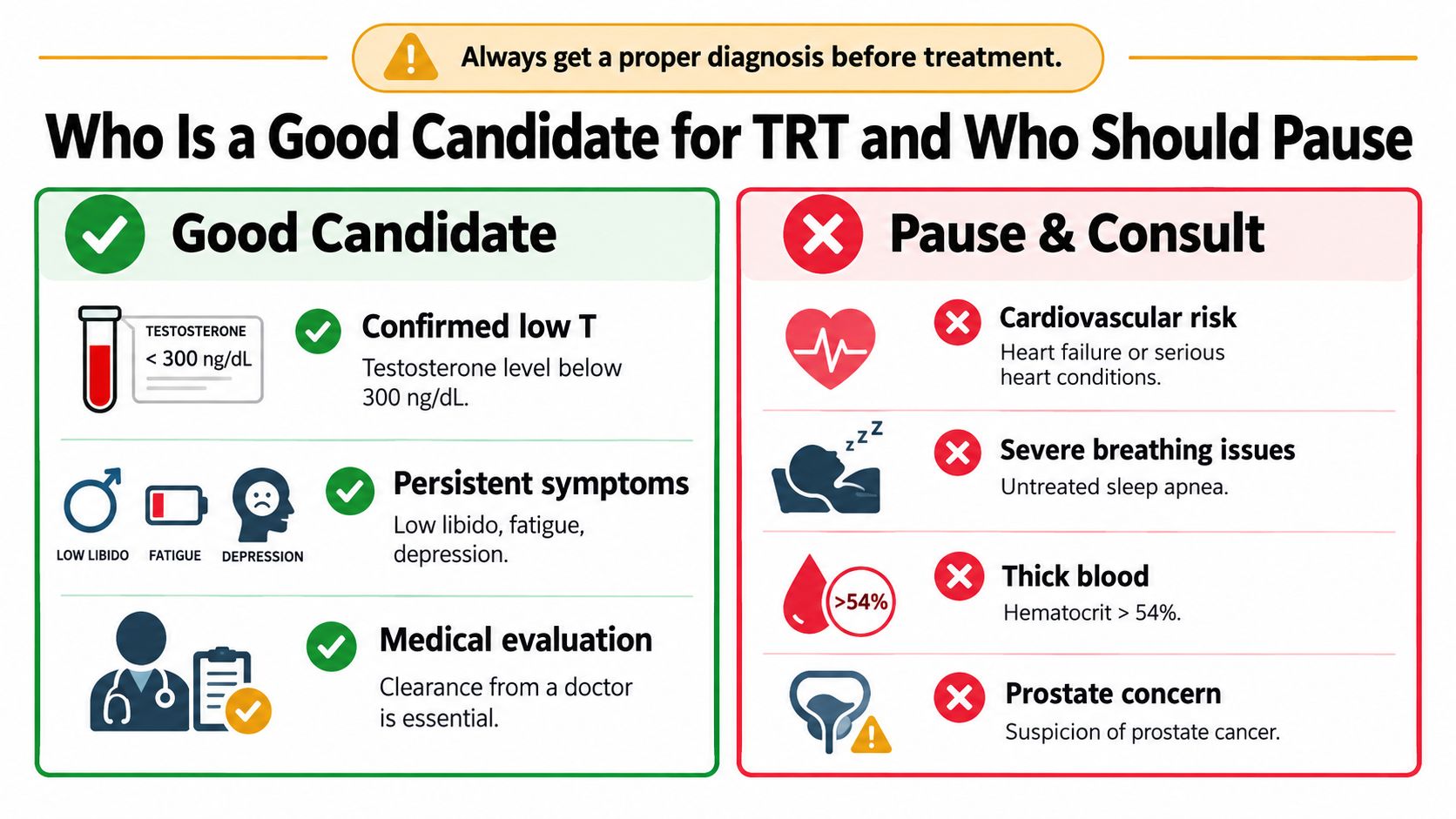
Pause and seek medical review rather than beginning immediately if you have:
- Near-term fertility plans: Ask about fertility-preserving approaches before accepting testosterone suppression.
- High hematocrit or prior erythrocytosis: Starting treatment can worsen blood thickening and may require evaluation first.
- Untreated sleep apnea: Breathing problems during sleep need attention because TRT may complicate the risk profile.
- Uncontrolled cardiovascular or fluid-related illness: Heart failure, major blood-pressure problems, or significant edema require careful assessment.
- Prostate concerns: An unexplained PSA change, suspicious examination, or possible prostate cancer needs appropriate evaluation.
- Recent serious cardiovascular illness: The clinician should decide when, or whether, treatment is appropriate based on the complete history.
A prescription should follow a diagnosis and a risk review. It shouldn't be the diagnostic process.
Older men and those with several comorbidities may need especially careful screening for clotting concerns, rhythm symptoms, blood-pressure changes, sleep apnea, and hematocrit elevation. The recent evidence is more reassuring about overall MACE than older headlines were, but it doesn't remove the need to identify individual vulnerabilities.
How Safety Monitoring Works From Labs to Dose Adjustments
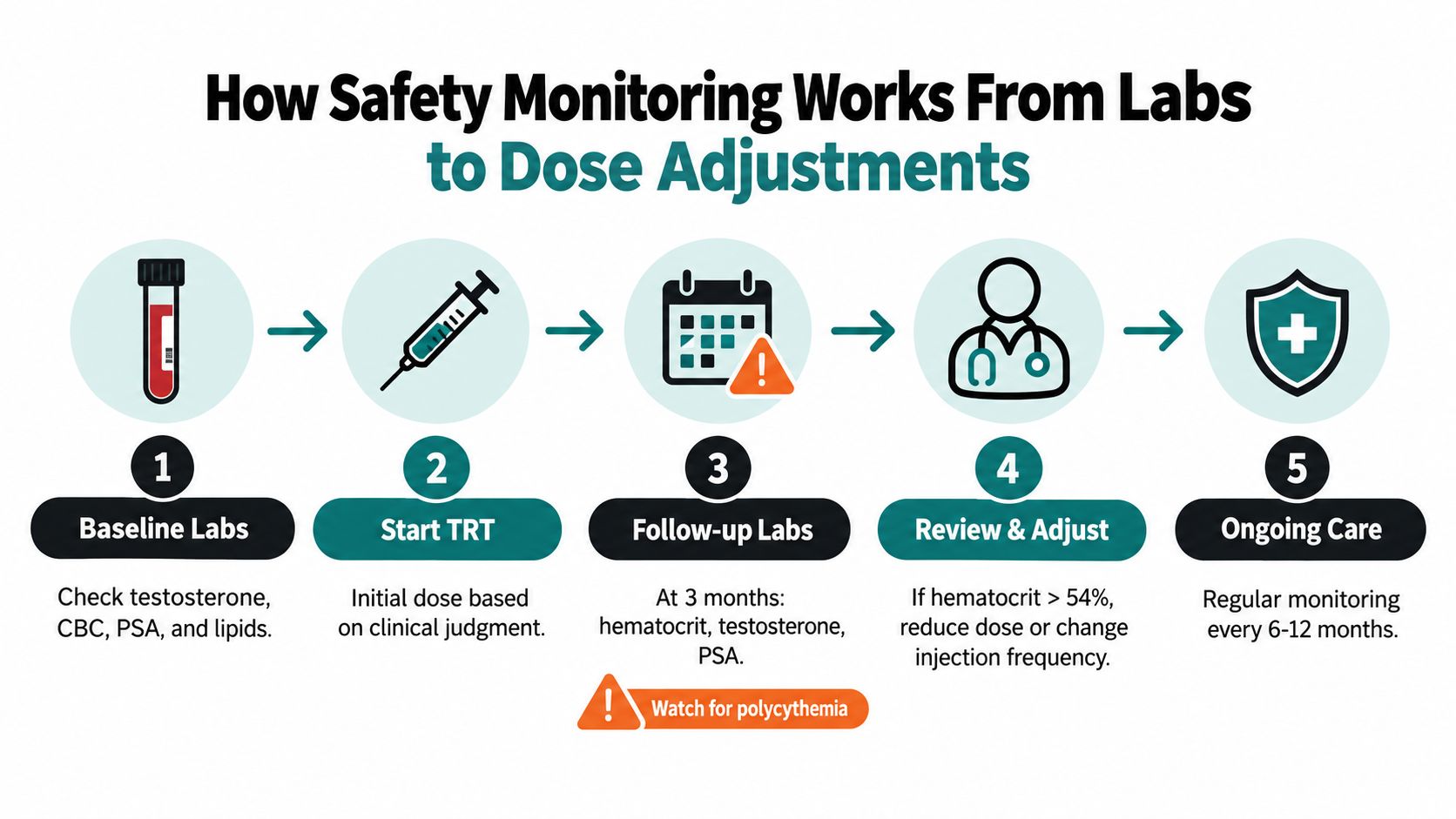
Safe TRT monitoring follows a loop rather than a single appointment. A clinician first establishes a baseline, starts treatment only when the indication is reasonable, checks the biological response, and adjusts the plan when results or symptoms call for it.
The monitoring journey
1. Baseline review comes first. The clinician confirms the diagnosis and reviews testosterone results, complete blood count, hematocrit, PSA when appropriate, blood pressure, relevant metabolic markers, medications, sleep symptoms, cardiovascular history, and fertility goals. The exact panel depends on the patient and the provider's clinical judgment.
2. The starting dose is an initial hypothesis. It's selected to address deficiency without creating excessive exposure. The patient should know which symptoms to track and which warning signs require prompt medical attention, such as new shortness of breath, chest symptoms, leg swelling, palpitations, or severe headaches.
3. Follow-up testing looks for response and complications. Testosterone levels show exposure, while CBC and hematocrit identify blood thickening. PSA and urinary symptoms may be relevant, and blood pressure and fluid retention deserve attention because cardiovascular safety isn't limited to MACE.
4. The provider adjusts the plan when results change. If hematocrit rises too far, the clinician may reduce the dose, alter the injection schedule, change the formulation, or pause treatment. Some reviews and clinical recommendations use 52% hematocrit as an action threshold, while other protocols use different thresholds, so patients should follow the clinician's specific plan rather than self-adjusting.
5. Ongoing care keeps the process active. A normal baseline result doesn't guarantee that every later result will remain normal. Repeated labs and symptom reviews help the provider decide whether the benefits continue to justify treatment.
A telemedicine workflow can support this process when patients can complete testing through a service such as Quest Diagnostics or provide recent laboratory results, meet with a licensed physician online, and receive follow-up instructions. Cost Plus TRT describes a model that coordinates online consultations, lab options, prescription fulfillment, and ongoing provider support. Those features matter only when they're paired with individualized medical review and a clear response to abnormal findings.
What patients should watch between tests
Contact a clinician promptly about symptoms that could indicate a clot, rhythm problem, significant fluid retention, or excessive blood-pressure effects. Don't wait for the next scheduled laboratory appointment if you develop concerning symptoms. Monitoring works best when patients report changes, including changes in sleep, snoring, swelling, urination, mood, libido, and injection-related effects.
Making a Confident Decision About TRT Safety for You
Start with four questions. Do you have symptoms that fit testosterone deficiency? Has low testosterone been properly confirmed? Do you want children now or later? Are you willing to complete repeat testing and change treatment if your results move in an unsafe direction?
Bring previous testosterone results, medication information, medical history, fertility plans, blood-pressure readings if available, and any history of sleep apnea, clotting, prostate concerns, or cardiovascular disease. Ask the provider what baseline tests are required, how hematocrit will be handled, which symptoms should trigger a call, and how often follow-up will occur.
You should also understand the practical care model before choosing a clinic. Transparent pricing is useful, but safety depends more on access to a licensed prescriber, appropriate laboratory review, documented dose adjustments, and follow-up that doesn't disappear after the prescription is issued. For a separate discussion of treatment expenses, see this guide to how much TRT costs.
The most useful answer to “is TRT safe” isn't a blanket yes or no. Cardiovascular evidence is reassuring for overall major events when TRT is appropriately prescribed, while reproductive effects and blood-thickening risks require personal planning and active monitoring. Safety is a managed process, not a permanent label attached on the day you start.
Cost Plus TRT provides physician-supervised telemedicine care, laboratory options through Quest Diagnostics or patient-provided results, testosterone treatment when clinically appropriate, and ongoing provider consultations. Visit Cost Plus TRT to review the process and request a consultation focused on your symptoms, fertility goals, and monitoring needs.