

A safe answer depends on the product, not the word “peptide.” In the best-studied modern benchmark, semaglutide 2.4 mg, gastrointestinal adverse events occurred in 74.2% of treated participants versus 47.9% with placebo, while discontinuation because of adverse events was 4.5% versus 0.8%.
That makes the answer to is peptide therapy safe more useful when it's phrased differently: which peptide, from which source, at what dose, and under whose supervision? FDA-approved GLP-1 medicines provide the strongest current benchmark because they have large controlled trials and extensive clinical monitoring. Many peptides promoted for longevity, recovery, sexual health, or hormone support have a much thinner human evidence base.
In clinical practice, the molecule is only one part of the safety equation. Product quality and physician oversight can determine whether a known risk is identified early or becomes a preventable complication.
Table of Contents
- A Direct Answer on Peptide Therapy Safety
- What Peptides Are and Why Source Matters
- What the Clinical Evidence Actually Shows
- Side Effect Profiles of NAD+, Sermorelin, PT-141, and Methylene Blue
- The Hidden Risk in Unregulated and Compounded Peptides
- Contraindications, Drug Interactions, and Lab Work to Expect
- How Physician Supervision and Telemedicine Reduce Risk
- Questions to Ask Before Starting Peptide Therapy
A Direct Answer on Peptide Therapy Safety
Safety varies predictably with the compound, its source, and the clinical oversight around it. The molecule is only one third of the equation.
- The specific peptide. A regulated GLP-1 medicine, a growth-hormone secretagogue, a melanocortin agent, and a redox compound have different mechanisms and safety profiles.
- The source and formulation. An FDA-approved product has a different manufacturing, quality-control, and surveillance history from a compounded preparation or an online research product.
- The clinical setting. A licensed physician can screen for contraindications, review medications, order labs, adjust dosing, and stop treatment when the risk outweighs the benefit.
The FDA-approved GLP-1 class provides the clearest modern benchmark. In the STEP 1 trial, 1,961 adults were randomized, and researchers documented frequent gastrointestinal side effects alongside a measurable discontinuation rate. That profile is reassuring because the risks were defined and monitored, while also showing that well-studied peptide medicines are not side-effect free.
Evidence for compounds discussed in men's health clinics ranges from moderate to sparse. Sermorelin affects growth-hormone signaling, PT-141 acts through melanocortin receptors, NAD+ is used in metabolic and cellular pathways, and Methylene Blue has important medication interactions despite not being a peptide. Applying one safety profile to all four would be poor clinical reasoning.
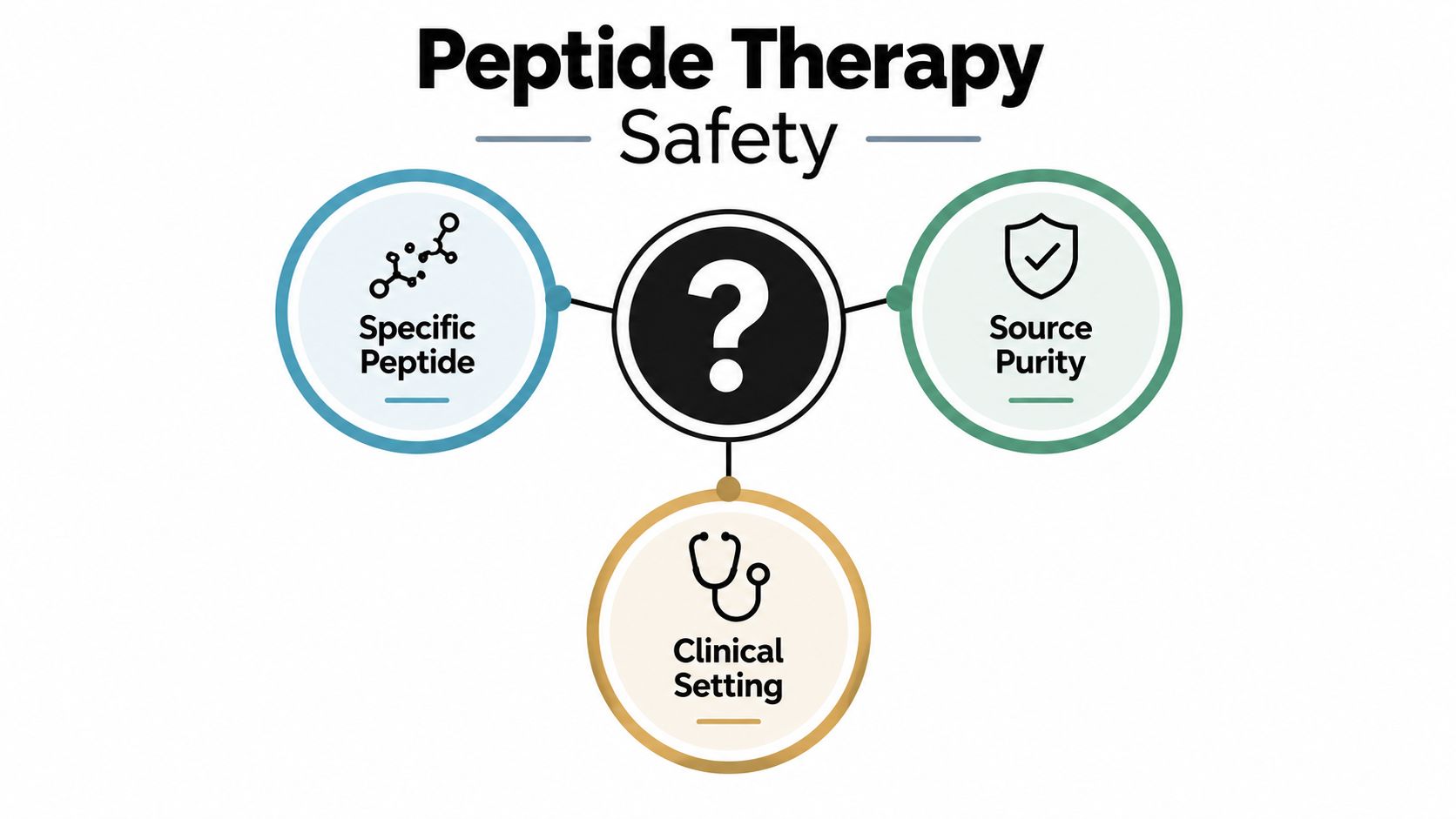
The practical rule: evaluate the molecule, pharmacy, dose, route, and prescribing clinician, not the peptide's name alone.
What Peptides Are and Why Source Matters
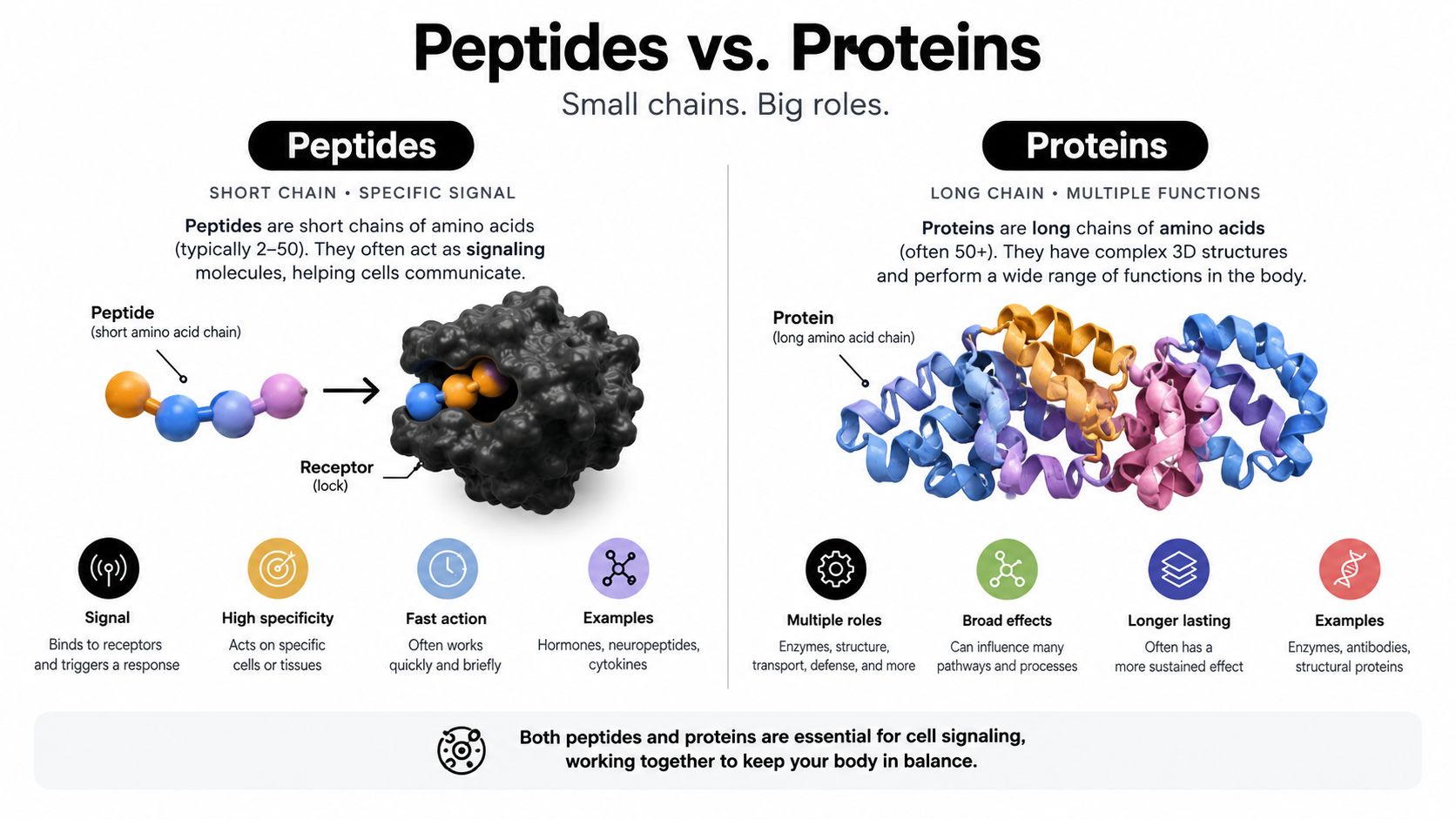
Peptides are short chains of amino acids. A useful analogy is a key and lock. The peptide acts as the key, binding to a particular receptor and sending a biological signal. The body naturally produces many peptides, while therapeutic products are designed to mimic, amplify, or modify those signals.
That biology separates peptide therapies from anabolic steroids and from recombinant growth hormone. Steroids are chemically different compounds that act through steroid hormone receptors. Recombinant growth hormone is a larger protein hormone. A growth-hormone secretagogue such as Sermorelin doesn't replace growth hormone directly. It signals the pituitary pathway that regulates its release.
Approved medicine and compounded preparation are different categories
FDA-approved peptide medicines pass through controlled clinical development, manufacturing controls, labeling requirements, and post-marketing safety reporting. A compounded product is made for a patient or under a compounding framework, and its regulatory pathway isn't identical to that of an approved commercial medicine.
That difference matters because the same named molecule can have a different risk profile when formulation, sterility, concentration, storage, or testing changes. A licensed US compounding pharmacy and an offshore research-chemical seller aren't interchangeable sources, even if both print the same peptide name on a vial.
The FDA has highlighted this concern in its review of compounded peptides. The review described non-serious immune-related events involving compounded ipamorelin, including increased lacrimation and headache after a nasal spray, and arthralgia after an injectable product containing ipamorelin and Sermorelin. (FDA review of compounded peptides)
Patients usually can't control receptor pharmacology, but they can ask where a prescription is filled, whether the pharmacy is licensed, how the product is labeled, and what follow-up is included. Source verification is one of the most modifiable safety decisions in the entire process.
What the Clinical Evidence Actually Shows
The STEP 1 semaglutide trial shows what a mature safety dataset can provide. Among adults receiving semaglutide 2.4 mg, gastrointestinal adverse events occurred in 74.2%, compared with 47.9% among placebo participants. Nausea occurred in 44.2% versus 17.4%, vomiting in 24.5% versus 6.3%, constipation in 24.2% versus 11.1%, and diarrhea in 31.5% versus 15.9%. The Detailed STEP 1 adverse-event data provide the full table.
These results describe frequent, generally manageable symptoms, not a finding that every participant faced a dangerous complication. Controlled trials make those symptoms easier to quantify and help clinicians judge tolerability. Treatment discontinuation because of adverse events occurred in 4.5% of semaglutide participants and 0.8% of placebo participants. That is more useful than promising a therapy without side effects.
The evidence is less uniform for wellness compounds. For NAD+, Sermorelin, PT-141, and Methylene Blue, study quality, clinical purpose, and patient populations differ. Evidence supporting one indication cannot automatically validate another use.
Evidence strength varies by compound
| Peptide or class | Evidence base | Commonly reported adverse events | Serious event rate |
|---|---|---|---|
| GLP-1 medicines | Large randomized clinical trial data and ongoing post-marketing surveillance | Nausea, vomiting, constipation, diarrhea | Trial-based and monitored, with the STEP 1 safety profile described above |
| NAD+ | Smaller clinical literature and practical infusion experience | Infusion-related discomfort, flushing, headache, gastrointestinal symptoms | Not established by a comparable large peptide-specific trial |
| Sermorelin | Clinical experience and selected growth-hormone pathway data, with limited adult longevity evidence | Headache, flushing, injection-site reactions | Not established for broad longevity use |
| PT-141 | Clinical trial evidence for its approved indication, but not a universal wellness treatment | Nausea, flushing, blood-pressure changes | Depends on patient selection and cardiovascular risk |
| Methylene Blue | Established pharmacology and case-based safety concerns, but not a peptide-specific trial program | Serotonin toxicity, hemolysis in G6PD deficiency, interactions | Risk depends heavily on medications and inherited enzyme status |
A smaller evidence base does not prove that a compound is harmful. It does leave more uncertainty about long-term outcomes, appropriate dosing, uncommon adverse events, and which patients should avoid treatment. For a prescribing clinician, that uncertainty calls for more conservative prescribing and closer monitoring, not more confident marketing. The relevant safety question is therefore specific: which compound is being used, from which source, and under whose supervision?
Side Effect Profiles of NAD+, Sermorelin, PT-141, and Methylene Blue
Men often ask for a single side-effect list, but that approach hides the important differences. The practical risks come from the route, dose, medical history, and concurrent drugs as much as from the product name.
| Peptide or compound | Common side effects | Key cautions |
|---|---|---|
| NAD+ | Flushing, chest pressure, headache, gastrointestinal upset | Infusion reactions, underlying liver disease, and cardiac rhythm concerns require medical review |
| Sermorelin | Injection-site reactions, transient headache, flushing | Pituitary disease, diabetes control, and prolonged changes in the growth-hormone and IGF-1 pathway need monitoring |
| PT-141 | Nausea, flushing, transient blood-pressure elevation, spontaneous erections | Avoid or use extreme caution with uncontrolled hypertension and significant cardiovascular risk; monitor existing moles |
| Methylene Blue | Drug-related toxicity, hemolysis in susceptible patients, interaction effects | G6PD deficiency and serotonergic medicines can create serious risk |
NAD+ requires attention to administration
NAD+ is commonly delivered intravenously or subcutaneously in wellness settings. Some patients report flushing, headache, chest pressure, or gastrointestinal discomfort during administration. Those symptoms may reflect the compound, the infusion rate, the concentration, or the patient's underlying condition, so pushing through them isn't a sound protocol.
High cumulative exposure also raises concern about liver enzymes in clinical decision-making. A clinician should review liver and kidney function, cardiovascular history, and the reason for treatment before deciding whether NAD+ is appropriate.
Sermorelin changes a signaling pathway
Sermorelin stimulates a growth-hormone releasing pathway rather than acting as a direct replacement for growth hormone. Injection-site reactions, headache, and flushing can occur. The more important question is whether the patient's pituitary function, glucose control, and IGF-1 response make the treatment reasonable.
Rare gynecomastia may become clinically relevant when growth-hormone and IGF-1 signaling shifts alter the broader hormonal balance. Theoretical concerns about pituitary desensitization also support periodic reassessment rather than indefinite, uninterrupted use.
PT-141 and Methylene Blue have different red flags
PT-141 can cause nausea, flushing, temporary blood-pressure elevation, and spontaneous erections. A patient with uncontrolled hypertension needs a different sexual-health strategy, and a physician should review cardiovascular risk before prescribing it. Existing moles also deserve monitoring because darkening can complicate skin surveillance.
Methylene Blue is often grouped with peptide therapies in wellness menus, but its risk profile is pharmacologically distinct. It can contribute to serotonin syndrome when combined with serotonergic drugs, and it can cause hemolytic anemia in people with G6PD deficiency. Dapsone and certain anesthetics create additional interaction concerns, so a complete medication list is essential.
The safest protocol is the one that makes the clinician slow down before the first dose.
The Hidden Risk in Unregulated and Compounded Peptides
A peptide's safety depends on more than its molecular name. The relevant questions are which peptide, from which source, under which supervision. A product supplied by a clinic still requires scrutiny: was it obtained through a controlled pharmacy pathway, is its concentration verified, and can a clinician account for what was dispensed?
Independent testing of grey-market peptide products sampled between 2022 and 2025 found 18% to 40% of lots outside their labeled concentration, creating direct dosing and quality risks. Reporting on FDA peptide safety concerns and third-party testing also describes FDA scientists' concerns about uneven evidence and safety data across products.
That range matters in practice. A patient may follow a precise protocol while receiving a different concentration. An inaccurate vial can create an apparent “side effect from the peptide” when the underlying problem occurred during manufacturing, labeling, storage, or measurement.
Separate the molecule from the supply chain
A pharmacy operating within the US compounding system has different accountability from a research supplier selling products marked “not for human use.” A licensed facility can provide prescription documentation, lot information, storage instructions, and a process for adverse-event follow-up. An anonymous seller generally cannot provide the same clinical chain of responsibility.
A vial's label is not proof of potency, sterility, or suitability for injection. Buying through social media, an offshore website, or a research-chemical marketplace removes safeguards that help a physician identify and manage a product problem.
The evidence gap adds a separate concern. A critical appraisal found that no compound it reviewed had established clinical efficacy for consumer-marketed indications in adequately powered randomized trials. A UCLA Health review of 565 studies found that more than two-thirds were animal-only, while human evidence was generally low quality. Critical appraisal of consumer-marketed peptides
For working men, the practical trade-off is clear: a lower-cost or easier-to-obtain product may carry greater uncertainty about identity, concentration, sterility, and follow-up. The molecule is only one third of the safety equation.
Contraindications, Drug Interactions, and Lab Work to Expect
A responsible prescription begins with screening, not a shipment. The physician should review the intended goal, past medical history, blood pressure, medication list, family history, prior reactions, and the exact route of administration.
Conditions that change the decision
- PT-141: Uncontrolled hypertension and significant cardiovascular risk require particular caution. Active malignancy also requires physician review before any hormone-related or sexual-health protocol.
- Methylene Blue: G6PD deficiency is a major concern because of hemolysis risk. Concurrent serotonergic medication can create a dangerous interaction.
- Sermorelin: Active pituitary disease and uncontrolled diabetes need evaluation before treatment because the therapy affects growth-hormone and IGF-1 signaling.
- NAD+: Hepatic failure and active arrhythmia require careful review, especially when high-dose intravenous treatment is being considered.
- All compounds: A compounded peptide taken alongside unregulated anabolic agents creates an unpredictable combination that should be disclosed rather than hidden.
The medication list deserves the same attention as the diagnosis. Methylene Blue can interact with SSRIs, SNRIs, MAOIs, tramadol, meperidine, dapsone, and certain anesthetics. PT-141 may require discussion when a patient uses PDE5 inhibitors because both can affect blood pressure. Sermorelin protocols also warrant review of diabetes medicines, including insulin secretagogues, because changes in the IGF-1 pathway can affect glucose management.
Baseline and follow-up testing
A clinician may consider a CBC with differential, metabolic panel with liver and kidney function, fasting insulin, lipid panel, IGF-1, and morning cortisol. PSA and hemoglobin A1c may be appropriate depending on age, symptoms, treatment goals, and medical history.
These tests aren't a box to check once. Follow-up labs and symptom reviews help identify changes that a patient may not feel, including altered glucose control, liver abnormalities, blood-count changes, or an unexpected IGF-1 response. Men comparing treatment pathways can review the broader clinical intake expectations through this men's health FAQ.
How Physician Supervision and Telemedicine Reduce Risk
Supervision reduces risk through ordinary medical discipline. It doesn't make an uncertain compound proven, but it improves the odds that the right patient receives the right product at a defensible dose and that problems are recognized early.
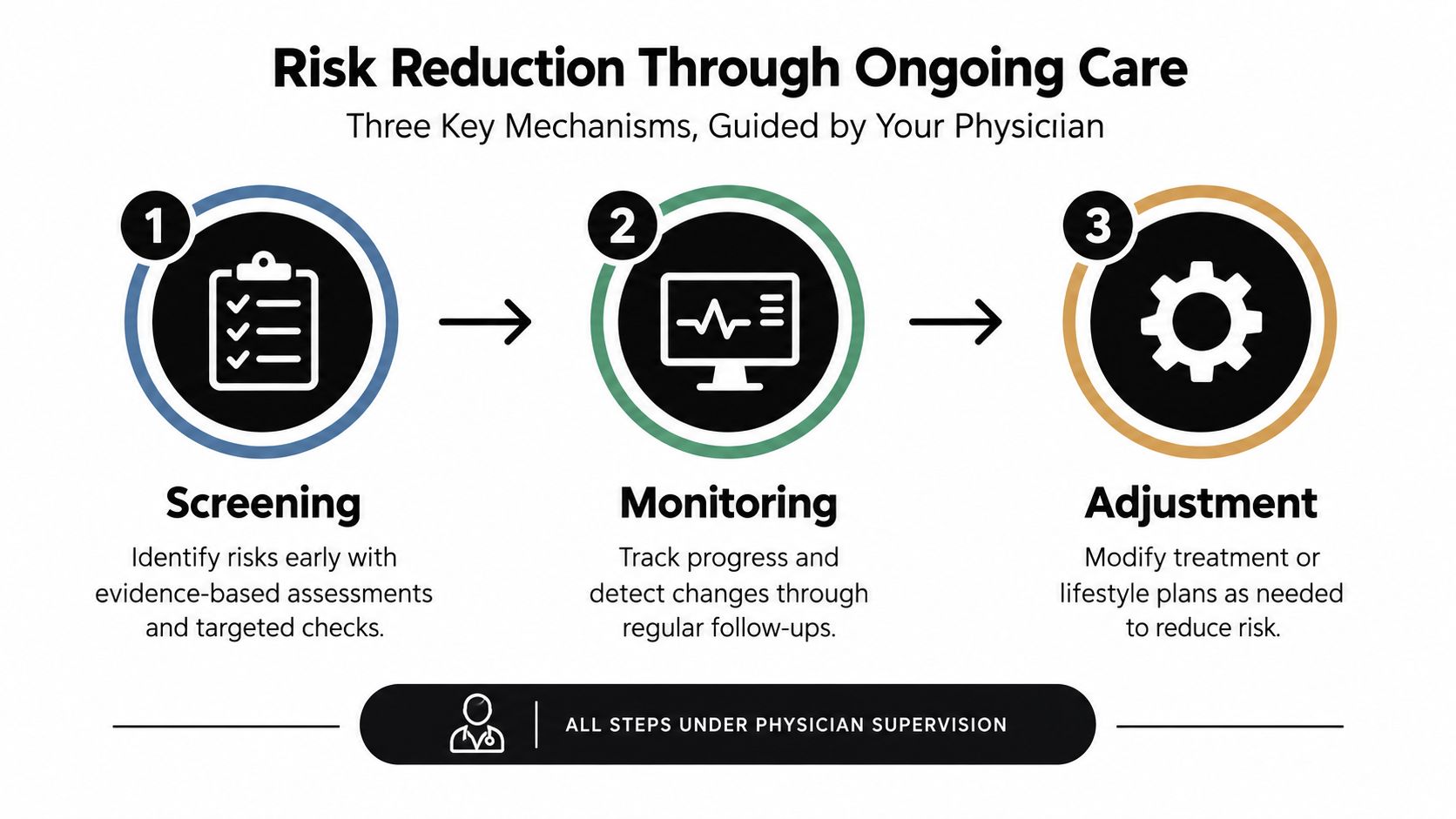
Three safeguards matter most
Screening comes first. A documented intake catches uncontrolled blood pressure, pituitary history, G6PD risk, serotonergic medication use, diabetes concerns, and unexplained symptoms before dosing begins.
Monitoring detects silent problems. Follow-up labs can identify changes in liver function, kidney function, glucose regulation, blood counts, or IGF-1 that may not produce obvious symptoms. Clinical check-ins also give the patient a defined process for reporting nausea, chest pressure, unusual erections, allergic symptoms, or mood and medication changes.
Adjustment prevents protocol drift. A physician-led plan can reduce, pause, change, or discontinue treatment based on response. Fixed-dose bundles and automatic refills don't provide that judgment.
Telemedicine can preserve the same safeguards
Telemedicine isn't automatically lower quality. A legitimate remote service should verify the patient's state eligibility, use a required video or in-person consultation when appropriate, document the medical decision, request baseline labs, and route prescriptions to a licensed US pharmacy.
The channel matters less than the protocol. A patient may receive excellent remote care if a physician reviews the chart, explains risks, checks medication interactions, orders follow-up testing, and remains available for dose changes. Conversely, an in-person wellness visit can still be unsafe if it skips labs and sells a fixed product bundle.
Red flags include shipping an injectable peptide without a medical consultation, accepting no medication history, requiring no labs, refusing to identify the dispensing pharmacy, and describing a compound as “natural” instead of explaining its known risks. Patients considering remote care should also read the clinic's telehealth consent information before starting.
A telemedicine visit is only as safe as the clinical process behind the screen.
Questions to Ask Before Starting Peptide Therapy
Before you agree to treatment, ask three questions and insist on clear answers.
First, where exactly does the product come from?
Ask whether the product is dispensed by a US pharmacy, whether the pharmacy is operating as a 503A or 503B facility, and whether a certificate of analysis is available. Ask how the product is labeled, stored, shipped, and replaced if the package arrives damaged or temperature-compromised.
A seller who can't identify the pharmacy or explain the product's quality documentation hasn't given you enough information to assess risk.
Second, who is responsible for your care?
Ask for the prescribing physician's name and license information. Find out which baseline labs are required, how follow-up is scheduled, who reviews abnormal results, and what happens if symptoms or lab values worsen.
You should also know how to reach the clinical team after the prescription arrives. A protocol without follow-up is closer to product fulfillment than medical care.
Third, what evidence supports this specific use?
Ask what published human evidence supports the peptide for your stated goal. Then ask about contraindications with your current medicines, the likely side effects, the expected timeline, and the criteria for stopping treatment.
Cost Plus TRT is one example of a telemedicine clinic that offers physician-supervised peptide protocols, including NAD+, Sermorelin, PT-141, and Methylene Blue, with care initiated through a medical consultation. Men who want to review whether a supervised pathway fits their situation can start the intake process.
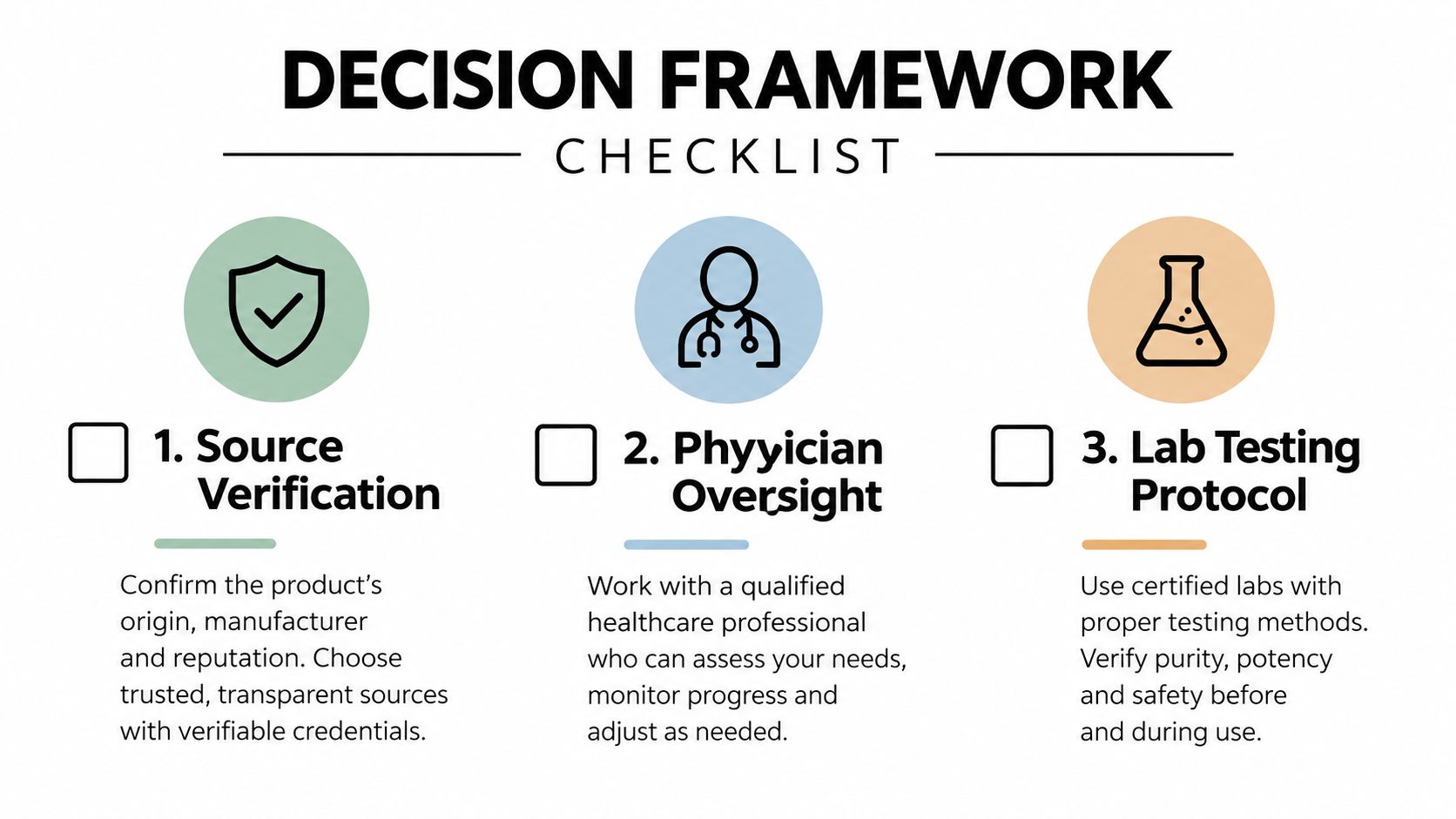
The central reframe is simple: peptide safety isn't a property of the molecule alone. It depends on the specific compound, the source and formulation, and the supervision that surrounds every dose.
Cost Plus TRT offers physician-supervised peptide therapy through telemedicine, with clinical evaluation and monitoring rather than anonymous product sales. If you want to discuss whether NAD+, Sermorelin, PT-141, or Methylene Blue is appropriate for you, visit Cost Plus TRT to begin a medically guided consultation.