
You may be in that familiar spot where nothing feels dramatically wrong, but you don't feel like yourself either. Your sex drive has faded. You're more tired than you used to be. Work feels mentally heavier. Training doesn't produce the same return. You may have blamed stress, poor sleep, aging, or all three.
Sometimes that's exactly what it is. Sometimes it isn't.
Male hypogonadism is a real medical condition, not just a vague label for “feeling off.” In men aged 45 years and older, a major epidemiologic study found a crude prevalence of 38.7% when hypogonadism was defined as total testosterone below 300 ng/dL or current androgen treatment, with a 95% confidence interval of 36.6% to 40.7% (major epidemiologic study in primary care men). That matters because it means these symptoms are common enough that they deserve proper evaluation, not dismissal.
The hard part is that hypogonadism symptoms rarely arrive as one clean signal. They usually show up as a pattern. Sexual changes often appear first. Physical and cognitive symptoms may creep in later. Severity varies. Age changes the picture. And plenty of other conditions can mimic the same complaints.
Men often get stuck. They either ignore symptoms too long, or they jump straight to testosterone without a careful diagnosis. Neither approach works well. The useful middle ground is straightforward: identify the pattern, decide whether your symptoms justify testing, and confirm the diagnosis correctly.
Table of Contents
- Are You Experiencing Symptoms of Low Testosterone
- The Core Symptoms of Male Hypogonadism
- How Symptoms Change with Age and Severity
- Distinguishing Hypogonadism from Other Conditions
- The Definitive Diagnostic Process
- Understanding the Causes of Low Testosterone
- Your Next Steps for Evaluation and Treatment
Are You Experiencing Symptoms of Low Testosterone
Most men don't walk into care saying, “I think I have hypogonadism.” They say they're dragging through the day, less interested in sex, less sharp mentally, or not recovering the way they used to. The pattern often unfolds gradually enough that it's easy to normalize.
That's one reason hypogonadism symptoms get missed. Men adapt. They reduce training intensity, avoid sex, blame work stress, and tell themselves they just need a vacation. Meanwhile, the symptom cluster becomes more consistent and harder to ignore.
What raises suspicion
A single symptom doesn't tell you much. Fatigue alone is common and nonspecific. Low mood alone can point in many directions. What gets my attention clinically is a combination such as:
- Sexual change plus energy loss: Lower libido along with reduced energy or endurance.
- Erection changes plus reduced spontaneous erections: Especially when morning or spontaneous erections become less frequent.
- Physical decline plus motivation changes: Less strength, more body fat, lower drive, and a sense that your baseline has shifted.
Practical rule: If symptoms are persistent, affecting daily life, and especially if sexual symptoms are part of the picture, testing makes more sense than guessing.
Watchful waiting versus testing
Watchful waiting can be reasonable when symptoms are mild, recent, and clearly linked to something fixable like acute stress, short-term sleep disruption, or illness. In those cases, it's sensible to tighten up sleep, alcohol intake, training load, and recovery before drawing conclusions.
Immediate testing makes more sense when symptoms are persistent, progressive, or centered on sexual function. Loss of libido, erectile dysfunction, reduced spontaneous erections, infertility concerns, or clear physical decline deserve a formal evaluation.
Telemedicine fits well here when it's done like real medicine. That means a clinician reviews symptoms, medical history, and goals, then orders appropriate labs instead of treating a questionnaire result as a diagnosis. Convenience helps. Shortcuts don't.
The Core Symptoms of Male Hypogonadism
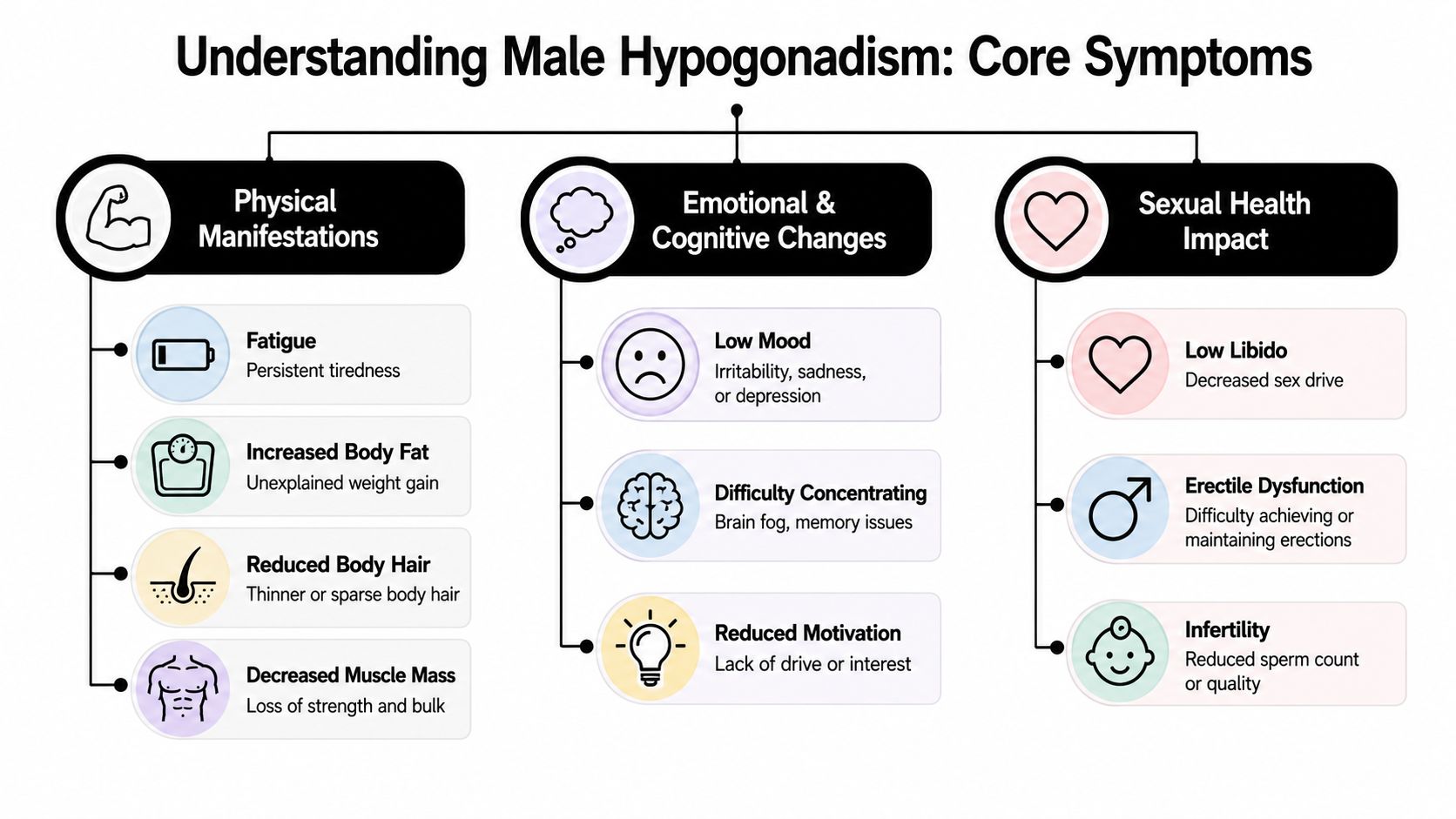
The clearest way to understand hypogonadism symptoms is to stop treating them like a random checklist. They usually fall into three buckets: sexual function, physical changes, and mental or emotional changes. Some are more specific to testosterone deficiency than others.
A quick visual summary helps:
Sexual symptoms tend to lead
Clinical references consistently place sexual symptoms near the center of diagnosis. The Endocrine Society lists drop in sex drive, erectile dysfunction, loss of spontaneous erections, reduced energy, reduced muscle mass, and depressed mood among key symptoms, and highly suggestive features include decreased spontaneous erections and decreased libido (clinical review summarizing guideline-based symptoms and diagnostic thresholds).
That matches what many men notice first.
- Low libido: This is often the earliest clue. Men describe less interest in sex, fewer sexual thoughts, or less initiation.
- Erectile dysfunction: Not every case of ED is low testosterone, but when ED occurs alongside reduced libido or fewer spontaneous erections, low testosterone moves higher on the list.
- Loss of spontaneous or morning erections: This is one of the more useful signals because it's less tied to performance anxiety or relationship context.
- Fertility concerns: Some men present because they're trying to conceive and discover a hormonal issue during that workup.
If erection quality is the main issue without a clear drop in libido, the differential broadens. Vascular disease, medication effects, stress, and sleep problems can all contribute. Men dealing with erection-specific symptoms sometimes also need targeted treatment such as ED medications, separate from any testosterone evaluation.
This short video gives a patient-friendly overview before getting into the clinical detail.
Physical changes usually build slowly
Physical symptoms often come on gradually, which is why men may not connect them to one underlying problem.
- Fatigue: Not just being sleepy. Men often describe lower stamina, less training capacity, or feeling flat even after rest.
- Reduced muscle mass: You may notice less strength, slower recovery, or loss of muscle despite consistent effort.
- Increased body fat: Especially when body composition worsens without a clear change in diet or activity.
- Reduced body hair: This can include thinner body hair or less shaving frequency.
- Hot flashes or testicular changes: These can occur in more significant deficiency and shouldn't be brushed off.
Sexual symptoms usually carry more diagnostic weight than fatigue alone.
Mood and cognitive changes matter but need context
Low testosterone can affect the way men think and feel, but these symptoms are less specific.
- Depressed mood: Men may report feeling flatter, less resilient, or less interested in things they normally enjoy.
- Poor concentration: Brain fog, slower recall, and difficulty staying mentally engaged are common complaints.
- Reduced motivation and irritability: Some men don't feel “sad” so much as less driven and more easily frustrated.
These symptoms count, but they can't diagnose hypogonadism on their own. If a man only reports brain fog and low mood, I don't assume testosterone is the answer. I widen the lens.
How Symptoms Change with Age and Severity
Hypogonadism doesn't look the same in every man. Age at onset changes the pattern, and symptom severity changes how obvious the problem feels. That's why one man presents with subtle low libido and another presents with major physical and sexual decline.
Age at onset changes the story
When hypogonadism begins before or during puberty, the signs are usually developmental. Puberty may be delayed or incomplete. The presentation is more obvious because normal sexual maturation doesn't proceed as expected.
Adult-onset hypogonadism is different. Men have already developed normally, so the issue shows up as loss rather than absence. The complaint is usually, “I used to feel one way, and now I don't.”
| Age of Onset | Typical Symptoms |
|---|---|
| Before puberty | Delayed or incomplete sexual development, lack of expected pubertal changes |
| During puberty | Stalled pubertal progression, delayed maturation, underdeveloped secondary sexual characteristics |
| Adulthood | Lower libido, erectile changes, reduced spontaneous erections, fatigue, reduced muscle mass, mood or concentration changes, fertility concerns |
Severity changes what men notice first
Mild deficiency tends to be easy to rationalize. A man may notice a softer sex drive, less initiative in the gym, or a subtle drop in energy. He can still function, so he often waits.
Moderate deficiency usually creates a more recognizable cluster. Sexual symptoms become harder to dismiss. Recovery worsens. Mood and concentration may drift enough to affect work and relationships.
Severe deficiency is more disruptive. Men may report profound sexual dysfunction, marked fatigue, obvious muscle loss, hot flashes, or testicular changes. At that point, “watchful waiting” usually isn't the right call.
A practical perspective:
- Mild pattern: Symptoms are present but intermittent, with no major effect on work, relationships, or function.
- Moderate pattern: Symptoms are persistent and starting to alter performance, confidence, or intimacy.
- Severe pattern: Symptoms are consistent, broad, and difficult to explain away by lifestyle alone.
Men often wait for symptoms to become severe before testing. That delay doesn't improve the diagnostic process. It just extends the period of uncertainty.
Telemedicine can help in this middle stage, especially for men who are busy, private, or reluctant to schedule in-person visits. The key is using it for actual diagnostic workup, not self-diagnosis.
Distinguishing Hypogonadism from Other Conditions
One reason low testosterone gets overdiagnosed online is that many of the symptoms are nonspecific. One reason it gets underdiagnosed in routine care is the same. If a man reports fatigue, low mood, poor sleep, and low motivation, several conditions can fit.
The overlap is real
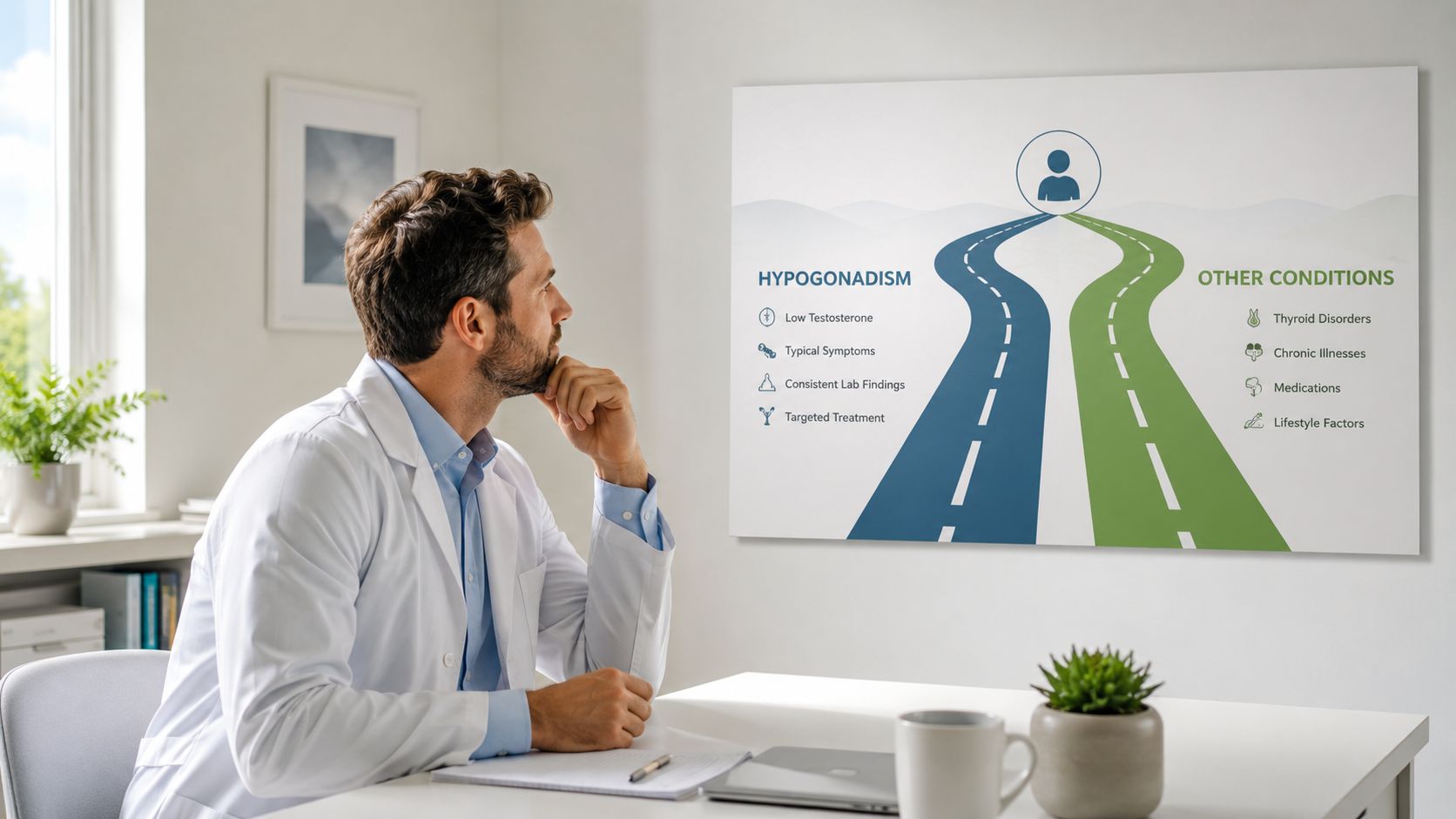
A careful differential diagnosis matters because treatment changes depending on the cause.
| Condition | Can look like hypogonadism | Clues that push evaluation wider |
|---|---|---|
| Depression | Low mood, low motivation, reduced libido, poor concentration | Mood symptoms dominate, sexual symptoms are less specific |
| Sleep apnea or chronic sleep loss | Fatigue, brain fog, low libido, reduced performance | Loud snoring, poor sleep quality, daytime sleepiness |
| Thyroid dysfunction | Fatigue, mood change, body composition changes | Broader metabolic symptoms, not a classic sexual-first pattern |
| Chronic stress | Low libido, poor recovery, irritability, concentration issues | Symptoms fluctuate with workload and life stressors |
| Medication effects | Sexual dysfunction, fatigue, mood changes | Timing lines up with starting or changing a medication |
Some signs also get missed because they're less commonly discussed in consumer content. Gynecomastia, testicular shrinkage, reduced body hair, and infertility all deserve attention. They can sharpen the diagnostic picture and sometimes point to a different underlying cause.
Fertility changes the treatment plan
This is one of the most important clinical trade-offs. Male hypogonadism can present with subfertility, low sperm count, and testicular shrinkage, and for men who want children, that distinction matters because TRT can worsen sperm production (Cleveland Clinic overview of male hypogonadism and fertility concerns).
That means “low T symptoms” and “I want fertility” cannot be handled casually in the same visit. A man trying to conceive may need a different path than a man whose family is complete. If fertility is part of your goal, read more about whether TRT can affect fertility before assuming testosterone is the default answer.
The wrong treatment can improve one symptom while creating a new problem. Fertility is where that trade-off becomes most obvious.
The Definitive Diagnostic Process
Symptoms start the conversation. Labs confirm the diagnosis. That distinction matters because hypogonadism is not diagnosed by symptoms alone.
When symptoms justify testing
Testing makes sense when symptoms are persistent, bothersome, and especially when sexual symptoms are part of the pattern. Reduced libido, loss of spontaneous erections, erectile dysfunction with low desire, fertility concerns, and progressive physical decline all deserve evaluation.
If symptoms are mild and tied to obvious short-term causes, a brief period of lifestyle correction can be reasonable. But if you've already tried better sleep, reduced alcohol, improved recovery, and the pattern is still there, it's time to measure rather than speculate.
A proper diagnostic pathway looks like this:
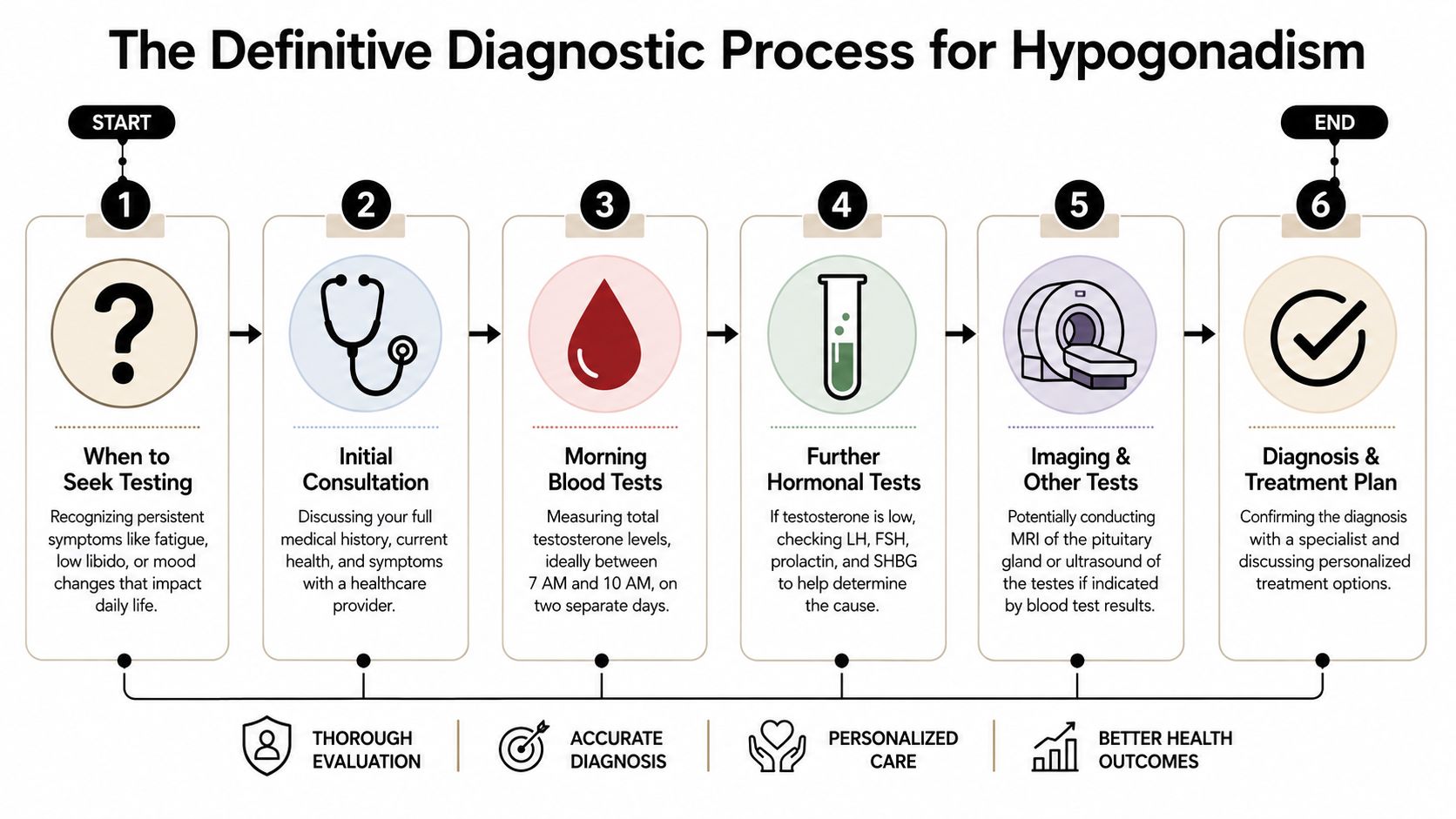
What a proper workup looks like
A commonly used biochemical threshold in adult men is serum testosterone below 300 ng/dL plus at least one compatible clinical sign or symptom, and expert reviews recommend repeat morning testosterone testing because testosterone follows a daily rhythm and fluctuates across the day (review of diagnostic standards for male hypogonadism).
That leads to a practical workup:
Clinical history first
A clinician should ask about libido, erections, fertility goals, sleep, medications, alcohol, training, weight change, chronic illness, and symptom timeline.Morning testosterone testing
Morning testing matters because testosterone varies during the day. A low afternoon value is less useful than a properly timed morning result.Repeat confirmation
Most guideline-based approaches require confirmation on two separate morning tests before diagnosing hypogonadism.Additional hormone testing when indicated
If testosterone is low, clinicians often look deeper to help determine cause. That may include LH, FSH, estradiol, and in selected cases other tests based on symptoms and history.Context matters as much as the number
A lab result doesn't exist in isolation. A man with classic symptoms and repeatedly low morning testosterone fits a different picture than a man with vague fatigue and one borderline result.
Here's the part many men need to hear clearly:
- What works: Repeated morning labs, symptom review, medication review, and fertility discussion.
- What doesn't: One random testosterone test, symptoms-only diagnosis, or starting TRT before clarifying whether another condition is driving the problem.
Telemedicine can handle this process well if the clinic insists on proper testing and follow-up. It's a good format for access and privacy. It's a poor format for shortcuts.
Understanding the Causes of Low Testosterone
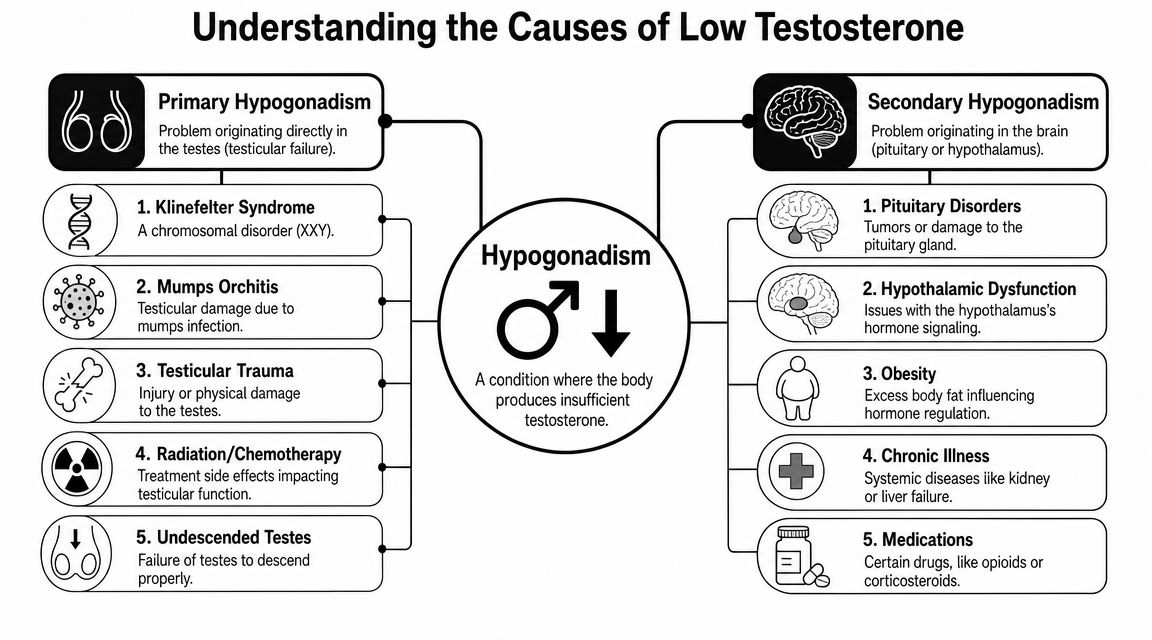
Low testosterone isn't one disease with one cause. It's a final common pathway. The useful split is primary versus secondary hypogonadism.
Primary and secondary hypogonadism
In primary hypogonadism, the problem starts in the testes. The brain may be sending the right signals, but the testes can't produce enough testosterone. Causes can include genetic conditions, prior testicular injury, infection-related damage, or effects from cancer treatment.
In secondary hypogonadism, the signaling problem starts higher up. The hypothalamus and pituitary normally tell the testes what to do. If those signals are disrupted, testosterone production can fall even when the testes themselves are capable of responding.
This visual map is a useful way to understand this:
Some causes are fixed and some are modifiable
Some causes are not reversible. A chromosomal condition such as Klinefelter syndrome or permanent testicular damage won't be fixed with sleep changes or weight loss.
Others are at least partly modifiable. In practice, I pay close attention to:
- Obesity and body composition
- Poor sleep
- Heavy alcohol use
- Medication effects
- Chronic illness
- High cumulative stress
Treatment isn't always “start testosterone.” Sometimes the right first move is to address the suppressing factor, then retest. That doesn't mean lifestyle solves every case. It means a careful clinician separates men who need replacement from men whose hormone profile may improve when the underlying problem is addressed.
A useful analogy is factory versus manager. In primary hypogonadism, the factory has a production problem. In secondary hypogonadism, the manager isn't sending the right instructions. You need to know which problem you're dealing with before you decide on treatment.
Your Next Steps for Evaluation and Treatment
If you have persistent hypogonadism symptoms, don't guess. Get evaluated. The right next step is usually a clinical review of symptoms, medical history, fertility goals, and properly timed morning labs.
Start with the basics you can control. Tighten up sleep, alcohol intake, recovery, and body weight where relevant. If symptoms remain, move to formal testing. Men with sexual symptoms, fertility concerns, or clear physical decline shouldn't wait long.
For confirmed hypogonadism, TRT is a standard treatment option, but it should follow diagnosis, not replace it. Some men need further endocrine workup. Some need fertility-preserving alternatives. Some need treatment for sleep apnea, depression, or another overlapping condition.
For men who want a remote option, TRT care through Cost Plus TRT is one telemedicine pathway that includes physician review and lab coordination. The useful part of telemedicine is access and convenience. The standard should still be the same: diagnose carefully, treat based on goals, and monitor like a medical condition.
If you're dealing with ongoing low libido, fatigue, erectile changes, or other symptoms that don't fit your usual baseline, Cost Plus TRT offers a telemedicine route to evaluation and treatment with physician oversight, lab review, and home delivery when treatment is appropriate.