
A lot of men who search how to improve sexual performance are not looking for abstract advice. They're dealing with something specific. Maybe erections feel less reliable than they used to. Maybe desire is there, but confidence isn't. Maybe sex has started to feel like a test instead of a connection.
In clinic, I've found that the men who improve most usually stop chasing random fixes and start using a framework. Sexual performance is not one thing. It sits on top of circulation, stress, sleep, habits, relationship dynamics, and sometimes a medical condition that needs real treatment. If you work through those layers in the right order, progress gets much more predictable.
Table of Contents
- The Foundation Quick Wins for Better Performance
- Mastering the Mechanics Exercises and Techniques
- The Mind-Body Connection Communication and Psychology
- When to Seek a Medical Evaluation
- Evidence-Based Medical Treatments Explained
- Your Next Steps Taking Control of Your Sexual Health
The Foundation Quick Wins for Better Performance
You notice it after a long week. Desire is there, but your body is not cooperating the way it used to. Erections are less reliable, stamina drops faster, or sex feels more effortful than expected. In clinic, that usually points to the first stage of the problem. Before men need techniques or medication, they often need a better physiologic base.
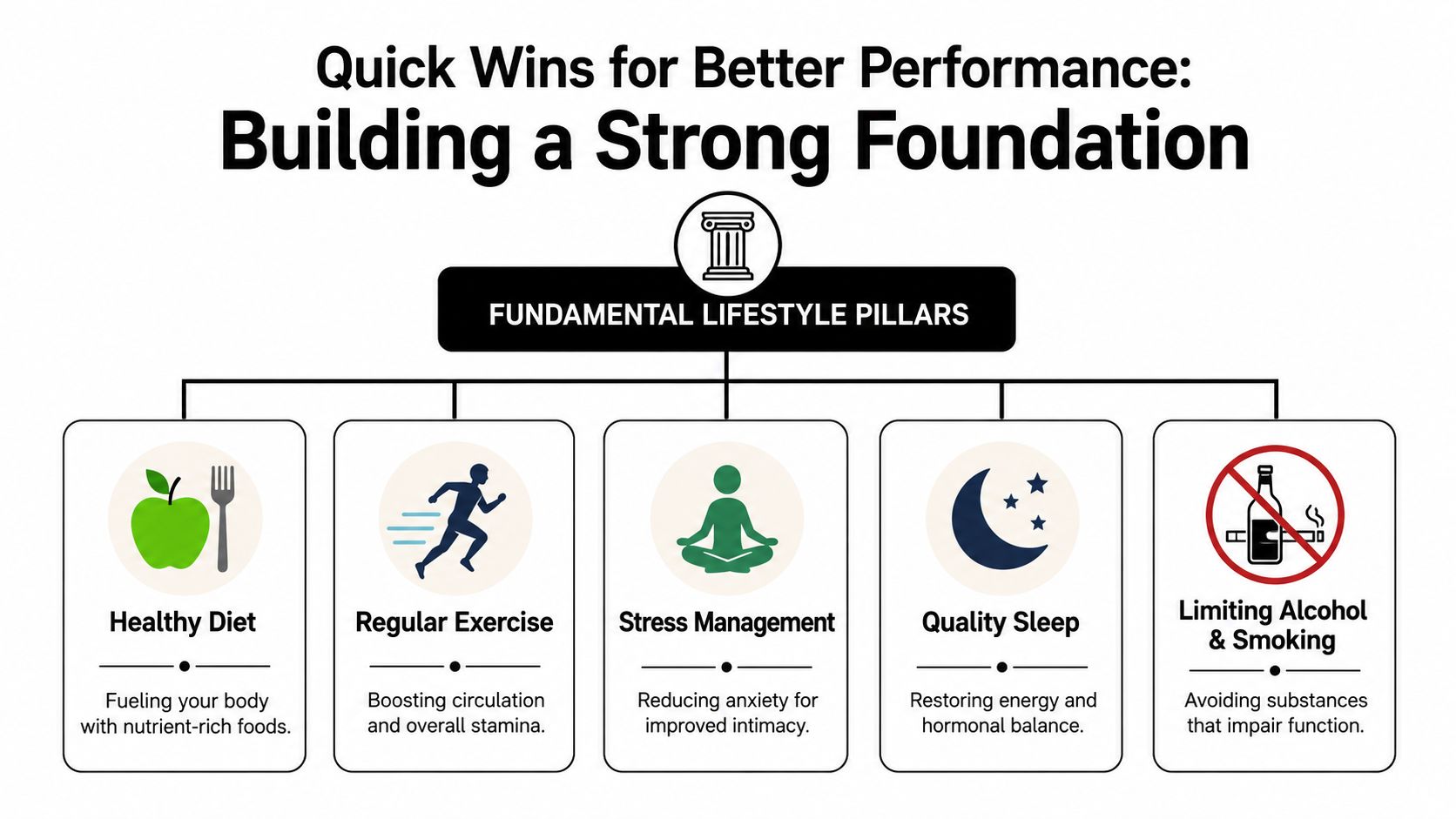
Sexual performance starts with circulation, energy, sleep, stress load, and metabolic health. That is why the fastest improvements often come from basic habits that also help your heart and blood vessels. Healthline's summary of clinical guidance points to 75 to 150 minutes per week of moderate-to-vigorous exercise as a useful target for sexual health.
Start with circulation and stamina
If you want quick wins, start with habits that improve blood flow and reduce physiologic drag.
- Walk or exercise on a schedule you can keep. A brisk daily walk counts. If you already train, consistency matters more than occasional hard sessions.
- Protect sleep. Short or poor sleep cuts into energy, mood, testosterone regulation, and erection quality.
- Eat in a way that supports vascular health. Meals that help with weight control, blood sugar, and blood pressure usually help sexual function too.
- Cut back on alcohol. Even moderate drinking can blunt arousal, weaken erections, and make orgasm less predictable.
- Stop smoking and avoid recreational drugs. These directly work against the blood vessels and nerve signaling involved in erections.
A simple rule works well here. If a habit is bad for your cardiovascular health, it often shows up in your sex life too.
I tell men to place themselves somewhere on a progression. First build the foundation. Then work on technique and arousal control. If problems continue after the basics are in place, move to medical evaluation instead of guessing. That framework saves time and usually gets better results than chasing random “performance hacks.”
Clean up the obvious performance killers
Common medical issues such as high blood pressure, high blood sugar, and abnormal cholesterol can damage the blood vessels erections depend on. That matters because erection changes are sometimes an early sign of broader cardiometabolic strain, not just a bedroom problem.
The highest-yield changes are usually straightforward:
| Habit area | What to change | Why it helps |
|---|---|---|
| Exercise | Build a weekly routine you can repeat | Supports circulation, stamina, and confidence |
| Alcohol | Cut back, especially before sex | Reduces blunting of arousal and erection quality |
| Stress | Add one daily downshift habit | Lowers the fight-or-flight response that can interrupt arousal |
| Sleep | Keep a regular sleep window | Improves energy, mood, and sexual responsiveness |
Two trade-offs are worth being honest about.
First, improvement is rarely instant. Men often want a same-week fix, but the body responds better to steady changes than to a burst of motivation for three days. Second, looking fit does not rule out lifestyle drivers. I see men who exercise regularly but still deal with sexual symptoms because they are sleeping five hours, drinking heavily on weekends, overtraining, or ignoring high blood pressure.
Start with the basics and do them long enough to judge them fairly. If erections are still inconsistent, desire is low, or performance has changed without a clear reason, that is the point to stop self-diagnosing and get a proper workup.
Mastering the Mechanics Exercises and Techniques
A common pattern looks like this. A man has made the basic health changes, wants sex to go better, and still feels unreliable once things speed up. At that point, the goal is no longer general health. The goal is skill.

Use targeted physical practice
Many performance problems are mechanical before they are medical. Breathing gets shallow. The pelvic floor stays clenched. Arousal rises faster than awareness. Men describe this as being out of control, but the problem is often poor timing and too much muscle tension.
Start with body awareness outside the bedroom.
- Identify the pelvic floor gently. These are the muscles involved in stopping urine or holding back gas. The job here is recognition, not a hard squeeze.
- Practice short contractions and full release. Tighten briefly, then let the muscles drop completely. Men often miss the relaxation part, and that is where a lot of the benefit comes from.
- Pair the drill with slower breathing. Let the abdomen expand on the inhale, then exhale without bracing your jaw, shoulders, glutes, or lower abdomen.
- Keep the dose small. A few minutes of accurate practice beats a long session done with too much force.
This is how men build control. Repetition matters more than intensity.
Train pacing, not just stamina
If early climax or loss of control is the issue, use methods that teach you to notice the rise in arousal sooner. The start-stop technique is the best known example. Stimulation builds, you pause before the point where control drops, breathing settles, then you begin again.
Used well, this is less about willpower and more about timing. Men who wait until the final second usually fail because they are already past the point where the body will cooperate. Men who learn their earlier signals can slow things down before urgency takes over.
Partnered practice helps if communication is good. Solo practice can still be useful because it lets you learn your pattern without pressure. If you want to review a clinician-guided option that works through a different pathway than pacing drills or erection medications, PT-141 treatment information is one example to discuss with a qualified clinician.
Better control usually comes from earlier recognition and better pacing.
One trade-off deserves honesty. Technique work can feel less spontaneous at first. That does not mean it is making sex worse. It means you are replacing reflexive rushing with deliberate control, and that usually gets easier with practice.
If you want a guided visual for movement and body control work, this short clip can help:
Avoid the usual mistake. Men often grip harder, tense more, or turn these drills into a performance test. Precision works better than force.
The Mind-Body Connection Communication and Psychology
A lot of performance problems aren't caused by lack of arousal. They're caused by self-surveillance. The man is no longer in the experience. He's monitoring it, grading it, and bracing for failure.
How anxiety hijacks arousal
The pattern is common. One bad night leads to worry. Worry creates tension. Tension makes erection quality or staying power less reliable. Then the next sexual encounter arrives with a layer of dread already attached to it.
That's why performance anxiety can feel so physical. It doesn't stay in your head. It changes breathing, muscle tone, attention, and confidence. Once that loop starts, men often make it worse by trying to force an erection or rushing intercourse before they “lose it.”
A better move is to reduce pressure inside the encounter:
- Slow the pace early. Fast escalation feeds panic in men who already feel uncertain.
- Shift attention outward. Focus on touch, sensation, and your partner's response instead of constant self-checking.
- Use shorter goals. Don't make the goal “perfect sex.” Make the goal staying present for the next few minutes.
- Lower the stakes. Not every sexual experience has to end in penetration to count as successful.
For men exploring clinician-guided options that target sexual function through a different pathway, PT-141 treatment information is one example to review with a qualified provider.
What to say to your partner
Silence usually makes performance anxiety worse. Most partners notice that something is off. When you don't address it, they may assume disinterest, dissatisfaction, or emotional distance.
A direct script works better than a polished one. Try language like:
“I'm attracted to you. I've been getting in my head during sex, and I want us to slow it down a little so I can stay present.”
Or:
“If I seem distracted, it's not about you. I do better when there's less pressure and more time.”
That kind of honesty changes the dynamic. Your partner stops feeling like an audience. They become part of the solution.
A simple communication checklist helps:
- Name the issue clearly. Say whether it's erection reliability, stamina, desire, or anxiety.
- Reassure attraction. Many partners wrongly assume the problem means reduced interest.
- Ask for one concrete adjustment. Slower pacing, less pressure for penetration, or more foreplay.
- Debrief later, not in the moment. Keep bedside conversations short and supportive.
Men often wait too long to have this conversation. Earlier is better.
When to Seek a Medical Evaluation
At some point, you have to decide whether this is a temporary pattern or a medical issue that needs workup. Men often delay too long because they think seeking help means they've failed. It doesn't. It means you're being efficient.
Match the symptom to the problem
The University of Iowa Health Care guidance makes an important point. Sexual dysfunction can reflect underlying health issues, and low libido, erection quality, and performance anxiety should be separated rather than treated as one universal problem.
That distinction matters because these complaints point in different directions:
- Low libido can suggest a hormonal, psychological, medication-related, or relationship issue.
- Weak or inconsistent erections often push me to think about circulation, vascular risk, medication effects, or diabetes-related problems.
- Performance anxiety with normal desire points more toward stress, learned fear, and psychosexual treatment.
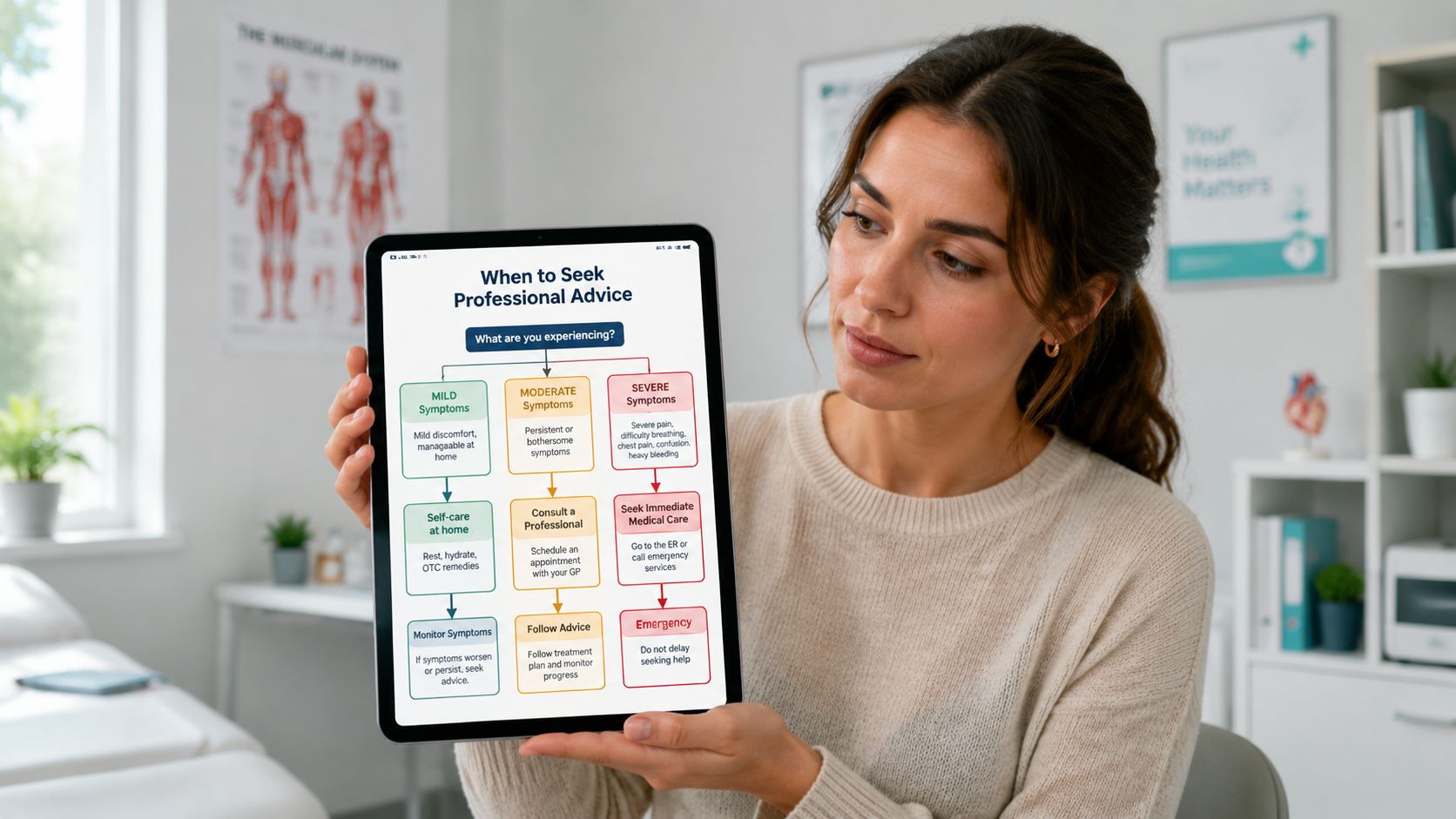
You should stop self-diagnosing and get evaluated if problems are persistent, if they're getting worse, or if they come with other symptoms such as fatigue, reduced sexual interest, or broader changes in health.
What a good evaluation should cover
A proper visit should not jump straight to a prescription. It should sort the problem first.
A useful assessment usually includes:
| Area to review | Why it matters |
|---|---|
| Sexual symptoms | Clarifies whether the issue is desire, erection quality, orgasm, or anxiety |
| Medical history | Identifies conditions that affect circulation, hormones, or nerves |
| Medications and substances | Some prescriptions, alcohol, and drugs impair function |
| Lifestyle | Sleep, stress, exercise, and weight often explain part of the picture |
| Relationship context | Tension, avoidance, or pressure can sustain dysfunction |
If your symptoms don't match a simple stress explanation, don't force them into one.
Men who suspect hormone-related symptoms may want to review TRT evaluation and treatment options with a licensed clinician, especially if low libido and fatigue are part of the picture. TRT is not a universal sexual performance treatment, but it can be relevant when true testosterone deficiency is present.
The key point is simple. You can't choose the right treatment if you're solving the wrong problem.
Evidence-Based Medical Treatments Explained
Medical treatment makes sense after you have already looked at the basics, practiced targeted techniques, and considered whether stress or relationship factors are driving the problem. The goal is not to collect treatments. The goal is to match the treatment to the failure point, whether that is erection quality, low desire, hormone deficiency, or poor response to first-line options.
Oral ED medications and where they fit
PDE5 inhibitors such as sildenafil, tadalafil, and vardenafil are usually the first prescription treatment for erectile dysfunction. They improve the blood-flow response needed for an erection. They do not create sexual interest, resolve partner conflict, or shut off performance anxiety.
That distinction matters in clinic. A man with normal libido and inconsistent erections often benefits from an oral ED medication discussion. A man with low desire, fatigue, and reduced morning erections may need hormone testing before pills become the main focus. A man whose erections fail mainly under pressure may still use medication, but the best results usually come when the psychological piece is addressed too.
A quick comparison helps clarify where each option fits:
Comparison of Medical Treatments for Sexual Performance
| Treatment | Primary Target | Mechanism of Action | Onset & Duration |
|---|---|---|---|
| Sildenafil and other PDE5 inhibitors | Erection quality | Support blood flow involved in erection response | Varies by medication and individual |
| TRT | Low libido and sexual symptoms in men with confirmed low testosterone | Replaces testosterone in men with deficiency | Gradual and monitored over time |
| MUSE alprostadil | Erectile dysfunction | Local erectile treatment | Used around the time of sexual activity |
| Prostaglandin-E1 + SEPA | Erectile dysfunction | Local erectile treatment | Used under clinician guidance |
Men who want a practical overview of prescription ED medication options can review that route to treatment before deciding whether an evaluation is appropriate.
TRT and other physician-guided options
Testosterone replacement therapy has a narrower role than online marketing suggests. It can help men with confirmed testosterone deficiency and matching symptoms, especially low libido, low energy, and reduced sexual interest. It is a poor substitute for treating vascular erectile dysfunction, untreated sleep problems, medication side effects, or anxiety.
I see men get tripped up here all the time. They use the phrase "sexual performance" as if every treatment aims at the same problem. In practice, these treatments solve different problems, and using the wrong one usually leads to wasted time, cost, and disappointment.
Some men also need options beyond pills. Local therapies such as alprostadil products may be considered when oral medications are ineffective, not tolerated, or medically inappropriate. These treatments are more targeted and less convenient, but they can be useful in the right setting with clinician guidance.
A practical framework looks like this:
- Normal desire, but erections are unreliable: Oral ED medication is often the first medical option to review.
- Low libido with fatigue or other hormone-related symptoms: Lab testing and hormone evaluation may matter more than starting an erection pill.
- Strong anxiety component: Medication may improve reliability, but progress is usually better when anxiety is treated directly.
- Poor response to pills or contraindications: More targeted therapies may be reasonable after a proper medical review.
Medication works best when it matches the diagnosis.
That is the trade-off. Faster treatment can help. Accurate treatment helps more.
Your Next Steps Taking Control of Your Sexual Health
Men do best when they stop asking for one magic solution and start asking one better question. “Where am I in the process?” If your habits are poor, start there. If the basics are solid but control is inconsistent, train the mechanics. If anxiety takes over, deal with the psychology directly. If symptoms persist, get evaluated.
A practical plan for the next month
Use a simple progression:
- Build the foundation. Get your exercise routine consistent, improve sleep, cut back alcohol, and clean up obvious habit-related problems.
- Add targeted practice. Work on breathing, pelvic control, and pacing instead of rushing sexual encounters.
- Reduce pressure. Talk to your partner clearly and shift focus from proving yourself to staying present.
- Escalate intelligently. If the problem keeps showing up, book a medical evaluation rather than experimenting endlessly on your own.
This approach is more effective because it respects how sexual function works. Erections, desire, stamina, and confidence don't all come from the same place. When you separate them, the path forward becomes much clearer.
The biggest mistake is doing nothing while hoping the issue disappears. Sometimes it does. Often it doesn't. And the longer a problem lasts, the more it can affect confidence, relationships, and overall health.
Take the next step that fits your situation. That might be a walking plan, a better conversation, a prescription discussion, or lab work. Action beats rumination every time.
If this article helped you recognize that your issue may need more than self-help, Cost Plus TRT offers telemedicine consultations for men's health concerns including TRT, ED medications, and physician-supervised treatment options. A visit with a licensed provider can help you sort out whether you're dealing with low testosterone, erectile dysfunction, performance anxiety, or a mix of factors, and what treatment path makes sense.