
You may be here because something has felt off for a while. You're sleeping enough, but not waking up refreshed. Your workouts don't seem to pay off the way they used to. Sex drive is down. Motivation is flatter. You might even feel a little guilty for wondering whether this is a medical issue or whether you're just supposed to accept it.
That uncertainty is common. Men often wait months or years before getting evaluated because the symptoms are easy to dismiss as stress, aging, poor sleep, weight gain, or burnout. Sometimes that's exactly what they are. Sometimes it's hypogonadism, which is a real medical condition with a real diagnostic process and, in the right patient, a reasonable treatment pathway.
Hormone replacement therapy for men should be approached the same way I'd approach blood pressure treatment or thyroid treatment. Start with symptoms. Confirm the diagnosis. Review what could make treatment unsafe. Match the treatment to the patient's life, goals, and risk factors. Then monitor it carefully.
Table of Contents
- Is It Low T or Just Getting Older
- Recognizing Signs and Getting a Diagnosis
- Exploring Your TRT Treatment Options
- The Real Benefits and Risks of Testosterone Therapy
- How Modern Telemedicine Makes TRT Safe and Accessible
- Monitoring Your Health and Adjusting Your Protocol
- Frequently Asked Questions About Starting TRT
Is It Low T or Just Getting Older
A typical patient isn't dramatic about it. He usually says some version of, “I'm functioning, but I don't feel like myself.” He's going to work. He's showing up at home. But the edge is gone. Recovery is worse. Interest in sex is lower. Mood is shorter. He may blame his age, his schedule, or the fact that he hasn't trained consistently in a few months.
That may be true. Aging changes the body. Stress changes the body. Poor sleep, alcohol, obesity, untreated sleep apnea, and depression can all lower energy and libido. That's why low testosterone should never be diagnosed from symptoms alone.

At the same time, this isn't some fringe issue anymore. The global TRT market was estimated at about $1.9 billion in 2024 and projected to reach $2.9 billion by 2034, and in the U.S. testosterone prescriptions increased from 7.3 million in 2019 to more than 11 million in 2024, which shows how mainstream treatment has become according to SingleCare's review of testosterone statistics.
Why more men are asking about it
Part of that growth reflects better awareness. Men are more willing to talk about symptoms that used to stay private. Telemedicine has also made evaluation easier for men who would otherwise put it off.
But higher demand creates a problem too. It becomes easier for clinics to treat a symptom checklist instead of a person. Fatigue alone is not low testosterone. Weight gain alone is not low testosterone. Getting older alone is not low testosterone.
Practical rule: If a clinic is ready to prescribe testosterone before confirming both symptoms and appropriate labs, slow down.
What treatment is actually trying to do
The purpose of testosterone therapy is not to turn a tired middle-aged man into a superhero. The goal is much narrower and more medical than that. In the right patient, therapy aims to restore hormone levels into a normal physiologic range and improve symptoms linked to deficiency.
That distinction matters. Men get into trouble when they chase “high” numbers, bodybuilder dosing, or internet advice built around performance enhancement rather than medical replacement. Good TRT is boring in the best way. It's structured, measured, and designed to help you function normally again.
Recognizing Signs and Getting a Diagnosis
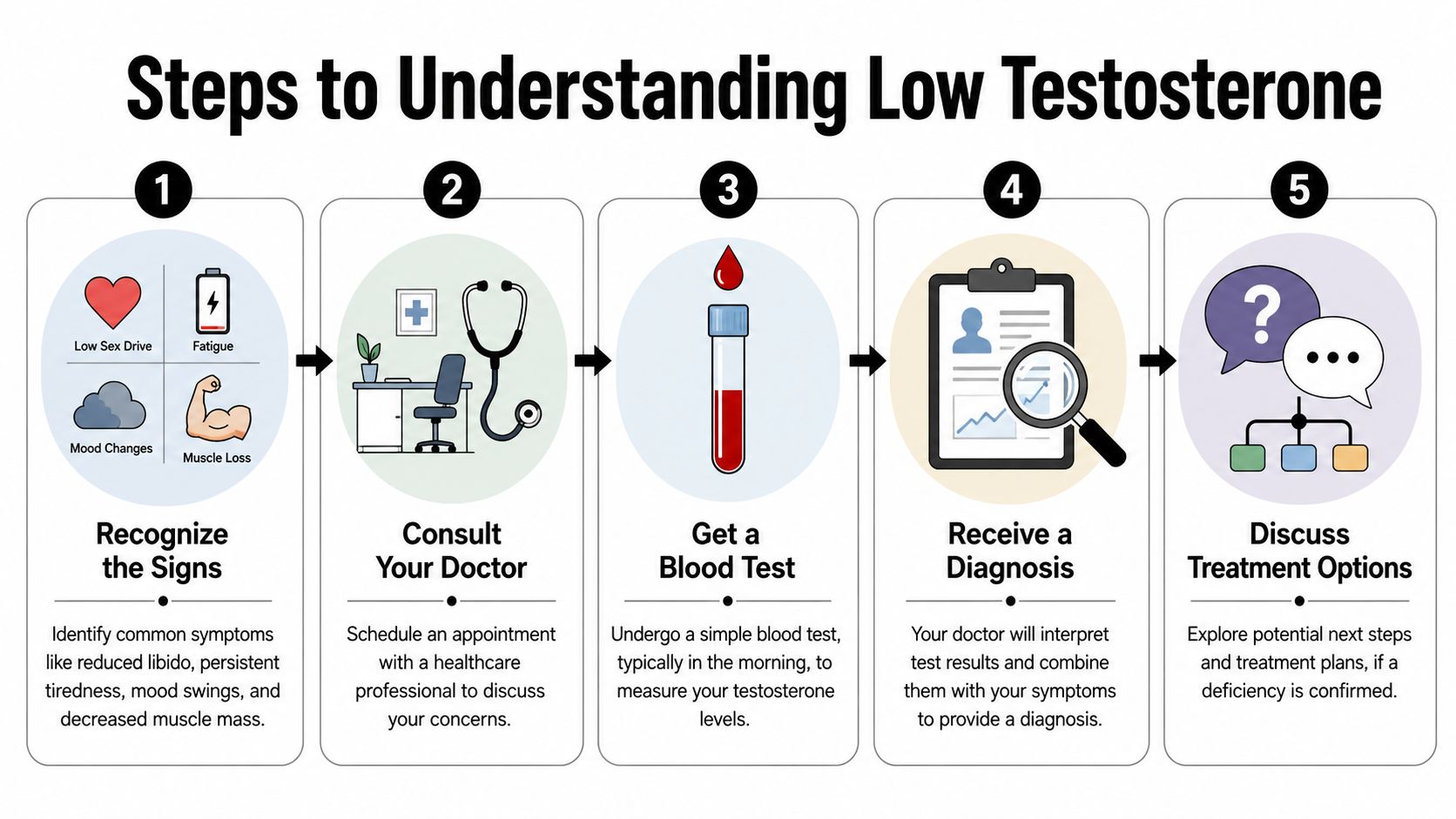
Symptoms matter because they tell you whether there's a reason to look deeper. Labs matter because they tell you whether testosterone deficiency is present. You need both.
What low testosterone can feel like
The most common complaints tend to cluster around a few areas:
- Sexual symptoms include lower libido, fewer spontaneous erections, or reduced sexual performance.
- Energy changes often show up as persistent fatigue, reduced drive, or poor exercise recovery.
- Body composition shifts can include loss of muscle, increased body fat, or less strength despite training.
- Mood and mental changes may include irritability, lower confidence, flat mood, or trouble concentrating.
None of those symptoms is specific to testosterone. The same man might have sleep deprivation, high stress, excess alcohol use, medication side effects, insulin resistance, obstructive sleep apnea, or depression. That's why an honest evaluation has to be wider than one hormone.
What a real workup should include
A proper diagnosis starts with blood work, usually drawn in the morning. In practice, I want more than a single testosterone value because one number without context can mislead you.
A useful evaluation often includes:
- Total testosterone, because it gives the broad headline value.
- Free testosterone, because symptoms may track better with available hormone in some men.
- LH and FSH, because they help distinguish primary from secondary causes.
- SHBG, because it affects how much testosterone is bound versus available.
- Estradiol, because conversion matters when symptoms and side effects are being interpreted.
The clinical target, once treatment is appropriate, is to restore serum testosterone to the normal adult male range of about 300 to 1000 ng/dL for symptom relief, and treatment isn't recommended in men with active prostate or breast cancer, untreated severe sleep apnea, or recent major cardiovascular events, as outlined in Boston University's guideline summary.
A low lab on paper doesn't automatically make you a candidate, and a “normal” lab doesn't automatically rule symptoms in or out.
A 2015 analysis of men evaluated for low testosterone offers useful historical context. Among 9,176 men, 3,320 men (36%) were diagnosed as hypogonadal, and 17.7% of the diagnosed group received testosterone replacement therapy. Treatment use rose from 8.3% in 2009 to 24% in 2012, according to the Urology study abstract on ScienceDirect. That tells you two things. First, a meaningful share of symptomatic men being evaluated did have biochemical deficiency. Second, even with confirmed low levels, treatment was not automatic.
What patients often get wrong
A lot of men focus on the lab portal and miss the bigger picture. They see one value flagged low or borderline and assume the answer is testosterone. The better question is simpler: Do your symptoms, lab pattern, medical history, and goals all line up?
If they do, TRT may help. If they don't, the smartest treatment may be weight loss, alcohol reduction, sleep apnea treatment, medication review, or mental health care. Good medicine doesn't force testosterone into every problem.
Exploring Your TRT Treatment Options
Once low testosterone is confirmed and treatment makes sense, the next question is practical. Which form of TRT fits your life well enough that you'll use it correctly? This matters more than most men expect.
Different formulations have different pharmacokinetics. That means they don't rise and fall in the body the same way. According to Prenuvo's review of testosterone therapy formulations, injections, gels, patches, and pellets differ in stability, adherence, and risk. That's why the “best” option is often the one that balances symptom control, side effects, convenience, and consistency for the individual patient.
How the main delivery methods differ
Injections are common because they're familiar, effective, and often practical for home use. They usually work well for men who don't mind needles and want a predictable routine. The trade-off is that some men notice peak and trough effects depending on dose and schedule.
Gels avoid needles and give a daily rhythm that some men prefer. The downside is daily application, variable absorption, and the need to be careful about skin transfer to partners or children.
Patches are straightforward in theory, but skin irritation can limit long-term use. Some men do fine on them. Others stop quickly because the application site becomes the main issue.
Pellets appeal to men who don't want frequent dosing. The trade-off is that they require an in-office procedure and aren't easy to adjust quickly if the dose isn't right.
Nasal or oral options can be useful in selected cases, but they're usually a more specific conversation based on tolerance, logistics, and clinician preference rather than a universal first choice.
Comparison of TRT Treatment Methods
| Method | Administration Frequency | Typical Cost | Pros | Cons |
|---|---|---|---|---|
| Injections | Periodic self-injection or clinic dosing | Varies by clinic, pharmacy, and follow-up structure | Direct dosing, common option, flexible scheduling | Needle use, possible peak-trough symptoms |
| Gels | Daily | Often depends on brand and insurance status | No injections, easy to start | Daily routine, transfer concerns, variable absorption |
| Patches | Daily | Varies | Simple concept, steady delivery for some men | Skin irritation, adherence issues |
| Pellets | In-office at longer intervals | Often higher upfront procedural cost | Less frequent dosing | Minor procedure required, slower adjustment |
| Nasal or oral products | Depends on product | Varies | Useful in selected cases | Not ideal for every patient, may require stricter routine |
Cost matters because TRT isn't just the medication. You also need physician oversight, lab work, supplies if you're injecting, and follow-up visits. Men are often surprised that two clinics can prescribe the same medication but bundle the surrounding services very differently. If you want a plain-language look at how pricing structures vary, this guide on how much TRT can cost is a practical place to start.
The right protocol is the one you can follow safely for months, not the one that sounds easiest on day one.
A man who travels every week may hate refrigerated or daily-application routines. A man who can't stand needles may never stay consistent with injections. A man who wants the fewest touchpoints may lean toward longer-acting options, but he has to accept less flexibility when adjustments are needed.
That's the most important conversation. Not “Which one is strongest?” but “Which one can you live with, monitor properly, and adjust without creating new problems?”
The Real Benefits and Risks of Testosterone Therapy
The marketing version of TRT is too simple. The fearful version is too simple too. In real practice, both the upside and the downside depend heavily on who is being treated, why they're being treated, and how well they're monitored.
A balanced discussion starts with what therapy is good at in men with confirmed hypogonadism.
What tends to improve in the right patient
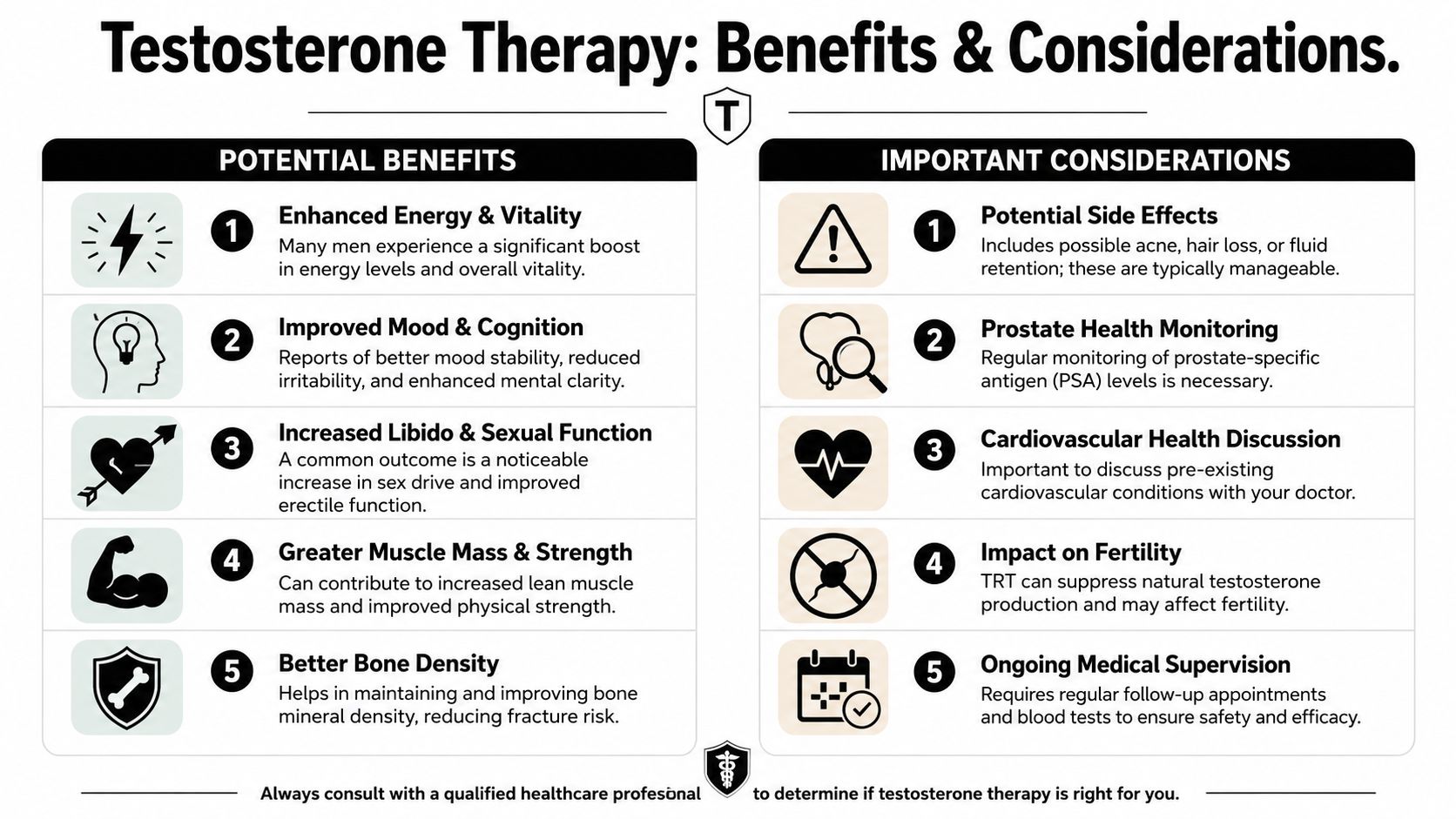
Expert reviews report benefits in libido and sexual function, bone density, muscle mass, body composition, and mood in men with hypogonadism. Those are meaningful improvements, especially when the baseline symptoms are clear and the diagnosis is solid.
What men often notice first is not dramatic muscle gain. It's that they feel more normal. Morning energy returns. Interest in sex improves. Training feels productive again. Mood becomes less flat.
That doesn't mean TRT fixes every complaint. If the main drivers are poor sleep, chronic stress, relationship strain, alcohol use, or obesity, testosterone may help less than expected or not at all. The treatment works best when the diagnosis is right and the rest of the health picture is addressed too.
Here's a clinician's rule of thumb. If every symptom is blamed on low testosterone, the patient usually ends up disappointed.
A closer look at the trade-offs helps:
- Sexual benefits can be substantial in the right patient, but they aren't a guaranteed fix for every case of erectile dysfunction.
- Body composition changes can support training and recovery, but they don't replace nutrition or resistance exercise.
- Mood improvement happens in some men, but TRT is not a stand-in for treating anxiety, depression, or burnout.
Later in treatment, this kind of overview can also help frame the discussion:
Where problems actually show up
The risk conversation needs to be more specific than “TRT is safe” or “TRT is dangerous.” Those statements are too broad to help anyone.
The FDA limits TRT approval to diagnosed hypogonadism, not age-related decline alone, and product labels warn of a possible increased risk of heart attack and stroke. The American Heart Association also states that testosterone therapy is not a cure-all and emphasizes careful patient selection, especially in men with obesity, sleep apnea, or prior cardiovascular disease, as summarized in their patient guidance on low testosterone therapy.
That means cardiovascular history is not a side note. It's central to the decision. Men with borderline low levels plus untreated sleep apnea, high blood pressure, obesity, or prior heart disease need a more careful conversation than the average online ad suggests.
Other practical concerns include:
- Hematocrit elevation can become a real issue, particularly if a man is pushed too high or monitored poorly.
- Estradiol-related symptoms may show up depending on dose, body composition, and how the individual metabolizes testosterone.
- Acne, oily skin, or fluid retention can happen and are often manageable, but they still matter.
- Fertility suppression is one of the biggest issues for younger men and should be discussed before starting, not after.
If fertility is part of your planning, review the details before treatment. This article on whether TRT can affect fertility covers that concern in patient-friendly language.
Ongoing supervision is not an annoyance built around TRT. It's part of the treatment itself.
One more point that often gets lost. Long-term safety data remain limited in some areas, and prostate risk has not been conclusively shown to rise, which is one reason thoughtful monitoring stays central in practice. The honest position is not blind enthusiasm or blanket fear. It's careful selection, clear goals, and regular follow-up.
How Modern Telemedicine Makes TRT Safe and Accessible
Many men who would consider treatment still put it off because traditional care is inconvenient. They don't want multiple office visits, surprise pricing, or a process that requires taking half a workday off for each step.
That's one reason use has expanded so quickly. The rise in testosterone prescriptions from 7.3 million in 2019 to over 11 million in 2024 reflects not only demand but also easier access, and that growth increases the need for evidence-based triage and monitoring, as noted in the CBS report discussing prescription growth.
What the process usually looks like
A legitimate telemedicine TRT workflow is more structured than many patients expect. It usually includes an intake questionnaire, review of symptoms and medical history, lab testing or upload of recent labs, a video visit with a licensed clinician, and prescription fulfillment only if the evaluation supports treatment.
For a busy professional, that model can remove the biggest friction points:
- Scheduling becomes easier because consults can happen without a commute.
- Lab options are more flexible because patients can often use a partner lab or upload recent results.
- Medication delivery is simpler because approved prescriptions can ship directly to the home.
- Transfer of care is smoother for men already on treatment who want a new supervising clinic.
One example is Cost Plus TRT, which offers telemedicine-based TRT care with options to use outside labs or upload existing results, then complete physician review online before approved medication is shipped. Any patient considering remote care should also read the clinic's telehealth consent information so expectations and responsibilities are clear.
Why convenience helps only when standards stay high
Convenience is useful only if the clinic still follows the same medical logic you'd expect in person. The good telemedicine programs do. They ask who should not be treated. They review cardiovascular history. They consider fertility plans. They require labs. They monitor response. They adjust protocols instead of just renewing prescriptions.
What doesn't work is an online model that behaves like a supplement store. If there's no serious screening, no review of contraindications, and no follow-up plan, the platform is solving the wrong problem.
Remote care can expand access. It should not lower standards.
For the right patient, telemedicine makes hormone replacement therapy for men more realistic. It doesn't make it casual. That distinction protects patients.
Monitoring Your Health and Adjusting Your Protocol
Starting TRT is the beginning of management, not the end of evaluation. A good protocol usually needs refinement. That's normal.
Some men feel better quickly. Others improve more gradually. Some feel good but have labs that show the dose or timing needs adjustment. Others have “good” numbers on paper but still feel off because the protocol doesn't fit their physiology or routine.
What to track after you start
The first few months are about response and tolerance. I want patients paying attention to patterns, not isolated good days or bad days.
Keep track of changes in:
- Energy and whether it's steadier throughout the day
- Libido and sexual function
- Mood including irritability, motivation, and mental clarity
- Training recovery and body composition trends
- Side effects such as acne, swelling, headaches, or feeling unusually flushed
That information matters because labs never tell the whole story. A number may be in range while the dosing schedule still produces highs and lows that the patient feels clearly.
How dose changes should happen
Protocol adjustments should be small and deliberate. If a man feels a burst of energy one week and a slump the next, that may point to dosing frequency, not necessarily “more testosterone.” If he develops side effects, the answer may be lowering the dose, changing the schedule, or revisiting whether the treatment is appropriate.
The practical monitoring process usually includes follow-up blood work and a symptom review. The labs help assess whether testosterone is landing where intended and whether markers such as hematocrit or estradiol need attention. The conversation with the patient helps determine whether the current plan is livable and effective.
A few habits make this easier:
- Be consistent with timing. If you get labs at random points in the dosing cycle, interpretation gets messy.
- Report side effects early. Don't wait until a refill visit to mention a problem.
- Don't self-adjust based on forums. Internet advice usually lacks your medical history and lab context.
- Stick with one supervising clinician or team when possible. Fragmented care leads to fragmented decision-making.
The goal isn't to chase a feeling for two weeks. It's to build a stable protocol you can maintain safely.
At this stage, many men either succeed or sabotage themselves. They start treatment, feel some improvement, then begin experimenting. Extra dose. Different schedule. Advice from a friend at the gym. That's how manageable therapy becomes messy therapy.
Good TRT care is repetitive by design. Review symptoms. Check labs. Make one change at a time. Repeat.
Frequently Asked Questions About Starting TRT
Most of the anxiety around TRT isn't about the injection itself. It's about what happens after you start.
Will TRT affect fertility
Yes, it can. This deserves a direct answer because it's often minimized in marketing. Testosterone therapy can suppress the body's own signaling for sperm production, which is why decreased sperm count and infertility are commonly listed concerns in consumer education, including Healthline's overview of hormone replacement therapy for men.
If you may want children, bring that up before treatment starts. Not later. Before. In practice, that may lead to baseline semen analysis, a discussion of timing, or consideration of adjunctive approaches such as hCG or SERMs under physician guidance, depending on the case.
How soon will I feel anything
Some men notice changes in libido, mood, or energy relatively early. Others need more time, and some symptoms improve before others. That's normal.
The biggest mistake is judging success too fast or expecting every problem to improve at the same pace. Symptom change is often uneven. Sexual interest may improve before body composition does. Energy may improve before mood fully catches up. If the diagnosis is right, the benefit usually feels more like a gradual return of function than a dramatic overnight switch.
Do I have to stay on it forever
Not always, but this needs an honest discussion upfront. If you have true hypogonadism and TRT clearly improves symptoms while restoring levels appropriately, long-term treatment may make sense. If the benefit is unclear, the treatment plan should be reconsidered.
There's also a practical point many men don't think about at the beginning. Once you start exogenous testosterone, your body's natural production is affected. Stopping therapy is not just a neutral reset button. Some men feel worse coming off, and some need a formal discontinuation plan depending on their situation.
What if my levels are borderline
Borderline cases are where good medicine matters most. A borderline lab plus no real symptoms usually should not trigger treatment. A borderline lab plus strong symptoms and a pattern that fits may justify a deeper workup or repeat testing.
This is also where lifestyle work carries more weight. Weight loss, improved sleep, reduced alcohol intake, resistance training, and treatment of sleep apnea can materially change the picture. Men with borderline values sometimes need better health inputs, not faster prescribing.
Can TRT help if I'm mainly tired
Maybe, but tiredness alone is weak evidence. Fatigue is one of the least specific symptoms in medicine. If sleep, stress, mood, work hours, diet, and recovery are poor, testosterone may not be the main issue.
That's why the best clinicians ask boring questions before they prescribe anything. How are you sleeping. Are you snoring. Are you drinking heavily. Have you gained weight. Are you depressed. Are you overtrained. Those questions protect you from the wrong treatment.
What should I ask at my consultation
Bring practical questions, not just lab questions.
- Ask about candidacy. Why do you think I am or am not a good candidate?
- Ask about fertility. What should I do if I want children?
- Ask about follow-up. How often will labs and visits happen?
- Ask about formulation fit. Which option matches my schedule and tolerance?
- Ask about safety. What risks matter most given my sleep, weight, blood pressure, or heart history?
A good TRT consultation shouldn't feel like a sales call. It should feel like a risk-benefit decision made with enough information to be comfortable saying yes, no, or not yet.
If you want a structured, physician-supervised way to explore treatment, Cost Plus TRT offers online evaluation, lab review options, and prescription fulfillment for eligible patients. It's a practical option for men who want transparent logistics and ongoing monitoring without turning TRT into a casual, unsupervised experiment.