

You're 45, your waistline keeps expanding despite regular attempts to exercise, and you can't remember the last time you woke up feeling restored. Your libido has changed, your motivation is inconsistent, and “low testosterone” starts to sound like a complete explanation.
It might be part of the picture. It might not. Hormone optimization therapy is a clinical decision process, not a product or a promise to push one hormone as high as possible. The right process connects symptoms, repeat laboratory testing, underlying causes, treatment goals, delivery method, and long-term safety monitoring.
The distinction matters because testosterone use has become a substantial national-scale treatment category, while prescribing practices have also changed in response to safety scrutiny and regulatory attention. A national analysis found that the number of people treated with testosterone annually increased from 1,216,982 in 2018 to 1,656,641 in 2022, a 27% increase, while the share of the study population filling a prescription rose from 0.76% to 0.98%. The same analysis is available in this national study of testosterone treatment patterns.
This guide follows the decision from first symptoms and laboratory testing through treatment selection, monitoring, telemedicine, outside-lab transfers, and the question many men overlook, whether metabolic treatment should come before testosterone.
Table of Contents
- What Hormone Optimization Therapy Actually Means
- How Your Hormone System Works and When It Stops Working
- Hormone Optimization Therapy vs TRT and Other Hormone Treatments
- Evaluation, Symptoms, and Labs That Confirm the Diagnosis
- Treatment Pathways, Delivery Methods, and Dosing Approaches
- Monitoring Cadence, Safety Guardrails, and Side Effect Management
- Lifestyle, Adjunctive Strategies, and the Metabolic-First Question
- Costs, Telemedicine Workflows, and Choosing a Provider
What Hormone Optimization Therapy Actually Means
Return to the 45-year-old man from the opening. A quick clinic might ask whether he wants testosterone, review one lab result, and offer a fixed prescription. A more careful clinician starts elsewhere: What changed first? How long have symptoms lasted? How does he sleep? What medications does he take? Does he want children? Has his weight, blood pressure, glucose regulation, or exercise pattern changed?
Hormone optimization therapy evaluates the whole clinical picture before deciding whether replacement is appropriate. The word “optimization” should mean that a clinician identifies a genuine deficiency or imbalance, addresses reversible contributors, chooses an appropriate treatment, and adjusts it according to symptoms, laboratory results, and safety markers. It shouldn't mean chasing unusually high hormone concentrations.
The target is durable function
Testosterone is only one part of a connected system. Depending on the patient, an evaluation may also consider thyroid function, estradiol, gonadotropins, prolactin, metabolic health, sleep, medication effects, and fertility goals. The clinician isn't trying to manufacture a temporary peak. The practical aim is steadier function, such as improved libido, energy, mood, recovery, cognition, or body composition, when a confirmed hormonal disorder is contributing.
That approach adds several layers beyond a prescription:
- Symptom mapping: The clinician records specific changes in libido, erections, sleep, mood, strength, concentration, and body composition rather than relying on “I feel off.”
- Baseline testing: Results establish whether deficiency is present and help distinguish testicular problems from pituitary or hypothalamic suppression.
- Treatment selection: The route, dose, timing, and fertility implications are matched to the individual.
- Follow-up titration: The plan changes when symptoms, testosterone, hematocrit, blood pressure, or other safety findings don't align.
Practical rule: A higher number isn't automatically a better result. The useful question is whether treatment improves meaningful function without creating avoidable risks.
Bioidentical hormones may be used in some treatment plans, but the label doesn't replace medical oversight. A hormone that matches the body's natural chemical structure can still cause problems if the diagnosis is wrong, the dose is excessive, or monitoring is poorly timed.
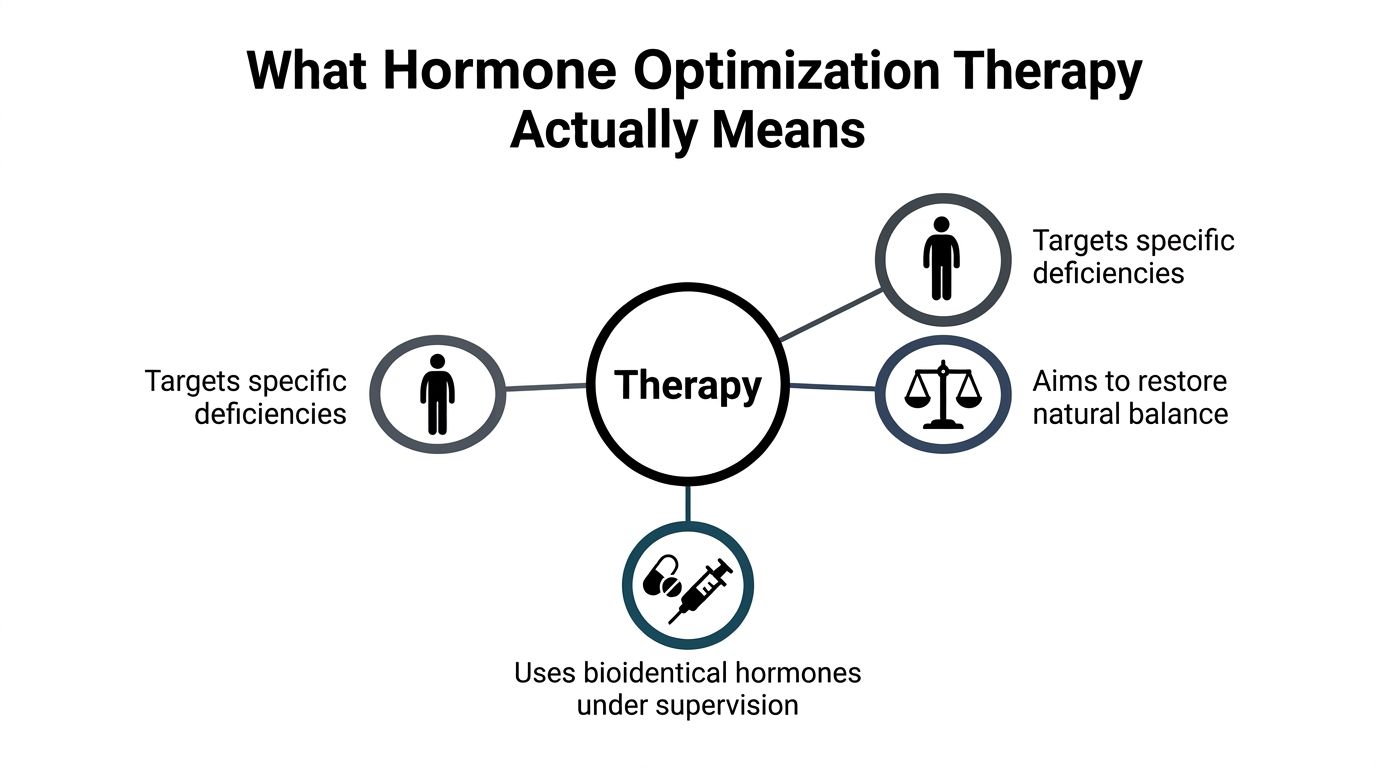
The rest of the process should answer four practical questions: Do you have a confirmed deficiency? What caused it? Which treatment fits your goals? How will you know when to adjust or stop?
How Your Hormone System Works and When It Stops Working
Think of testosterone production as a thermostat loop rather than a single switch. The hypothalamus detects the hormonal environment and releases gonadotropin-releasing hormone, or GnRH. The pituitary responds by sending luteinizing hormone, or LH, to the testes. The testes then produce testosterone, which feeds information back to the brain so the system can increase or reduce its signal.
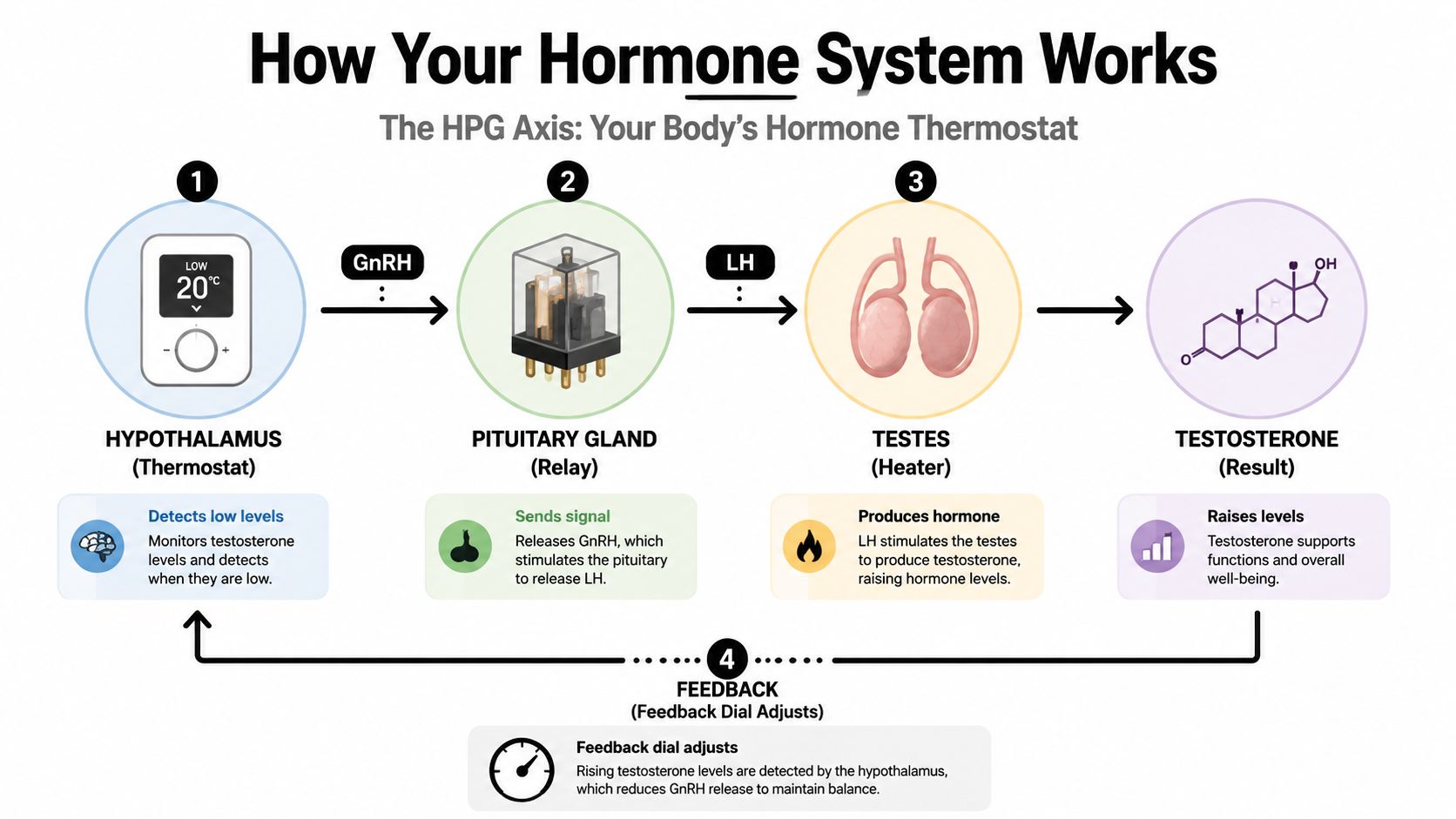
Where the control loop can fail
In primary hypogonadism, the testes don't respond adequately, so testosterone is low while LH and follicle-stimulating hormone may be high. In secondary hypogonadism, the brain or pituitary sends too little stimulation, producing low testosterone with low or inappropriately normal LH and FSH. Some men show a mixed pattern.
Obesity, sleep apnea, opioid use, heavy alcohol exposure, chronic illness, and sustained stress can suppress the system or make symptoms resemble low testosterone. That's why a symptom such as fatigue doesn't identify the location of the problem by itself.
Common symptom clusters include:
- Sexual changes: Reduced libido, fewer spontaneous erections, or erectile changes.
- Physical changes: Increased visceral fat, reduced strength, and poorer recovery.
- Cognitive and emotional changes: Brain fog, low motivation, irritability, or depressed mood.
- Sleep-related complaints: Unrefreshing sleep or persistent daytime exhaustion.
Clinicians generally look for symptoms alongside consistently low morning testosterone. The exact threshold depends on the guideline, assay, and clinical setting, but the diagnostic discussion often centers on total testosterone below roughly 300 to 350 ng/dL on two separate morning draws, with free testosterone and related markers adding context. Because this is a quantitative claim, the diagnostic and monitoring framework should be reviewed with a licensed clinician rather than treated as a self-diagnosis.
Low testosterone is a laboratory finding. Hypogonadism is a clinical diagnosis that connects the finding to symptoms and cause.
A thoughtful panel may include total and free testosterone, SHBG, estradiol, LH, FSH, prolactin, TSH, CBC, and CMP. The results don't just answer whether testosterone is low. They help show whether replacement, stimulation of the existing axis, or treatment of another condition makes more sense.
The video below offers another visual explanation of the hormonal control loop.
Hormone Optimization Therapy vs TRT and Other Hormone Treatments
Patients often use “TRT,” “optimization,” fertility treatment, and anabolic steroids as if they describe the same model. They don't. Testosterone replacement supplies testosterone from outside the body. Fertility-preserving protocols try to stimulate or protect the body's reproductive axis. Anabolic steroid use prioritizes performance or appearance and commonly operates outside medical supervision.
Optimization-style care sits closer to evidence-based replacement than to performance enhancement. It generally seeks stable, age-appropriate mid-range exposure, considers fertility before treatment, and follows safety markers such as hematocrit and, when appropriate, estradiol and PSA. Traditional TRT clinics vary widely, so the label alone doesn't prove how carefully a program operates. A patient should examine the actual diagnostic and monitoring process, not just the marketing language.
| Model | Primary Goal | Typical Target | Fertility Approach | Monitoring Depth | Key Risk |
|---|---|---|---|---|---|
| Hormone optimization therapy | Restore function after confirmed deficiency | Stable mid-range exposure | Discussed before treatment, with alternatives when needed | Symptoms, testosterone, hematocrit, and relevant hormones | Overtreatment or an incorrect diagnosis |
| Traditional TRT | Replace testosterone | May use a fixed replacement target | Often suppresses sperm production unless separately addressed | Varies by clinic | Insufficient follow-up or poorly timed labs |
| Fertility-preserving protocols | Stimulate the axis or preserve sperm production | Improve endogenous signaling | Central treatment objective | Requires reproductive and hormonal follow-up | Medication-specific adverse effects or incomplete response |
| Anabolic-androgenic steroid use | Performance, muscle, or appearance | Often exceeds physiologic replacement | Usually not prioritized | Frequently absent or informal | Cardiovascular, reproductive, psychiatric, and hormonal harm |
Men who want a family shouldn't default to a high-dose testosterone template. Exogenous testosterone can reduce the pituitary signals that support sperm production, while fertility-directed care may use different medications and a different endpoint. A clinician may also discuss whether a patient can pursue symptom relief while preserving endogenous signaling, but that choice requires individualized evaluation.
For readers comparing conventional and telemedicine options, TRT treatment information can help clarify what a replacement program includes. It still shouldn't replace a diagnostic conversation about fertility, risks, alternatives, and monitoring.
Evaluation, Symptoms, and Labs That Confirm the Diagnosis
A patient may arrive with fatigue, lower libido, erectile changes, mood shifts, reduced strength, or more visceral fat and assume testosterone is the answer. Those symptoms can also come from sleep apnea, depression, thyroid disease, medication effects, diabetes, or inadequate recovery. Symptoms open the investigation. They do not close it.
The clinician should establish when each change began, whether it fluctuates, what improves or worsens it, and whether another condition provides a better explanation. A single low result is like one faulty reading on a fuel gauge. Timing, illness, sleep, food intake, medications, and assay quality can all affect testosterone.
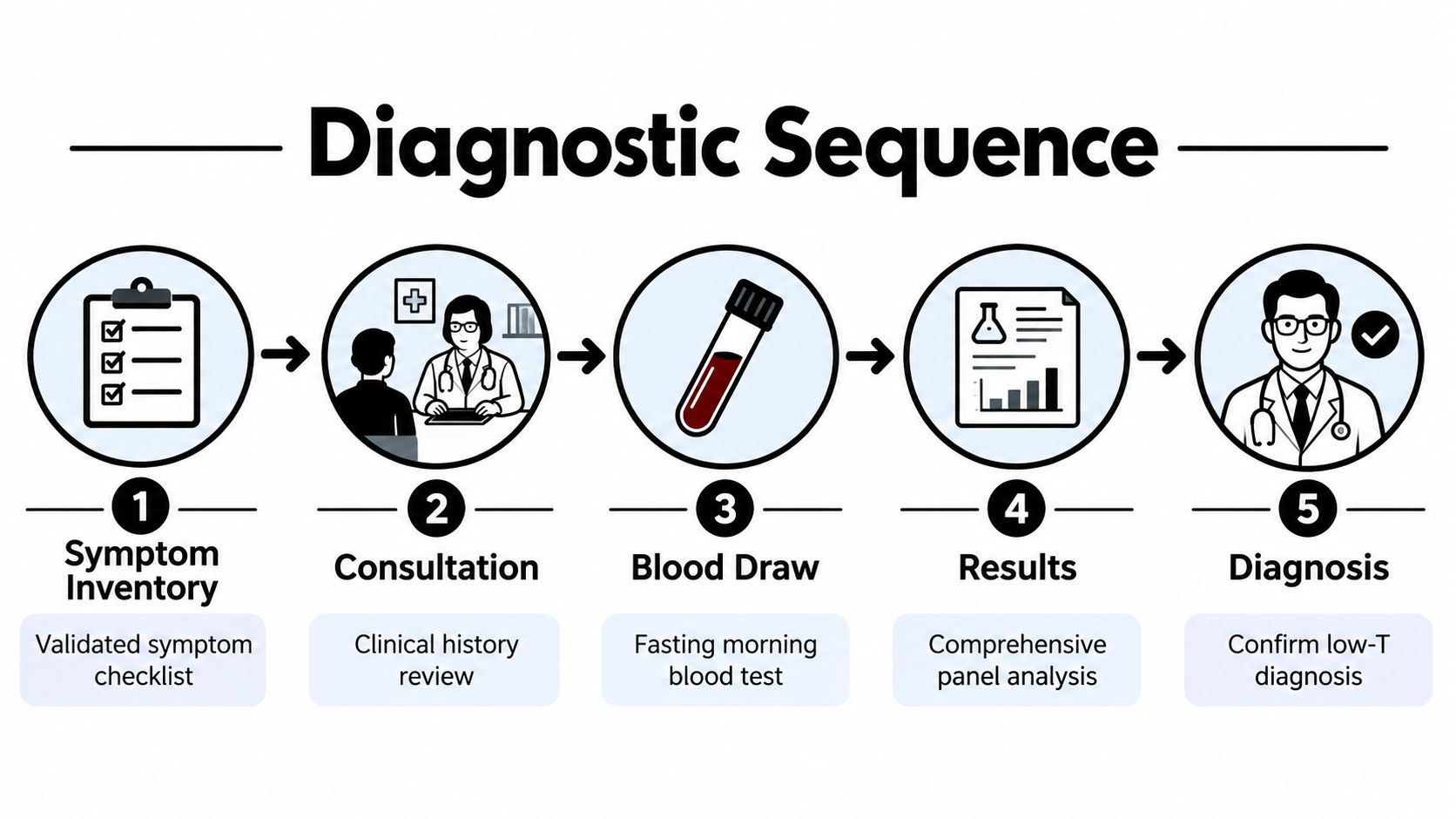
A practical diagnostic sequence
- Document symptoms and goals. Record sexual function, energy, mood, sleep, exercise tolerance, fertility plans, and the changes that matter most.
- Review history and medications. Opioids, glucocorticoids, some psychiatric medications, chronic disease, prior testicular injury, and pituitary symptoms can alter the interpretation.
- Obtain two morning total testosterone tests. Draw blood before 10 a.m. on separate days, ideally under comparable conditions.
- Add context with related labs. Free or calculated free testosterone, SHBG, LH, FSH, prolactin, sensitive estradiol, CBC, CMP, lipids, TSH, and PSA where appropriate can show which part of the hormone pathway may be involved and establish safety baselines.
- Confirm the diagnosis and cause. Treatment should follow a coherent explanation, not just a result outside a reference range.
When testing needs to go further
Thyroid antibodies, vitamin D, and insulin markers may clarify the picture when the history supports testing them. Pituitary imaging may be considered when prolactin is high or LH is inappropriately normal in a man with confirmed low testosterone. A testicular ultrasound can investigate a palpable abnormality.
Certain findings should pause an optimization plan until a clinician evaluates them:
- Unexplained hematocrit elevation
- Severely elevated or concerning PSA
- Untreated sleep apnea
- Active cardiovascular disease
- A desire for fertility without a preservation strategy
A bring-your-own-labs transfer can support a consultation, but the receiving clinician still needs to check collection time, laboratory method, reference ranges, symptoms, medications, and medical history. A lab report is evidence for the decision, not the decision itself. The sequence should remain symptoms, history, repeat testing, cause, goals, then treatment.
Treatment Pathways, Delivery Methods, and Dosing Approaches
No delivery method wins for every patient. The right choice depends on lifestyle, adherence, fertility plans, tolerance for injections, skin exposure, peak-and-trough symptoms, and sensitivity to changes in hemoglobin or hematocrit.
Short-acting intramuscular or subcutaneous testosterone cypionate or enanthate can be adjusted relatively easily. Some clinicians use smaller, more frequent doses to reduce fluctuations, but the schedule still needs individualized prescribing. Gels and solutions avoid needles but require consistent daily application and attention to transfer risk. Long-acting testosterone undecanoate and pellets reduce day-to-day decisions, but they offer less flexibility if the dose proves unsuitable.
| Delivery Route | Dosing Rhythm | Steady State | Fertility Impact | Key Trade-Off |
|---|---|---|---|---|
| Short-acting IM or SC injection | Repeated injections under a clinician's plan | Can fluctuate unless carefully scheduled | Usually suppresses endogenous production | Flexible, but requires injection technique and timed labs |
| Transdermal gel or solution | Daily application | More gradual exposure | Usually suppresses endogenous production | Needle-free, but adherence and skin transfer matter |
| Long-acting injection | Formulation-specific intervals | Longer-lasting exposure | Usually suppresses endogenous production | Fewer administrations, less rapid dose adjustment |
| Subcutaneous pellets | Implanted, formulation-specific intervals | Extended exposure | Usually suppresses endogenous production | Convenient for some patients, but removal or rapid adjustment isn't simple |
| Fertility-directed medication | Regimen-specific | Stimulates endogenous signaling | Designed to preserve or support fertility | Requires reproductive monitoring and a different treatment goal |
Measurement timing is part of the prescription. Guidance summarized in clinical testosterone therapy recommendations notes that gels and patches are often checked 2 to 4 weeks after initiation, short-acting injections after 3 to 4 cycles, and long-acting products or pellets at formulation-specific intervals. A result drawn immediately after an injection may not represent the exposure present through the rest of the cycle.
The fertility conversation belongs before the first dose. Testosterone replacement can suppress spermatogenesis, while hCG or selective estrogen receptor modulators may be considered in selected fertility-preserving pathways. Those aren't interchangeable options, and each requires a clinician to weigh diagnosis, goals, contraindications, and follow-up.
Monitoring Cadence, Safety Guardrails, and Side Effect Management
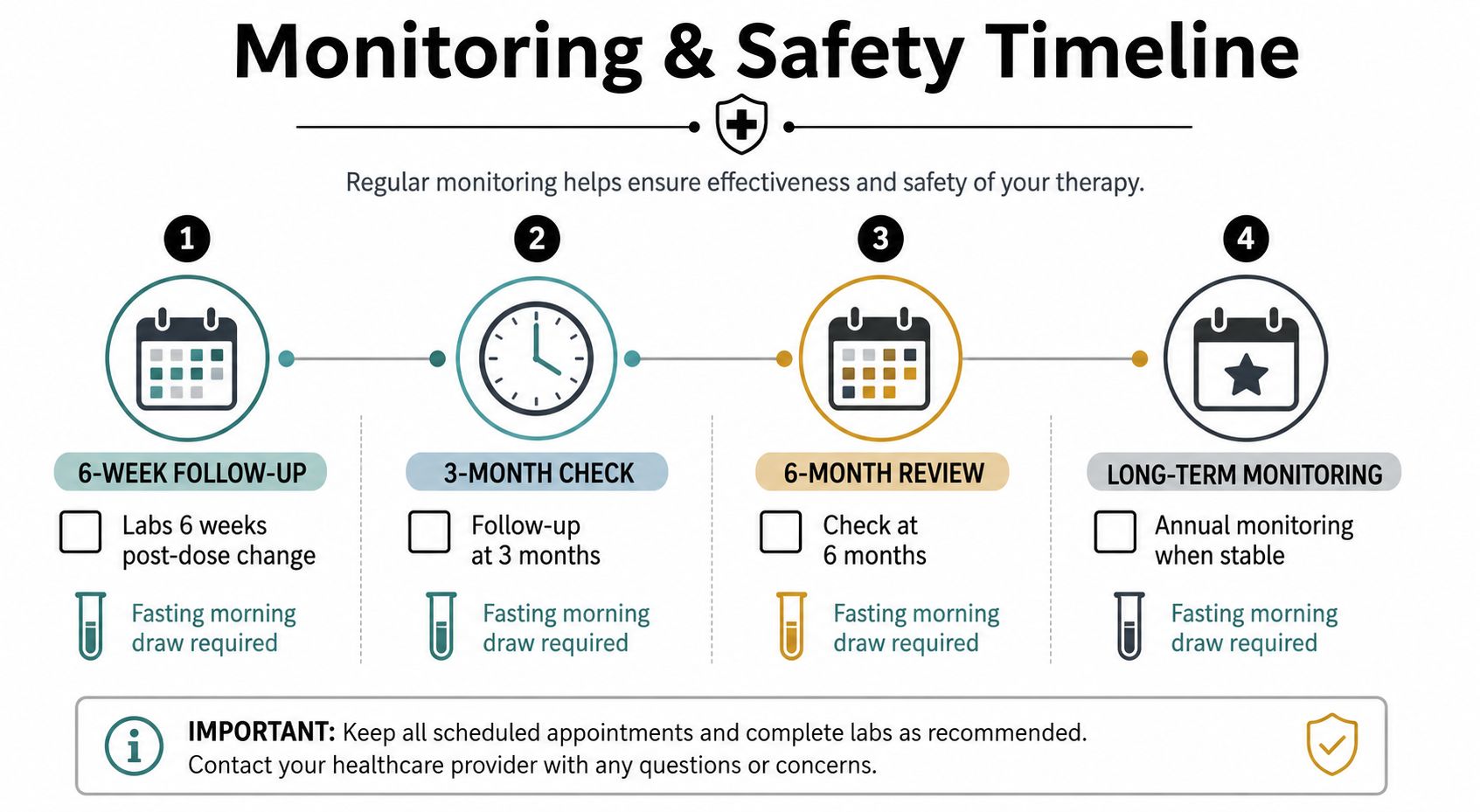
Monitoring makes hormone therapy a clinical decision process rather than a recurring shipment. Before treatment, establish baseline symptoms, testosterone, hematocrit, blood pressure, and other relevant risk markers. After a dose change, draw labs at a consistent point in the delivery cycle, because the same result can mean something different at a peak than at a trough.
A practical schedule includes a review after a dose change, a broader reassessment at about 3 months, another check around 6 months, and continued monitoring every 6 to 12 months once stable. The exact timing depends on the medication, diagnosis, age, comorbidities, and previous results. Follow-up commonly includes testosterone, hematocrit, and PSA at 3 months, then every 6 to 12 months, as summarized in the Endocrine Society report.
The hematocrit guardrail
Measure hematocrit before treatment, repeat it at 3 to 6 months, and check it at least annually. Several guidelines use 54% as the point requiring intervention because testosterone can increase red blood cell production and cause secondary polycythemia. The clinical review of testosterone therapy monitoring describes the usual response: hold treatment, assess causes such as hypoxia or sleep apnea, and restart at a lower dose only after the value normalizes.
Side effects require context, not automatic add-on medication:
- Acne or oily skin: A dose or delivery adjustment may be more appropriate than another drug.
- Nipple tenderness: Review the clinical context and check estradiol when indicated. Treat symptoms, not an isolated number.
- Mood lability: Examine peak-and-trough variation, sleep, and dose timing before assuming the total dose is too low.
- High hematocrit: Pause treatment and investigate. The treating clinician may consider therapeutic phlebotomy when appropriate.
- Sleep symptoms or rising blood pressure: Reassess the underlying risk before increasing testosterone.
Discuss an exit strategy before the first dose. Decide what happens if symptoms do not improve, laboratory values become unsafe, fertility becomes a priority, or treatment trade-offs no longer justify continuation. Testosterone can suppress sperm production, so review whether TRT can affect fertility before starting, not only after fertility becomes an urgent concern.
Lifestyle, Adjunctive Strategies, and the Metabolic-First Question
Testosterone isn't automatically the best first move. A man with central weight gain, unrefreshing sleep, insulin resistance, depression, thyroid disease, medication-related suppression, or inadequate calorie intake may have a problem that testosterone won't solve.
A metabolic-first review asks practical questions. How long and how well do you sleep? Do you snore or stop breathing at night? What are your blood pressure, glucose, lipids, activity level, resistance-training pattern, protein intake, alcohol use, and stress load? Treating sleep apnea or another confirmed illness can change symptoms and laboratory results, while also making later hormone treatment easier to assess.
Recent coverage of a 2025 study involving 83 men with obesity, insulin resistance, and functional hypogonadism reported that tirzepatide produced greater weight loss, higher endogenous testosterone, improved gonadotropins, and better erectile function than transdermal TRT or no treatment. Read the coverage of the tirzepatide and TRT comparison, but treat it as a reason to ask better diagnostic questions, not as a universal prescription.
Metabolic-first question: Could improving sleep, weight, insulin resistance, or medication exposure address the cause before replacement becomes necessary?
Resistance training can support muscle and bone, adequate nutrition supports recovery, and consistent sleep supports normal hypothalamic signaling. These measures are supportive, not substitutes for treatment when genuine hypogonadism remains confirmed. Avoid treating “boosters,” prohormones, and growth-hormone products as harmless shortcuts. They can complicate the laboratory picture and add risks without answering the underlying diagnosis.
Costs, Telemedicine Workflows, and Choosing a Provider
The medication price is only one part of the cost. A realistic comparison includes the initial consultation, two early-morning testosterone tests, related bloodwork, follow-up visits, injection supplies, shipping, and possible procedures such as fertility preservation or imaging. Insurance may cover some services and not others, while cash-pay programs may bundle medication and visits or bill each component separately.
For a fuller breakdown of the categories to compare, see this guide to how much TRT costs. Ask whether a quoted price includes laboratory review, clinician follow-up, supplies, pharmacy fulfillment, and dose adjustments. A low monthly medication price can become less attractive if essential testing or consultations sit outside the package.
How a legitimate telemedicine workflow works
Telemedicine can be convenient without becoming casual medicine. A responsible workflow should include:
- Identity and location verification: The clinic confirms who you are and whether the clinician can legally provide care where you live.
- Live clinical evaluation: A licensed clinician reviews symptoms, medical history, medications, cardiovascular risk, prostate considerations, sleep, and fertility goals.
- Appropriate laboratory evidence: The clinic orders suitable testing or reviews recent results that meet its requirements.
- Clinical decision-making: The clinician considers alternatives and doesn't approve treatment from one isolated number.
- Licensed pharmacy fulfillment: The prescription comes through a legitimate pharmacy with clear instructions.
- Planned follow-up: The clinic explains when to repeat testing and whom to contact if side effects occur.
How bring-your-own-labs transfers work
A transfer patient usually uploads existing laboratory reports before or during intake. The receiving clinician should verify the test names, units, reference ranges, collection times, fasting status when relevant, and relationship to the last dose. A testosterone result without collection timing can be difficult to interpret, especially for injections, gels, pellets, or long-acting products.
The clinic may accept the results, request missing tests, or repeat the panel. That isn't unnecessary friction. It protects against treating an old result, an improperly timed result, or a panel that omitted hematocrit, PSA where appropriate, LH, FSH, prolactin, or other clinically relevant markers.
A provider-selection checklist
Look for a clinician who:
- Explains alternatives: They discuss observation, metabolic treatment, fertility-preserving options, and replacement when appropriate.
- Shares the exact plan: You receive the dose, route, timing, laboratory schedule, and side-effect instructions in writing.
- Coordinates care: The provider encourages communication with primary care and relevant specialists.
- Uses adjustment rather than escalation: The clinician responds to symptoms and safety markers instead of chasing a high target.
- Provides an exit plan: You understand when treatment may be paused, changed, or discontinued.
Cost Plus TRT is one telemedicine option that describes physician consultations, testosterone cypionate, injection supplies, shipping, and the ability to upload recent laboratory results for transfer evaluation. Patients should still confirm eligibility, required testing, state availability, and the clinician's individualized plan before starting or transferring care.
The strongest 2026 approach is likely to favor individualized risk assessment, better handling of outside laboratory records, and a clearer boundary between medical hormone treatment and wellness marketing. The principle remains straightforward: optimization means matching treatment to confirmed need, personal goals, physiology, and safety, not maximizing a laboratory value at any cost.
If you're considering hormone optimization therapy, start by documenting your symptoms, gathering recent laboratory reports, and writing down your fertility and health goals before a consultation. Cost Plus TRT offers online clinician evaluation, options for patients with existing labs, and physician-supervised TRT where appropriate, so visit Cost Plus TRT to review the process and request a consultation.