
You start TRT because you want to feel better. Your energy improves a bit, maybe your labs show testosterone in range, but something still feels off. Libido is inconsistent. Erections aren't as reliable as you expected. You feel puffy, flat, irritable, or tired in a way that doesn't match the story you were told about “fixed” hormones.
That pattern is common, and it confuses a lot of men.
The mistake is assuming every symptom points in one direction. Low testosterone can cause sexual, mood, and fertility problems. So can high estradiol. In practice, men often chase the wrong culprit, especially when they start with symptoms alone and skip a full hormone workup. Estradiol is not a “female hormone” that men should try to eliminate. Men need it. The problem starts when the balance between testosterone and estradiol shifts far enough that symptoms show up.
If you're on TRT, considering TRT, or trying to understand why you still don't feel right, high estradiol symptoms in men deserve a careful look. The answer usually isn't panic, and it usually isn't to stop treatment on your own. The answer is to identify the pattern, test correctly, and make targeted adjustments.
Table of Contents
- Is It High Estradiol? Understanding the Symptoms
- Recognizing the Symptoms of High Estradiol
- The Main Causes of Elevated Estradiol
- Getting a Diagnosis Lab Tests and Interpretation
- Treatment Options for High Estradiol in Men
- What to Ask Your Doctor About High Estradiol
- Take Control of Your Hormonal Health
Is It High Estradiol? Understanding the Symptoms
A familiar scenario goes like this. A man starts testosterone, expects steady improvement, then runs into a strange mix of symptoms. Sex drive drops instead of rising. Erections become less dependable. He feels emotionally off, more reactive, or just not like himself. His first thought is usually, “My testosterone must still be low.”
Sometimes that's true. Sometimes it isn't.
A major diagnostic problem is that high estradiol can masquerade as low testosterone, which means men can seek TRT based on symptoms alone and still miss the actual issue. That's why a full hormone panel matters before treatment decisions are made, especially when symptoms overlap so heavily, as described by Medical News Today's discussion of estrogen in men.
Why symptoms get mistaken for low testosterone
Estradiol affects male sexual function, mood, and reproductive health. It isn't just sitting in the background. Estrogen receptors exist in multiple body systems, so when estradiol rises out of range, men can feel it in several ways at once. That's part of what makes the picture messy. You may have lower libido, fatigue, and erectile problems without having “too little testosterone” as the main problem.
High estradiol doesn't always announce itself with one obvious symptom. More often, men notice a cluster of frustrating changes that don't fully make sense until estradiol is measured.
The emotional side matters too. A lot of men start blaming themselves when treatment doesn't work the way they expected. They think they failed the diet, the workout plan, or the medication. Usually, it's a hormone-balance problem, not a character problem.
Before assuming you need more testosterone, it's worth asking whether the ratio between testosterone and estradiol has shifted in the wrong direction.
Recognizing the Symptoms of High Estradiol
Some symptoms are easy to spot. Others are subtle enough that men write them off as stress, aging, poor sleep, or “just not feeling great.” High estradiol symptoms in men usually make more sense when you separate the visible physical signs from the internal symptoms that affect mood, cognition, and sexual function.
Common high estradiol symptoms in men
A well-known physical sign is gynecomastia, or enlargement of male breast tissue. Clinical guidance notes that gynecomastia often shows up when estradiol exceeds 50 pg/mL, and in men on TRT, post-treatment estradiol above 40 pg/mL is associated with 4.2 times higher odds of also experiencing erectile dysfunction, according to Balance My Hormones on testosterone and high estrogen symptoms in men.
That doesn't mean every man with a mild bump in estradiol will develop breast tissue or ED. It does mean these symptoms deserve attention when they appear together.
Other common patterns include breast tenderness, a softer or puffier look, reduced erection quality, lower libido, and a sense that arousal is harder to sustain. Men often describe it as feeling disconnected from sexual response rather than just "not in the mood." If erectile symptoms are part of the picture, some men also explore clinician-guided support options such as ED medications for men while the hormone issue is being worked up.
| Symptom Category | Specific Symptom | What to Look For |
|---|---|---|
| Sexual function | Erectile dysfunction | Less reliable erections, weaker rigidity, more inconsistency |
| Sexual function | Low libido | Reduced interest in sex, less spontaneous desire |
| Chest changes | Gynecomastia | New breast fullness, tenderness, or a small firm lump under the nipple |
| Reproductive health | Infertility | Trouble conceiving or abnormal semen findings |
| Mood and cognition | Irritability or low mood | Feeling more emotionally reactive, flat, or mentally off |
| Energy and performance | Fatigue | Ongoing tiredness despite sleep, training, or adequate testosterone |
Why symptoms get mistaken for low testosterone
The overlap is the problem. Low testosterone and high estradiol can both produce low libido, poor sexual performance, fatigue, and fertility concerns. If a man focuses on one lab marker and ignores the rest, he can end up treating the wrong thing.
Three symptoms deserve special respect because they often point clinicians toward estradiol imbalance: infertility, erectile dysfunction, and gynecomastia. They involve different body systems, but they often travel together when estrogen signaling is too strong relative to available androgen activity.
Practical rule: If testosterone looks “good” on paper but your chest, libido, mood, and erections are moving in the wrong direction together, don't guess. Test estradiol and review the whole hormonal context.
Mood changes also matter. Men may not say “I think this is hormonal.” They say they feel flat, more anxious, easier to frustrate, less motivated, or mentally cloudy. Those complaints count.
The Main Causes of Elevated Estradiol
Estradiol rises for reasons. In men, the most common story is not that the body randomly starts making estrogen for no reason. Usually, there is a driver. For this audience, the biggest ones are TRT, excess body fat, and anything that increases conversion of testosterone into estradiol or slows clearance.
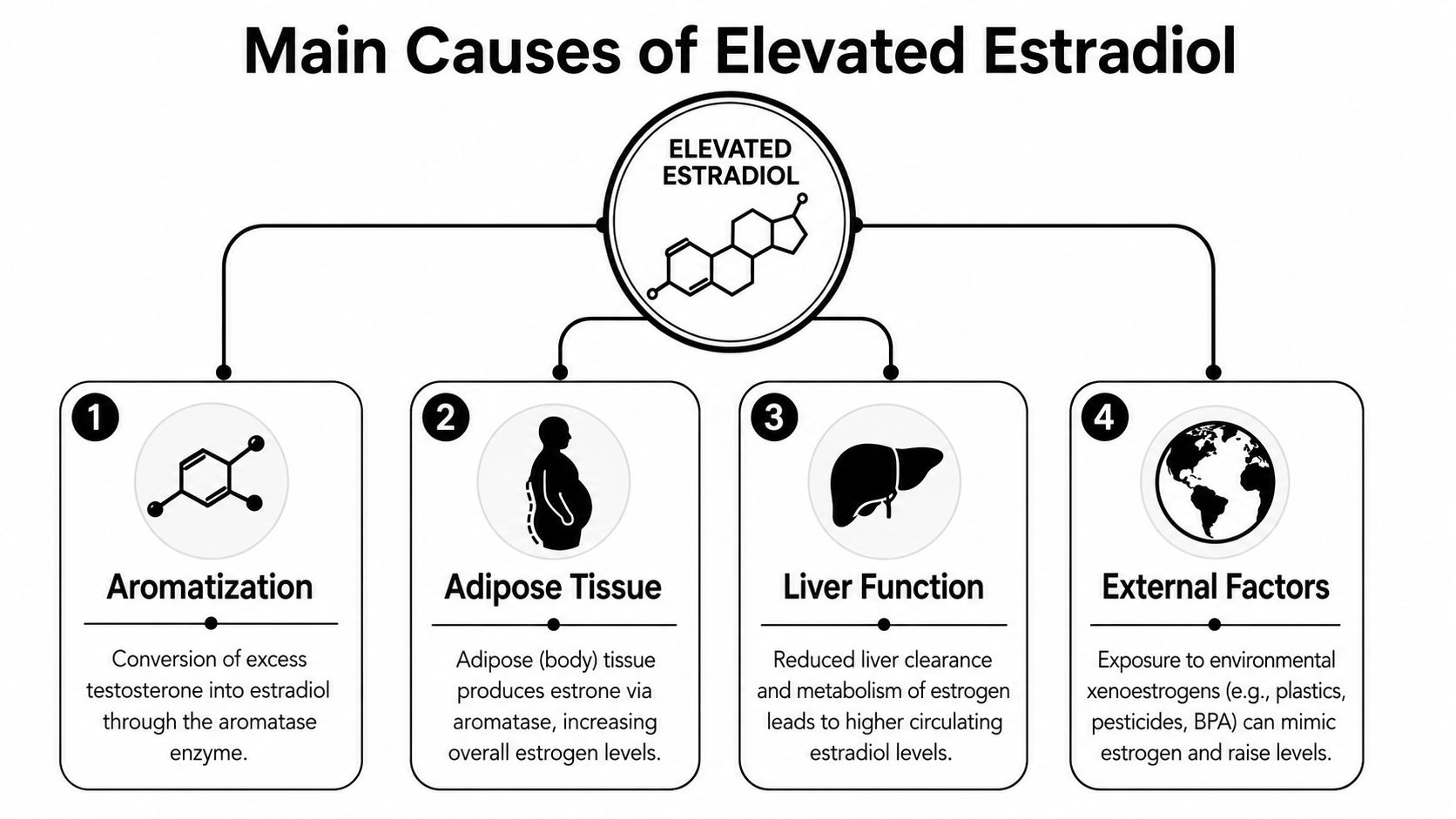
The aromatase factory
The simplest way to think about this is as a conversion factory. Aromatase is the enzyme that converts testosterone into estradiol. If your body has more raw material coming in, or more factory activity, estradiol can climb.
That's why TRT can help one part of the hormonal picture while complicating another. Male Infertility Guide explains elevated estradiol, noting that for men on TRT, exogenous testosterone can raise estradiol, and that high estradiol can impair sperm production by disrupting the hormonal axis.
For a man who feels worse after starting treatment, that matters. The issue may not be that testosterone “isn't working.” It may be that more testosterone created more substrate for aromatization.
Why TRT and body fat matter most
Body fat changes the equation because adipose tissue contains aromatase activity. More fat tissue usually means more conversion capacity. So a man on TRT with higher body fat has two pressures acting at once. He has more testosterone available to convert, and more tissue capable of converting it.
This is why some men do poorly on a protocol that looks perfectly reasonable on paper. Their body chemistry turns a portion of that testosterone dose into estradiol aggressively. The result can be sexual dysfunction, water retention, mood shifts, and breast symptoms even when total testosterone appears acceptable.
Other contributors worth discussing
Not every case comes from TRT or body composition alone. A clinician should also ask about:
- Alcohol use: Heavy use can affect liver handling of hormones.
- Liver health: Reduced clearance can allow hormones to accumulate.
- Medications: Some drugs can shift hormone balance in ways that complicate the picture.
- Environmental exposure: Some men worry about xenoestrogens and endocrine disruptors. That conversation can be reasonable, but it shouldn't distract from the higher-yield basics first.
A lot of men jump straight to supplements when symptoms show up. That usually isn't the best first move. If the main driver is dose-related aromatization, you won't solve it with guesswork.
Getting a Diagnosis Lab Tests and Interpretation
You can't diagnose estradiol imbalance by symptoms alone. The symptom pattern can raise suspicion, but confirmation requires the right lab test and the right interpretation.
Which test to ask for
Men should ask for a sensitive or ultrasensitive estradiol assay, ideally one using LC-MS/MS methodology. Standard immunoassays can be less helpful at the lower ranges seen in men, and small errors matter when clinical decisions depend on a hormone measured in a relatively tight range.
This is one of the most practical mistakes in men's hormone care. A patient gets an estradiol result, assumes it's accurate, and then makes a treatment decision from a shaky number. If the test method is off, the plan built on top of it can be off too.
A useful lab discussion usually includes more than estradiol alone. Testosterone, free testosterone, SHBG, and fertility-related questions may all matter depending on your symptoms.
How to think about the result
A common reference range for adult men is 10 to 50 pg/mL, according to Breastcancer.org's review of high estrogen in men. That same review cites clinical research showing a significant correlation between increased estradiol and erectile dysfunction, with an odds ratio of 1.068 for ED for every unit increase in estradiol.
Range matters, but context matters more.
An estradiol value has to be interpreted alongside symptoms, testosterone status, and whether you're on TRT. A number near the top of the range may be tolerated well by one man and poorly by another. A result outside the range becomes more meaningful when it lines up with clear symptoms such as breast tenderness, erectile dysfunction, or fertility decline.
Bring your actual symptom timeline to the visit. “I started treatment, then two weeks later my libido fell and my chest became tender” is far more useful than “I still feel off.”
The goal isn't to chase the lowest estradiol possible. It's to identify whether estradiol is contributing to the symptoms you have.
Treatment Options for High Estradiol in Men
Most men want a simple answer. “What do I take?” That's understandable, but it's often the wrong starting question. The better question is, “What's driving the elevation, and what is the least disruptive fix?”
A major problem in patient care is the lack of clear guidance for men dealing with TRT-induced estradiol issues. Everlywell's discussion of high estradiol in males highlights that men are often left unsure whether they should stop treatment, change treatment, or add a medication. In good practice, you don't jump straight to stopping TRT or taking an aromatase inhibitor. You work through the likely causes in order.

Start with the TRT protocol, not the pill bottle
If a man developed symptoms after starting or increasing TRT, I look at the protocol first. Dose size, injection frequency, and timing of labs all matter. Large peaks can create a stronger aromatization problem in some patients.
In plain terms, smoother testosterone delivery often produces a smoother estradiol response. That doesn't mean every man needs the same schedule. It means protocol design should fit the patient's response, not just a template.
For men learning more about treatment structure and physician-guided adjustments, it helps to understand how modern TRT care is typically managed.
Lifestyle changes that actually move the needle
If excess body fat is part of the picture, weight reduction matters because it can reduce aromatase activity. This is one of the highest-yield non-drug interventions available. It's not glamorous, but it works better than a lot of supplement stacks marketed to men who feel desperate.
Useful habits include:
- Consistent resistance training: Helps preserve lean mass while body composition improves.
- A calorie plan you can sustain: Extreme diets usually fail and create more stress than benefit.
- Reduced alcohol intake: Especially important if bloating, poor sleep, or liver concerns are part of the picture.
- Sleep discipline: Poor sleep can make symptom interpretation harder and worsen recovery.
Some men want an overview before talking through options in detail:
When medications make sense
Sometimes protocol changes and lifestyle work are not enough. That's where medications enter the conversation.
Aromatase inhibitors can reduce conversion of testosterone into estradiol. They can be useful in selected cases, especially when lab-confirmed elevation matches symptoms. The risk is overcorrection. Men who “crash” estradiol often feel terrible. Joints may ache, libido can worsen, mood can flatten, and overall well-being can drop. More suppression is not better.
SERMs may also be relevant in some situations, particularly when breast symptoms are prominent. These aren't casual add-ons. They need a reason, a clear goal, and follow-up labs.
The best treatment is the smallest change that fixes the problem. If a protocol tweak solves it, that beats adding another medication.
What doesn't work well is self-prescribing based on internet advice, borrowing someone else's AI dose, or chasing numbers without matching them to symptoms.
What to Ask Your Doctor About High Estradiol
A good visit is specific. Vague concern gets vague answers. If high estradiol symptoms in men are on your radar, bring focused questions and your symptom timeline.

Bring these questions to your visit
- Ask about the assay: “Are we using a sensitive or ultrasensitive estradiol test?”
- Ask about interpretation: “How are you evaluating this in the context of my testosterone level and symptoms?”
- Ask about timing: “When should labs be drawn relative to my injections so the result is useful?”
- Ask about protocol first: “Can we adjust dose or injection frequency before starting an aromatase inhibitor?”
- Ask about fertility: “If I want children, how does this estradiol level affect sperm production and the treatment plan?”
- Ask about red flags: “Which symptoms would make you want to intervene sooner?”
- Ask about follow-up: “When should we recheck labs after making a change?”
If fertility is part of your concern, it also helps to review a clear explanation of whether TRT can affect fertility, because that conversation often overlaps with estradiol management.
The reason to ask sharp questions is simple. High estradiol can look like low testosterone, and symptom-only treatment creates room for misdiagnosis. Clear questions help the visit stay anchored to evidence instead of assumptions.
Take Control of Your Hormonal Health
High estradiol symptoms in men are frustrating, but they are manageable. Most men don't need fear-based advice. They need accurate testing, a clear interpretation, and a plan that matches what is happening in their body.
The key insight is balance. Estradiol isn't the enemy, and testosterone isn't always the full answer. Men feel best when the overall hormone picture is working together. That means symptoms, labs, fertility goals, and treatment response all have to be considered at the same time.
If you're on TRT and feel worse than expected, don't assume treatment failed. If you're considering TRT, don't assume symptoms alone tell the whole story. Get a proper panel, review the pattern carefully, and make changes in a rational order. That approach prevents overtreatment, reduces confusion, and gives you a much better chance of feeling like yourself again.
If you want help sorting out symptoms, reviewing labs, or optimizing a TRT plan without hidden fees or unnecessary add-ons, Cost Plus TRT offers physician-guided telemedicine care built around transparent pricing and practical hormone management.