

An adult male estradiol level commonly falls around 10–40 pg/mL, but the number only makes sense when you know when the blood was drawn and which assay measured it. A result near the edge of that range can mean something very different on a sensitive LC-MS/MS test than on a standard immunoassay.
You're on testosterone replacement therapy, your testosterone number looks acceptable, and then your lab report shows estradiol at 35 pg/mL. Is that a problem? Maybe, maybe not. The answer depends on your symptoms, injection schedule, the timing of the blood draw, and whether the laboratory used a method capable of measuring male estradiol accurately.
Men often receive confusing advice about estradiol. Some are told it's a “female hormone” that should be suppressed. Others are given an aromatase inhibitor as soon as a result looks slightly high. Neither approach reflects how estradiol works in the male body. A reliable estradiol test for men is a context-dependent tool, not a pass-or-fail score.
Table of Contents
- What Is Estradiol Testing for Men and Why It Matters
- Understanding Male Estradiol and Its Roles
- How to Get an Accurate Estradiol Test
- Interpreting Your Estradiol Results
- Where and How to Get Tested in the US
- Common Myths About Estradiol in Men
- Next Steps and When to Seek Care
What Is Estradiol Testing for Men and Why It Matters
A man on TRT may open his lab report and see estradiol at 35 pg/mL. He may feel fine, or he may report water retention, breast tenderness, reduced libido, or mood changes. The same result can lead to different decisions because a laboratory reference interval isn't a diagnosis, and because the test method can influence the reported value.
Estradiol is a form of estrogen that men produce in smaller amounts, largely when the body converts some testosterone through a process called aromatization. It isn't a useless byproduct. Male estradiol supports several systems that matter in daily life, including bone maintenance, sexual function, joints, and aspects of brain health. The practical issue is balance. Both excessive and insufficient estradiol can create symptoms that overlap with low testosterone, excessive testosterone, medication effects, poor sleep, or unrelated medical conditions.

Why TRT makes the result more relevant
Testosterone therapy changes the amount of substrate available for aromatization. That doesn't mean every man on TRT develops excessive estradiol, and it doesn't mean a higher result automatically requires medication. It means estradiol deserves attention when symptoms appear, when a dose changes, or when a clinician is assessing treatment safety and response.
The most useful interpretation combines four pieces of information:
- The laboratory value: Adult male results are often reported within an approximate 10–40 pg/mL range, although intervals vary by method and laboratory. Laboratory medicine guidance on male estradiol testing explains why the reference interval isn't universal.
- The assay method: Low male concentrations challenge standard immunoassays, which can overestimate results at the lower end.
- The blood-draw timing: A result soon after an injection may not represent the same exposure as a result taken just before the next dose.
- Your clinical picture: Libido, erectile function, mood, joints, breast symptoms, fertility goals, and bone health all affect the decision.
Clinical perspective: A single estradiol number rarely tells me what to do by itself. The number becomes useful when it matches the timing, assay, symptoms, and the rest of the hormone panel.
Understanding Male Estradiol and Its Roles
Estradiol works more like a volume control than an on-off switch. Men need enough signaling for normal physiology, but pushing the level too high or suppressing it too aggressively can create a different set of problems.
Bone health is one of the clearest reasons not to treat estradiol as an enemy. Estradiol helps maintain skeletal strength in men, and very low levels can be relevant when a patient has bone-density concerns. It also participates in sexual function. Libido and erection quality involve testosterone, estradiol, blood flow, nerves, sleep, mood, medications, and relationship factors, so estradiol is one contributor rather than a complete explanation.
Joint comfort can change when estradiol falls too low. Some men describe stiffness or aching after an aromatase inhibitor lowers their level, while others notice no joint symptoms at all. Cognitive and emotional effects are similarly individual. Mood changes, reduced mental sharpness, or emotional sensitivity shouldn't be assigned to estradiol without reviewing the broader clinical picture.
Aromatization connects testosterone and estradiol
The body converts some testosterone to estradiol through aromatase. This conversion occurs in tissues including fat, muscle, bone, and the brain. TRT can increase the amount of testosterone available for conversion, but the response varies among men. Body composition, dose, injection pattern, underlying health, and medication use can all affect the result.
For men considering or already receiving testosterone replacement therapy, this relationship explains why monitoring testosterone alone can leave an important part of the picture missing. A “good” testosterone result doesn't guarantee that estradiol is appropriate for the individual.
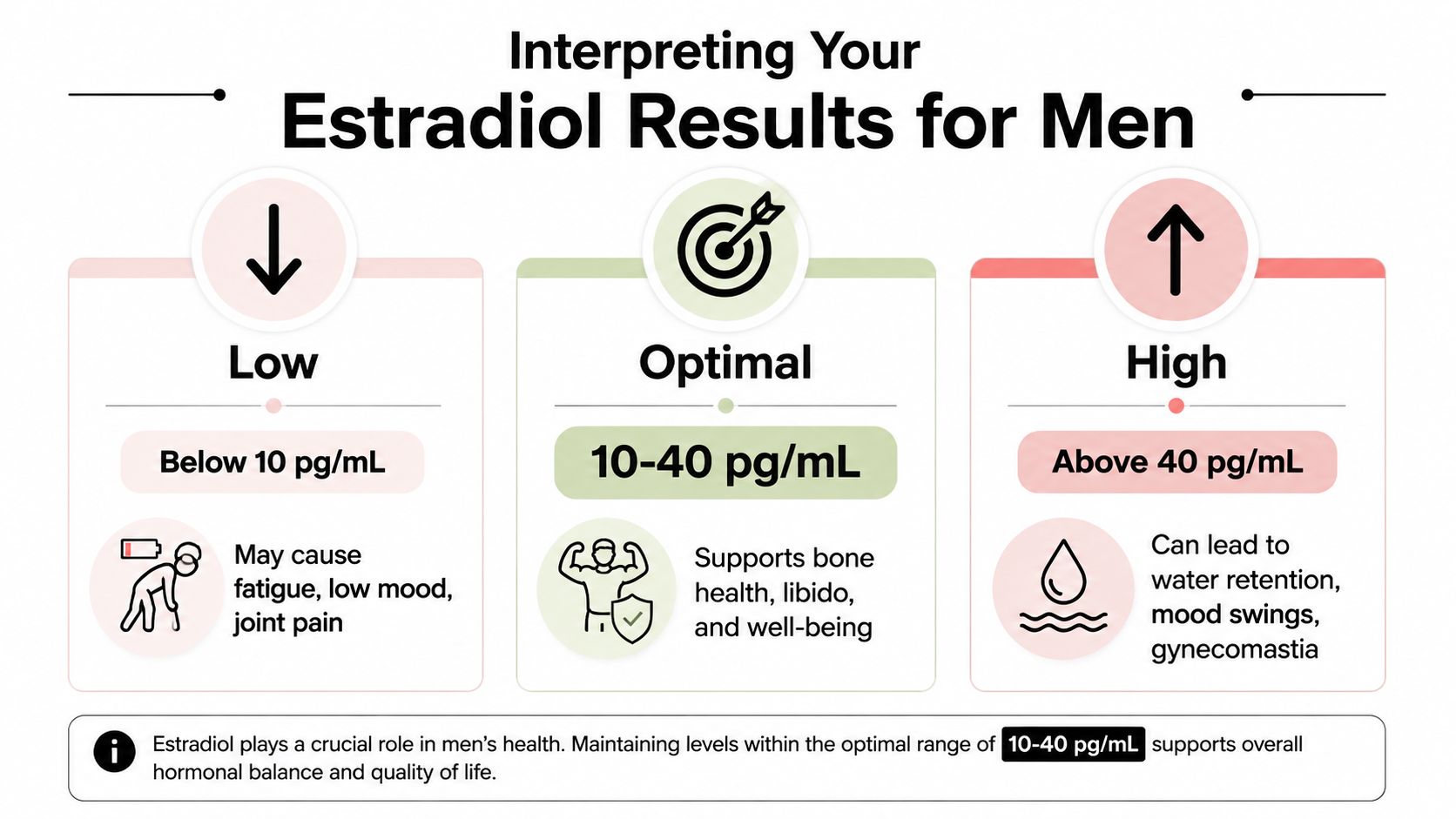
Very high estradiol may accompany breast tenderness or enlargement, fluid retention, mood changes, or sexual symptoms. Very low estradiol may accompany low libido, joint discomfort, or mood changes. Those symptoms aren't specific enough to prove the cause. A clinician should confirm the result with an appropriate assay and assess testosterone, LH, FSH, medications, fertility plans, and other relevant findings before changing treatment.
How to Get an Accurate Estradiol Test
The most common practical mistake is treating the blood draw as if timing doesn't matter. If you inject testosterone weekly, a mid-week draw is often a useful compromise because it avoids interpreting only the immediate post-injection period or the pre-injection trough. Your prescriber may instead want a trough measurement, taken shortly before the next injection, to understand the lowest exposure. Follow the same timing strategy each time so results can be compared.
The exact schedule depends on the formulation, dose, injection frequency, and clinical question. Record the date and time of your last injection, the dose, and the date and time of the blood draw. Give that information to the ordering clinician. Without it, even a technically accurate result can be difficult to interpret.
Request the right assay
Ask whether the order specifies sensitive estradiol, ultrasensitive estradiol, or estradiol by LC-MS/MS. The Association for Diagnostics & Laboratory Medicine guidance recommends LC-MS/MS for adult men because male concentrations are low and direct immunoassays have limitations, including poorer sensitivity and steroid cross-reactivity.
A published high-sensitivity method quantified serum estradiol down to a lower limit of quantification of 0.5 pg/mL, illustrating how far modern mass-spectrometry testing can extend below the usual male range. The analytical chemistry publication describing that method also highlights why assay precision matters in men.
| Testing Method | Best For | Sensitivity | Male Reliability |
|---|---|---|---|
| Standard direct immunoassay | Higher estradiol concentrations | Limited at low male levels | Can be misleading near the lower range |
| Sensitive immunoassay | Some low-level applications | Better than routine testing, but platform-dependent | Check the laboratory's method and interval |
| LC-MS/MS | Men, TRT monitoring, and low-level measurement | Designed for very low concentrations | Generally the preferred option for adult men |
Prepare consistently
Fasting isn't always required for an estradiol blood test, but consistency helps when you repeat testing. Don't stop testosterone, an aromatase inhibitor, or another hormone medication unless the prescribing clinician tells you to. Bring your medication list and note any recent dose change.
Practical rule: Keep the injection timing, laboratory method, and reporting details consistent whenever possible. A trend from comparable tests is more useful than a collection of unrelated numbers.
Interpreting Your Estradiol Results
Start with the laboratory's own reference interval, then compare it with the method used. Adult male estradiol is commonly reported around 10–40 pg/mL, while some laboratories use narrower or broader method-specific ranges. A laboratory medicine review notes that adult men are generally below 30 pg/mL and that values tend to decrease with age, which is another reason a universal cutoff doesn't work well. The review on estradiol measurement in men discusses these interpretation limits.
A result below the laboratory range may be important if it matches symptoms such as joint pain, reduced libido, low mood, or concerns about bone health. It may also reflect an overly aggressive aromatase-inhibitor dose, a testing method that isn't reliable at low concentrations, or a result taken under different conditions from an earlier test. The appropriate response is usually confirmation and clinical review, not an automatic medication change.
A result within the reference range doesn't guarantee that every symptom has been solved. A man with estradiol at 20 pg/mL and persistent erectile dysfunction may need evaluation of vascular health, sleep, medications, psychological factors, and testosterone exposure. A man at 35 pg/mL with breast tenderness may deserve a different review from an asymptomatic man with the same result.
Read the panel, not one isolated marker
Estradiol should generally be considered alongside total testosterone, and often LH and FSH. Those hormones help distinguish endogenous production, TRT-related changes, possible suppression, and fertility-related concerns. Age, symptoms, medication exposure, body composition, and injection timing belong in the same conversation.
When estradiol is high and symptoms are present, a clinician may first review the testosterone dose and injection pattern. An aromatase inhibitor can lower estradiol, but excessive suppression may cause its own problems. Selective estrogen receptor modulators may have a role in selected situations, particularly when fertility or breast symptoms are part of the assessment, but they aren't interchangeable with aromatase inhibitors and shouldn't be self-prescribed.
The following video can provide general background, but it can't replace interpretation by the clinician who knows your history.
Where and How to Get Tested in the US
Most men use one of three routes. A primary-care clinician or urologist can order estradiol as part of a broader evaluation. A local laboratory network can perform the blood draw when an order is in place. Telemedicine clinics may coordinate testing through a major network or review laboratory results obtained elsewhere.
Quest Diagnostics and Labcorp locations are familiar options for many patients, but the important question isn't only where the blood is drawn. Ask which laboratory platform will perform the estradiol measurement and whether the order specifies a sensitive method suitable for men. A convenient location doesn't compensate for an assay that struggles at male concentrations.
Compare the practical pathways
Traditional care works well when you already have a clinician who knows your medical history and can order follow-up testing. It may be less convenient if appointments are difficult to schedule or if you want to transfer TRT management.
Self-pay testing can offer direct access to a blood draw, but you still need a qualified clinician to interpret the result and decide whether treatment should change. Uploading an existing report can also help when transferring care, provided the report includes the collection date, units, reference interval, assay method, and the rest of the hormone panel.
Telemedicine can reduce travel and coordinate consultation remotely. Cost Plus TRT states that patients may schedule laboratory work through Quest Diagnostics or upload recent results from another provider, followed by an online visit with a licensed physician. Men considering that route can review the process through Cost Plus TRT's start page.
Bring these details to any appointment:
- Collection information: Injection date, injection time, dose, and blood-draw date.
- Laboratory details: Assay name, units, reference interval, and whether LC-MS/MS was used.
- Treatment history: Testosterone formulation, other hormones, aromatase inhibitors, and recent changes.
- Clinical goals: Symptom relief, TRT monitoring, fertility preservation, or evaluation of breast symptoms.
Some men need one carefully timed repeat test. Others need a broader workup. The right pathway is the one that connects the lab result to a clinician who can act on it.
Common Myths About Estradiol in Men
Myth one, high estradiol always means you need an aromatase inhibitor.
A high-looking result may reflect the assay, timing, or laboratory interval. Even when the elevation is real, clinicians should consider symptoms, testosterone exposure, and the reason for testing before prescribing an aromatase inhibitor. Lowering estradiol too far can produce low-libido, mood, joint, or bone-related concerns, so suppression isn't a harmless correction.
Myth two, estradiol is bad for men.
Men need estradiol for normal physiology. Bone maintenance, sexual function, joint comfort, and brain-related functions all make the hormone clinically relevant. The goal isn't to eliminate estradiol. The goal is to identify whether the measured level fits the patient and the treatment context.
Myth three, every man on TRT will develop gynecomastia.
TRT can increase aromatization in some men, but gynecomastia isn't an inevitable outcome. New breast tenderness, a firm area behind the nipple, or progressive enlargement deserves timely assessment. Waiting for a severe symptom or taking medication without an examination can complicate the situation.
Myth four, testosterone testing is enough.
A testosterone result describes one part of treatment. Estradiol, LH, and FSH can add context, particularly when symptoms persist or fertility matters. Men who are concerned about fertility should also understand that TRT and infertility involve a separate clinical discussion, because testosterone therapy can affect the reproductive axis even when a man feels better.
A laboratory flag is a reason to ask a better question, not permission to start or stop a drug.
Next Steps and When to Seek Care
If you're on TRT and your symptoms don't match your testosterone result, ask for a structured review rather than guessing. Confirm the injection timing, identify the assay method, check the laboratory reference interval, and compare estradiol with the rest of the hormone panel.
Contact your prescribing clinician when you develop new or worsening symptoms, especially:
- Breast changes: Tenderness, a firm lump, or progressive enlargement around the nipple.
- Unexpected sexual changes: A marked decline in libido or erectile function despite otherwise stable treatment.
- Joint or mood symptoms: New joint discomfort, low mood, irritability, or mental changes after a dose adjustment or aromatase-inhibitor change.
- Fertility concerns: A desire to conceive, reduced testicular volume, or concern about sperm production while using TRT.
- Conflicting reports: A low, borderline, or unexpectedly different result from another laboratory.
If two laboratories disagree, don't compare the values as though they came from the same instrument. Review the units, reference intervals, timing, and method. Independent lab-focused guidance describes how a less sensitive assay may report a result below its detection threshold, while sensitive LC/MS testing can provide a more usable value for men; this explanation of male estradiol test interpretation also discusses why platforms can produce different intervals.
A clinician may recommend repeating the test with sensitive LC-MS/MS and pairing it with total testosterone, LH, and FSH. The provider may then adjust the TRT dose or injection schedule, address an aromatase inhibitor, investigate another cause of symptoms, or leave treatment unchanged when the result and clinical picture are reassuring.
Estradiol testing shouldn't become a source of anxiety or self-treatment. Used correctly, it helps men and clinicians make more informed decisions about TRT, fertility, breast symptoms, and long-term health.
If you need physician-guided TRT care or want help interpreting properly timed hormone labs, Cost Plus TRT offers online consultations, laboratory coordination through Quest Diagnostics, and review of eligible existing results. Visit Cost Plus TRT to complete the questionnaire and discuss your next step with a licensed provider.