
You're staring at a prescription page, wondering whether sildenafil, tadalafil, or something newer will fit your life. Maybe you've tried a pill once, eaten a heavy meal beforehand, and decided the medication failed. Maybe you're less concerned about the drug itself than about cost, privacy, or what happens if a standard tablet isn't enough.
Erectile dysfunction medication can help, but the options aren't interchangeable. Timing, duration, food, other medicines, cardiovascular health, hormone levels, and your preferred level of spontaneity all matter. The right approach is a decision tree, not a popularity contest between brand names.
Table of Contents
- A Common Problem Worth Talking About
- How Erections Work and Where ED Drugs Intervene
- Comparing the Main Erectile Dysfunction Medications
- Dosing, Timing, and What to Do When Results Disappoint
- Side Effects, Interactions, and Safety Boundaries
- Access, Labs, and What Treatment Actually Costs
- Choosing the Right Option for Your Situation
- Questions Men Ask Most About ED Medication
A Common Problem Worth Talking About
A man may first notice erectile dysfunction when an erection fades during sex, arrives inconsistently, or requires more stimulation than it once did. He may tell himself it was stress, alcohol, poor sleep, or an isolated off night. When the pattern continues, embarrassment often delays a medical conversation.
That hesitation is understandable, but ED is a health symptom, not a verdict on masculinity. The National Library of Medicine clinical summary describes ED as a widespread condition, affecting at least 150 million men worldwide, with projections of about 322 million by 2025. In the Massachusetts Male Aging Study, prevalence was 52% among men aged 40 to 70, including about 40% at age 40 and roughly 70% by age 70. These figures describe a medical pattern, not a personal failure.
Why erections change
Several factors can contribute at the same time:
- Vascular health: Narrowed or less responsive blood vessels can reduce penile blood flow.
- Hormonal shifts: Low testosterone or other endocrine problems can affect desire and sexual response.
- Medication effects: Some prescriptions influence libido, blood pressure, or nerve signaling.
- Stress and relationship pressure: Anxiety can interrupt the arousal process even when the blood vessels are healthy.
- Neurological or metabolic conditions: Diabetes and nerve disorders can interfere with the signals required for an erection.
Treatment uptake remains limited. The same clinical summary reports that only about 15% to 20% of ED cases are treated, while another population finding from the Massachusetts Male Aging Study noted that only about 10% of men with ED sought treatment. A private telehealth questionnaire, a primary-care visit, or an appointment with a urologist can all be reasonable starting points.
The modern menu includes oral PDE5 inhibitors such as sildenafil, tadalafil, vardenafil, and avanafil. If those medicines underperform, clinicians may consider vacuum devices, topical or intraurethral alprostadil, intracavernosal injections, or evaluation for an underlying condition. Cost and access belong in the conversation too, because a treatment that works but remains unaffordable won't be a practical treatment.
How Erections Work and Where ED Drugs Intervene
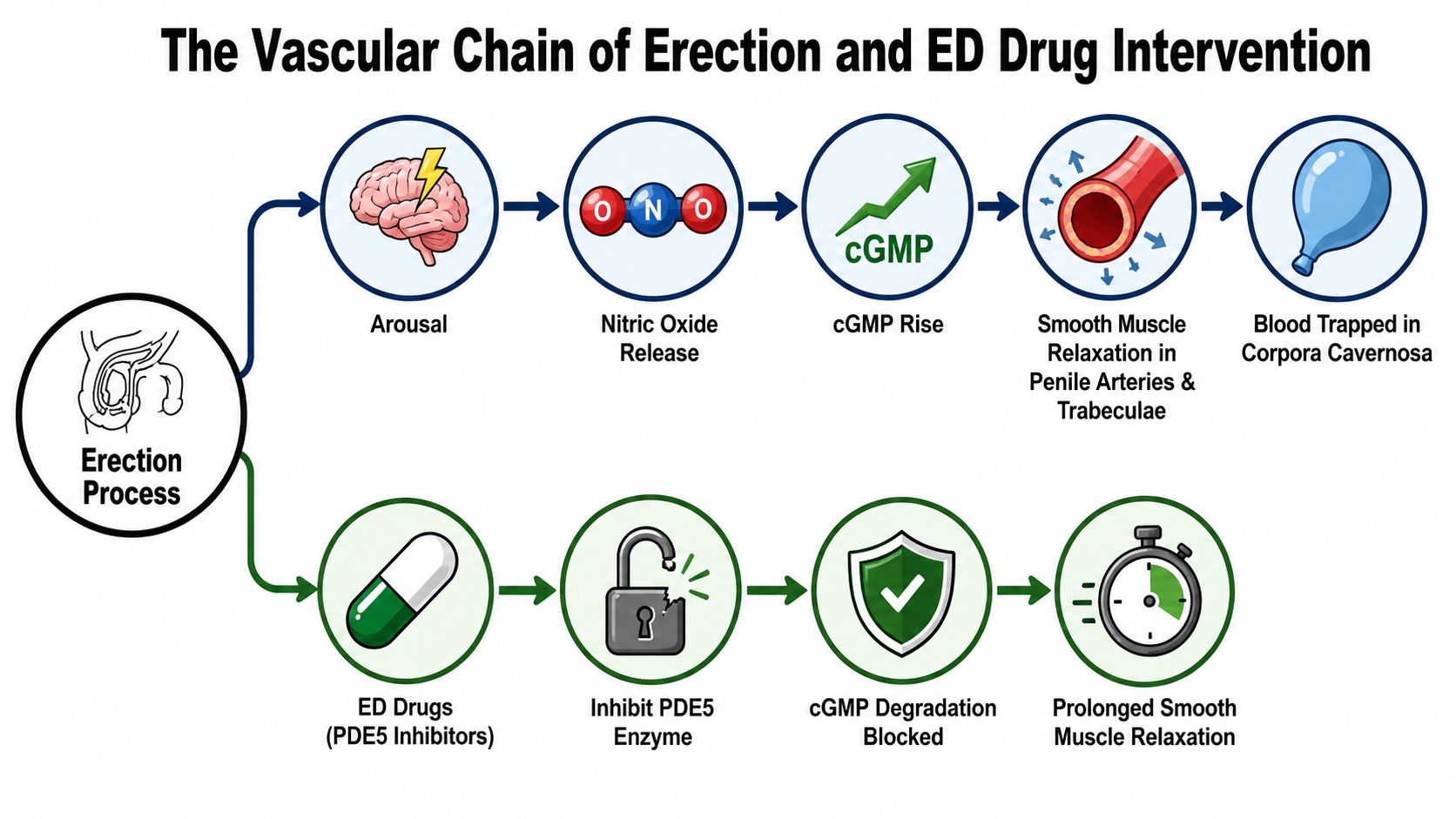
An erection is a coordinated vascular and neurological event. Sexual arousal activates nerve signals that prompt the release of nitric oxide in penile tissue. Nitric oxide increases cyclic guanosine monophosphate, commonly called cGMP.
cGMP relaxes smooth muscle in the penile arteries and in the trabecular tissue surrounding the erectile spaces. Blood enters the corpora cavernosa, and the expanding tissue compresses veins that would otherwise let blood leave. An erection develops when inflow rises and outflow is temporarily restricted.
The main oral drugs work at the final part of that chain. An enzyme called PDE5 breaks down cGMP. PDE5 inhibitors slow that breakdown, allowing the natural arousal signal to last longer. They don't create sexual desire and generally won't produce an erection without arousal and stimulation.
Where other treatments act
Oral PDE5 inhibitors amplify the body's own nitric oxide and cGMP pathway. Other treatments take a more direct route:
- Intracavernosal alprostadil uses prostaglandin E1 to relax penile smooth muscle directly after injection.
- Trimix combines several injectable medicines, commonly including alprostadil, to produce a stronger local response under medical supervision.
- Intraurethral alprostadil delivers prostaglandin E1 through the urethra rather than by injection.
- Topical alprostadil acts locally on penile tissue and may suit men who want to avoid pills or needles.
- Emerging peptides and adjuncts may influence arousal or other pathways, but many remain experimental and require careful clinical judgment.
This distinction helps explain why changing from one PDE5 inhibitor to another may help some men, while others need a different treatment mechanism altogether. It also explains why a low testosterone level, vascular disease, medication side effect, or performance anxiety can't always be solved by increasing a tablet dose.
Mechanism matters: A pill supports the arousal pathway. It doesn't replace arousal, repair every blood vessel, or correct every cause of ED.
Comparing the Main Erectile Dysfunction Medications
Sildenafil and tadalafil are the best-known reference points, but vardenafil and avanafil offer other timing profiles. Guidelines identify PDE5 inhibitors as first-line pharmacologic treatment, while also emphasizing that selection depends on pharmacokinetics and patient preference. The European Association of Urology guideline on ED management lists sildenafil as commonly started at 50 mg and notes that tadalafil can be taken on demand or as a 5 mg daily regimen.
The table below gives a practical orientation. Exact dosing and suitability depend on your medical history, kidney and liver function, other prescriptions, and the product dispensed.
| Medication | Class | Typical onset | Duration | Standard dosing | Food interaction | Best fit |
|---|---|---|---|---|---|---|
| Sildenafil | PDE5 inhibitor | About 30 to 60 minutes | About 6 hours | Usually as needed, commonly started at 50 mg | A heavy or high-fat meal may delay absorption | Planned intimacy with a shorter active window |
| Tadalafil | PDE5 inhibitor | At least about 30 minutes | Up to about 30 hours | As needed or 5 mg daily | Food has less practical effect | Greater flexibility or frequent sexual activity |
| Vardenafil | PDE5 inhibitor | Similar general window to sildenafil | Mid-range window | Usually as needed | High-fat meals may reduce or delay absorption | Men seeking another short-to-mid duration option |
| Avanafil | PDE5 inhibitor | Often positioned as a faster-onset option | Shorter active window than tadalafil | Usually as needed | Follow the product instructions | Men who prioritize quicker planning |
| Alprostadil injection | Prostaglandin E1 | Direct local action, often used shortly before sex | Individual response varies | Clinician-prescribed injection | Food isn't the central issue | Oral medication that underperforms or causes problems |
| Trimix injection | Combination injectable therapy | Direct local action | Individual response varies | Compounded prescription with supervised instruction | Food isn't the central issue | More reliable response after oral options fail |
Tadalafil's longer duration doesn't mean a continuous erection. It means the medication remains available for a broader period when arousal occurs. Sildenafil's shorter window can be perfectly suitable if you prefer a defined period and can plan around it.
Injectables belong in a different category. They can bypass some limitations of the oral pathway, but they require instruction, safe dose selection, and attention to priapism risk. They're not automatically a better choice, just a different tool for a different response pattern.
Dosing, Timing, and What to Do When Results Disappoint
A first unsuccessful attempt doesn't always mean the medication is ineffective. Many men take a tablet too close to a meal, expect an automatic erection, skip adequate stimulation, or judge the result after one stressful experience.
Use the prescription exactly as directed, and give the treatment a fair trial under normal conditions. Sildenafil is commonly taken about one hour before intercourse, while tadalafil may be taken at least 30 minutes before. The NHS Highland erectile dysfunction guidance describes tadalafil as effective for up to about 30 hours and sildenafil for about 6 hours.
| Medication | Typical starting dose | Onset | Duration | Food effect |
|---|---|---|---|---|
| Sildenafil | 50 mg | About 30 to 60 minutes | About 6 hours | High-fat meals can delay absorption |
| Tadalafil | On-demand or 5 mg daily, as prescribed | At least about 30 minutes | Up to about 30 hours | Less affected by food |
| Vardenafil | Individualized prescription dose | Similar general window to sildenafil | Mid-range window | High-fat meals can interfere |
A practical troubleshooting sequence
- Check the setting. The medicine supports arousal. It won't overcome absent desire, severe anxiety, or insufficient stimulation by itself.
- Review meals. Sildenafil and vardenafil may work less predictably after a heavy fatty meal.
- Limit alcohol. Alcohol can reduce arousal, worsen erection quality, and make dizziness or low blood pressure more likely.
- Avoid premature escalation. Don't double a dose because one attempt disappointed you. A prescriber should decide whether titration is safe.
- Look for a pattern. If the medicine remains inadequate despite appropriate use, discuss daily low-dose tadalafil, a vacuum device, alprostadil, or injectable therapy.
A clinician may also review testosterone, glucose, cardiovascular risk, medication effects, and relationship or psychological factors. The next step isn't always a stronger pill. Sometimes it's a better-timed pill, a different mechanism, or treatment of the condition that is blocking the response.
Side Effects, Interactions, and Safety Boundaries
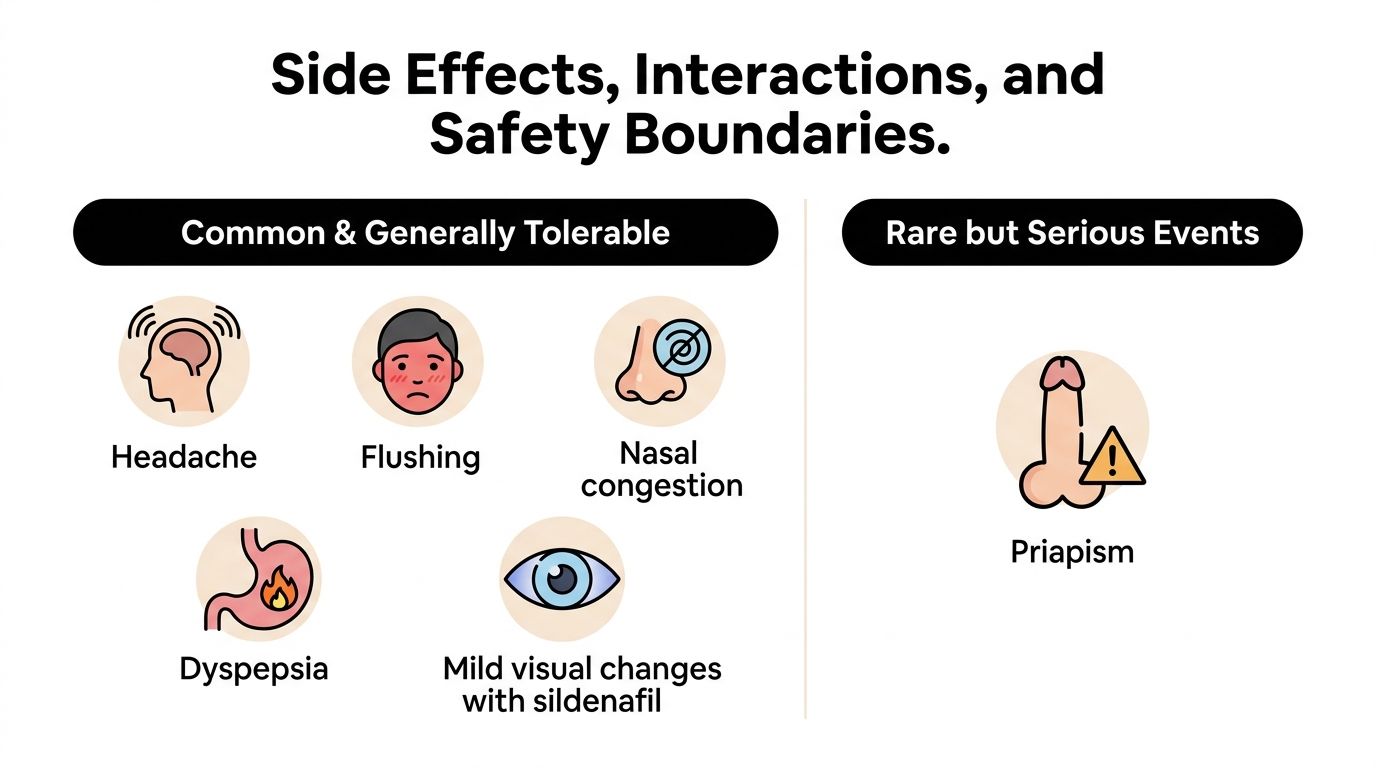
Most PDE5 inhibitor side effects are related to blood-vessel relaxation. Headache, flushing, nasal congestion, indigestion, and dizziness can occur. Sildenafil may also cause mild visual changes, such as a temporary blue tint or increased light sensitivity.
The interaction that must be addressed first
Never combine sildenafil or tadalafil with nitrates or nicorandil. This includes prescribed nitrate medicines and recreational “poppers” containing amyl nitrites. The combination can amplify nitric oxide-mediated vasodilation and cause dangerous hypotension, as explained in the NHS Highland medication guidance.
Alpha-blockers such as tamsulosin or doxazosin can also lower blood pressure. A clinician may adjust doses, separate the timing, or decide that a particular PDE5 inhibitor isn't appropriate. Tell the prescriber about blood-pressure medicines, pulmonary hypertension treatment, heart disease, and every supplement or recreational drug you use.
Other medicines can change PDE5 inhibitor levels in the body. Examples include strong CYP3A4 inhibitors such as ketoconazole and ritonavir, certain antibiotics, and grapefruit products. The exact risk depends on the drug, dose, and your health, so medication reconciliation matters more than memorizing a universal list.
When symptoms need urgent attention
Stop the medication and seek immediate medical advice for:
- A prolonged erection, especially one that is painful or does not resolve.
- Sudden vision or hearing loss.
- Severe faintness, chest symptoms, or marked breathing difficulty.
- Signs of a serious allergic reaction, such as facial swelling or trouble breathing.
Safety boundary: A prescriber needs to know about nitrates before discussing any PDE5 inhibitor. This isn't a minor interaction to manage after the prescription is written.
Access, Labs, and What Treatment Actually Costs
Access usually begins with a medical history rather than a product selection. An online questionnaire may ask about erection quality, libido, cardiovascular symptoms, current prescriptions, and previous treatments. A clinician may then request lab work such as testosterone, a lipid panel, and A1c, with prolactin or TSH considered in selected situations.
The process can continue through telehealth, where a licensed clinician reviews the history and results, discusses alternatives, and issues a prescription when appropriate. Home delivery adds convenience and privacy, while an in-person urology visit remains important for complex symptoms, abnormal examination findings, suspected structural problems, or treatment-resistant ED.
Separate the clinical cost from the medication cost
Pricing varies by drug, dose, formulation, pharmacy, insurance, and dispensing model. Generic sildenafil often costs less per dose than branded Viagra. Generic tadalafil may cost less than branded Cialis, while daily dosing creates a recurring medication expense rather than an occasional purchase. Newer delivery formats and compounded options may have different pricing and require additional clinical review.
Insurance coverage is inconsistent and often limited for ED drugs. FSA or HSA eligibility also depends on the plan and the expense, so confirm the rules before assuming reimbursement.
A cost-plus telemedicine model separates the clinical consultation, prescribed medication, and dispensing or shipping fee. That structure can make it easier to see what you're paying for and compare a monthly plan with an as-needed prescription. For an example of how one provider presents pricing, review Cost Plus TRT's pricing information.
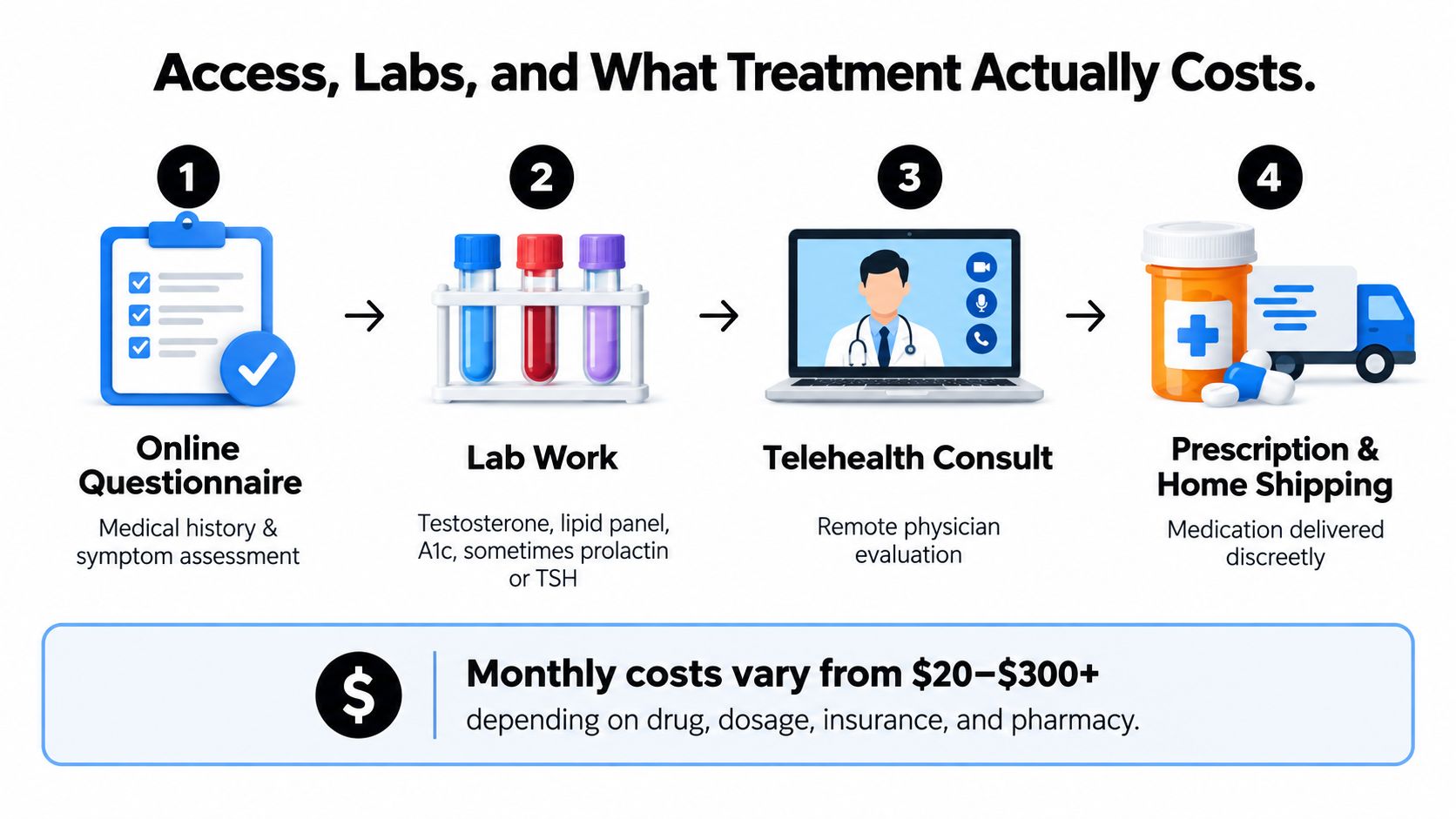
The practical question is not “What does a pill cost?” Ask whether the price includes the consultation, prescription, lab review, formulation, dispensing, shipping, follow-up, and dose changes. Transparent line items help you compare telemedicine with a traditional clinic and local pharmacy without confusing a low advertised price with the total cost of care.
Choosing the Right Option for Your Situation
Start with your routine, not the brand name. A man who has planned intimacy and wants a defined treatment window may prefer sildenafil. Someone who dislikes scheduling sex around a dose may value tadalafil's longer availability. If sexual activity is frequent, a daily regimen may be worth discussing, but it still requires attention to interactions and medical suitability.
Your health profile narrows the decision tree. Nitrates or nicorandil rule out sildenafil and tadalafil. Alpha-blockers, cardiovascular medicines, kidney or liver disease, diabetes, and prior low blood pressure may require a dose adjusted to your needs or closer supervision. BPH symptoms can also influence the conversation because tadalafil may be considered in a way that addresses more than one concern, depending on the individual prescription and diagnosis.
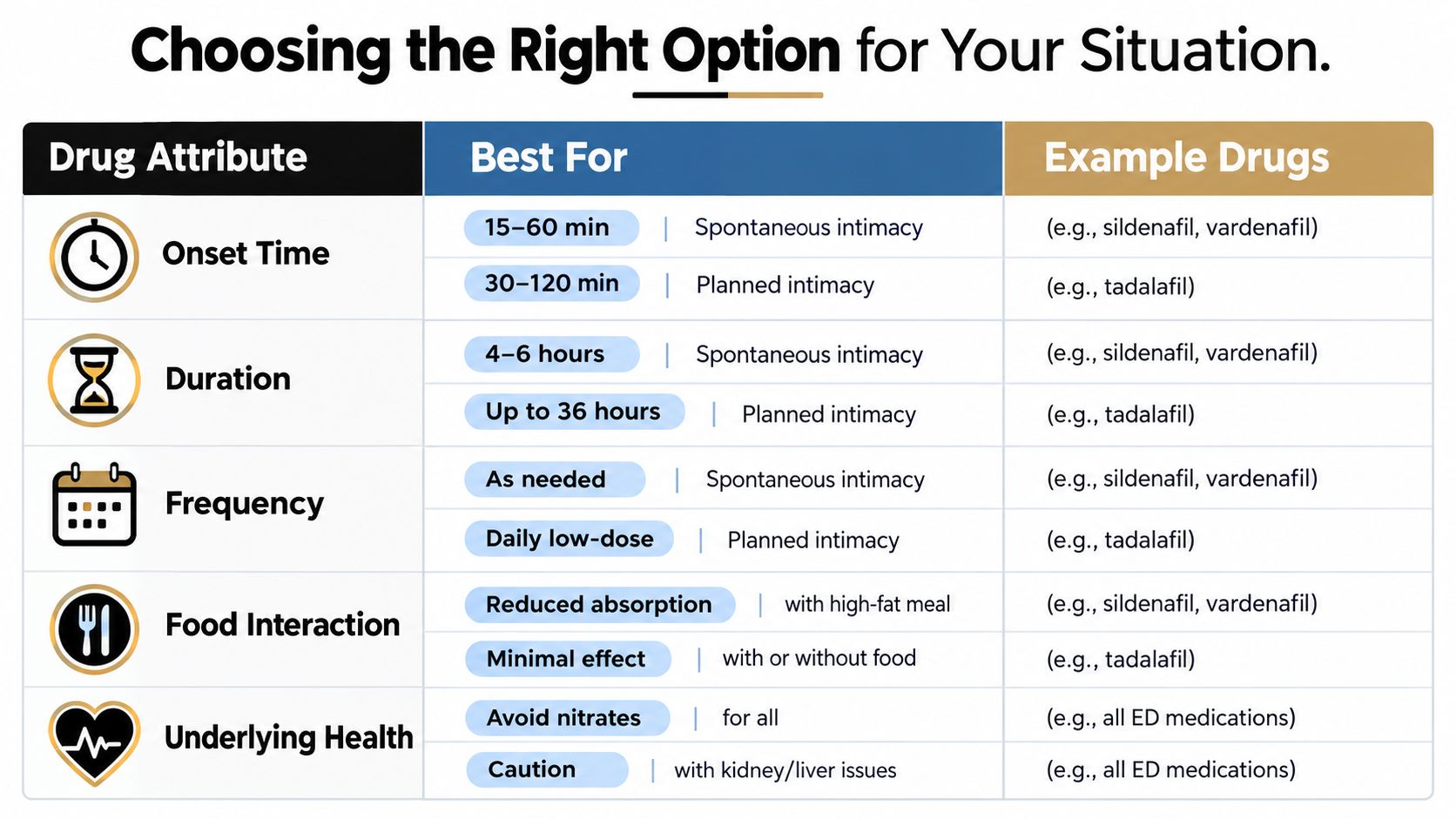
Build a shortlist with your prescriber
- For planned use: Ask about sildenafil, vardenafil, or another as-needed PDE5 inhibitor and how meals affect timing.
- For flexibility: Ask whether tadalafil on demand or daily tadalafil matches your frequency and preferences.
- For persistent nonresponse: Discuss a vacuum device, topical or intraurethral alprostadil, or intracavernosal treatment.
- For low desire or fatigue: Ask whether morning testosterone testing and a broader hormonal review are appropriate.
- For possible vascular disease: Request an assessment of blood pressure, glucose, lipids, and overall cardiovascular risk.
- For cost-sensitive care: Compare the complete price, including the visit, labs, medication, dispensing, shipping, and follow-up.
A supervised telemedicine program may suit someone who wants remote evaluation, lab coordination, prescription delivery, and ongoing follow-up. Cost Plus TRT offers prescribed sildenafil and tadalafil formulations as well as other men's health treatments through an online care model, while an in-person urologist remains valuable when symptoms are complex or oral and injectable options need specialist assessment. You can review its broader treatment information at Cost Plus TRT's TRT service page.
Bring four questions to the appointment: What is the likely cause of my ED? Which option fits my timing preferences? What medicines or health conditions make it unsafe? What happens if the first treatment doesn't work? Clear answers turn an intimidating prescription decision into a manageable plan.
Questions Men Ask Most About ED Medication
Is ED medication available over the counter? Prescription access rules vary by country and product. In the United States, the commonly used PDE5 inhibitors discussed here require a prescription, and the clinician must screen for contraindications and interactions. Be cautious with online products that hide ingredients or bypass medical review.
Can alcohol prevent the medicine from working? It can make erections less reliable by reducing arousal and affecting blood pressure. Heavy drinking may also make dizziness more likely when combined with a vasodilating medication. A small amount may affect people differently, so discuss your usual intake rather than assuming the drug will cancel it out.
Will I become dependent or tolerant? PDE5 inhibitors don't create a chemical need to have sex, and using them doesn't mean you've failed. If a medicine appears less effective over time, the clinician should reassess timing, dose, vascular health, hormone status, other drugs, and the original diagnosis instead of automatically increasing the prescription.
Why do clinicians order labs? Fasting glucose and A1c can help identify metabolic problems, lipid testing can clarify cardiovascular risk, and morning testosterone can help evaluate hormonal contributors. Prolactin or TSH may be appropriate when symptoms point toward those conditions. ED can sometimes appear alongside vascular, hormonal, neurological, or medication-related disease, so the evaluation protects more than sexual function.
Is ED medication contraindicated or merely dose-sensitive? Nitrates and nicorandil are a major contraindication for sildenafil and tadalafil. Other situations, including alpha-blocker use or kidney and liver problems, may call for dose adjustment, timing changes, or a different treatment. Your prescriber needs the complete medication list to make that distinction safely.
For more practical answers about appointments, prescriptions, and treatment logistics, consult the Cost Plus TRT FAQ. Seeking help is a routine, evidence-based health decision, and the goal is a treatment plan that fits your body, relationship, schedule, and budget.
Cost Plus TRT provides telemedicine consultations, lab coordination, and prescribed erectile dysfunction treatments that can include sildenafil, tadalafil, and other clinician-supervised options. Visit Cost Plus TRT to complete a confidential questionnaire, review your options with a licensed provider, and get clear guidance on the next step.