
A man in his late 40s may first notice the change after a demanding stretch at work. He can become aroused, but the erection isn't as firm as it used to be, or it fades before sex is complete. One difficult night may reflect stress, fatigue, or alcohol. Repeated changes deserve a closer look because erectile dysfunction causes often involve more than sexual performance alone.
An erection depends on several systems working in sequence. The brain must process arousal, nerves must transmit the signal, penile arteries must deliver blood, veins must help retain it, and hormones and emotional state must support the response. If one part is impaired, or if several are under strain, erection quality can change. This guide explains those connections in plain language and shows how a clinical evaluation can identify the drivers.
Table of Contents
- What Erectile Dysfunction Really Means
- How Common Erectile Dysfunction Causes Actually Are
- The Vascular Pathway and Why Blood Flow Leads the List
- Neurologic and Hormonal Causes Worth Knowing
- Psychological, Medication, and Substance-Related Causes
- Lifestyle Factors That Quietly Stack the Deck
- How Clinicians Work Up the Causes
- When to Seek Care and What Comes Next
What Erectile Dysfunction Really Means
A man may feel sexual desire, become aroused, and still find that an erection is unreliable during sex. One episode does not automatically indicate erectile dysfunction, or ED, which is the persistent inability to get or keep an erection firm enough for satisfying sexual activity. Poor sleep, illness, relationship tension, stress, or alcohol can briefly disrupt the process.
The pattern provides more useful information than a single event. A clinician may ask whether the difficulty occurs every time or only in certain situations, whether morning erections remain, whether sexual desire has changed, and whether the erection becomes firm but fades. These details can point toward a physical cause, a situational cause, or both.
An erection is a coordinated process
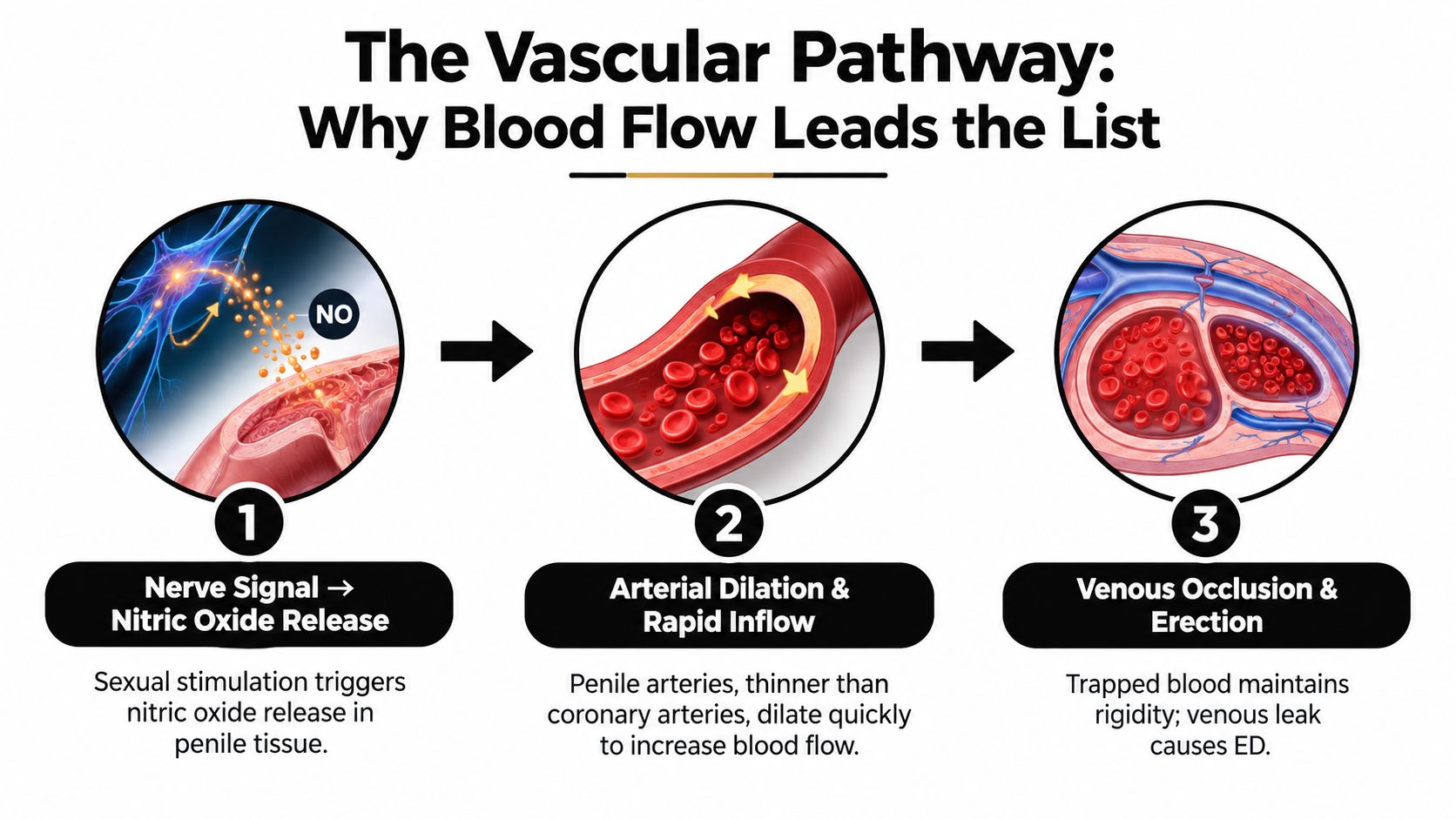
An erection works like a communication and plumbing system operating in sequence. Sexual stimulation starts in the brain, which sends signals through the spinal cord and pelvic nerves. Those signals promote nitric oxide release in penile tissue. Smooth muscle then relaxes, allowing arterial blood to fill the erectile chambers. As they expand, they compress nearby veins and reduce blood leaving the penis.
Hormones influence desire, energy, and erectile response, while emotions affect attention and arousal. Blood pressure, cholesterol, glucose control, medications, smoking, alcohol, sleep, and neurological health can interfere with the same sequence from different directions. ED can therefore act as a signal of broader health, rather than a problem limited to sex.
Practical rule: A recurring erection problem is a health symptom worth evaluating, not a verdict on masculinity or relationship quality.
The Johns Hopkins overview of erectile dysfunction describes ED in connection with vascular, metabolic, neurological, medication-related, and lifestyle factors. Evaluation may begin through telemedicine with a careful history and medication review, while laboratory testing or an in-person examination can help assess possible physical contributors. Treating the erection alone may miss the condition affecting the system behind it.
How Common Erectile Dysfunction Causes Actually Are
Age changes the likelihood of ED, but it does not make the symptom meaningless or unavoidable. The Massachusetts Male Aging Study, conducted from 1987 to 1989 in 1,709 men aged 40 to 70, found total ED prevalence of 52%. Within that group, 9% had complete ED and 17% had minimal ED, according to the Johns Hopkins clinical summary.
The same research reported an overall probability of impotence of 39% by age 40 and 67% by age 70. These figures describe population patterns, not an individual diagnosis. A younger man can develop ED, while an older man can maintain good erectile function.
| Age range | Estimated ED prevalence | Cardiometabolic contribution |
|---|---|---|
| Men aged 40 to 70 | 52% total ED prevalence in the Massachusetts Male Aging Study | Diabetes, hypertension, cardiovascular disease, cholesterol problems, smoking, and medication effects are associated contributors |
| Age 40 | 39% overall probability of impotence | Vascular and metabolic risk can affect erection quality before other symptoms appear |
| Age 70 | 67% overall probability of impotence | Accumulated vascular, neurological, hormonal, and medication-related influences are more likely |
| Men with diabetes | 65.8% pooled ED prevalence in a 2024 global analysis, according to Boston University Sexual Medicine | High glucose can affect blood vessels and nerves, while diabetes often occurs alongside blood pressure and weight-related risks |
Why age is only part of the explanation
The connection with age often reflects years of exposure to conditions affecting circulation, nerves, and hormones. Hypertension can strain vessel walls. High cholesterol can contribute to plaque formation. Diabetes can injure small vessels and peripheral nerves. Smoking can impair vascular function, and some medications can alter arousal or the mechanics of erection.
ED can appear before an obvious cardiovascular diagnosis because penile arteries are small and may be affected by reduced blood flow earlier. A single episode does not predict heart disease. Persistent ED does justify checking cardiometabolic health rather than treating the erection problem in isolation.
This pattern shows why ED can serve as a systemic health signal. Vascular, neurologic, hormonal, psychological, medication-related, and lifestyle factors may overlap, so evaluation should consider the wider picture. The Mayo Clinic explanation of ED symptoms and causes includes vascular disease, high blood pressure, cholesterol problems, diabetes, obesity, metabolic syndrome, sleep disorders, and psychological factors within that clinical picture.
The Vascular Pathway and Why Blood Flow Leads the List
Think of an erection as a plumbing system with an active shutoff valve. The arteries must open wide enough to deliver a rapid surge of blood. The erectile chambers must expand. Then the veins must become compressed so the blood stays inside. If the inflow is weak or the outflow can't be controlled, firmness declines.
How vessel damage interrupts an erection
Healthy endothelial cells line the inside of blood vessels and help regulate dilation. During sexual stimulation, nitric oxide signaling relaxes penile smooth muscle. That relaxation increases arterial inflow, while pressure inside the erectile tissue compresses the veins.
Vascular disease disrupts each part of that sequence. Atherosclerosis can narrow the passageway. Hypertension can damage the vessel lining over time. Diabetes can affect both endothelial function and nerves. High cholesterol can contribute to plaque-related disease, and smoking can promote constriction and vascular injury.
The Cleveland Clinic guide to erectile dysfunction identifies atherosclerosis, hypertension, hyperlipidemia, diabetes, smoking, and chronic kidney disease as common upstream causes. These conditions don't merely affect circulation in the abstract. They can reduce the ability of penile arteries to respond quickly when arousal occurs.
Why ED can precede obvious cardiovascular symptoms
Penile arteries are smaller than coronary arteries, so impaired blood flow may become noticeable during erections before a person develops clear symptoms from larger-vessel disease. ED isn't a diagnosis of heart disease, and a clinician must consider other explanations. Still, the shared vascular pathway makes persistent ED a reason to review blood pressure, glucose, lipids, kidney health, smoking, physical activity, and family history.
A useful evaluation asks two separate questions:
- Can blood reach the penis adequately? This addresses arterial inflow and endothelial function.
- Can the erectile tissue retain that blood? This considers veno-occlusive function, sometimes called venous leak.
- Can the nervous system trigger the response? Arteries may work properly but fail to receive a sufficient signal.
- Are hormones and emotional state supporting arousal? Blood flow can't compensate for severely reduced desire or disrupted signaling.
Because these pathways overlap, a cardiometabolic review is often as relevant as a sexual-health discussion.
Neurologic and Hormonal Causes Worth Knowing
Nerves provide the electrical communication, while hormones help set the biological conditions for desire and response. A problem in either system can resemble vascular ED, and many men have more than one contributor.
The brain and spinal cord process arousal and send signals through pelvic nerves to penile tissue. Diabetes-related neuropathy, spinal cord injury, multiple sclerosis, Parkinson's disease, pelvic surgery, and radiation can interrupt that route. After prostate surgery, for example, nerve injury may affect the signal even when the arteries themselves are healthy.
Hormonal contributors work differently. Low testosterone may reduce libido and weaken the overall erectile response. Thyroid imbalance can affect energy, mood, and sexual function. High prolactin can suppress reproductive signaling. Poorly controlled diabetes can affect hormones, nerves, and blood vessels at the same time.
| Category | Common causes | How it disrupts erections | Typical clues |
|---|---|---|---|
| Neurologic | Diabetic neuropathy, spinal cord injury, multiple sclerosis, Parkinson's disease, pelvic surgery, radiation | Interrupts the brain-to-penis signal or reduces sensation | Numbness, altered sensation, weakness, urinary changes, or a clear link to neurological disease or pelvic treatment |
| Hormonal | Low testosterone, thyroid imbalance, elevated prolactin, poorly controlled diabetes | Reduces libido, energy, tissue response, or reproductive signaling | Lower desire, fatigue, mood changes, infertility concerns, breast symptoms, or other endocrine signs |
| Mixed | Vascular disease combined with neuropathy or endocrine dysfunction | Weakens both the trigger and the blood-flow response | Gradual progression with several medical risk factors |
What testosterone testing can and can't tell you
Low testosterone isn't defined by a symptom alone or by a single number considered outside clinical context. Clinicians usually interpret hormone results alongside libido, energy, mood, body composition, fertility goals, medications, and medical history. They may distinguish primary testicular failure from secondary causes involving the hypothalamus or pituitary gland.
Hormonal treatment may be appropriate for some men with confirmed deficiency, but it isn't a universal ED treatment. A man with normal testosterone and impaired arterial inflow needs a different strategy. Men considering evaluation can review the role of testosterone care through the Cost Plus TRT testosterone replacement therapy program, while still obtaining an individualized medical assessment.
Neurologic and hormonal causes frequently coexist with vascular disease. That is why a good workup doesn't stop after finding one abnormality. It asks whether several smaller problems are combining to produce a larger change in erectile function.
Psychological, Medication, and Substance-Related Causes
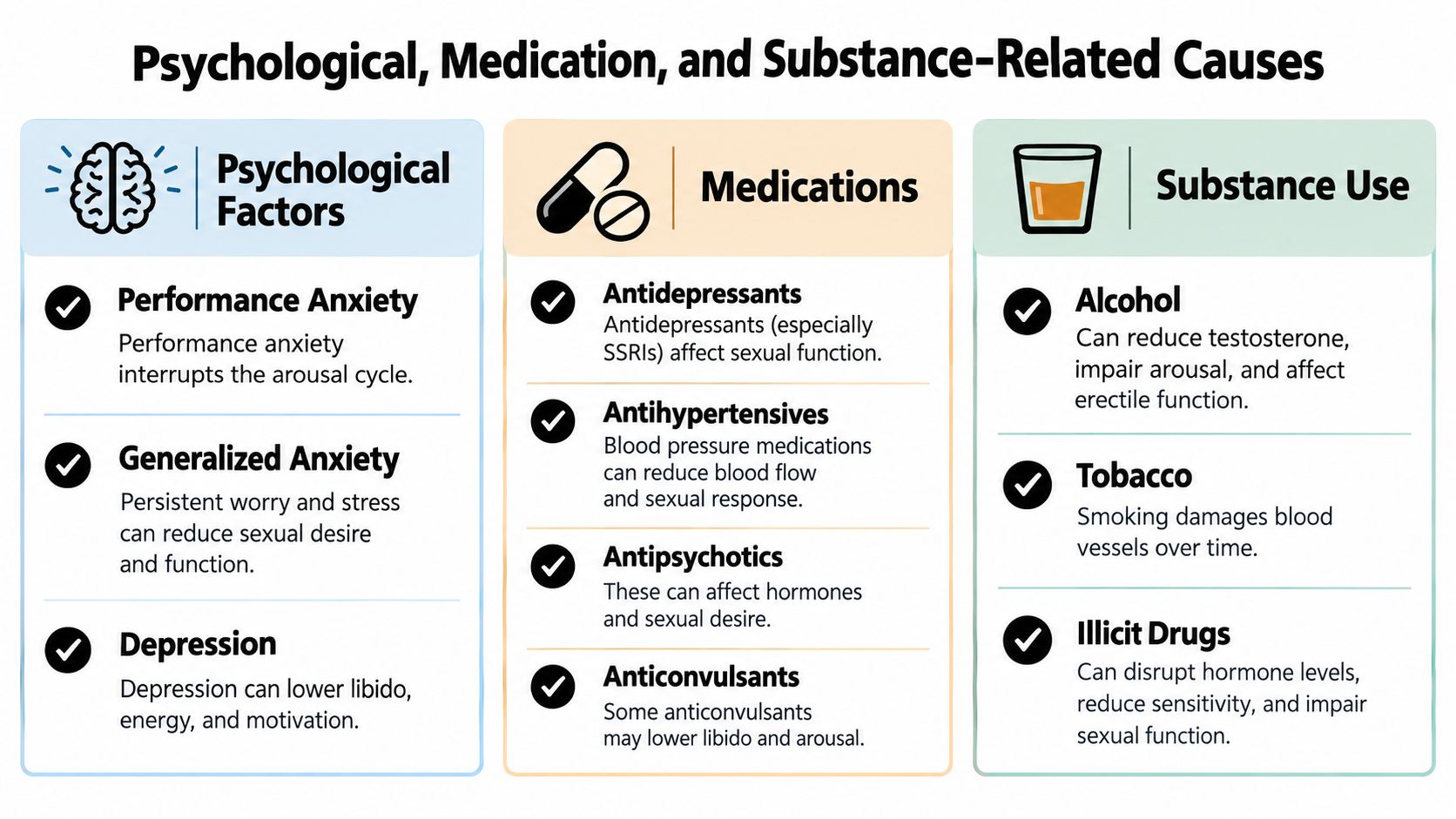
Arousal requires attention and a sense of safety. Anxiety can pull attention away from sexual stimulation and toward self-monitoring: “Will this work?” That question increases tension, which makes the next erection less likely. One difficult encounter can then create a self-reinforcing cycle.
Depression may reduce desire, pleasure, energy, and concentration. Generalized anxiety, relationship conflict, grief, and chronic stress can have similar effects. Psychological ED can occur alone, but it also commonly amplifies a physical limitation. A man who has slightly reduced blood flow may become anxious after losing an erection, and that anxiety can make the physical problem appear more severe.
Review the medication list before changing treatment
Medication-related ED is easy to overlook because a prescription may help one condition while affecting sexual function. Clinicians may review:
- Antidepressants: SSRIs, SNRIs, and some tricyclic antidepressants can affect desire, orgasm, or erection quality.
- Psychiatric medicines: Antipsychotics and some anticonvulsants may alter sexual function.
- Cardiovascular medicines: Thiazide diuretics, beta-blockers, and some alpha-blockers can contribute in certain patients.
- Other medicines: Finasteride, opioids, and some H2 blockers can be relevant when symptoms begin after a medication change.
The effect depends on the drug, dose, duration, other health conditions, and the person's response. Never stop a prescribed medication on your own. Bring the complete list, including over-the-counter products and supplements, to the evaluation.
Substances can affect both the signal and the vessels
Alcohol may initially reduce inhibition but can impair arousal and erection as intake increases. Nicotine promotes vascular constriction and contributes to long-term vessel damage. Cannabis, stimulants, anabolic steroids, and recreational drugs can affect mood, hormones, circulation, or nerve signaling in different ways.
The most useful clinical question isn't whether one factor is solely responsible. It's whether stress, medication, and substance exposure are adding pressure to a vascular or hormonal problem that already exists.
Lifestyle Factors That Quietly Stack the Deck
A typical day can place several systems under strain without any single choice seeming decisive. A man may sit through a long workday, skip a balanced meal, rely on takeout in the evening, drink alcohol to decompress, and sleep poorly because his mind remains active. Repeating that pattern can influence weight, glucose regulation, blood pressure, mood, and vascular function.
Sedentary time matters even when someone occasionally exercises. Long periods of inactivity reduce the regular demand placed on the cardiovascular system and can accompany weight gain. Visceral fat can promote inflammation and is associated with hormonal changes, including lower testosterone in some men. Poor sleep can disrupt hormonal recovery, worsen stress, and reduce sexual interest.
The day-to-day mechanisms
A person who smokes or vapes adds another vascular stressor. Nicotine can constrict blood vessels, while chronic tobacco exposure damages the endothelium. Alcohol can interfere with erection quality in the short term, and heavy or frequent use can complicate sleep, mood, blood pressure, and hormone regulation.
Diet affects the same network. A pattern dominated by highly processed foods may make weight, glucose, cholesterol, and blood pressure harder to control. A more balanced pattern supports the broader cardiometabolic goals that also protect erectile function.
Improving erectile health isn't a moral test. It means changing the inputs that affect blood vessels, nerves, hormones, sleep, and mood.
Practical changes should be specific enough to repeat. Break up prolonged sitting during the workday. Protect a consistent sleep schedule. Reduce tobacco exposure and moderate alcohol. Build meals around minimally processed foods and add physical activity that fits current ability. These steps won't identify the cause by themselves, but they can reduce background strain and make medical treatment more effective.
How Clinicians Work Up the Causes
A useful evaluation follows the clues instead of ordering every test at once. The clinician first establishes the pattern, then examines relevant systems, orders targeted laboratory work, and reserves specialized tests for cases that remain unclear or need further detail.
Four stages of an evaluation
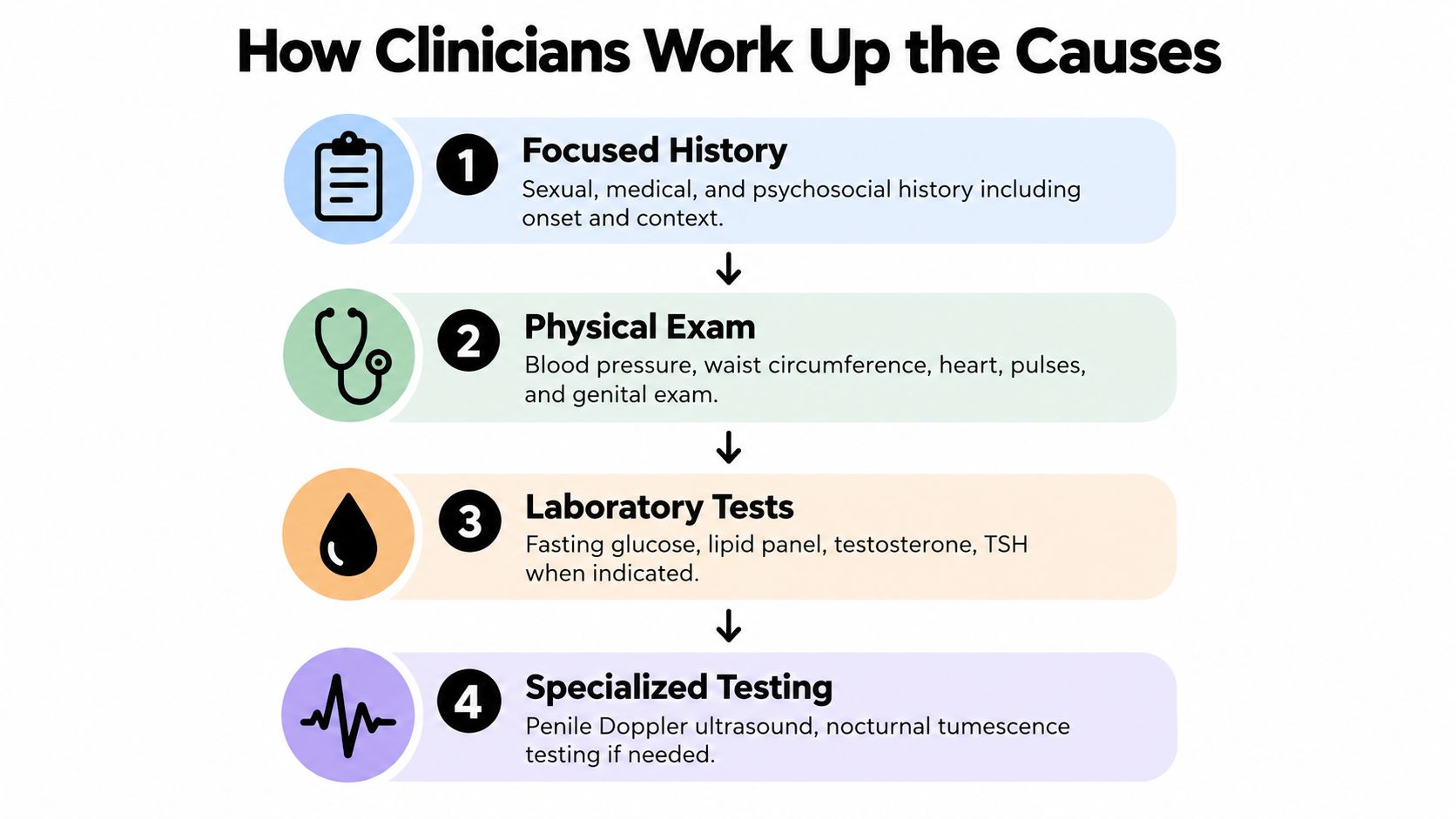
Focused history. The clinician asks when the change began, whether it is gradual or sudden, whether it occurs with masturbation or a partner, whether morning erections remain, and whether desire has changed. Medical history covers diabetes, hypertension, cardiovascular disease, neurological illness, pelvic procedures, sleep, substance use, and medications. Psychosocial questions help identify performance anxiety, depression, relationship stress, or situational patterns.
Physical examination. Blood pressure, waist circumference, heart sounds, pulses, genital findings, and neurological function can reveal clues that a sexual-health questionnaire won't. The exam may assess penile anatomy, testicular size, sensation, reflexes, and signs of vascular disease.
Laboratory testing. Depending on the history, clinicians may request fasting glucose or A1c, a lipid panel, total testosterone, morning free testosterone, thyroid-stimulating hormone, or prolactin. Morning testosterone testing matters because levels vary during the day. One result may need confirmation before a diagnosis or treatment decision.
Selective second-line testing. Nocturnal penile tumescence testing can help assess whether erections occur during sleep. Penile Doppler ultrasound can examine arterial inflow and veno-occlusive function. Cardiovascular risk assessment may become a priority when the history suggests vascular disease.
Telemedicine can support the first stages through a private intake, secure messaging, medication review, and clinician consultation. Some services coordinate blood draws through partner laboratories or allow patients to upload recent results. The Cost Plus TRT FAQ describes questions related to online care, but remote evaluation should complement in-person examination when symptoms, test results, or red flags require it.
The purpose of testing isn't to label a man with one cause too quickly. It is to identify the combination of vascular, neurological, hormonal, psychological, medication-related, and lifestyle factors that can be addressed safely.
When to Seek Care and What Comes Next
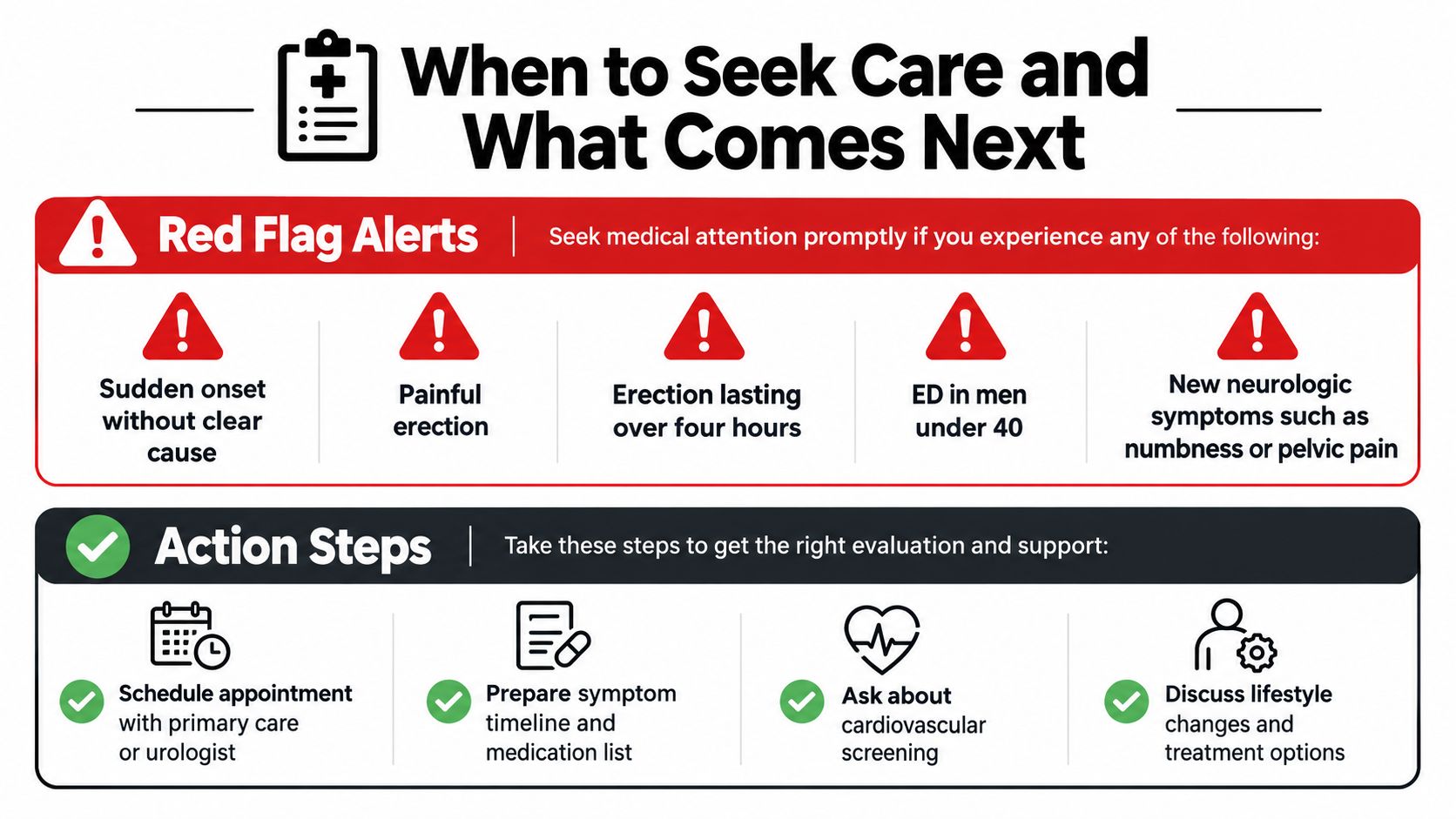
Persistent erection changes deserve medical attention even when they aren't painful. Schedule a routine appointment within weeks rather than waiting months if the problem keeps returning, is worsening, affects intimacy, or comes with reduced desire, fatigue, or other health changes.
Some situations need prompt care. Seek urgent medical attention for a painful erection or one that lasts over four hours. Sudden ED without a clear explanation, ED in a man under 40, or new neurological symptoms such as numbness or pelvic pain also warrant timely evaluation, particularly when they follow an injury or procedure.
Treatment follows the cause
A clinician may combine several approaches rather than rely on one prescription:
- Cardiometabolic care: Managing blood pressure, glucose, cholesterol, weight, smoking, sleep, and physical activity addresses the vascular conditions associated with ED.
- Hormone treatment: Testosterone therapy is considered only when symptoms and testing support a diagnosis of deficiency, with attention to fertility and other safety factors.
- Erection medicines: PDE5 inhibitors can improve blood-flow signaling for appropriate patients. A clinician must review other medicines and cardiovascular status before prescribing.
- Psychosexual support: Counseling can address performance anxiety, depression, relationship strain, and the cycle created by repeated erection loss.
- Mechanical or procedural options: Vacuum devices, penile injections, and, for refractory cases, surgical implants may be discussed when earlier options don't provide adequate results.
Men seeking prescription options can review Cost Plus TRT erectile dysfunction medications, but medication selection should follow a clinician's review. Some ED medicines can be unsafe with particular cardiovascular drugs, and online access doesn't remove the need for screening.
The central goal is broader than restoring firmness for one encounter. It is to identify a treatable vascular, hormonal, neurological, psychological, medication-related, or lifestyle factor and improve the health system behind sexual function. Prepare for an appointment by recording when symptoms occur, noting morning or spontaneous erections, listing every medication and supplement, and bringing recent laboratory results if available.
Cost Plus TRT offers telemedicine consultations for men seeking physician-supervised testosterone evaluation and related men's health care, along with prescription ED medication options when clinically appropriate. Visit Cost Plus TRT to complete a confidential questionnaire and request a consultation about your symptoms, laboratory needs, and treatment options.