

The most popular advice in erectile dysfunction treatment is also the least useful: find the strongest pill. In practice, sildenafil, tadalafil, and vardenafil are all highly effective PDE5 inhibitors, and the meaningful differences usually involve timing, duration, food, side effects, and sexual spontaneity, not whether one medication works while another fails. A systematic review of sildenafil trials found successful intercourse outcomes substantially above placebo, while a broader comparison found strong IIEF improvements with sildenafil, tadalafil, and vardenafil alike. The comparative evidence is summarized in this systematic review.
A useful ED medication comparison therefore starts with your real routine. Do you want a medication for a planned encounter, a longer window that reduces scheduling pressure, or an option that fits around meals and travel? Your cardiovascular history, current prescriptions, reflux tendency, testosterone status, and tolerance for common adverse effects matter just as much as erection firmness.
Table of Contents
- Rethinking How We Choose ED Treatments
- Comparing the Major Oral PDE5 Inhibitors
- Evaluating Satisfaction and Side Effect Profiles
- Exploring Troches, Injections, and Adjunct Therapies
- Integrating ED Treatment with TRT Protocols
- Navigating Contraindications and Drug Interactions
- Accessing Care and Understanding Transparent Pricing
Rethinking How We Choose ED Treatments
Men often ask whether sildenafil or tadalafil is “stronger.” That question assumes the main challenge is finding a pill powerful enough to create an erection. For many patients, the harder problem is choosing a treatment they'll use correctly and consistently.
PDE5 inhibitors work by supporting the blood-flow response involved in sexual stimulation. They don't create desire on their own, and they won't overcome every cause of erectile dysfunction. Anxiety, low libido, medication effects, diabetes, vascular disease, sleep problems, relationship stress, and low testosterone can all influence the result. A medication can be pharmacologically effective and still feel like a poor choice if it causes troublesome reflux, demands strict meal planning, or wears off before the opportunity for sex arises.
The practical factors that change adherence
Onset matters if you typically want sex soon after taking medication. Duration matters if you dislike planning around a narrow window. Food interaction matters if you take medication after dinner, especially a heavy or high-fat meal. Side-effect tolerance matters if headaches, flushing, nasal congestion, indigestion, or reflux interfere with the experience you're trying to improve.
The evidence supports moving away from a simple ranking. In a direct meta-analysis comparing tadalafil with sildenafil, erectile-function improvement measured by IIEF-EF showed no significant difference between the two treatments. That comparison is reported in the tadalafil and sildenafil review. The practical conclusion is straightforward: the best option is often the one that fits your behavior and medical profile.
Practical rule: A medication you can take at the right time, tolerate comfortably, and use safely is more valuable than a theoretically stronger option that you avoid.
Clinicians should also ask what “success” means to the patient. One man may prioritize spontaneity. Another may care more about minimizing reflux or avoiding a medication that conflicts with a large evening meal. A third may need a broader evaluation because ED is an early sign of vascular or metabolic disease rather than an isolated sexual problem.
Comparing the Major Oral PDE5 Inhibitors
The four oral options most commonly discussed are sildenafil, tadalafil, vardenafil, and avanafil. They share a general mechanism, but they don't feel interchangeable in daily use. Onset and duration vary, and food can affect some medications more noticeably than others.
| Medication | Typical Onset | Duration of Action | Food Interaction |
|---|---|---|---|
| Sildenafil | Often taken before planned sexual activity | Shorter on-demand window | A heavy meal can delay absorption |
| Tadalafil | Often taken before activity or as a daily option | Long window, commonly described as up to 36 hours | Less affected by meals |
| Vardenafil | On-demand use with a relatively prompt onset | Intermediate on-demand window | A heavy meal may reduce or delay absorption |
| Avanafil | Often selected for rapid absorption | On-demand window | Food effects are generally less central to its use |
These are practical categories, not guarantees. Individual response varies, and a prescription should reflect your health history, other medications, and the clinician's assessment. For a broader overview of available formulations and treatment pathways, review the ED medication options available through telemedicine care.
Sildenafil for planned encounters
Sildenafil is familiar, widely used, and often a reasonable first option for men who can anticipate sexual activity. Its shorter action can be an advantage if you prefer a medication that doesn't remain active as long. The trade-off is that timing becomes more important, and a heavy meal can delay the effect.
That food issue matters in everyday life. A patient who takes sildenafil after a large restaurant meal may conclude that the medication failed when the actual problem was delayed absorption or insufficient time before sexual activity. Sildenafil also tends to be taken on demand rather than as a background daily treatment.
Tadalafil for flexibility
Tadalafil is the classic choice for men who want a longer opportunity for sexual activity and less pressure to coordinate a precise moment. Its extended action can support a more spontaneous pattern, and its lower sensitivity to meals makes it easier to fit around dinner, travel, or an unpredictable schedule.
Some men prefer daily low-dose tadalafil because it removes the need to plan each encounter around a tablet. Others prefer on-demand use because they don't want continuous exposure or because their sexual activity is less frequent. Those decisions should be made with a prescriber, particularly if you take blood-pressure medication or have cardiovascular disease.
Vardenafil and avanafil
Vardenafil can suit men who want an on-demand alternative to sildenafil, although food and timing still deserve attention. Avanafil is often considered when rapid absorption is a priority. Neither should be judged by marketing language alone. The right comparison asks how the medication performs for you, what adverse effects appear, and whether you can follow the instructions reliably.
Evaluating Satisfaction and Side Effect Profiles
A medication comparison that discusses only erection strength misses the reason many men change prescriptions. Satisfaction includes confidence, timing, comfort, sexual performance, and the feeling that the treatment doesn't dominate the encounter.
A 2025 head-to-head analysis found similar overall adverse-event rates for sildenafil and tadalafil, but sildenafil produced better patient satisfaction and sexual-performance scores at medium and high doses. The same analysis found more reflux with tadalafil than with sildenafil. Review the published head-to-head analysis for its clinical findings.
Why satisfaction can outweigh duration
Tadalafil's longer window is valuable when scheduling pressure is the main obstacle. But duration isn't automatically a benefit if a patient experiences persistent indigestion or reflux. Sildenafil may be preferable for someone who wants a defined on-demand effect and reports better sexual-performance satisfaction with it.
The reverse can also be true. A man who dislikes planning, regularly eats before sex, or wants more flexibility may accept a greater tendency toward reflux in exchange for tadalafil's convenience. That isn't a contradiction. It's a preference and tolerability decision.
Common PDE5 adverse effects include headache, flushing, nasal congestion, visual symptoms, indigestion, and muscle or back discomfort. The intensity and combination vary by medication and patient. A clinician should ask whether symptoms are mild and manageable, whether they persist after the medication wears off, and whether they're severe enough to affect adherence.
The best prescription is often the one that produces a satisfactory sexual experience without creating a new reason to avoid intimacy.
The broader health conversation
ED can coexist with cardiovascular risk because erections depend on healthy blood-vessel function. That doesn't mean a PDE5 inhibitor should be treated as a cardiovascular prevention drug. It does mean the diagnosis deserves a broader medical conversation, particularly when ED is new, worsening, or accompanied by exertional symptoms.
A 2025 PubMed-indexed study reported associations between tadalafil or sildenafil use and lower risks of all-cause mortality, myocardial infarction, stroke, venous thromboembolism, and dementia, with tadalafil showing larger relative benefits across several endpoints. The study details are available in the PubMed record. These findings are important but shouldn't be interpreted as proof that every man should take tadalafil or sildenafil for disease prevention. Association doesn't establish that the medication caused the outcomes.
The sensible response is evaluation, not self-prescribing. Ask whether blood pressure, glucose, lipids, sleep, exercise, smoking, testosterone, and current medications need attention. Treating ED can become an opportunity to identify health issues that would otherwise go unaddressed.
Exploring Troches, Injections, and Adjunct Therapies
Oral capsules and tablets are convenient, but they aren't the only tools. A patient may need an alternative if standard PDE5 treatment produces inadequate results, meal timing becomes a persistent problem, or gastrointestinal side effects are difficult to tolerate.
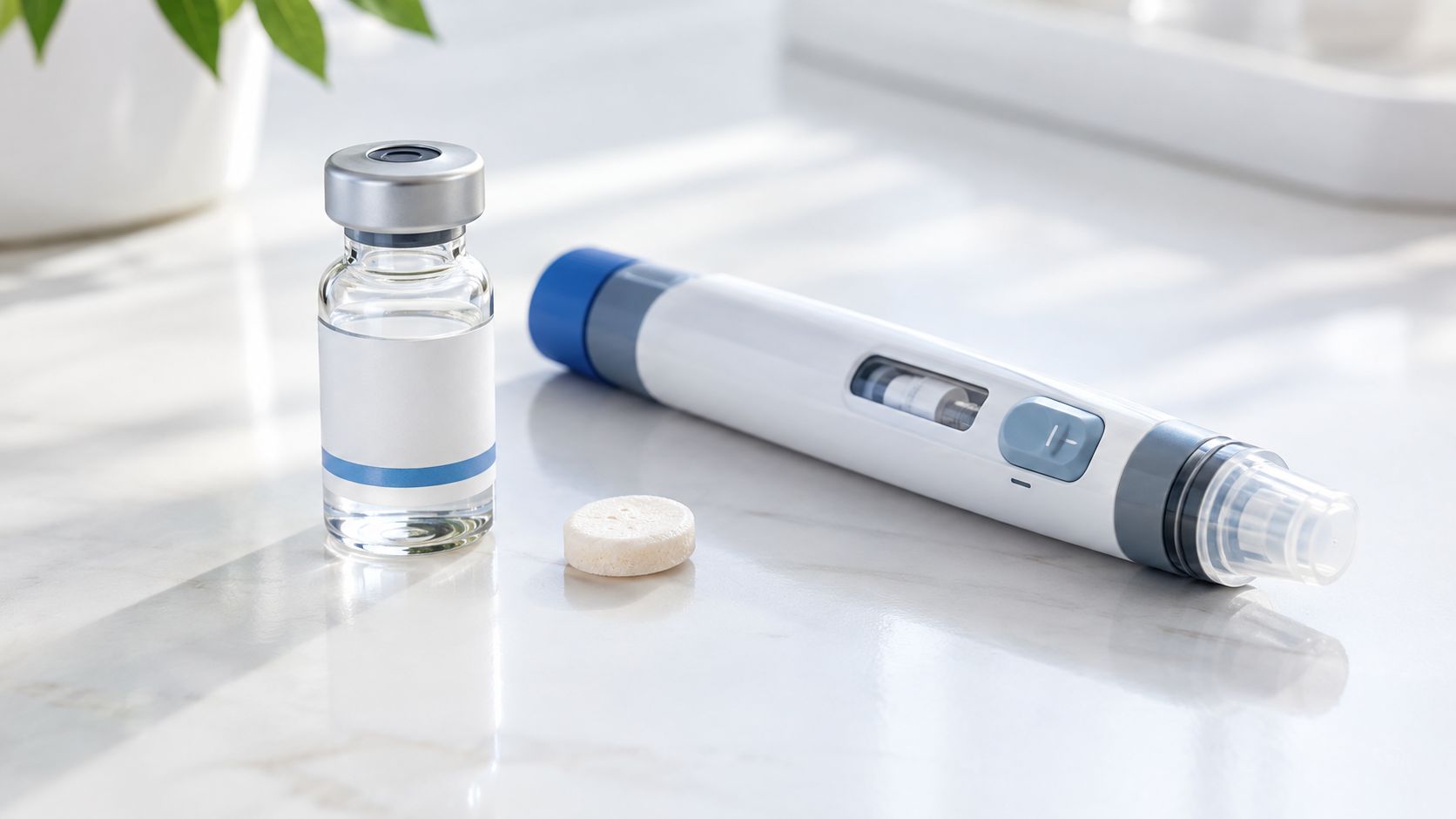
Sublingual troches
A troche dissolves in the mouth rather than being swallowed as a conventional pill. The intended practical advantage is to reduce reliance on gastrointestinal absorption and make administration easier for some patients. A troche still requires a prescription and careful instructions, and it isn't automatically faster, stronger, or safer for everyone.
The clinician should first clarify what went wrong with the oral option. Was the dose taken too soon after a heavy meal? Was there inadequate sexual stimulation? Did side effects limit use? Was the trial long enough to judge? Solving the actual problem is more useful than escalating immediately.
Injectable treatment
Intracavernosal injections act locally and can help men who don't respond adequately to oral therapy. They require training, correct storage, careful dosing, and an understanding of warning signs such as prolonged erections. Patients should never improvise injection combinations or adjust the amount without medical guidance.
Compounded formulations may combine more than one active ingredient, depending on the clinic and the patient's needs. Trixmix injections are one example of a clinician-supervised pathway. Other adjunctive approaches discussed in men's health care include oxytocin or PT-141, but these products require individualized review because evidence, availability, and suitability differ across patients.
A structured escalation process is safer than shopping for the most aggressive option:
- Confirm the diagnosis: Review libido, erections, medications, mental health, vascular risks, and hormone status.
- Optimize use: Check timing, stimulation, food, dose instructions, and adherence.
- Address tolerability: Consider a different PDE5 inhibitor or formulation when side effects are the limiting factor.
- Escalate carefully: Discuss troches, injections, or adjuncts only with a licensed prescriber.
The educational video below can help patients understand how different delivery methods are used, but it shouldn't replace individualized instruction.
Integrating ED Treatment with TRT Protocols
Low testosterone and ED overlap, but they aren't the same diagnosis. Testosterone influences libido, energy, mood, and aspects of sexual function. Erections also depend heavily on vascular health, nerve signaling, medication effects, and psychological context. Testosterone replacement therapy can address confirmed hypogonadism, but it doesn't guarantee that a PDE5 inhibitor will no longer be needed.
Treat the missing pieces, not just the symptom
A man with low libido and weak erections may need hormone evaluation before assuming the problem is purely vascular. A man with normal libido but unreliable erections may need a different workup. Someone already using TRT may have improved desire while still requiring tadalafil or sildenafil for erection quality.
That distinction prevents a common mistake: increasing testosterone when the actual unresolved issue is blood flow, medication interaction, sleep apnea, anxiety, or cardiovascular disease. TRT should follow appropriate clinical assessment and monitoring, while ED medication should be chosen according to response and safety.
For men considering hormone evaluation or an existing treatment transfer, TRT care and consultation options can be reviewed separately from the ED medication decision. The two treatments may be coordinated, but they shouldn't be treated as interchangeable.
How protocols work together
A clinician may review:
- Baseline hormone status: Symptoms and laboratory findings should support the diagnosis rather than relying on a single complaint.
- Sexual goals: Libido, erection firmness, morning erections, and relationship context provide different information.
- Medication timing: Daily tadalafil and intermittent sildenafil create different routines alongside injections, gels, or other TRT approaches.
- Vascular risk: Blood pressure, glucose, lipids, smoking, exercise, and family history can influence erection quality and medication safety.
- Follow-up response: The plan should change if erections improve but libido doesn't, or if libido improves without reliable erections.
TRT also requires attention to follow-up and adverse effects. ED medication can support the vascular component, but it won't correct every consequence of untreated sleep, metabolic, or cardiovascular problems. Good care coordinates the treatments without promising that one prescription will solve all aspects of sexual function.
Navigating Contraindications and Drug Interactions
Safety comes before convenience. PDE5 inhibitors can lower blood pressure, so combining them with certain medicines can create a dangerous drop, dizziness, fainting, or cardiovascular instability.
The clearest absolute warning involves nitrates, including nitroglycerin and recreational nitrate products known as “poppers.” Never combine these with a PDE5 inhibitor. Tell the prescriber about every prescription, over-the-counter medicine, supplement, and recreational substance before treatment begins.
Interactions that need careful review
Alpha-blockers can increase the risk of hypotension. Some antifungal drugs and other medicines that inhibit CYP3A4 can raise PDE5 inhibitor exposure, which may intensify adverse effects. The exact risk depends on the medication, dose, timing, kidney or liver function, and the specific PDE5 inhibitor.
Alcohol deserves a practical discussion rather than a blanket statement. Heavy drinking can worsen erection quality, increase dizziness, and make it harder to judge whether a medication is working. Grapefruit products may affect drug metabolism for some medicines, so ask the prescriber or pharmacist whether they should be avoided with your specific prescription.
What to tell your clinician
Bring a complete medication list, including:
- Heart medicines: Especially nitrates and blood-pressure drugs.
- Prostate medicines: Alpha-blockers and other urinary treatments.
- Antifungals and antibiotics: Some can alter metabolism.
- Recreational substances: Poppers and other vasodilating products create serious safety concerns.
- Recent symptoms: Chest pain, fainting, severe breathlessness, or exercise-related discomfort require medical assessment.
Don't use someone else's tablets, stack PDE5 inhibitors, or increase a dose because the first attempt disappointed you. Chest pain during sexual activity requires urgent attention, and a prolonged erection is a medical emergency.
Accessing Care and Understanding Transparent Pricing
The treatment decision is only useful if obtaining and continuing the medication is practical. Traditional care can involve multiple appointments, unclear consultation charges, pharmacy markups, and repeated administrative steps. Those barriers encourage patients to ration medication, skip follow-up, or buy from unreliable sources.
Telemedicine can reduce some of that friction, but transparency matters. A patient should know what the consultation includes, whether laboratory work is required, how prescriptions are fulfilled, which formulations are available, and how follow-up works. Cost should be clear before treatment begins, not discovered after a series of mandatory add-ons.
A practical online pathway
Most patients can prepare by gathering recent laboratory results, a medication list, relevant diagnoses, and a clear description of the erection problem. A licensed clinician can then review the history, assess contraindications, discuss options such as sildenafil, tadalafil, troches, or injections, and determine whether additional testing is appropriate.
A good consultation should answer practical questions:
- Which medication fits my usual timing and meal pattern?
- What should I do if the first trial seems ineffective?
- Which side effects justify a change?
- Can the treatment be coordinated with TRT?
- What medications or supplements must I avoid?
- How will follow-up and refills work?
Cost Plus TRT offers telemedicine for TRT and related men's health treatments, including physician-supervised ED medication options and transparent pricing information. You can review the pricing and care details before deciding whether the model fits your needs.
The central value isn't just convenience. A transparent process makes it easier to compare treatment pathways, ask safety questions, and stay engaged when the first prescription needs adjustment. ED treatment often requires refinement, so access to follow-up is part of the treatment itself.
Cost Plus TRT offers online evaluation for physician-supervised ED medications, TRT, and related men's health treatments with transparent pricing and home delivery options. If you want an individualized ed medication comparison based on timing, side effects, current medications, or TRT status, visit Cost Plus TRT to begin with a consultation.