
Out-of-pocket TRT typically costs $100–$450 per month all-in for injectable therapy, but it can exceed $1,000 monthly for gels, pellets, or oral formulations once laboratory testing and provider visits are included. The medication is only one part of the cost of TRT without insurance.
The most popular advice is also the least reliable: “Just find the cheapest testosterone vial.” A low pharmacy price may help, but it doesn't tell you what you'll spend on diagnostic testing, follow-up bloodwork, consultations, injection supplies, or treatment adjustments.
A sensible cash-pay decision compares annual cost of ownership, not just the amount printed on a prescription label. Generic injectable testosterone is often the most economical starting point, but the clinic model and monitoring schedule can change the final bill substantially. The right question is not “How cheap is the testosterone?” It's “What will safe, supervised treatment cost from the first lab draw through the next year?”
Table of Contents
- Why Medication Price Alone Tells the Wrong Story
- Breaking Down Every TRT Cost Component
- Comparing TRT Delivery Methods by Total Cost
- Four Strategies That Actually Lower Your Monthly Bill
- Choosing the Most Cost-Effective Path for Your Situation
- How to Start Affordable TRT This Week
- What Your First 90 Days of TRT Really Cost
Why Medication Price Alone Tells the Wrong Story
The cheapest testosterone vial can produce the most expensive therapy. Medication is only one charge in a care bundle that may include medical evaluation, laboratory monitoring, prescribing, injection supplies, and follow-up. Independent pricing guides place generic injectable testosterone around $20–$100 per month, while the broader uninsured TRT bill commonly reaches approximately $100–$450 per month after consultations and monitoring are included (PolicyLab's TRT cost overview).
A low pharmacy price may therefore hide a sizeable monthly or quarterly bill. Clinics can charge separately for the initial consultation, follow-up review, lab ordering, dose changes, shipping, and supplies. Other programs bundle some of these services, so compare what the advertised price includes before choosing a provider.
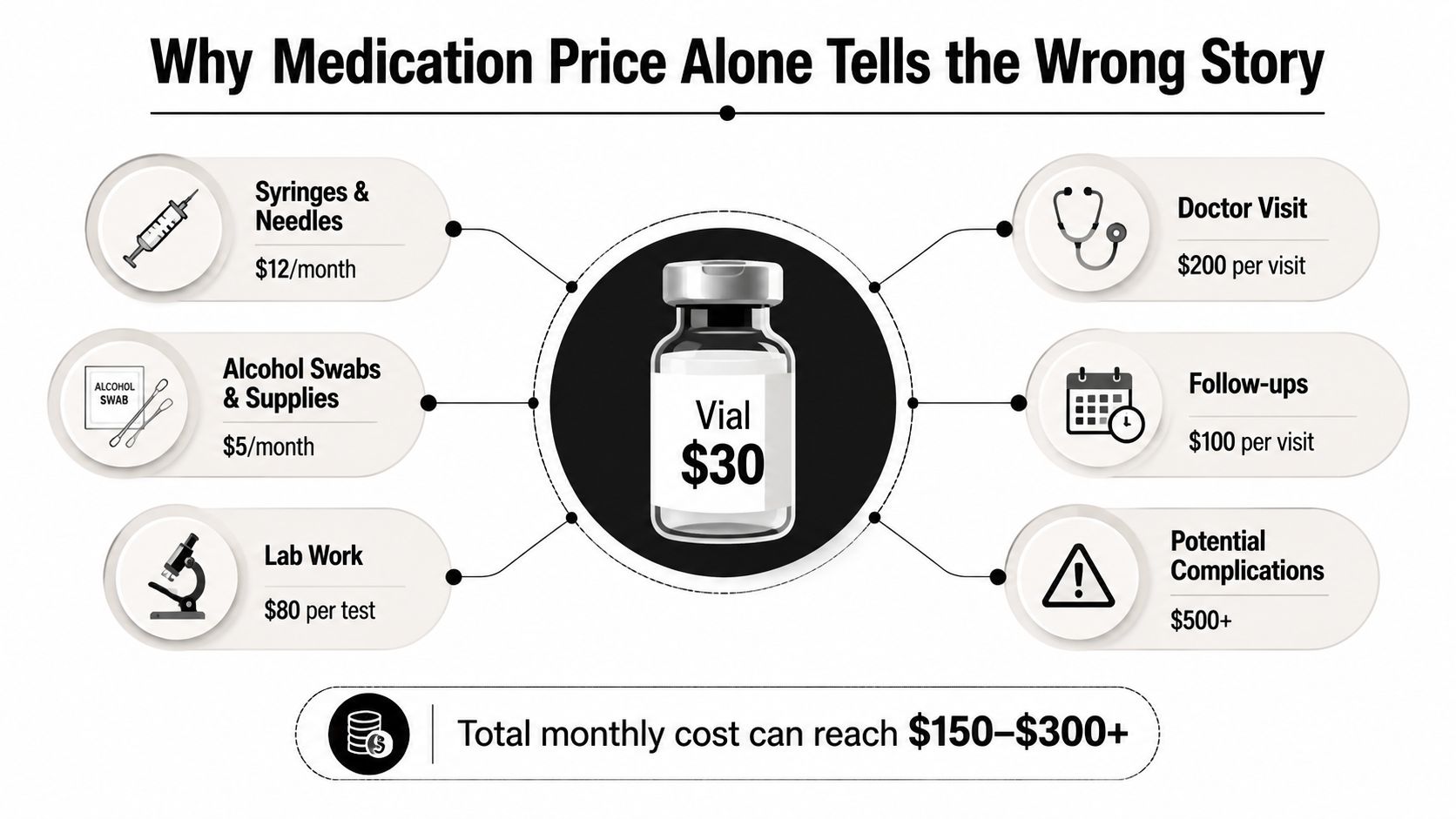
The four cost drivers patients overlook
- Medication: Testosterone cypionate is frequently less expensive than branded, topical, pellet, or oral options. One independent pricing guide cites approximately $106 for a month's supply of two vials without insurance, while retail estimates for a 10 mL vial often fall around $40–$90 (GBC Health's cash-pay TRT guide).
- Laboratory monitoring: TRT requires repeat bloodwork and provider review to assess testosterone response, hematocrit, and other safety markers. Independent estimates place lab work around $150–$300 per panel.
- Clinical oversight: An initial visit and later follow-ups may be billed separately. The same cost breakdown places initial physician visits around $100–$500 and follow-ups commonly around $75–$150 (Zee Medical Billing's TRT cost breakdown).
- Supplies and related treatment: Injectable therapy requires syringes, needles, alcohol swabs, and sharps disposal. Additional prescriptions may be appropriate for some patients, but they should follow a clinical indication rather than an automatic package add-on.
The annual bill is the practical comparison. Include every required service, not only the amount printed on the prescription.
A cheap vial can become the costly choice when it comes with frequent paid visits, marked-up lab panels, or mandatory add-ons. A slightly higher monthly fee may be easier to manage if it includes medication, monitoring coordination, and provider access.
Breaking Down Every TRT Cost Component
The headline medication price can mislead. Formulation determines the pharmacy bill, but the total cost also reflects how often the product must be dispensed, whether a procedure is required, and how much follow-up the treatment model includes.
Generic injectable testosterone usually occupies the lowest medication tier. Independent pricing guides place injectable therapy around $40–$100 monthly. Gels and creams often cost $200–$500 per month, while oral testosterone may reach $400–$1,000 per month (GBC Health's TRT pricing guide). Other cash-pay summaries report oral formulations at approximately $1,000–$2,000 monthly in some settings (Hormone Online's uninsured TRT guide). These figures describe different products and care models, not just different testosterone doses.
| Formulation | Reported monthly medication range | What changes the real cost |
|---|---|---|
| Generic injectable testosterone | $40–$100 | Pharmacy pricing, vial size, dispensing schedule, and injection supplies |
| Gels and creams | $200–$500 | Product strength, pharmacy, application requirements, and ongoing refills |
| Oral testosterone | $400–$1,000, with some cash-pay estimates reaching $1,000–$2,000 | Product selection, prescribing model, and pharmacy pricing |
| Pellets | Varies by clinic and treatment plan | Insertion procedure, product quantity, and procedure-based follow-up |
Pellets deserve separate scrutiny because their price is not comparable to a monthly prescription at the pharmacy. The charge may cover the product and insertion together, then recur when another procedure is needed. A lower advertised medication price elsewhere does not necessarily mean a lower annual bill if the patient changes formulations, pays for unused medication, or needs additional visits after an adjustment.
For gels, creams, and oral products, ask how the quoted price changes with refills and whether the clinic requires its own pharmacy. Compounded products may have different pricing from commercially manufactured products, and shipping can be listed separately. For injections, confirm whether syringes, needles, alcohol swabs, and sharps disposal are included or purchased separately.
What the invoice may not show clearly
Ask whether the advertised formulation price includes the prescription, shipping, supplies, lab orders, interpretation, and follow-up appointments. Also ask whether a dose adjustment triggers a new consultation fee.
The practical comparison is the annual cost of ownership, not the cheapest monthly drug. A low-cost vial can become expensive when paired with frequent paid reviews, marked-up monitoring, or required add-ons. A higher monthly price may be easier to budget if the provider includes medication coordination and follow-up access. As noted earlier, compare every required service before choosing the formulation.
Comparing TRT Delivery Methods by Total Cost
The cheapest testosterone prescription is not always the cheapest therapy. Delivery method affects medication pricing, laboratory monitoring, follow-up visits, supplies, and procedure fees. Compare the full annual cost of ownership before choosing a formulation.
| Delivery method | Annual medication cost | Annual lab cost | Annual visit cost | Supply or procedure cost | Total annual cost |
|---|---|---|---|---|---|
| Generic injectable testosterone | Roughly $480 to several thousand, depending on care model | Varies by panel frequency | Varies by visit cadence | Injection supplies | Roughly $480 to well over $12,000 across uninsured care models |
| Gels and creams | Often $2,400–$6,000+ | Varies by monitoring needs | Varies by provider model | Topical application supplies | Often higher than generic injections |
| Pellets | Medication and insertion fees combined | Varies by monitoring needs | Procedure-based visits | Procedure fees | Often $1,000+ per insertion plus fees |
| Oral testosterone | Roughly $4,800–$12,000+ in documented pricing ranges | Varies by monitoring needs | Varies by provider model | Product-specific | Can exceed $12,000 annually |
Generic injectable testosterone cypionate usually has the lowest cash-pay medication cost. That advantage can narrow when a clinic charges separately for consultations, lab interpretation, dose changes, syringes, needles, alcohol swabs, or sharps disposal. A low-priced vial may therefore produce a higher annual bill than expected.
Gels and creams avoid needles, but their medication cost is often higher and application requires consistent handling. Oral testosterone can suit patients who want to avoid injections and topical products, although its cash price may be substantially higher. Pellets reduce day-to-day administration, yet combine medication with insertion and procedure-based follow-up. If another insertion is needed, the next charge may include both the product and the procedure.
Monitoring and clinician access can change the ranking. A provider model with fewer paid visits may make a higher medication price easier to manage, while frequent reviews can make an inexpensive formulation costly. Lab frequency also matters, especially when testing and interpretation are billed separately.
For a cash-paying patient, injectable therapy often offers the strongest cost control and dosing flexibility, provided the patient can manage injections and supplies. The right comparison is not the monthly drug price. It is the medication, labs, visits, supplies, and procedures required over the year.
Ask for an all-in estimate covering prescription coordination, shipping, lab orders, result review, follow-up, dose adjustments, and administration supplies. Patients comparing TRT treatment options and pricing should review those inclusions before selecting a delivery method.
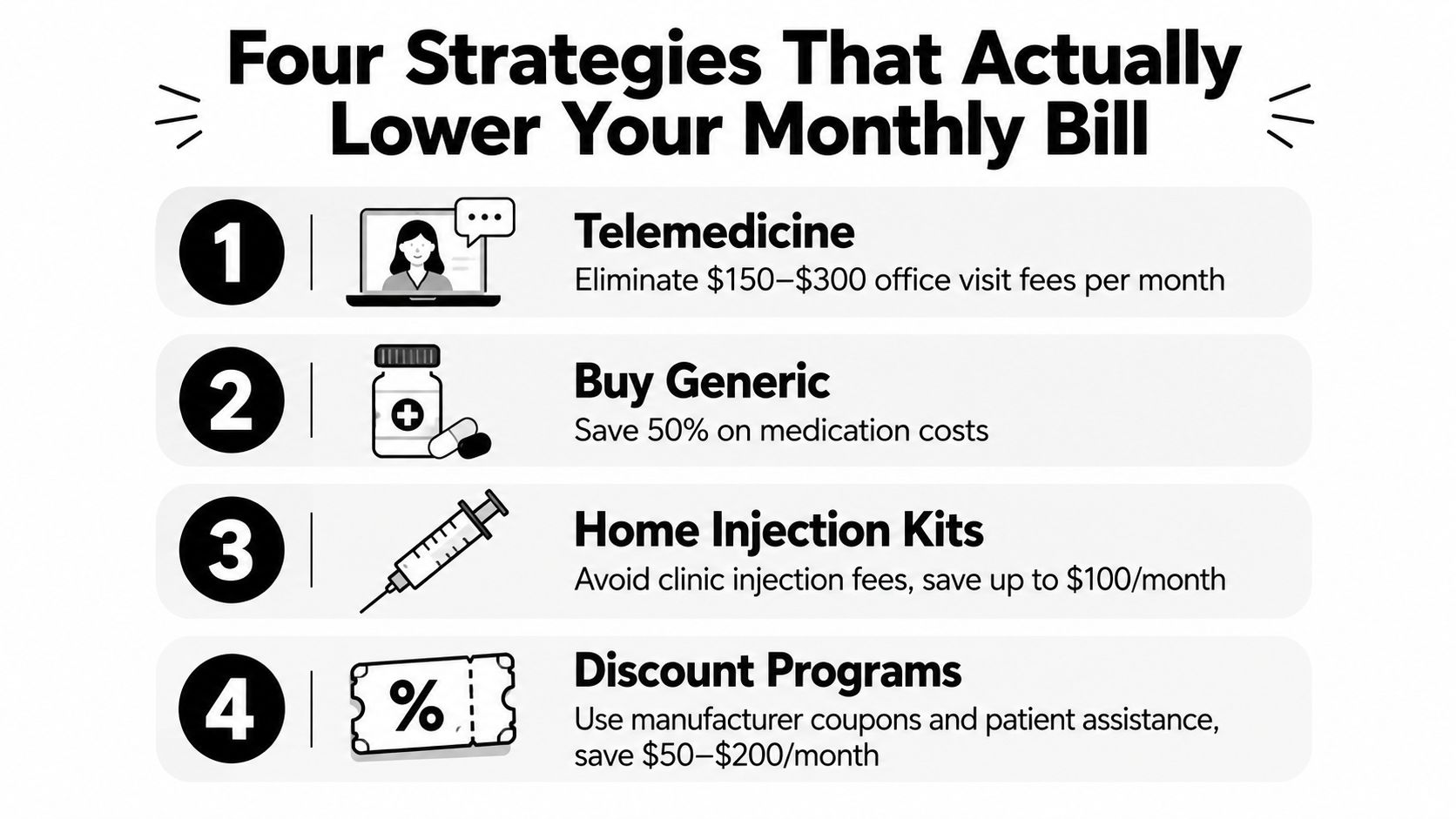
Four Strategies That Actually Lower Your Monthly Bill
The safest savings come from removing unnecessary overhead, not from skipping medical supervision. Four practical levers usually matter most.
1. Compare the care model
Traditional in-person care may involve office charges each time you need evaluation or follow-up. Telemedicine can reduce facility overhead and may bundle consultations with medication management, but you should confirm what the monthly fee includes before enrolling.
Ask these questions before paying:
- What's included: Does the price cover medication, provider review, shipping, supplies, and dose adjustments?
- What labs cost: Can you use an outside laboratory, or must you purchase testing through the clinic?
- What happens later: Is follow-up included, or does every review create a new charge?
2. Use independent laboratory pricing when permitted
Direct-pay laboratory services can be less expensive than clinic-marked-up testing. The documented cost range for a TRT lab panel is approximately $150–$300, so comparing providers may materially reduce the cost of monitoring (Zee Medical Billing's lab cost estimates).
Don't order random tests because they appear cheaper. Use the markers your prescribing clinician requires, and make sure the outside lab can send results in a format the clinician accepts.
3. Request the generic option
Testosterone cypionate is commonly less expensive than branded or non-injectable formulations. Retail pharmacy estimates for a 10 mL vial often fall around $40–$90, although the final amount varies by pharmacy and prescription (GBC Health's testosterone pricing guide).
Ask whether a generic prescription is clinically appropriate and whether the clinic uses a retail, specialty, or compounding pharmacy. The cheapest source isn't useful if it creates delays or lacks appropriate dispensing practices.
4. Separate price transparency from a headline discount
A coupon can lower a pharmacy charge, but it won't necessarily reduce the cost of lab work or provider visits. Compare the complete recurring bill, then check whether a cost-plus pharmacy or discount program improves the medication portion without changing the clinical oversight.
A low monthly medication price shouldn't persuade you to delay required bloodwork or follow-up. TRT is a prescription treatment, and cost control must preserve appropriate evaluation and monitoring.
Choosing the Most Cost-Effective Path for Your Situation
The lowest medication price rarely determines the lowest annual TRT cost. Compare the complete cost of ownership, including testosterone, laboratory testing, follow-up visits, injection supplies, shipping, and any procedure charges. A therapy that looks cheap at the pharmacy can become expensive if it requires frequent visits, costly monitoring, or supplies that are billed separately.
Your priorities still matter. Someone comfortable with injections and able to arrange laboratory appointments may spend less with generic injectable testosterone, a clinic that accepts outside lab results, and a pharmacy with clear pricing. Someone who values convenience may choose bundled telemedicine care with a higher recurring fee because one predictable bill reduces coordination and missed follow-ups.
Patients who avoid needles should compare total treatment costs rather than medication prices alone. Independent pricing guides place gels and creams around $100–$500 monthly, oral testosterone around $400–$1,000 or more, and pellets at $1,000 or more per insertion plus procedure fees (Hims' testosterone cost comparison). Those figures may not include laboratory work, consultations, or supplies.
| Patient priority | Recommended setup | Estimated monthly cost | Key trade-off |
|---|---|---|---|
| Lowest predictable medication cost | Generic injectable therapy with transparent follow-up pricing | Often near the lower end of the $100–$450 all-in range | Requires injections and supply planning |
| Convenience | Bundled telemedicine care with medication and monitoring coordination | May sit around $149–$289 in documented bundled models | Higher recurring fee may buy simpler administration |
| No needles | Gel, cream, pellet, or oral option after a full cost review | Can exceed $1,000 for some formulations | More convenience can mean higher medication or procedure costs |
| Maximum control over spending | Separate pharmacy, lab, and provider quotes | Depends on each component | More administrative work and less billing simplicity |
Use the matrix as a budgeting tool, not as a treatment recommendation. The right option must also fit your medical needs, injection comfort, schedule, and ability to complete monitoring. Starting with a clinically appropriate setup and changing later can reduce waste, provided the prescribing clinician agrees and required follow-up continues. A low monthly bill is not a saving if the treatment is difficult to use or monitor consistently.
How to Start Affordable TRT This Week
The lowest advertised medication price rarely represents the lowest treatment cost. Affordable TRT starts with a complete estimate for evaluation, laboratory work, visits, medication, and supplies. Before prescribing testosterone, a clinician needs an appropriate assessment and baseline testing.
- Confirm the required baseline labs. Ask the clinic which tests it orders and whether it accepts outside results. The panel may include total testosterone, free testosterone, estradiol, CBC, CMP, PSA, and lipids, but the prescribing clinician should select the actual tests. Price the laboratory work before booking.
- Request the full clinic fee schedule. Compare telemedicine providers by asking about the consultation, follow-ups, laboratory coordination, medication shipping, supplies, and dose adjustments. A low enrollment fee can become expensive if each review is billed separately.
- Complete a proper medical consultation. Discuss symptoms, medical history, current medications, fertility goals, and prior testosterone results. A low laboratory value alone does not establish the right treatment plan.
- Compare dispensing options. Ask whether clinic-shipped medication, a local retail pharmacy, or another licensed option costs less after shipping and refill charges. Confirm the formulation, concentration, quantity, and refill timing.
- Budget for supplies. With injectable therapy, include syringes, needles, alcohol swabs, and a sharps container. Use equipment recommended by your clinician or pharmacist rather than choosing supplies solely by price.
- Learn administration and storage. Your provider should explain the injection route, storage, disposal, and missed-dose instructions. Do not change the dose or schedule because a vial appears inexpensive. A cheaper medication can create extra cost if incorrect use leads to avoidable follow-up.
- Schedule monitoring before starting. Your clinician will determine when to repeat labs and review results. Budget for both services together, since a laboratory bill and a separate provider review can materially change the annual total.
Patients comparing telemedicine models can review Cost Plus TRT's start process. Assess the scope rather than the headline price. Confirm exactly what the quoted fee includes before submitting a prescription request, then record each recurring and one-time charge in your annual budget.
What Your First 90 Days of TRT Really Cost
The cheapest testosterone prescription can become the most expensive treatment once laboratory work, consultations, supplies, and monitoring are included. The first 90 days usually carry the highest setup burden, while later costs become more predictable if the regimen remains stable.
Consider a patient using generic injectable testosterone obtained through a local pharmacy and arranging laboratory work independently. The medication may be the smallest recurring expense. The patient still pays for the initial evaluation, baseline testing, syringes and needles, alcohol swabs, a sharps container, and a follow-up review. If a repeat lab panel is required during the first quarter, that bill arrives alongside another medication refill and can make the third month more expensive than the second.
| Phase | What the patient pays for | Practical cost effect |
|---|---|---|
| Starting treatment | Consultation, baseline testing, first prescription, and injection supplies | Highest concentration of one-time charges |
| Early adjustment | Medication refill and clinician review if scheduled | Recurring medication plus any visit fee |
| First monitoring cycle | Repeat testing, result review, and another refill | A second cluster of clinical costs |
| Established care | Medication, periodic testing, supplies, and oversight | More predictable when services are bundled |
The total depends on the delivery method and care model. Generic injections often reduce medication spending, while gels, pellets, or oral formulations may bring higher product or administration charges. A low pharmacy price does not help if it comes with costly shipping, frequent visits, or monitoring that was excluded from the advertised fee. Compare the TRT pricing information with separate pharmacy and laboratory quotes.
Request a written first-quarter estimate before paying. It should identify what the consultation, prescription, supplies, follow-up, lab review, and repeat testing each cost. That list makes it easier to compare a bundled program with outside services and prevents an unexpectedly large first invoice.
Cost Plus TRT describes a telemedicine program with cash-pay pricing that includes medication and ongoing provider consultations in its stated structure. Patients may coordinate laboratory work through Quest Diagnostics or submit recent results. Review Cost Plus TRT's current program details against your preferred pharmacy, laboratory, and monitoring schedule.