

Cayenne does not have strong clinical evidence as a treatment for erectile dysfunction, and a 2024 study found that among non-smokers, spicy food eaten more than 3 times per week was linked with a 158.6% higher erectile dysfunction risk, with an odds ratio of 2.58 and 95% CI 1.27–5.26. If you're looking at cayenne for ED, the honest answer is that the human data is weak, and some of the newer evidence points in the opposite direction.
Table of Contents
- Why Cayenne Pepper Gains Attention for Erectile Dysfunction
- The Theoretical Mechanism Behind Capsaicin and Blood Flow
- What the Scientific Evidence Actually Shows
- Practical Considerations for Using Cayenne
- Safety, Side Effects, and Medication Interactions
- Evidence-Based ED Treatments and When to See a Clinician
Why Cayenne Pepper Gains Attention for Erectile Dysfunction
The claim is simple, cayenne heats the body, improves circulation, and therefore should help erections. That idea has survived because it sounds biologically plausible, and because men searching for natural ED remedies usually want something inexpensive, familiar, and easy to try.
Why the folk remedy sticks
Cayenne contains capsaicin, the compound responsible for its heat, and capsaicin does affect blood vessels in laboratory and experimental settings. That's enough for wellness blogs and forum posts to turn a limited biological effect into a larger promise about sexual function. The jump from “this compound can influence circulation” to “this spice treats erectile dysfunction” is the part that never got proven.
A second reason the idea persists is that erectile function is closely tied to blood flow. Men hear that and reasonably assume any blood-flow ingredient should help. The problem is that erections depend on a very specific coordination of vascular, nerve, hormonal, and psychological factors, not just a general sense of being “more circulated.”
What readers usually find online
Most online coverage repeats the same mechanism without asking whether it improves real-world outcomes. That leaves readers with a half-truth, capsaicin may have physiologic effects, but the question is whether those effects improve erection quality, not whether they sound promising on paper. The distinction matters because many substances look useful in theory and fail in practice.
Practical rule: If a remedy only has a mechanism and no meaningful human outcomes, treat it as unproven, not as a treatment.
For men searching cayenne for ed, the right starting point is not tradition. It's whether the available human evidence supports an actual benefit. Right now, it doesn't.
The Theoretical Mechanism Behind Capsaicin and Blood Flow
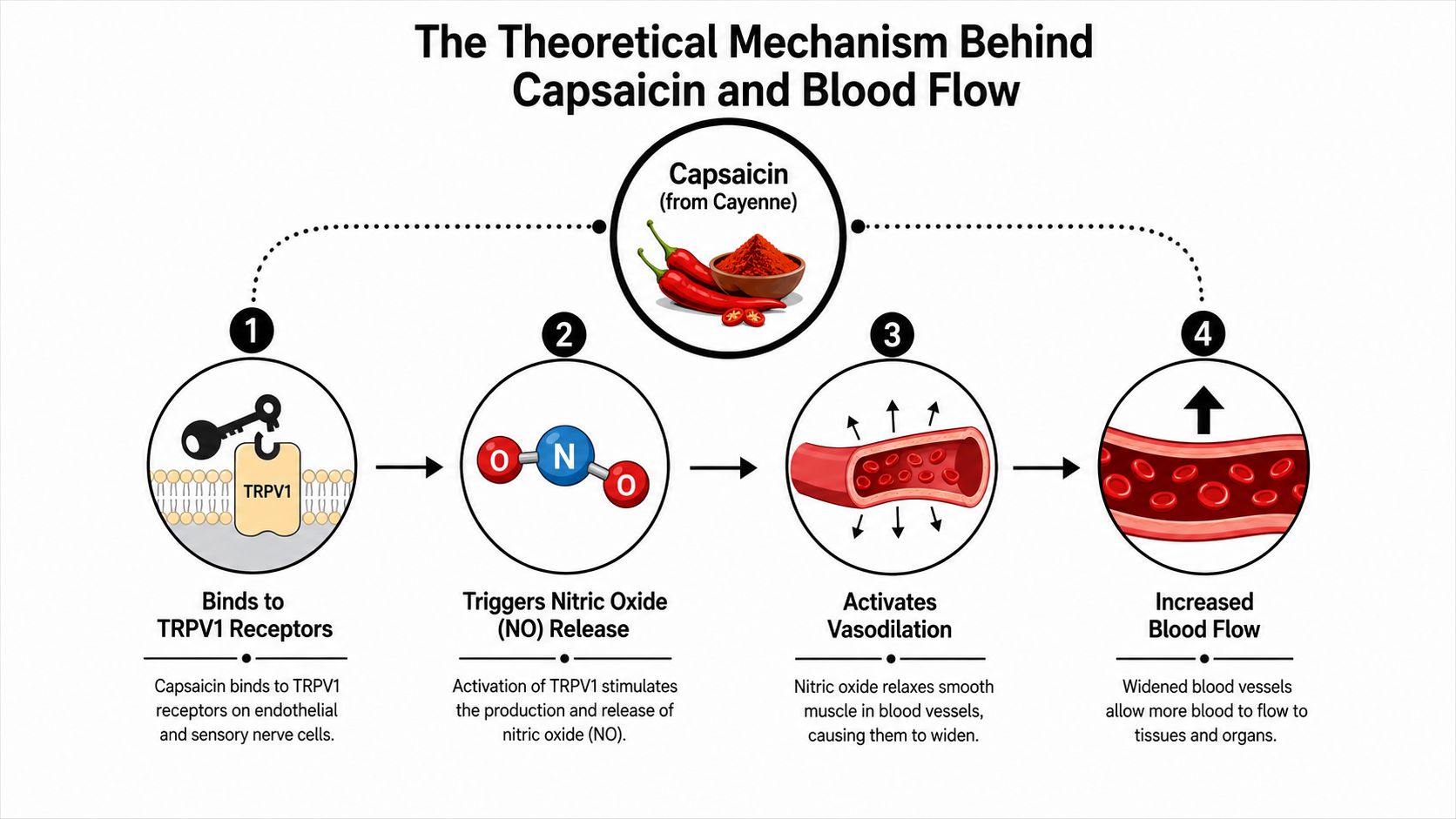
Cayenne gets attention because capsaicin interacts with TRPV1 receptors, which are involved in the body's heat and pain signaling. That interaction can influence vascular behavior and is part of why people connect spicy food with circulation. In simple terms, it's like pressing a thermostat button that changes how the body notices heat, then hoping that same button also improves the plumbing.
Why nitric oxide comes up in the conversation
A lot of the discussion centers on nitric oxide, because nitric oxide helps relax blood vessel walls. When vessels relax, blood can move more easily. That's one reason capsaicin sounds attractive in the context of erectile function, since erections depend on blood entering and staying in penile tissue.
But that's still only a theory of direction, not proof of outcome. A substance can nudge vascular tone in one part of the body and still do nothing meaningful for erectile rigidity, erection maintenance, or sexual satisfaction. Human erectile function is not a generic circulation test.
Why general circulation isn't the same as erection physiology
The erectile response is more than increased blood flow. It requires the right nerve signaling, proper smooth muscle relaxation, adequate hormone status, and a body that isn't fighting competing problems such as anxiety, vascular disease, or medication effects. A kitchen spice doesn't automatically solve those layered issues.
That's why capsaicin is interesting scientifically but weak clinically. It may influence blood vessels in a broad sense, yet a true ED treatment has to improve a sexual outcome, not just a lab or physiologic marker. In evidence-based medicine, the question is never “does it do something?” The question is “does it help the patient with the problem he has?”
A general vasodilator effect is not the same as a reliable erection effect.
The theory behind cayenne for ED is therefore plausible enough to keep people curious, but not strong enough to justify confident recommendations. The difference between those two ideas is where most internet advice falls apart.
What the Scientific Evidence Actually Shows
The most direct human evidence is narrow. A 1995 PubMed-indexed study found that intraurethral capsaicin could induce penile erection under controlled experimental conditions, but that was a medical intervention using direct infusion, not normal dietary cayenne consumption. It doesn't show that eating cayenne works as an ED therapy, and it definitely doesn't establish it as a practical or approved treatment. The original human study is indexed in PubMed, and the context matters more than the headline.
What the human data does and does not prove
The best way to read that older experiment is as a demonstration that capsaicin can affect erectile tissue under artificial conditions. It is not evidence that pepper on food, capsules, or supplements reproduces that effect in daily life. The route of administration is the whole story here.
Independent reviews also note that there's no legitimate data showing peppers improve erectile function, and no major clinical guideline lists cayenne as a recommended ED treatment. If you want the clearest evidence-based bottom line, that is it. The gap between “possible biologic effect” and “clinically useful therapy” remains wide.
The newer data pushes in the opposite direction
A 2024 retrospective study of men found that among non-smokers, spicy food eaten more than 3 times per week was associated with a 158.6% higher erectile dysfunction risk, with an odds ratio of 2.58 and 95% CI 1.27–5.26. The same study reported that the association was especially notable in non-smoking men, which argues against the idea that frequent spicy-food intake is automatically sexually beneficial.
| Study | Design | Key Finding | Relevance to Dietary Cayenne |
|---|---|---|---|
| Human capsaicin study, 1995 | Controlled experimental intervention | Intraurethral capsaicin could induce erection under direct medical conditions | Does not show ordinary dietary cayenne helps ED |
| Retrospective study, 2024 | Human observational study | Among non-smokers, spicy food more than 3 times per week was associated with higher ED risk | Raises concern that frequent intake may not be benign for sexual health |
| Independent review evidence | Review-level synthesis | No legitimate data demonstrating peppers improve erectile function | Supports the conclusion that cayenne isn't a proven ED treatment |
One important caveat is that observational association is not the same as proof of cause. Even so, patients deserve to know when the evidence moves from “maybe helpful” to “possibly concerning.” If you want a conventional ED discussion alongside this evidence, a clinician can walk through medical options and whether they fit your health profile, including ED medication options.
The practical takeaway is blunt. Human evidence for cayenne for ED is weak, and the most specific recent study does not point toward benefit in every subgroup. That is not how a proven treatment behaves.
Practical Considerations for Using Cayenne
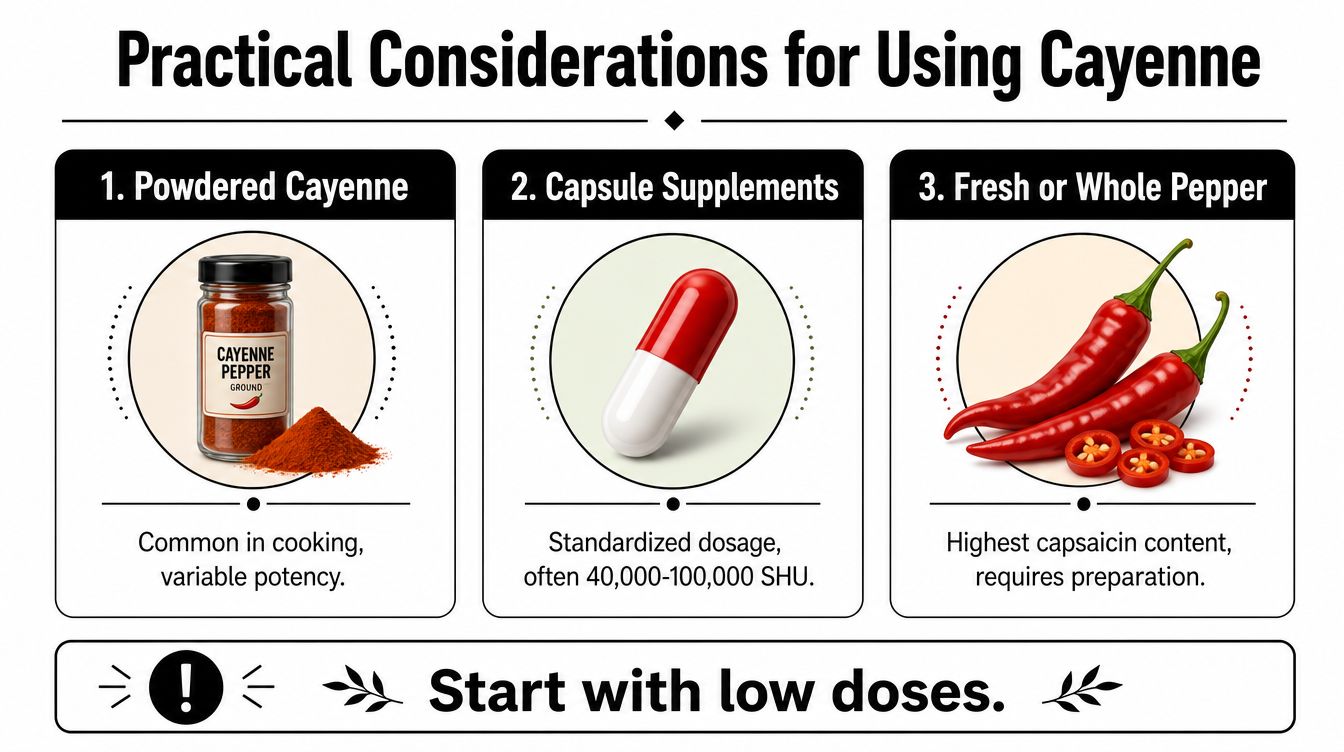
If someone still wants to try cayenne, the first question is what form they are using. Powdered cayenne, capsules, topical products, and concentrated extracts are not the same thing, and none of them has a validated ED dosage. The 1995 study used direct infusion of capsaicin under medical control, which is very different from sprinkling pepper onto dinner.
Oral intake, topical use, and why the route matters
The route of administration changes what cayenne can do. Oral cayenne goes through digestion, which alters how much active compound reaches the bloodstream and how quickly it does so. Topical preparations may create a warming sensation on the skin, but that does not translate into the internal vascular response people are hoping for. The direct urethral route used in the older study is a medical procedure, not a home remedy.
That leaves consumer products in a difficult position. They are being sold into a space where the core claim has not been validated. A man may feel a burning sensation or notice digestive effects and assume the supplement is working, even when no erectile outcome is changing. Sensation is not the same as response.
How to read product claims
A few questions help cut through marketing noise.
- What exactly is the product form? Powder, capsule, or extract matters because each one delivers a different exposure pattern.
- Does the label promise erection benefits without human data? That is a red flag, especially if the claim relies on circulation language alone.
- Is the product trying to imitate a drug effect without being studied like a drug? That is where supplement marketing often overreaches.
- Are you being told that “natural” means automatically safe? Natural products can still irritate the gut, trigger reflux, or interact with other treatments.
If a company cannot point to validated ED outcomes, the dosage advice is marketing, not medicine.
The phrase cayenne for ED sounds straightforward, but the picture is more complicated. The route of administration, concentration, and intended use all change what the product is. Without a human ED trial establishing a safe and effective dose, there is no evidence-based way to dose cayenne for sexual function.
For men who are also sorting out hormone questions, a separate issue may matter more than supplements. A practical overview of whether TRT can make you infertile may be more useful than chasing a pepper product with no established ED dosing.
Safety, Side Effects, and Medication Interactions
The most common problem with cayenne is not that it fails to help, it's that it can make the body feel worse. Capsaicin is a known irritant, and people can experience heartburn, stomach discomfort, and digestive upset. For a man already dealing with performance anxiety or discomfort, that's not a trivial trade-off.
The gastrointestinal downside is real
Digestive irritation matters because it can spill into sexual comfort. If a supplement leaves someone bloated, burning, or nauseated, that person is less likely to feel relaxed or interested in sex. That's a practical issue, not a theoretical one.
People with reflux or sensitive stomachs are especially likely to notice the downside first. The “natural” label doesn't cancel out irritation, and a warming sensation in the mouth doesn't predict tolerability in the gut. If a product causes repeated discomfort, it's not a good candidate for sexual health support.
Interactions deserve more caution than most blogs give them
Capsaicin's vascular effects also raise medication concerns, especially when someone is already using prescription ED therapy or blood pressure treatment. Combining an unproven supplement with a PDE5 inhibitor such as sildenafil or tadalafil is something a clinician should review, not something to improvise. The same caution applies with antihypertensive medications, because overlapping effects can complicate blood pressure management.
The situation gets even more important when a man is trying to solve ED by stacking multiple products. Someone who is already taking a prescription pill, or considering one, should not assume that an extra supplement is harmless just because it's sold as food-derived. If you're also evaluating hormonal symptoms, a broader review like this TRT and fertility discussion can help frame the conversation with a clinician.
When to stop and reassess
Stop the product and seek medical advice if any of the following happen.
- Persistent heartburn or stomach pain after starting cayenne.
- Worsening reflux symptoms that interfere with sleep or meals.
- Lightheadedness or unexpected blood pressure symptoms after combining it with other medications.
- No erectile benefit after a reasonable trial, since continuing an unhelpful irritant makes little sense.
Practical rule: If a supplement creates side effects before it creates benefit, it's not supporting sexual health, it's just adding noise.
The safety question matters because men often search for natural options precisely when they're frustrated with medication side effects or cost. That's understandable. It doesn't change the fact that cayenne can be uncomfortable, and in the wrong setting, potentially unhelpful.
Evidence-Based ED Treatments and When to See a Clinician
ED treatment works best when it matches the cause. PDE5 inhibitors, vacuum erection devices, penile injections, and hormone therapy all have established roles because they target specific mechanisms and have actual clinical use behind them. Cayenne doesn't belong in that same category, because its evidence base hasn't shown reliable erectile benefit in humans.
What actually tends to help
Prescription sildenafil and tadalafil are common first-line options when a man is a candidate for them. Vacuum erection devices can help when medication isn't enough or isn't wanted. Penile injections are another option in selected cases, and hormone therapy is appropriate only when testing shows a genuine hormonal issue.
Cost Plus TRT also offers ED medications, including sildenafil capsules and troches, tadalafil chewable tablets and capsules, oxytocin/tadalafil, and Trixmix injections, along with clinician-guided evaluation. That's a very different proposition from a kitchen spice, because the therapy is designed, prescribed, and supervised for the problem at hand.
When a clinician should be involved
Persistent ED deserves evaluation, especially when it's new, ongoing, or affecting relationships. Men over 40 should also pay attention to ED because it can overlap with broader health issues, including cardiovascular risk factors. If ED shows up alongside fatigue, reduced libido, or other hormonal symptoms, that's another reason to get checked rather than keep guessing.
A clinician may review blood pressure, medications, testosterone status, diabetes risk, sleep, stress, and cardiovascular health. That's not overkill. It's how you identify the main driver instead of masking the symptom with an unproven remedy.
If you want a structured next step, you can start a consultation here and discuss whether your symptoms fit a medication, hormone, or lifestyle-based plan. The point isn't to dismiss natural approaches. It's to stop delaying care when the evidence says cayenne isn't the answer.
If you're weighing ED symptoms, testosterone concerns, or prescription options, Cost Plus TRT offers clinician-guided telemedicine care with clear pricing and home delivery. Visit Cost Plus TRT to review treatment options and decide whether a medical evaluation makes more sense than another unproven supplement.