
Most advice about low testosterone starts in the wrong place. It jumps from a lab result to testosterone replacement therapy, as if a low number automatically proves that the testes have failed. In many men, that conclusion misses the more useful question: what is suppressing the hormone system?
The causes of low testosterone in men often include obesity, insulin resistance, poor sleep, chronic illness, medication effects, and disrupted brain signaling. A 2026 review of obesity and hypogonadism describes obesity-related hypogonadism as a common clinical problem, while structural hypothalamic, pituitary, or testicular disease accounts for a much smaller share of cases. That doesn't mean structural disease is unimportant. It means the first step should be finding the mechanism, not assuming the treatment.
A confirmed diagnosis requires more than one disappointing test. Testosterone varies during the day, symptoms overlap with many other conditions, and treatment decisions can affect fertility. This guide separates functional, potentially reversible suppression from primary testicular failure and secondary central causes, so you can approach testing and treatment with a clearer framework.
Table of Contents
- What Low Testosterone Really Means in 2026
- The Hormone Control System in Plain English
- Primary vs Secondary Hypogonadism Explained
- Lifestyle and Metabolic Drivers of Low T
- Medications, Illness, and Iatrogenic Causes
- Aging, Genes, and Structural Causes
- Symptoms and When to Seek Testing
- Putting It All Together and Next Steps
What Low Testosterone Really Means in 2026
Low testosterone is best understood as a clinical pattern, not an isolated laboratory result. A commonly used diagnostic approach considers total testosterone below roughly 300 ng/dL on two morning tests, together with compatible symptoms. This threshold and testing approach are summarized by Harvard Health Publishing's clinical overview of testosterone deficiency.
One low result can reflect poor sleep, acute illness, a late blood draw, calorie restriction, medication use, or ordinary biological variation. A clinician usually repeats the measurement and interprets it alongside the person's symptoms and other hormone results. A man with a low reading who feels well isn't evaluated in exactly the same way as a man with persistent low desire, erectile changes, exhaustion, loss of muscle, increasing abdominal fat, and impaired concentration.
Practical rule: A low number tells you what is happening. Additional testing helps explain why.
Age matters, but “age-related” shouldn't end the investigation. Testosterone production generally begins declining after age 30 at about 1% per year, according to the University of North Carolina overview of male hypogonadism. That gradual shift can overlap with weight gain, diabetes, sleep disorders, stress, and medication exposure. Those factors may suppress the hormone axis in ways that can improve when the underlying problem receives attention.
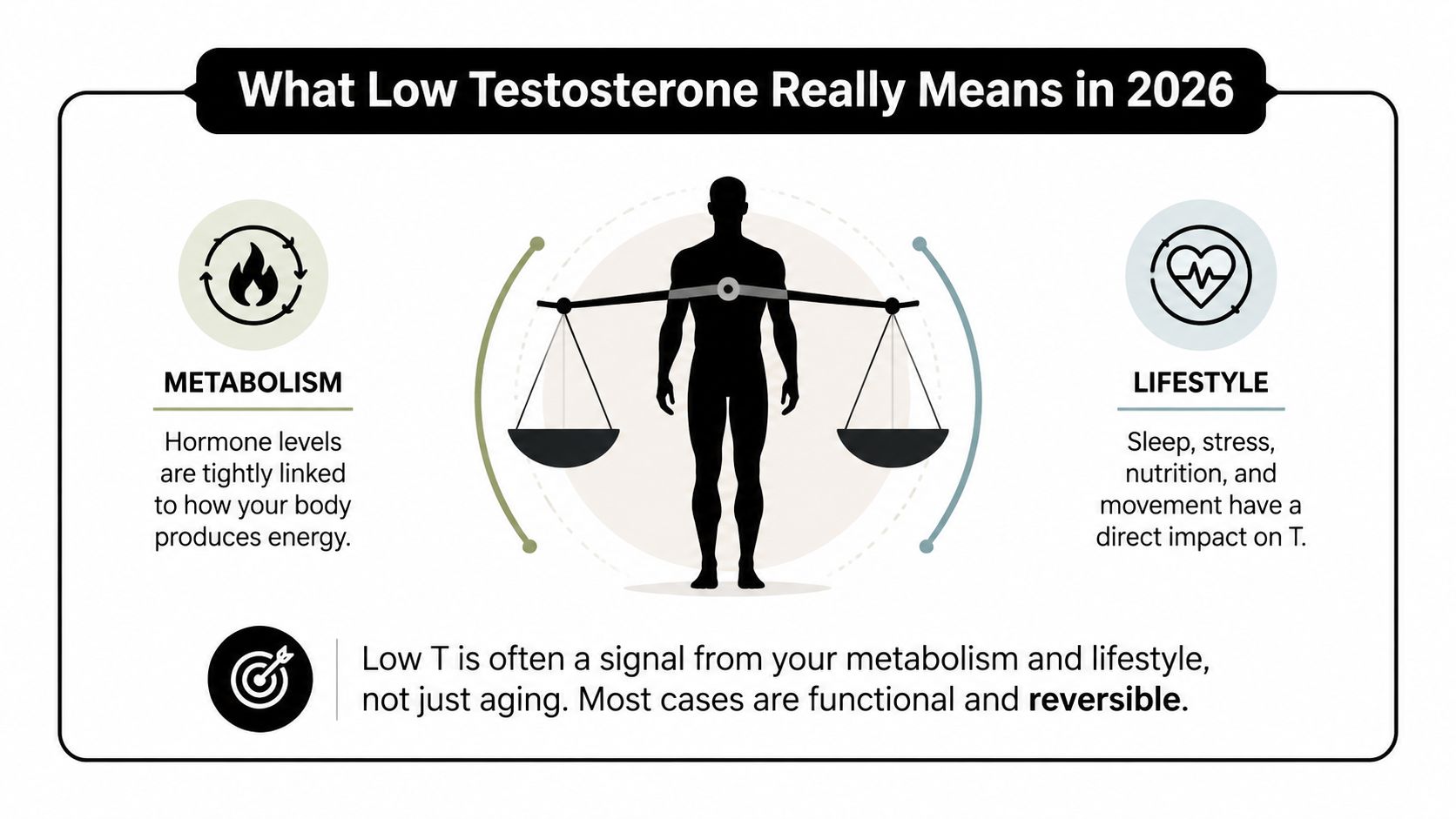
The key distinction is between primary hypogonadism, where the testes cannot respond normally, and secondary hypogonadism, where the brain and pituitary don't provide adequate stimulation. Functional suppression from metabolic disease usually belongs in the secondary category. That distinction shapes the next clinical move, whether it's treating sleep apnea, reviewing opioids, investigating prolactin, or assessing permanent testicular damage.
The Hormone Control System in Plain English
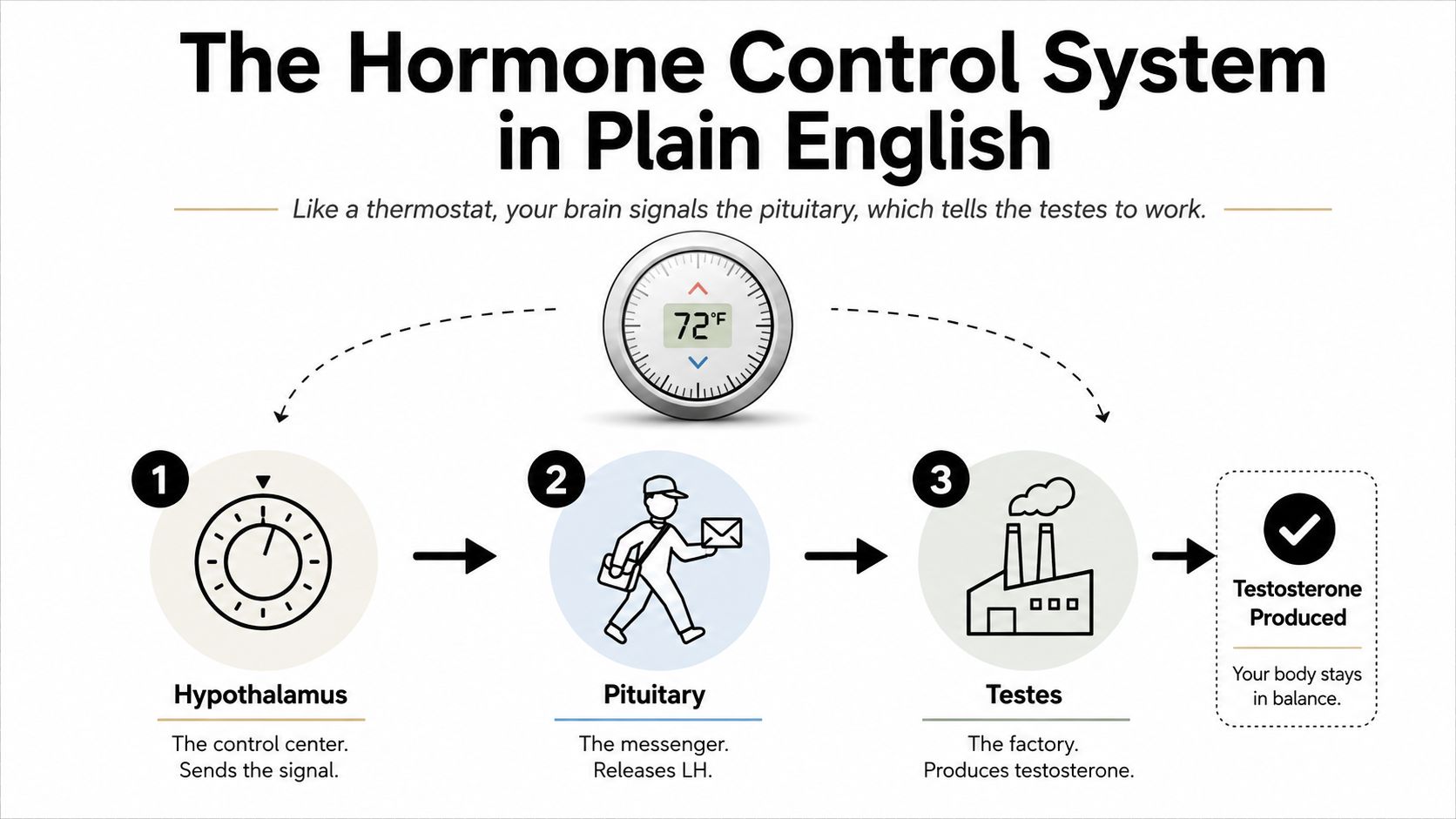
Think of testosterone production as a thermostat with a feedback loop. The brain monitors the body's hormonal environment and adjusts the signal sent toward the testes.
The process works in stages:
- The hypothalamus releases gonadotropin-releasing hormone, known as GnRH.
- The pituitary gland responds by releasing luteinizing hormone, or LH, and follicle-stimulating hormone, or FSH.
- The testes use those signals to produce testosterone and support sperm production.
When testosterone rises sufficiently, it sends feedback to the hypothalamus and pituitary. The brain then reduces GnRH and LH signaling, preventing uncontrolled production. When testosterone falls, the system should increase its signal. If that response doesn't happen, clinicians look for a central problem involving the hypothalamus or pituitary.
Why the timing of the test matters
Testosterone is usually highest in the early morning. That's why clinicians commonly request a fasting morning sample, often before 10 a.m., rather than relying on an afternoon measurement. A result collected after a poor night's sleep or outside the expected morning window may not represent a person's usual level.
The same control system also supports fertility. LH stimulates testosterone-producing Leydig cells, while FSH contributes to sperm production through its effects on the testes. External testosterone can improve circulating testosterone while reducing the brain's signals that support sperm production, so fertility plans must be discussed before treatment.
How the pattern guides the investigation
A low testosterone result becomes more informative when paired with LH and FSH. High LH and FSH suggest that the pituitary is pushing hard but the testes aren't responding. Low or inappropriately normal LH and FSH suggest that the signal from the brain or pituitary is inadequate.
That laboratory pattern doesn't identify every cause on its own. Prolactin, thyroid testing, medication history, metabolic markers, and sometimes imaging add context. The purpose is to locate the faulty part of the thermostat system before choosing a therapy.
Primary vs Secondary Hypogonadism Explained
The simplest way to separate the two major categories is to ask where the failure occurs.
Primary hypogonadism begins in the testes. The brain and pituitary may send strong signals, but damaged or underdeveloped testicular tissue can't produce enough testosterone. Causes include Klinefelter syndrome, undescended testes, testicular trauma or torsion, mumps orchitis, chemotherapy, radiation, surgical removal of a testicle, and some forms of testicular decline associated with aging.
Secondary hypogonadism begins higher in the system. The hypothalamus or pituitary fails to stimulate the testes adequately. Causes include pituitary tumors, excess prolactin, pituitary surgery or radiation, head trauma, Kallmann syndrome, obesity, opioid exposure, sleep disorders, type 2 diabetes, and chronic systemic illness. The Cleveland Clinic explanation of male hypogonadism describes several of these central and functional contributors.
| Feature | Primary Hypogonadism | Secondary Hypogonadism |
|---|---|---|
| Main problem | The testes don't produce enough testosterone | The hypothalamus or pituitary doesn't provide enough stimulation |
| Testosterone | Low | Low |
| LH and FSH | Usually high | Low or inappropriately normal |
| Typical causes | Testicular injury, torsion, infection, genetic disease, chemotherapy, radiation | Obesity, chronic illness, opioids, sleep disorders, pituitary disease, prolactin excess |
| Potential for reversal | Often limited when tissue is permanently damaged | Frequently depends on the underlying cause |
| Fertility context | Sperm production may be directly impaired | Sperm production may be suppressed by inadequate signaling or treatment |
The phrase “inappropriately normal” matters. If testosterone is clearly low, LH should normally rise to encourage the testes to work harder. A result that falls inside the laboratory range may still be inadequate for the situation.
Some men show mixed or compensated patterns. Older or overweight men may have borderline-high LH while testosterone is falling, suggesting that the testes are under increasing pressure even if the pattern doesn't fit neatly into one box. Clinicians therefore interpret the entire picture rather than treating one hormone value as a verdict.
The useful question isn't only “How low is testosterone?” It's “Are the testes failing, or has the brain stopped sending enough instructions?”
Lifestyle and Metabolic Drivers of Low T
Metabolic health sits near the center of many functional cases. A 2026 review of obesity-related hypogonadism identifies obesity and type 2 diabetes as high-risk settings, with hypogonadism affecting roughly 30% to 50% of men in those groups. The same review reports obesity-related hypogonadism in about 2% to 8% of men overall, while hypothalamic, pituitary, or testicular pathology accounts for less than 1% of cases.
Abdominal fat and insulin resistance
Fat tissue contains aromatase, an enzyme that converts some testosterone into estradiol. Increased abdominal fat can also interfere with pituitary signaling, reducing the LH stimulation that the testes need. Insulin resistance and type 2 diabetes add another layer of metabolic stress, creating a setting in which testosterone production and regulation become less efficient.
The practical response isn't to chase a hormone number in isolation. A clinician may assess waist gain, glucose regulation, blood pressure, activity, diet, and medication exposure. Sustainable weight reduction, resistance training, and improved metabolic control can address the environment that is suppressing the axis.
Sleep is part of hormone care
Fragmented sleep and obstructive sleep apnea can reduce normal overnight hormone production. The 2026 NIH review of functional hypogonadism highlights obesity, poor sleep, inactivity, chronic stress, and related exposures as likely contributors to declining testosterone patterns. It also reports obstructive sleep apnea in 28% of men evaluated for low testosterone, with sleep apnea most common in functional low testosterone at 48%.
Other functional pressures include severe calorie restriction, excessive endurance training, heavy alcohol use, and chronic psychological stress. These conditions can reduce recovery, disturb sleep, and alter the signals that regulate reproductive hormones.
Practical levers include:
- Treat possible sleep apnea: Loud snoring, witnessed pauses in breathing, morning headaches, and daytime sleepiness deserve medical assessment.
- Restore adequate recovery: Training should be matched to sleep, nutrition, and stress rather than pushed indefinitely.
- Moderate alcohol exposure: Frequent heavy drinking can worsen sleep, liver health, weight, and hormone regulation.
- Address stress directly: Therapy, structured relaxation, regular movement, and consistent sleep timing can reduce the strain on the system.
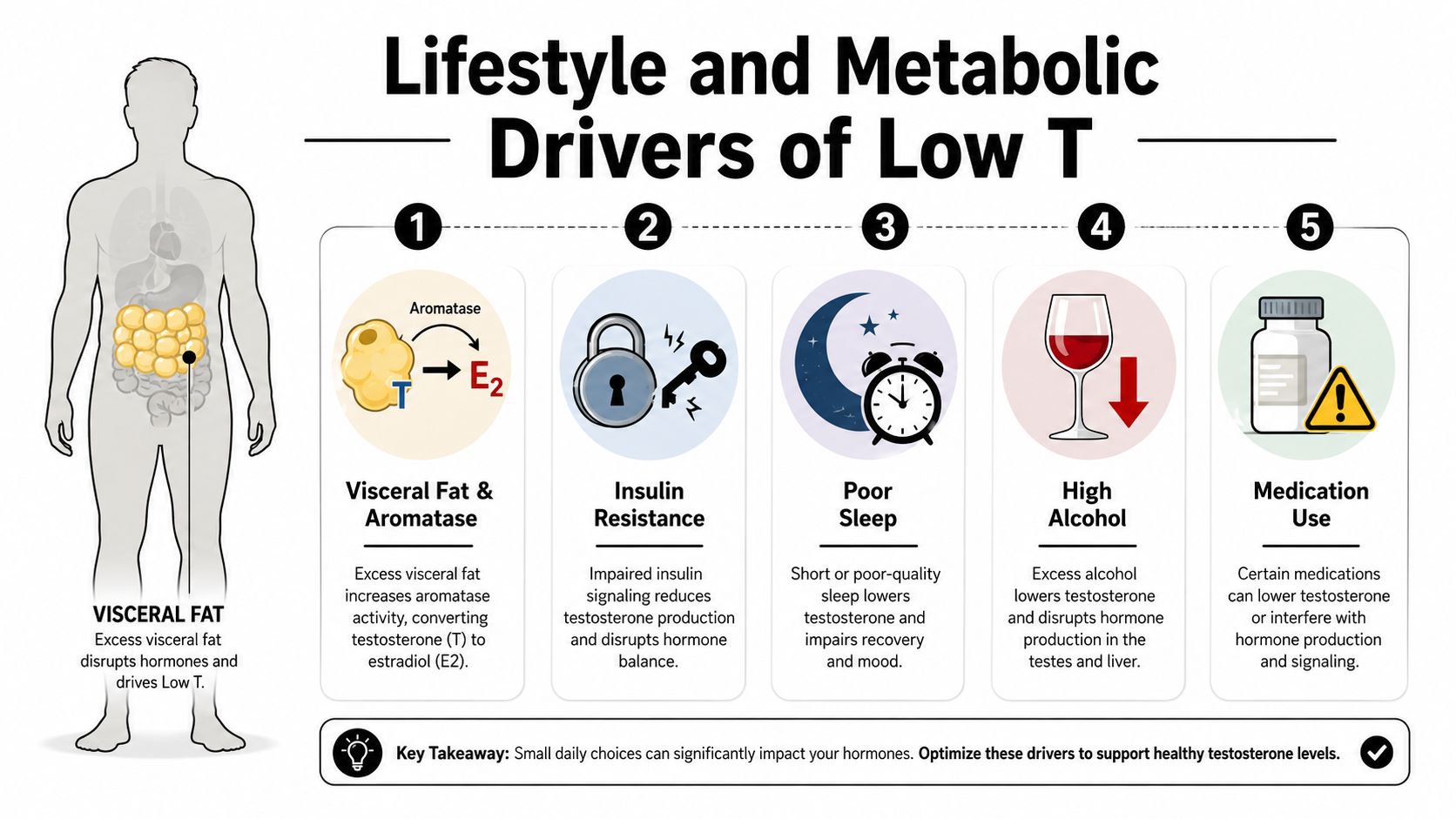
Sleep, weight, alcohol, and activity often cluster rather than appear separately. That's why functional hypogonadism can improve when the broader metabolic problem is treated, although persistent symptoms still require proper testing.
The relationship between these drivers and testosterone is discussed in this educational video:
Medications, Illness, and Iatrogenic Causes
A medication list can explain a low testosterone result even when the testes themselves are healthy. Opioids can suppress the brain's reproductive signaling, while corticosteroids and anabolic steroids can disrupt the normal feedback loop. Some men also develop low testosterone after treatment that directly affects the testes or pituitary.
| Cause | Mechanism | Type |
|---|---|---|
| Opioids | Suppress central reproductive signaling | Secondary or functional |
| Corticosteroids | Interfere with hypothalamic-pituitary signaling | Secondary |
| Anabolic steroids | Suppress natural LH and FSH through feedback | Secondary |
| Type 2 diabetes | Associated metabolic dysfunction can reduce testosterone regulation | Functional or secondary |
| Chronic kidney or liver disease | Systemic illness alters hormone production and metabolism | Functional or secondary |
| HIV/AIDS | Chronic disease can affect the reproductive axis | Functional or secondary |
| Prolactinoma | Excess prolactin suppresses reproductive signaling | Secondary |
| Hemochromatosis | Iron accumulation can injure pituitary function | Secondary or mixed |
| Chemotherapy and radiation | Can damage testicular or pituitary tissue | Primary, secondary, or mixed |
| Androgen deprivation therapy | Deliberately blocks androgen signaling | Treatment-related |
Don't stop a prescription on your own. Instead, ask the prescribing clinician whether an opioid, steroid, or other medication could be contributing, and whether a safer alternative or dose review is appropriate. Supplements and performance-enhancing products belong on the list too, especially when they contain undisclosed anabolic compounds.
Chronic conditions deserve the same attention. Uncontrolled diabetes, advanced liver disease, chronic kidney disease requiring dialysis, chronic obstructive pulmonary disease with hypoxia, HIV, sleep disorders, and severe systemic illness can all reduce testosterone signaling or production. Treating the underlying disease may improve the hormone pattern, although recovery isn't guaranteed.
Cancer treatment can create a more direct cause. Chemotherapy, pelvic or testicular radiation, removal of testicular tissue, and androgen deprivation therapy for prostate cancer can all reduce androgen activity. Pituitary surgery or radiation may interrupt LH and FSH release, while a prolactinoma can suppress the axis through excess prolactin.
Fertility is a separate concern from testosterone symptoms. Men considering treatment should review the reproductive implications before starting, including the issues discussed in this guide to whether TRT can affect fertility. Physician-led review comes before hormonal treatment, particularly when several medications or illnesses overlap.
Aging, Genes, and Structural Causes
Age can lower testosterone, but it does not automatically turn a normal life stage into a disease. The University of North Carolina clinical review reports that nearly 39% of men aged 45 and older have low testosterone, with estimates increasing from 12% in men in their 50s to 49% in men in their 80s. A separate NIH and StatPearls summary describes a similar age pattern, with about 40% of men older than 45 and 50% of men in their 80s classified as hypogonadal.
Prevalence does not decide whether treatment is appropriate. Symptoms, repeat morning tests, general health, fertility plans, and the likely cause all shape that decision. An older man may have a testosterone level within the expected range while sleep loss, depression, medication effects, thyroid disease, or metabolic illness explains his symptoms.
Genetic conditions can cause primary hypogonadism from early life. Klinefelter syndrome often involves small, firm testes, impaired sperm production, and high LH and FSH. Kallmann syndrome may cause absent or incomplete puberty and a reduced sense of smell because hypothalamic signaling did not develop normally. Less common disorders can affect hormone receptors or testicular development.
Structural damage follows a different pathway from reversible functional suppression. Testicular torsion, major trauma, mumps orchitis, an undescended testis, chemotherapy, radiation, or surgical removal can reduce the amount of functioning testicular tissue. Correcting an undescended testis may prevent further problems, but earlier development can still affect later hormone and sperm production.
In primary testicular failure, LH is generally high as the pituitary tries to compensate for inadequate output. Healthy weight, exercise, sleep, and disease management still support overall health, but they cannot rebuild permanently damaged tissue. Structural causes therefore require ongoing endocrine and reproductive assessment, with treatment based on remaining function and the person's goals.
Symptoms and When to Seek Testing
Low testosterone symptoms become more persuasive when they form a pattern. Reduced sexual desire and erectile changes are often more specific than fatigue alone, while loss of muscle, increasing abdominal fat, low mood, poor concentration, and sleep disruption can add context. None of these symptoms proves testosterone deficiency by itself.
Fatigue may come from anemia, thyroid disease, depression, sleep apnea, medication effects, infection, or overtraining. Erectile dysfunction may reflect vascular disease, anxiety, medication use, or nerve problems. That's why a man with a borderline result and few symptoms may be managed differently from someone with persistent sexual and physical changes.
When testing makes sense
Consider medical assessment when symptoms persist rather than appearing for a day or two. Testing is particularly relevant when you have:
- Persistent low desire: A clear and sustained change in libido deserves evaluation.
- New erectile changes: Testosterone may be one contributor, but vascular and medication causes also need review.
- Unexplained physical decline: Reduced muscle, increased abdominal fat, or weakened bones can justify broader endocrine testing.
- Fertility concerns: Low testosterone and impaired sperm production require a coordinated reproductive assessment.
- Symptoms before TRT: Treatment should follow confirmation and cause evaluation, not replace them.
Which tests provide useful context
Clinicians commonly begin with a fasting morning total testosterone test and repeat it when the first result is low or inconsistent. SHBG helps explain how much testosterone is bound, while free testosterone or calculated free testosterone can clarify cases in which total testosterone doesn't match symptoms.
LH and FSH help distinguish primary from secondary hypogonadism. Prolactin can identify an abnormal pituitary signal, and TSH can identify thyroid disease that may mimic or contribute to the symptom pattern. A clinician may add metabolic tests, blood counts, liver and kidney testing, or pituitary imaging based on the findings.
Don't diagnose yourself from one home test or one afternoon result. Use a repeat morning measurement and ask what the accompanying hormones show.
A repeat test is reasonable when the first sample was taken late, during acute illness, after unusually poor sleep, or without a compatible symptom pattern. Persistent low results, markedly abnormal LH or prolactin, visual symptoms, headaches, infertility, or signs of testicular damage should prompt more urgent medical review, often with endocrinology or urology involvement.
For erectile symptoms specifically, a clinician can also discuss options such as the ED medications available through Cost Plus TRT, while still investigating whether low testosterone is contributing.
Putting It All Together and Next Steps
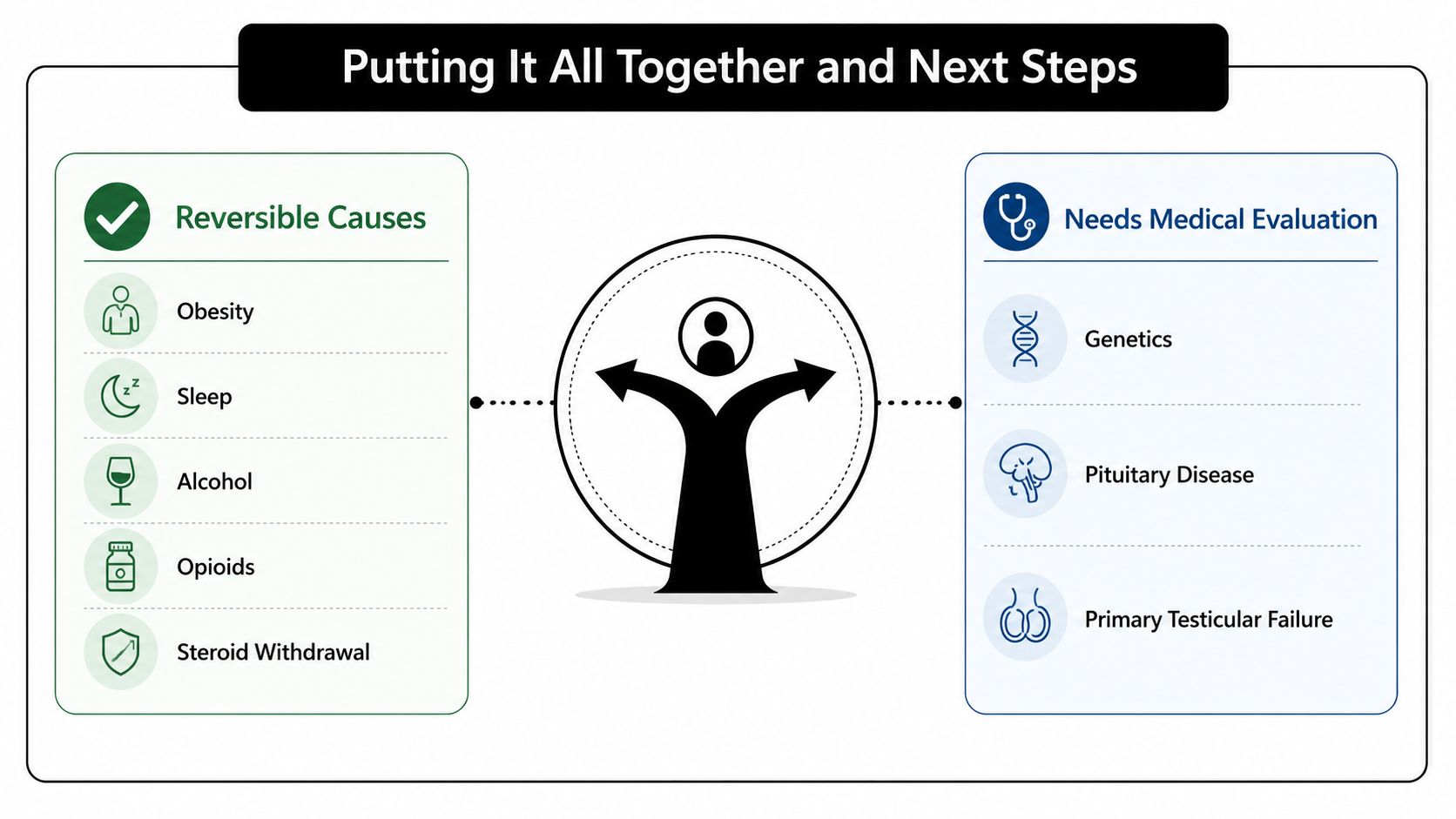
Low testosterone is often a clue, not an inevitable result of aging. Start by asking whether the cause can change. Obesity, poor sleep, heavy alcohol use, opioid exposure, severe under-recovery, and suppression after anabolic steroid use may improve when the underlying stressor is addressed. Diabetes and sleep apnea need disease-specific care. Pituitary tumors, genetic syndromes, orchiectomy, radiation damage, and permanent testicular failure require specialist evaluation.
The sequence matters. Evaluation comes before treatment. Low testosterone with low or inappropriately normal LH may lead to prolactin testing and, depending on the results, pituitary imaging. A man with obesity, fragmented sleep, and metabolic dysfunction may first need a structured health intervention before testosterone treatment is considered.
A practical appointment checklist
Bring details that show the pattern over time:
- Record symptoms: Note changes in libido, erections, energy, mood, sleep, strength, and concentration.
- List every substance: Include prescriptions, over-the-counter products, supplements, opioids, corticosteroids, and performance-enhancing products.
- Schedule the right test: Ask for a fasting morning total testosterone measurement, with repeat testing if indicated.
- Request relevant context: Discuss LH, FSH, prolactin, SHBG, free testosterone, and thyroid testing.
- Mention fertility goals: Fertility plans can change the preferred treatment strategy.
- Review sleep and metabolic health: Ask about sleep apnea, glucose regulation, weight changes, alcohol, and physical activity.
Men with confirmed deficiency may discuss supervised options such as testosterone replacement therapy. The choice depends on the cause, symptoms, laboratory pattern, fertility plans, and safety review. TRT replaces missing hormone, but it does not explain why the level fell or correct an untreated sleep or metabolic disorder.
Low testosterone can point to the testes, pituitary, medication list, sleep pattern, or metabolic health. Identifying the source helps match treatment to the problem.
Cost Plus TRT provides physician-supervised telemedicine care for men with clinically confirmed testosterone deficiency, including online evaluation, laboratory review, and prescribed treatment when appropriate. To request an assessment, visit Cost Plus TRT.