

You're looking at a lab report and the results appear reassuring. The values sit inside the printed ranges, no urgent flags appear, yet you still feel tired, your weight has changed, or your energy and sexual function aren't what they used to be. The obvious question is, “Are these average blood test results actually healthy for me?”
That question exposes a common misunderstanding. Average isn't the same as optimal, and a reference range isn't a personal target. A result only becomes clinically useful when it's considered alongside symptoms, age, medical history, medications, trends, and the reason the test was ordered.
Table of Contents
- What Average Blood Test Results Actually Mean
- Reading a Complete Blood Count
- Understanding Metabolic and Lipid Markers
- Hormone Tests and What Average Really Means
- How to Collect, Upload, and Use Your Labs
- TRT Lab Trends and Red Flags to Watch
What Average Blood Test Results Actually Mean
A patient may see a glucose result near the top of the lab's interval and feel relieved because it isn't flagged. Another patient may see a testosterone value inside a broad reference range and assume it explains everything, even though symptoms and previous results point in another direction. Both are making the same mistake: treating a population reference range as a guarantee of individual health.
Reference intervals are built from groups considered healthy. They help laboratories identify results that deserve attention, but they don't promise that every value inside the interval is ideal for every person. MedlinePlus explains why lab results must be interpreted using the laboratory's range and the person's individual context.

The difference between typical and actionable
Consider fasting glucose. A commonly used benchmark is 70 to 100 mg/dL, while random non-fasting glucose is commonly expected to be under 140 mg/dL in a standard laboratory reference set, as shown in the NBME laboratory reference values. A result near the upper boundary may still be reported as normal, but its meaning changes if it appears repeatedly alongside abnormal lipids, inflammation, medication effects, or symptoms associated with metabolic strain.
That doesn't mean one borderline value proves disease. It means the result may deserve confirmation and context rather than dismissal. Hydration, recent food intake, illness, exercise, timing, and prescribed medication can all influence a reading.
Practical rule: Treat a reference range as a screening boundary, not as a personalized health score.
Why trends beat snapshots
One report answers, “Where was this marker on the day of the draw?” A series of reports can answer a more useful question: “Which direction is this marker moving?” A stable result may require little action, while a gradual shift toward an unfavorable boundary can matter even before the lab prints an abnormal flag.
The right interpretation therefore has three parts: the number, the lab's range, and the clinical setting. For someone considering testosterone replacement therapy, that setting includes symptoms, baseline hormone results, blood counts, cardiovascular risk, fertility plans, and the goals of treatment.
Reading a Complete Blood Count
A complete blood count, or CBC, is one of the most common baseline blood tests. It examines red blood cells, hemoglobin, hematocrit, white blood cells, and platelets, giving clinicians a practical view of oxygen transport, immune activity, and clotting capacity.
The ranges below are commonly cited adult reference intervals, but the range printed on your own report should govern because laboratories may use different methods and units. The Cleveland Clinic CBC guide provides the clinical framework for interpreting these markers.
| Marker | Typical adult male range | Common interpretation of deviation |
|---|---|---|
| Red blood cells | About 4.35 to 6.1 trillion cells/L | Low results may accompany anemia; high results can reflect concentration or increased red-cell production |
| Hemoglobin | About 13.2 to 16.6 g/dL | Low values may indicate reduced oxygen-carrying capacity; high values need context |
| Hematocrit | About 38.3% to 48.6% | Low values can occur with anemia; high values may reflect dehydration or increased red-cell mass |
| White blood cells | About 4,000 to 11,000 cells/mcL | Abnormal values can occur with infection, inflammation, medication effects, or marrow conditions |
| Platelets | About 150,000 to 400,000 cells/mcL | Low or high results may affect bleeding or clotting assessment |
Start with the red-cell line
Red blood cells carry oxygen. Hemoglobin is the oxygen-carrying protein inside them, while hematocrit represents the proportion of blood made up of red blood cells. These values should be read together rather than treated as unrelated scores.
Adult male and female reference ranges differ because typical red-cell production and circulating concentrations differ between the sexes. Cleveland Clinic lists adult female red blood cell ranges around 3.92 to 5.13 trillion cells/L, with other laboratory methods reporting approximately 4.2 to 5.4 million cells per microliter. Female hemoglobin is typically about 11.6 to 15 g/dL, and hematocrit about 35.5% to 44.9%, according to the same clinical reference.
A low hemoglobin or hematocrit may prompt evaluation for anemia, blood loss, nutritional deficiency, or another underlying condition. A high value can appear with dehydration, smoking, sleep-related breathing problems, or increased red-cell production. The number alone doesn't identify the cause.
Scan white cells and platelets next
White blood cells help clinicians assess immune and inflammatory activity. A high count may accompany infection or inflammation, while a low count can have several explanations, including medication effects or conditions affecting marrow function. A temporary illness can shift the result, so symptoms and repeat testing often matter.
Platelets support normal clot formation. An abnormal platelet count doesn't automatically mean a dangerous clotting disorder, but it deserves interpretation alongside bleeding, bruising, medication use, and the rest of the CBC.
Hematocrit has special importance for men using testosterone therapy because treatment can stimulate red-cell production. A provider should compare the result with baseline and previous monitoring rather than reacting to a single isolated change. The safest approach is to review the entire CBC and the treatment plan together.
Understanding Metabolic and Lipid Markers
A normal CBC does not rule out metabolic risk. Glucose, lipids, liver-related chemistry, and kidney-related chemistry answer different clinical questions, so the useful interpretation comes from the pattern and the patient's risk factors, not from whether each result looks average.
Glucose requires context
Fasting glucose is commonly benchmarked at 70 to 100 mg/dL, while random non-fasting glucose is commonly expected below 140 mg/dL, as noted in the previously cited NBME reference. A result within those intervals is generally reassuring. Repeated readings near the upper boundary, however, may deserve more attention than one isolated value.
Meals and fasting duration can shift glucose. Stress, acute illness, poor sleep, exercise, and medication can also affect the result. If the number conflicts with symptoms or previous tests, repeat testing or a broader metabolic assessment may be more useful than assigning a diagnosis from one measurement.
Lipids are not one number
Total cholesterol provides a starting point, but LDL, HDL, and triglycerides describe different parts of cardiovascular risk. Common clinical benchmarks classify total cholesterol below 200 mg/dL as desirable, LDL below 100 mg/dL as optimal for many adults, HDL above 60 mg/dL as protective, and triglycerides below 150 mg/dL as normal, according to the Cleveland Clinic lipid panel reference.
| Lipid marker | Desirable range | Borderline or high range |
|---|---|---|
| Total cholesterol | Below 200 mg/dL | 200 to 239 mg/dL is commonly borderline high, and 240 mg/dL or above is high |
| LDL cholesterol | Below 100 mg/dL for many people | Higher results can increase concern, with stricter goals used for some higher-risk patients |
| HDL cholesterol | Above 60 mg/dL is considered protective | Lower results may contribute to an unfavorable risk profile |
| Triglycerides | Below 150 mg/dL | Higher results may require lifestyle and medical assessment |
Reference cutoffs are not the same as personal treatment targets. A person with diabetes or established cardiovascular risk may need a stricter LDL goal, with some references identifying below 70 mg/dL for people with diabetes. The treating clinician should set that goal after considering the patient's full risk profile, rather than relying on a generic comparison chart.
Look for patterns, not isolated flags
A mildly unfavorable lipid result carries more weight when it appears alongside raised glucose, high blood pressure, smoking, obesity, family history, or low activity. Liver enzymes and kidney markers also require context. Alcohol use, supplements, strenuous exercise, prescription drugs, and hydration can all influence interpretation.
Review trends rather than reacting to a single flagged value. Compare results with prior testing, symptoms, medications, and the reason for testing. Choosing one “good” number while ignoring the rest of the panel can conceal a pattern that merits follow-up. For people on TRT, the same principle applies: metabolic results belong in the wider monitoring plan, alongside treatment response and safety markers.
Hormone Tests and What Average Really Means
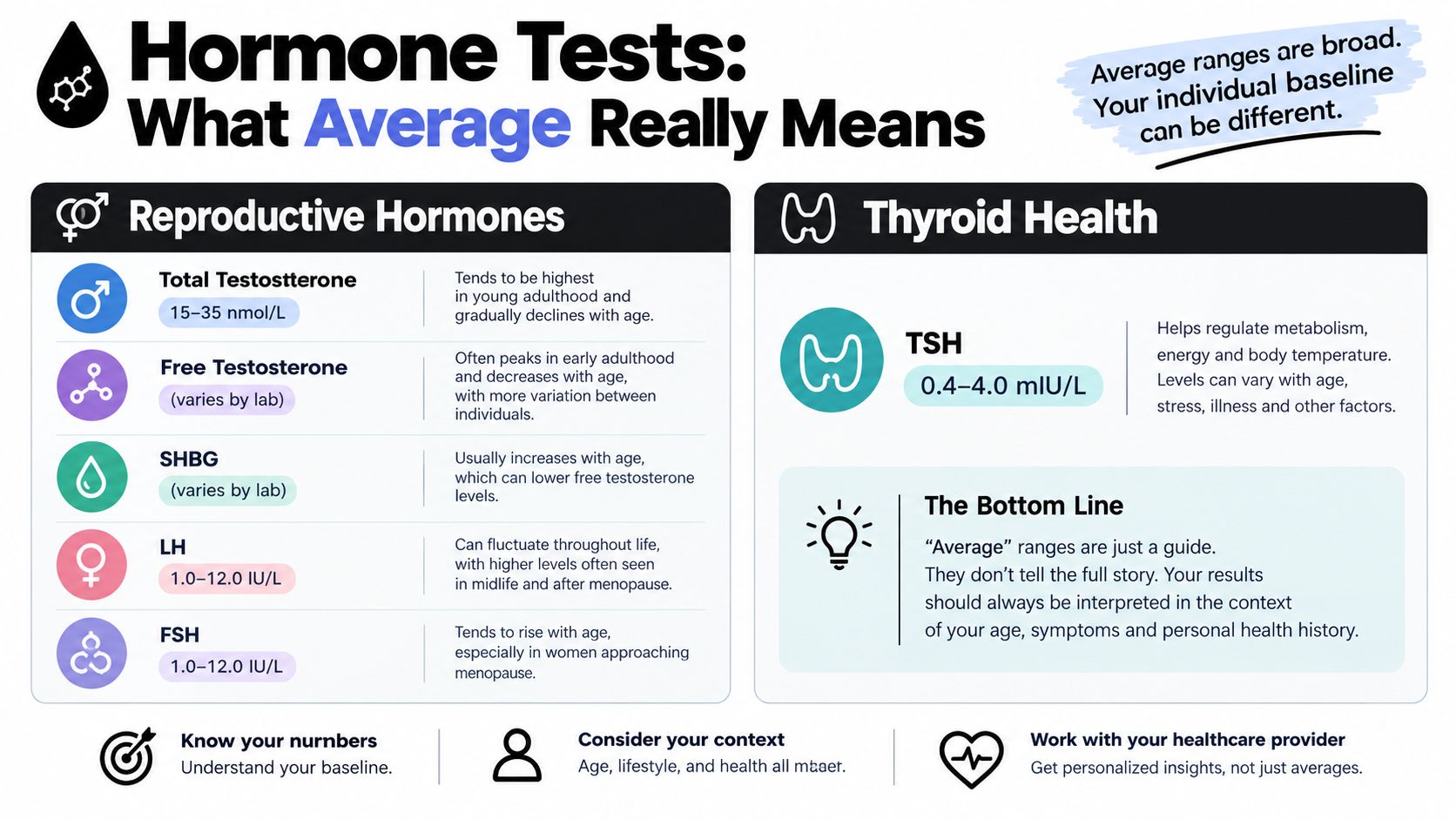
A testosterone result can sit inside the laboratory range while a patient still has symptoms, an abnormal related marker, or a result that does not fit his treatment goals. Hormone ranges are broad, method-dependent, and affected by age, timing, and individual health. The useful question is not whether a number is average. It is whether the result is appropriate for that person and the clinical decision being made.
Compare the hormone, not just the headline number
Total testosterone measures the amount circulating in the blood. Free testosterone estimates the portion available to tissues, while SHBG affects how much testosterone remains bound. Two men can have the same total testosterone and different free testosterone results, so the headline value may not explain symptoms by itself.
LH and FSH provide information about communication between the pituitary gland and testes. Low testosterone with low or inappropriately normal LH and FSH suggests a different clinical pattern from low testosterone with raised signaling hormones. That distinction can affect the next diagnostic step.
Age and collection timing also matter. Reference ranges vary by age, and a result that appears routine for a younger man may require a different discussion in an older man with symptoms. The MedlinePlus guide to understanding lab results emphasizes that “normal” can mislead when a laboratory range is separated from the person's circumstances.
Thyroid results need the same discipline
TSH is commonly used to assess thyroid signaling, but interpretation still depends on symptoms, medications, medical history, and related thyroid hormones. A patient with fatigue may have an ordinary TSH result while another condition explains the symptom. A result that differs from a previous baseline or occurs alongside clear symptoms may deserve follow-up even if it is not dramatically abnormal.
The key comparison is between reference-range normal and clinical fit:
- A result can fall inside the range but fail to explain the patient's symptoms.
- A result can move outside the range temporarily because of illness, timing, medication, or laboratory variation.
- A result can suit one treatment goal while leaving another question unanswered.
- A hormone panel cannot establish the need for TRT from one number alone.
For men considering TRT, baseline testing should support the diagnosis and identify safety concerns before treatment begins. Fertility plans belong in that discussion because external testosterone can suppress reproductive signaling. Review the guide to TRT and fertility before starting care, and discuss alternatives or timing with the treating clinician if preserving fertility matters. During TRT, compare results with symptoms, treatment timing, and prior values rather than chasing an average number.
How to Collect, Upload, and Use Your Labs
Good interpretation starts before the blood draw. If the order includes glucose or lipids, follow the fasting instructions provided by the ordering clinician. A CBC alone commonly doesn't require fasting, but combined panels may have different preparation requirements, so don't assume that one test's instructions apply to every marker.
Prepare the report properly
Use the laboratory's instructions, keep your appointment time, and tell the provider about prescription drugs, over-the-counter products, supplements, recent illness, and unusual exercise. Don't stop a medication unless the prescribing clinician tells you to. Bring the complete report, not only a screenshot of the testosterone line.
A useful upload includes:
- The full panel: Include the result, units, reference range, and any flags.
- The collection date: Providers need timing to compare trends accurately.
- The treatment context: State whether the draw was before treatment, during treatment, or after a dose, according to the prescribed schedule.
- Your symptoms: Record energy, libido, erectile function, sleep, mood, urinary symptoms, and any changes since the previous test.
- Relevant history: Mention fertility plans, cardiovascular conditions, blood disorders, sleep apnea concerns, and medications.
Use telemedicine to organize the decision
Patients may schedule a draw through Quest Diagnostics when the clinic manages testing, or they may provide recent laboratory results when those results meet the provider's requirements. Uploading complete records before the consultation gives the licensed clinician time to review patterns rather than spending the appointment reconstructing missing information.
Securely submit files through the clinic's patient process. Avoid sending sensitive medical records through casual messaging channels or leaving identifying information visible in public documents.

Turn numbers into a follow-up plan
During the consultation, ask which results are baseline markers, which require monitoring, and what would trigger a repeat test or dose review. Ask how the provider will evaluate hematocrit, hemoglobin, PSA, lipids, and hormone levels over time. A clear plan should explain what to do if a result is slightly outside range, repeatedly drifting, or associated with new symptoms.
For men who want an online evaluation and a structured way to submit existing results or arrange testing, Cost Plus TRT's start page describes its intake and consultation process. The decision to prescribe still depends on a licensed clinician's assessment of the patient's results and medical history.
TRT Lab Trends and Red Flags to Watch
Testosterone therapy changes the monitoring question from “Is this result average?” to “Is this response safe and appropriate for me?” Providers commonly follow testosterone alongside CBC markers, lipids, PSA, symptoms, and treatment timing. The important signal is often a sustained trend, not a single result that differs slightly from the previous report.
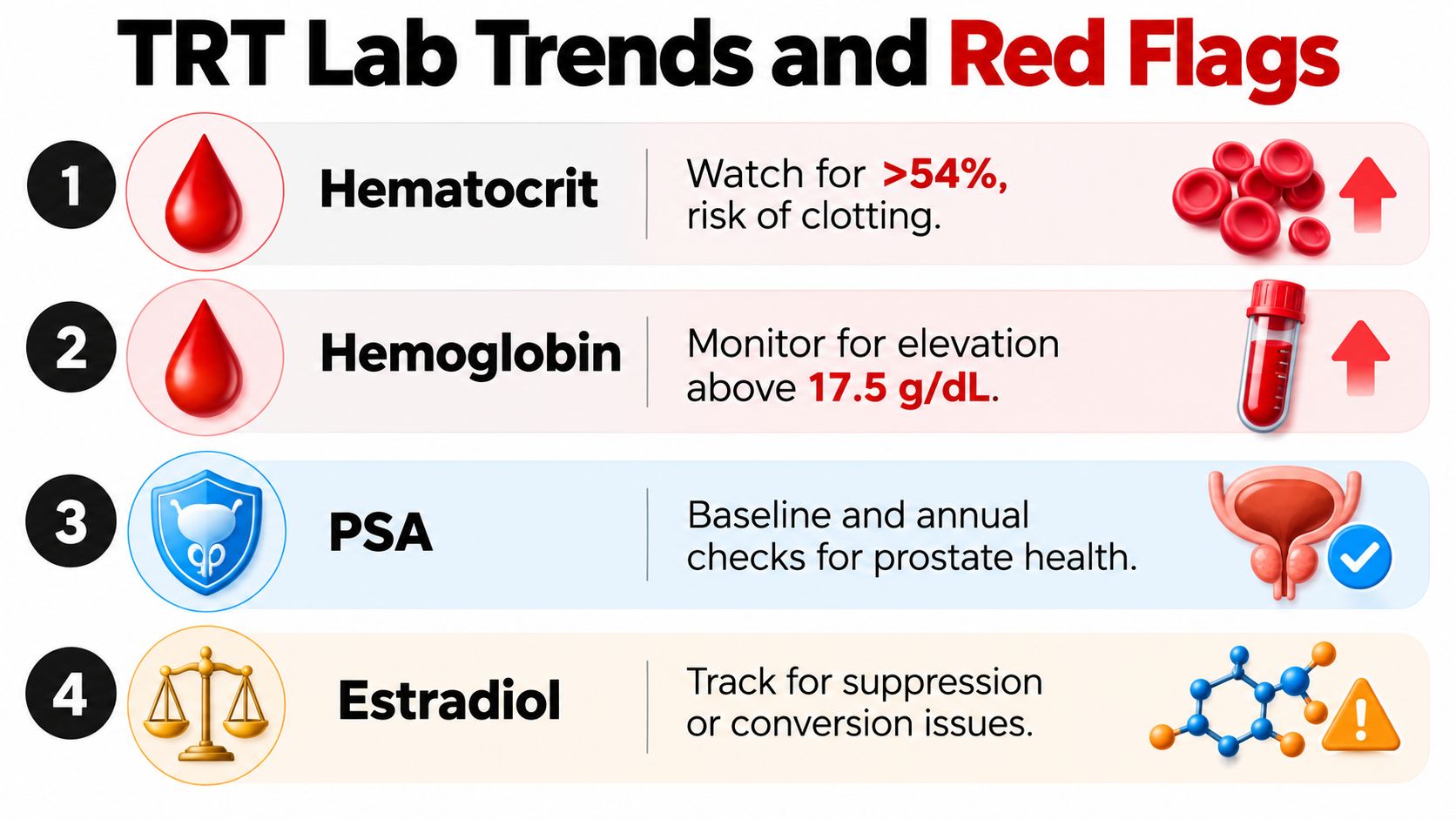
Hematocrit and hemoglobin deserve particular attention because testosterone can increase red-cell production. Rising values, new headaches, flushing, unusual shortness of breath, chest pain, or other concerning symptoms should prompt timely contact with the treating clinician. PSA and urinary symptoms also belong in the conversation, while lipid and glucose trends can reveal a broader metabolic picture.
A lab flag isn't automatically an emergency, and an unflagged result isn't automatically ideal. Don't change the dose, stop treatment, donate blood, or add another medication based only on an online range. Bring the complete trend to a qualified provider through a service such as Cost Plus TRT's TRT program, then use that review to decide whether monitoring, repeat testing, or treatment adjustment is appropriate.
Cost Plus TRT provides online evaluation and ongoing provider consultations for men considering or already using testosterone replacement therapy, with options to arrange labs through Quest Diagnostics or upload recent results. Visit Cost Plus TRT to submit your information, discuss your lab history with a licensed clinician, and build a monitoring plan based on your symptoms, goals, and actual results rather than an “average” number alone.