
The most popular advice about anastrozole with TRT is also the advice most likely to create problems: if estradiol rises, suppress it immediately. That approach treats a normal hormone conversion as a defect and turns a lab result into an automatic prescription.
Estradiol is active in men. It contributes to sexual function, mood, joints, and bone health. Testosterone replacement can increase estradiol because the body converts some testosterone through aromatase. The practical question isn't whether estradiol is detectable or slightly high. It's whether the result is reliable, the symptoms fit, and the testosterone protocol has already been optimized.
Anastrozole can have a legitimate place, especially when persistent symptoms accompany clearly high estradiol. But it isn't a routine accessory to every TRT plan. Used too aggressively, it can create the very problems a patient hoped to solve.
Table of Contents
- Why anastrozole with TRT is not the default fix
- How aromatase converts testosterone to estradiol
- What the research shows
- Dosing patterns and practical adjustment strategies
- Monitoring estradiol and symptoms over time
- Alternatives to anastrozole on TRT
- Risks of pushing estradiol too low and when to stop
Why anastrozole with TRT is not the default fix
A high estradiol result on TRT doesn't automatically mean you need an aromatase inhibitor. Men need estradiol, and lowering it without a clinical reason can affect libido, mood, joints, bone health, and metabolic markers. The goal isn't the lowest possible number. The goal is a treatment plan that improves symptoms while keeping hormone levels physiologically useful.
Estradiol rises because testosterone provides more substrate for aromatase, the enzyme that converts testosterone into estradiol. That conversion is expected. A patient may have a higher result after starting TRT and still feel better, with no breast symptoms, fluid retention, or sexual problems. Treating the number alone could make the overall balance worse.
Symptoms matter more than a solitary result
The symptoms that deserve a careful review include:
- Breast or nipple changes: New nipple sensitivity, breast tenderness, or progressive gynecomastia deserves prompt clinical attention.
- Fluid retention: Noticeable puffiness or rapid changes in water retention may be relevant, but they can also have other causes.
- Mood and sexual changes: Emotional lability, reduced libido, or erectile difficulty require a broader assessment rather than an automatic AI prescription.
- Protocol-related swings: Large fluctuations after testosterone dosing may contribute to symptoms that improve when the testosterone schedule is adjusted.
Routine aromatase-inhibitor use isn't standard TRT care. Independent clinical summaries emphasize selective, symptom-driven prescribing and sensitive estradiol testing rather than reflex treatment based on a conventional assay, as discussed in this clinical overview of low testosterone and aromatase-inhibitor decisions.
Practical rule: Before adding a second medication, ask whether the testosterone dose, injection timing, assay, and symptom pattern all make sense.
For patients beginning or transferring supervised care, Cost Plus TRT's TRT program is one example of a telemedicine pathway where testosterone treatment and follow-up can be reviewed with a licensed clinician. The central principle remains the same wherever care takes place: anastrozole should earn its place, not appear automatically beside a testosterone prescription.
How aromatase converts testosterone to estradiol
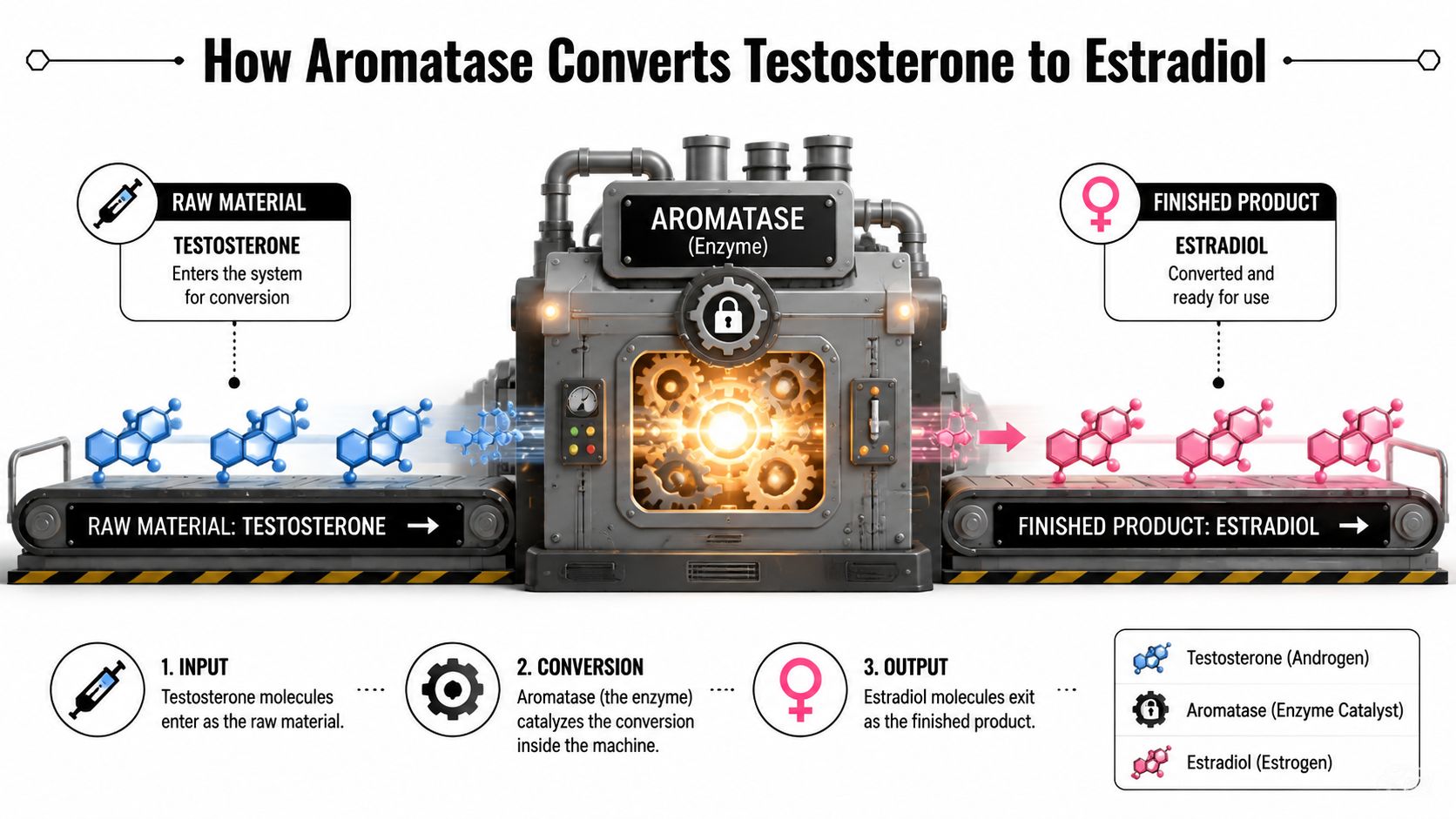
Think of aromatase as a biological conversion machine. Testosterone arrives as the raw material, the aromatase enzyme processes it, and estradiol leaves as the finished product. TRT increases the amount of raw material available, so more conversion can occur in tissues that contain aromatase.
Aromatase is found in several locations, including adipose tissue, muscle, the brain, and the testes. Body composition can influence the amount of conversion because fat tissue contains aromatase. Testosterone dose and the size of hormone peaks also affect how much substrate reaches the enzyme.
Why blocking the machine has system-wide effects
Anastrozole inhibits aromatase. It doesn't switch off conversion in only one preferred location, such as breast tissue. Its effect can be systemic, which explains why lowering estradiol may influence joints, lipids, mood, and bone biology as well as breast symptoms.
The response also depends on how much drug is used and how often it is taken. Repeated dosing can produce cumulative suppression, particularly when the original problem was a high testosterone dose or a large peak rather than an inability to regulate estradiol.
The factory analogy also explains why dose reduction often deserves priority. If the system is receiving more testosterone than needed for the treatment goal, reducing that input may lower estradiol without blocking aromatase throughout the body. Changing injection frequency can also reduce peaks and may lessen the pressure on the conversion pathway.
The trade-off is built into the mechanism
Anastrozole doesn't selectively remove an unwanted byproduct. It changes the conversion of testosterone into an active hormone. That can be useful in a narrow clinical situation, but it creates a trade-off whenever suppression exceeds the patient's need.
The safest interpretation is simple: more testosterone can mean more estradiol, and more anastrozole can mean too little estradiol. A good protocol manages both sides rather than chasing a single laboratory value.
What the research shows
Clinical studies support a narrower conclusion than many TRT discussions suggest. Anastrozole can change testosterone and estradiol measurements, yet those laboratory changes do not reliably produce better strength, body composition, or daily function.
A 1-year randomized, double-blind, placebo-controlled trial published in 2008 enrolled 88 men aged 60 years or older with biochemical and symptomatic hypogonadism. Participants received anastrozole 1 mg daily or placebo. By month 3, mean total testosterone rose from 11.2 ± 3.3 nmol/L to 18.2 ± 4.8 nmol/L, and bioavailable testosterone increased from 2.7 ± 0.8 to 5.4 ± 1.7 nmol/L. Estradiol fell from 55.8 ± 15.4 pmol/L to 42.2 ± 13.6 pmol/L. Body composition, strength, PSA, BPH symptoms, hematocrit, and lipids did not materially change, according to the published PubMed trial.
Key trial comparison
| Study | Design | Dose | Estradiol change | Testosterone change | Functional outcome |
|---|---|---|---|---|---|
| 2008 randomized trial | 1-year, randomized, double-blind, placebo-controlled trial in older men | Anastrozole 1 mg daily | Fell from 55.8 ± 15.4 to 42.2 ± 13.6 pmol/L by month 3 | Total testosterone rose from 11.2 ± 3.3 to 18.2 ± 4.8 nmol/L, and bioavailable testosterone rose from 2.7 ± 0.8 to 5.4 ± 1.7 nmol/L | No material change in body composition, strength, PSA, BPH symptoms, hematocrit, or lipids |
| Testosterone pellets with anastrozole | Retrospective analysis of 38 men and 65 pellet insertions | Anastrozole coadministered with testosterone pellets | Lower estradiol at all time points | Higher total and free testosterone beyond 120 days | Longer time to reinsertion, but not evidence of superior strength or lean-mass outcomes |
| Testosterone pellet therapy study | Study of men receiving testosterone pellets | Coadministered anastrozole | Lower estradiol | Prolonged therapeutic testosterone exposure with less gonadotropin suppression | Supports endocrine optimization, not a proven functional advantage |
A separate retrospective analysis of 38 men with 65 testosterone-pellet insertions associated anastrozole with higher total and free testosterone beyond 120 days, lower estradiol at all measured time points, and an average reinsertion interval of 198 days versus 128 days, a 70-day difference, compared with pellets alone. The authors interpreted this as possible optimization of pellet-based TRT, not proof of improved strength or lean mass, as reported in the pellet coadministration analysis.
Another study of men receiving testosterone pellets found prolonged therapeutic testosterone exposure and less gonadotropin suppression when anastrozole was coadministered. The pellet therapy study helps explain the interaction between the treatments, but it does not establish better long-term quality of life, muscle, or strength.
The practical message is selective use. Anastrozole can lower estradiol and change testosterone feedback, while excessive suppression may create problems of its own. Long-term cardiovascular, bone, and cognitive safety data in men remain limited, so laboratory improvement alone is not a reason to add it to TRT.
Dosing patterns and practical adjustment strategies
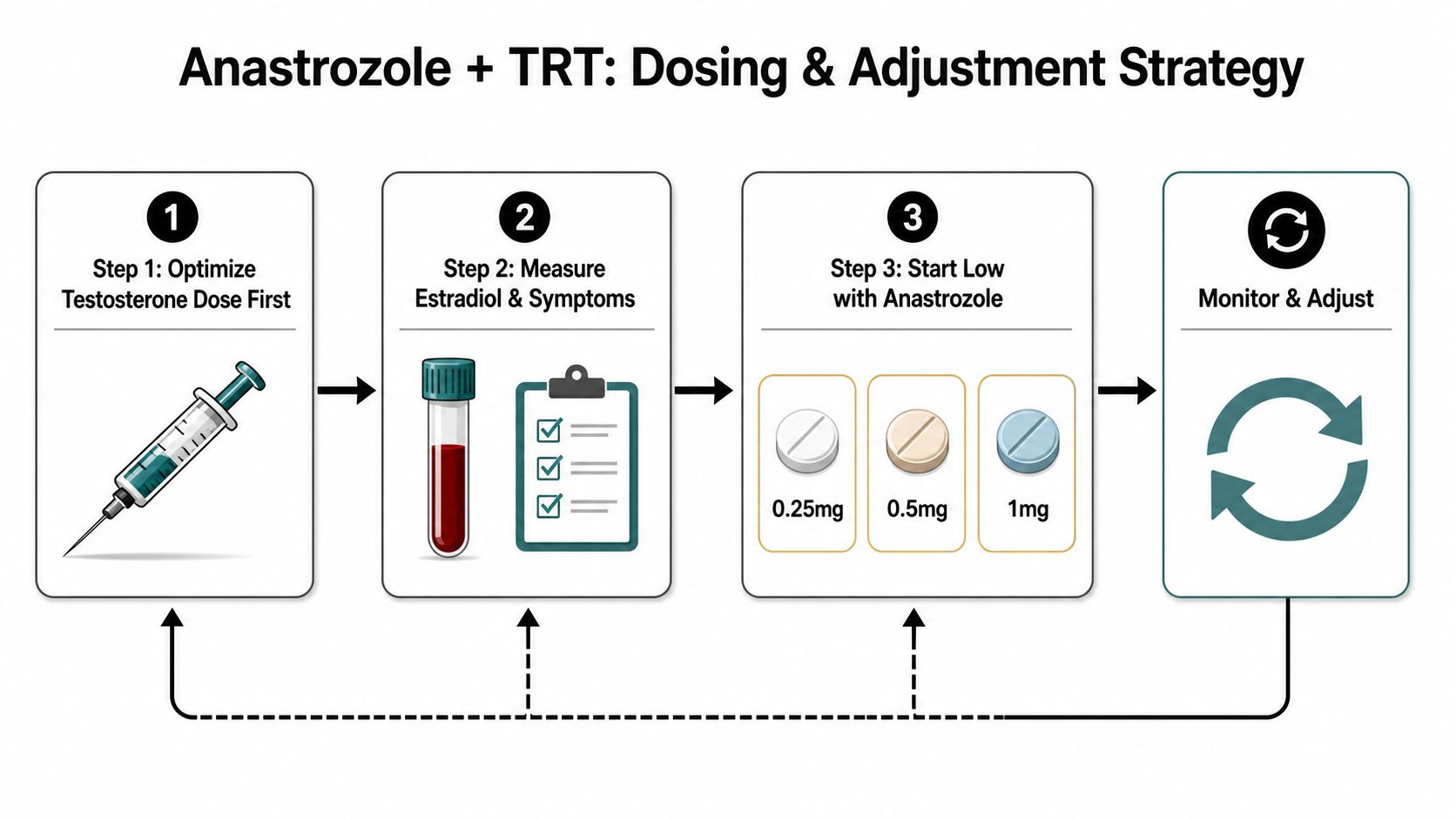
The safest dosing strategy starts with a question that often gets skipped: does the testosterone protocol need adjustment first? If the dose is excessive, or if weekly injections create large peaks and troughs, adding anastrozole may hide the source of the problem rather than solve it.
Anastrozole tablets are commonly available in 0.25 mg, 0.5 mg, and 1 mg portions when prescribed and compounded or divided appropriately. Clinicians who use it selectively often prefer a low, intermittent approach instead of daily dosing, because aromatase inhibition can overshoot. A plan might use 0.5 mg twice weekly or 0.25 mg every other day, but the appropriate choice depends on the patient's labs, symptoms, testosterone schedule, and response.
A practical adjustment sequence
- Review the testosterone dose. Confirm that the dose matches the treatment goal and that the patient isn't responding to a peak created by an unnecessarily large injection.
- Review injection timing. A weekly schedule may produce a different estradiol pattern than twice-weekly dosing. More frequent, smaller administrations can sometimes create a steadier exposure.
- Confirm the estradiol result. A surprising result should be repeated with a method appropriate for men before medication is escalated.
- Match treatment to symptoms. A patient with no compatible symptoms may need observation rather than an AI.
- Start conservatively when indicated. If symptoms persist alongside a reliable, high result, the clinician can consider a low intermittent dose.
- Recheck after the change. The next decision should follow new laboratory information and symptom tracking, not impatience.
When a reduction or stop makes more sense
A patient who develops joint pain, dry skin, low libido, sexual dysfunction, fatigue, or a flattened mood may be experiencing excessive estradiol suppression. The correct response isn't to increase the dose because the original high result looked concerning. The clinician may reduce frequency, reduce the dose, or stop anastrozole and reassess.
Patient-specific details matter. BMI, baseline estradiol, hematocrit, SHBG, testosterone dose, injection route, and the timing of blood collection can all change the interpretation. Dose optimization of testosterone is usually the safer first lever, while anastrozole remains a targeted adjustment for a clearly supported problem.
Monitoring estradiol and symptoms over time
Monitoring should combine three pieces of information: a reliable estradiol assay, the timing of the blood draw, and a symptom record. A number without context can mislead, especially when a standard immunoassay overestimates estradiol in men at low concentrations.
For men, clinicians often favor a sensitive LC-MS/MS estradiol test. Equilibrium dialysis may also be used in appropriate settings. The important point is not to compare a conventional assay from one laboratory with a sensitive assay from another and assume the values are interchangeable.
A decision loop for follow-up
Before starting anastrozole, establish baseline information that allows the clinician to distinguish treatment effects from unrelated symptoms. Depending on the case, this may include testosterone measures, estradiol, CBC and hematocrit, lipids, liver-related testing, SHBG, and other TRT safety markers.
After a dose change, repeat testing within a clinically appropriate interval. Independent monitoring guidance describes repeat estradiol checks within about 4 to 8 weeks after changes and periodic review of lipids and bone health for longer-term users, as outlined in this monitoring bundle for aromatase inhibitors.
Keep a weekly symptom log rather than relying on memory:
- Sexual function: Libido, erection quality, and orgasmic function.
- Mood: Irritability, emotional flattening, anxiety, or depressed mood.
- Physical symptoms: Joint comfort, skin dryness, fatigue, and water retention.
- Breast symptoms: Nipple sensitivity, tenderness, swelling, or changes in tissue.
- Treatment context: Testosterone dose, injection date, and any missed or delayed administration.
| Timepoint | Labs to order | Symptoms to assess | Decision trigger |
|---|---|---|---|
| Before anastrozole | Sensitive estradiol plus relevant TRT monitoring labs | Baseline sexual, mood, joint, breast, and fluid symptoms | Confirm that symptoms and laboratory findings support treatment |
| After a change | Repeat sensitive estradiol and relevant safety labs within the clinician's planned interval | Direction of improvement or new low-estrogen symptoms | Reduce, maintain, or discontinue based on the combined picture |
| Once stable | Periodic estradiol and TRT safety monitoring | Ongoing libido, mood, joints, energy, and breast symptoms | Continue only while benefit remains clear |
| Any time symptoms worsen | Targeted reassessment and clinician review | New joint pain, fatigue, sexual dysfunction, or mood flattening | Pause escalation and investigate over-suppression |
A patient who wants more detail on common TRT questions can review the Cost Plus TRT FAQ, but no online guide replaces individualized interpretation. Estradiol is a number plus a story. The result should explain the patient's experience, not override it.
Alternatives to anastrozole on TRT
Anastrozole is one tool in a broader set of options. The first alternative is often the simplest: reduce the testosterone dose if levels are higher than needed or symptoms began after a dose increase. Lowering the input can reduce aromatization without blocking the enzyme throughout the body.
Injection frequency is another practical variable. A patient using a larger weekly injection may discuss dividing the same overall treatment into smaller administrations, such as every 3.5 days, if that fits the prescription and clinician's plan. The aim is to reduce pronounced peaks, not to create a more complicated schedule for its own sake.
Comparing the available levers
| Approach | Potential role | Main limitation |
|---|---|---|
| Testosterone dose reduction | Useful when testosterone exposure is higher than clinically necessary | May reduce benefits if the original dose was appropriate |
| More frequent injections | May smooth fluctuations for some patients | Requires consistent administration and follow-up |
| Body-composition changes | May reduce an aromatization source over time | Takes sustained effort and doesn't provide an immediate medication effect |
| Alcohol and lifestyle review | Can identify modifiable contributors to symptoms and hormone variation | Lifestyle changes aren't a substitute for evaluating significant symptoms |
| Selective estrogen receptor modulators | Drugs such as tamoxifen or raloxifene may be considered for specific breast-related situations | They act at estrogen receptors and aren't interchangeable with anastrozole |
| Anastrozole | Can lower estradiol when symptoms and reliable labs support intervention | Can suppress estradiol too far and create systemic effects |
Body-fat reduction, limiting alcohol, consistent sleep, and correcting genuine nutritional deficiencies may support a better overall protocol. Zinc shouldn't be used as a magic aromatase switch, and supplementation is most rational when a clinician identifies deficiency or a clear dietary need.
A formulation change may also be discussed, but the right choice depends on the patient's response rather than a promise that one testosterone ester won't aromatize. Selective estrogen receptor modulators may help in carefully selected breast-symptom scenarios, yet they don't solve every cause of higher estradiol and require their own risk review.
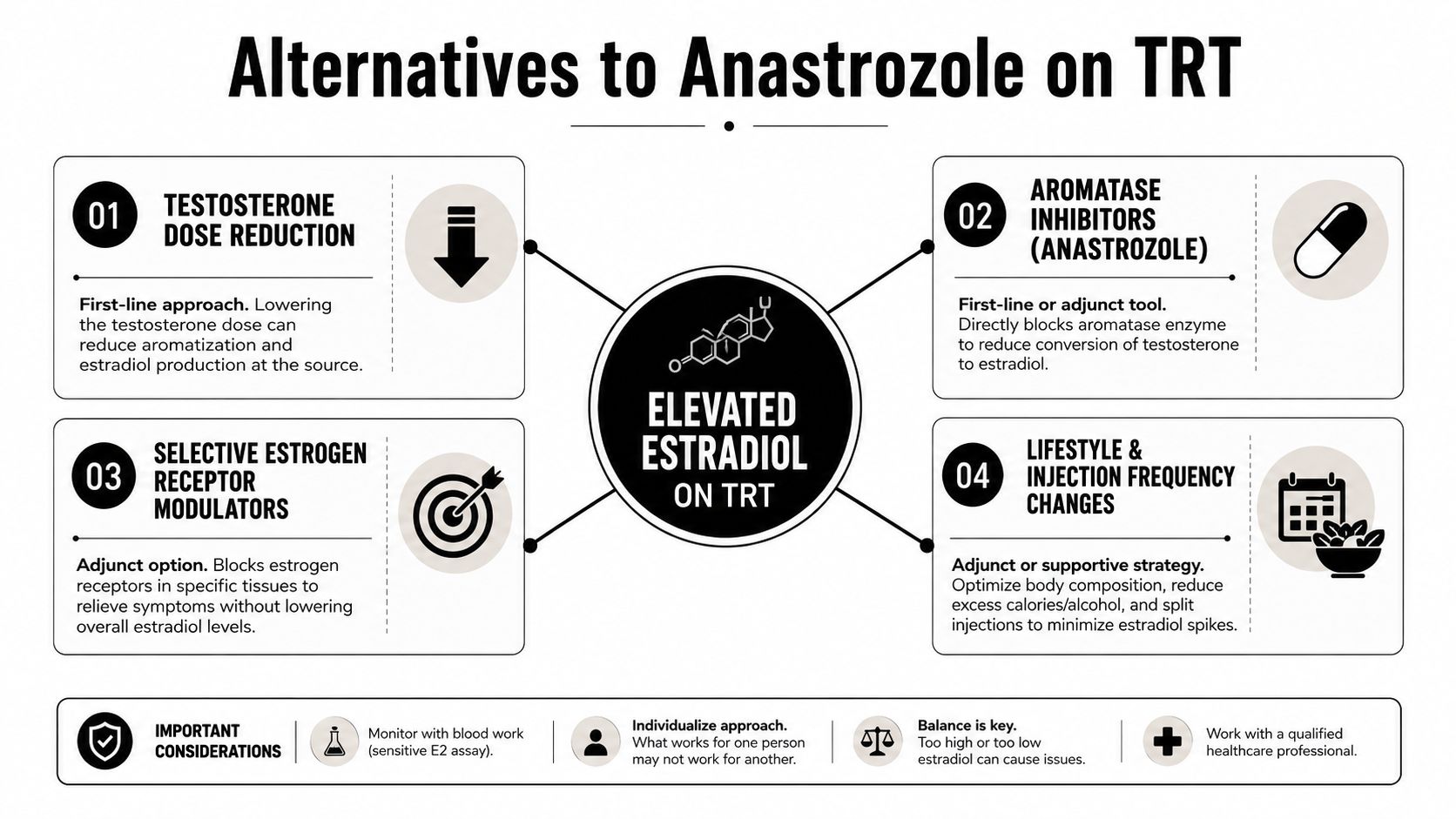
The decision is therefore sequential. Check the protocol, smooth the delivery if appropriate, address modifiable factors, confirm the assay, and then consider anastrozole if the problem persists. It may be appropriate for confirmed high-estradiol symptoms, but it shouldn't be the first answer by default.
Risks of pushing estradiol too low and when to stop
Low estradiol is the underrated risk of aggressive AI use. A patient may begin anastrozole to address nipple sensitivity or fluid retention, then develop joint pain, dry skin, fatigue, low libido, erectile difficulty, or a flat mood because the treatment removed too much of a hormone he still needs.
Longer-term concerns include bone-density loss and unfavorable lipid changes. The 2008 randomized trial found no material short-term change in lipids or other measured functional outcomes despite substantial hormone changes, but that result doesn't establish long-term safety for indefinite aromatase inhibition in all men. The clinical trial report supports a measured interpretation, not a guarantee that chronic suppression is harmless.
Red flags that should change the plan
- New joint pain or stiffness: Don't assume this is a normal adjustment if it begins after AI initiation.
- Sexual dysfunction: Low libido or worsening erections can reflect excessive suppression as well as other medical causes.
- Crushing fatigue: A major loss of energy deserves prompt review rather than another dose increase.
- Mood flattening or irritability: Emotional changes can be clinically important even when a lab result appears “controlled.”
- Persistently very low estradiol: Confirm the finding with a sensitive assay and discuss reducing or stopping treatment.
- Unfavorable safety markers: Changes in lipids or bone-health concerns require broader risk management.
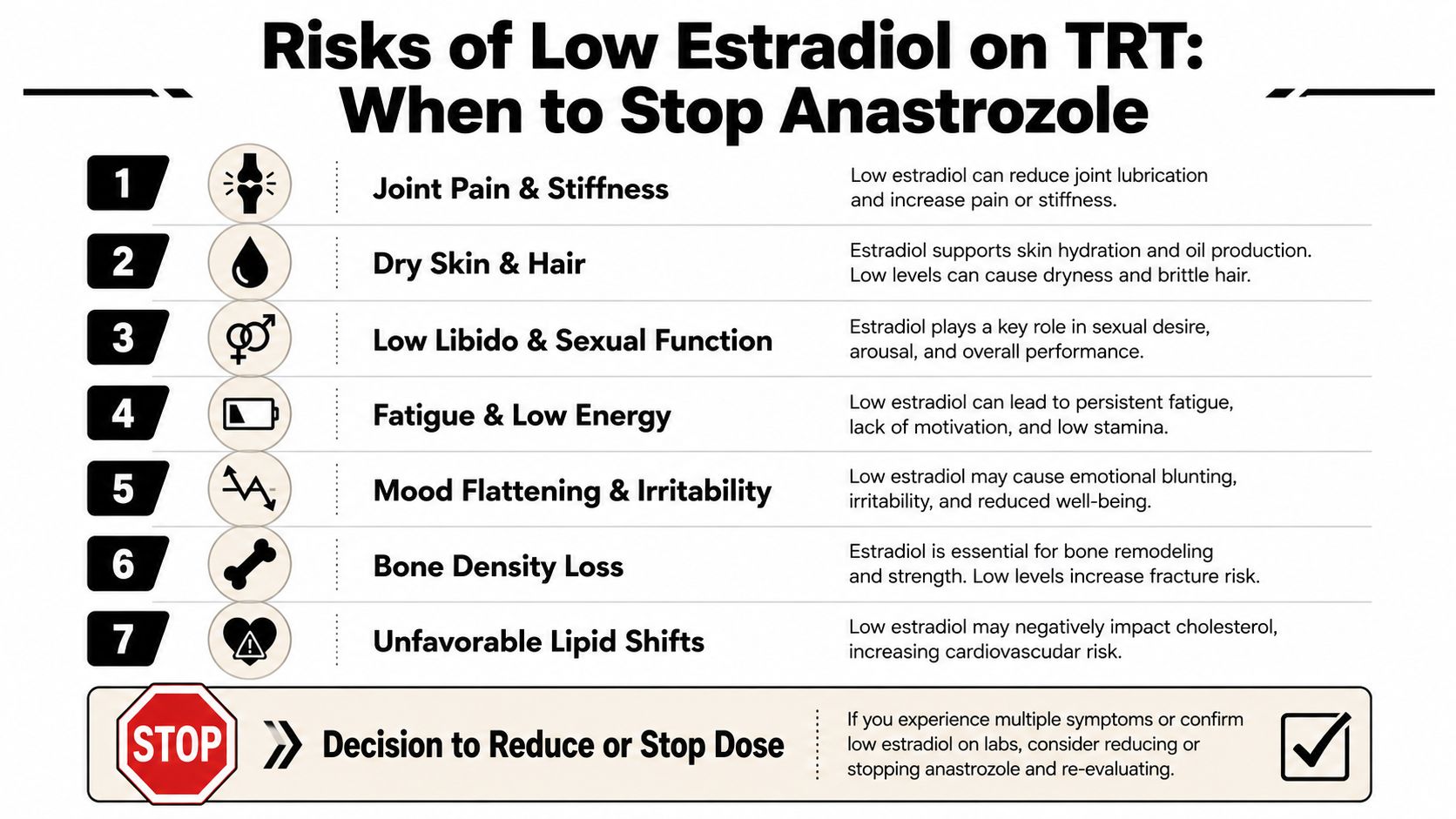
If symptoms suggest over-suppression, the usual decision path is to verify the result, stop escalating, and have the prescribing clinician reduce the dose, extend the interval, or discontinue anastrozole. A patient shouldn't chase a very low estradiol target because the number looks cleaner.
The safety question isn't “How low can estradiol go?” It's “Is this treatment improving the patient without creating a new hormone deficiency?”
Patients also need to discuss fertility before changing TRT or adding medication. Testosterone therapy can affect sperm production, and the subject deserves a dedicated review such as this guide to TRT and fertility.
A structured telemedicine workflow can make course correction easier when the clinician schedules follow-up labs, reviews symptom changes, and gives the patient a clear way to report adverse effects. The right endpoint isn't an estradiol value that is as low as possible. It's a stable, individualized TRT plan in which anastrozole is used only when the evidence and the patient's experience justify it.
Cost Plus TRT provides physician-supervised TRT with prescription testosterone cypionate, online consultations, lab-upload or Quest Diagnostics options, and home delivery for eligible patients. If you're already on TRT and want a structured review of testosterone, estradiol, symptoms, and follow-up needs, visit Cost Plus TRT to request a consultation.